Tag Archives: cultivation

1 6 7 8 9 10 19

2000.133.1

Audio cassette recording of Archie MacKinnon and John MacKinnon talking to Maggie Campbell in June 2000.

Archie MacKinnon (Èairdsidh Ghilleasbuig Eachainn) of Cornaigmore and John MacKinnon (Iain Aonghais) of Kilmoluaig talk to Maggie Campbell in June 2000 about the people who used to live in Cornaigmore, their relations and employment, the ferry service, the shops and Post Office in Cornaig, ministers, sea captains and crofters, seaweed as fuel, the mill at Cornaig, Lady Victoria Campbell and her good works; Archie plays a selection of Gaelic tunes on the accordion and sings a Gaelic song. Tha Èairdsidh Ghilleasbuig Eachainn a Còrnaig Mhòr agus Iain Aonghais a Cill Moluaig a’ bruidhinn ri Magaidh Chaimbeul anns an Òg Mhìos 2000 mu na daoine a b’ àbhaist a bhi fuireach ann an Còrnaig Mhòr, an càirdean agus an dreuchd, seirbheis nam bàtaichean aiseag, na bùthan agus oifis a’ phuist ann an Còrnaig, ministearan, sgiobairean agus croitearan, feamainn air ùis na connaidh, muileann Chòrnaig, bean-uasal Bhioctoria Chaimbeul agus an obair math a rinn i; tha Èairdsidh a’ cluich taghaidh de sheidean Gàidhlig air a’ bhocsa-chiùil agus tha e seinn òran Gàidhlig.

1998.286.1

Audio cassette recording of David MacClounnan of Balephuil talking to John Donald MacLean in June 1998.

David MacClounnan (Dàibhidh na Croige) of Balephuil talks to John Donald MacLean (Teòn Dòmhnall a’ Mhuilinn) of Crossapol about himself and Flòraidh Bhàird going home by bicycle, fishing, the caves around ‘cowrie shell beach’, the hanging island, a mermaid found at Diobadal in Hynish, Hynish pier and Skerryvore lighthouse, a well in Balephuil, beach-combing, forts, second sight, the first tractor in Tiree, a fairy woman, old funerals and funeral costs.

1998.282.1

Audio cassette recording of a ceilidh with Maggie Campbell, Neil MacLeod and Murdoch MacDonald in 1998.

Maggie Campbell and Neil MacLeod of Kilmoluaig sing several songs composed by Tiree bards and a love song; Murdoch MacDonald of Kilmoluaig talks about shepherding, harvesting, the spring work on a croft, bulk buying of groceries, sharing barrels of herrings, travelling people, first-footing, home-coming events during the Glasgow fair, barn weddings and blanket washing days.Tha Magaidh Chaimbeul agus Niall MhicLeòid a Cill Moluag a’ seinn iomadach òran air an cur ri chèile aig bàird Thirisdeach agus òran gaoil; Murchadh MhicDhòmhnaill a Cill Moluaig a’ bruidhinn mun obair cìobair, obair foghair, obair an Earraich air a’ chroit, ceannach biadh ann am meudachd, a’ roinn barraille sgadain, na ceàrdan, a’ dol a mach air oidhche na Callaine, cùisean aig àm tighinn dhachaigh re Faidhir Glaschu, bainnsean sàbhail agus làithean nigheadh na plaideachan.

1998.307.1

Audio cassette recording of Neil MacLeod of Kilmoluaig talking to Maggie Campbell in November 1998.

Neil MacLeod of Kilmoluaig talks to Maggie Campbell in November 1998 about his schooldays, his work with the Post Office delivering mail in Cornaig at first by bike and then by pony, the general running of the Post Office, the difficulties during blackout in World War II, posting boxes of eggs and potatoes from Tiree, the introduction of the red mail vans in 1956, other postmen, the different ferries and the change in the pace of life.

2004.6.1

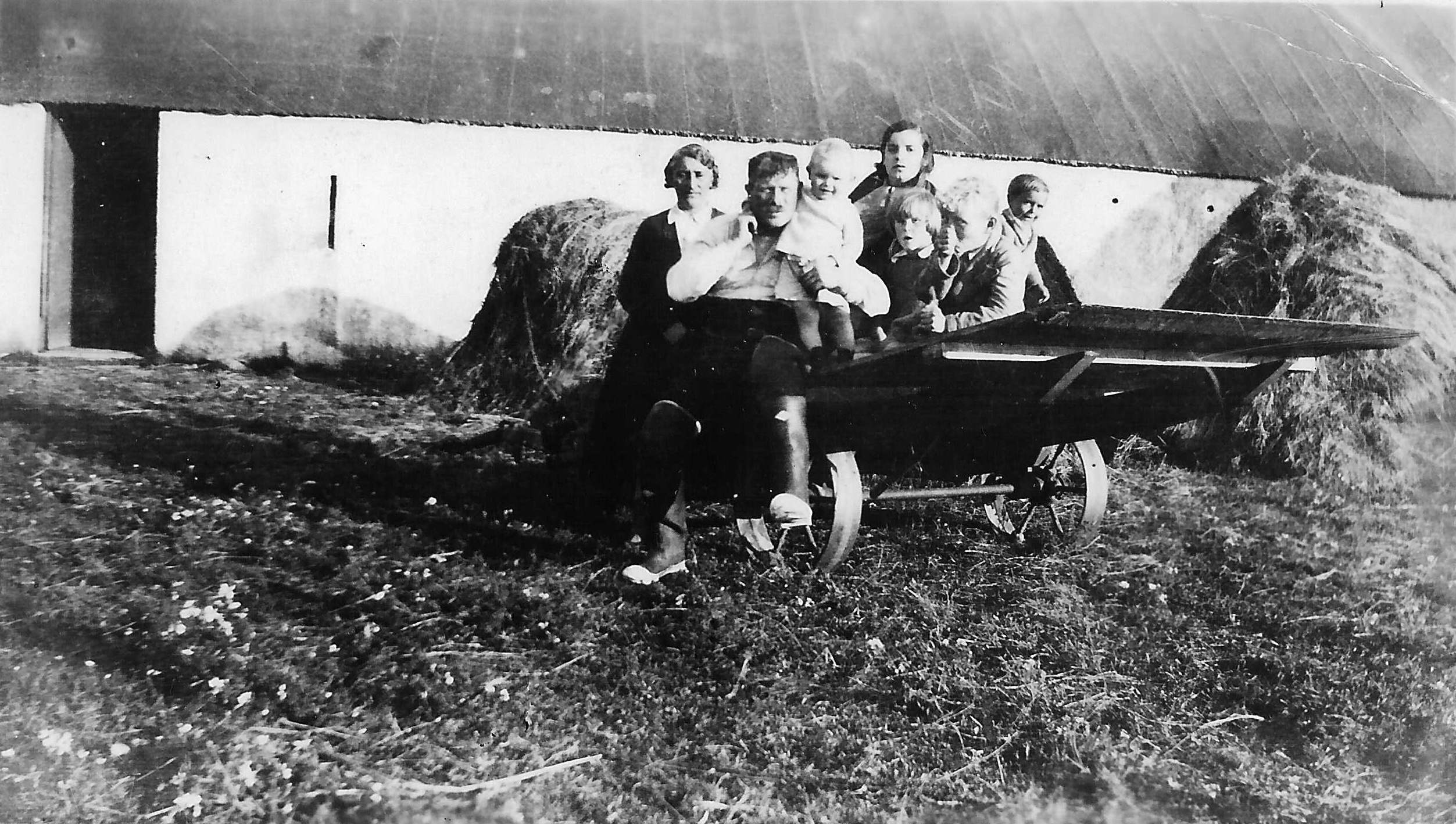
Photograph of George Paterson and his family in the stackyard of his farm at 6 Crossapol in 1937. L-R: (back) Sarah MacPhee née Paterson (George’s sister); George Paterson; his wife Margaret (Meta) with baby Angus; (front) Hamish MacPhee, Sarah’s son; George and Meta’s children, Iain and Mairi.

z9.jpgCourtesy of Mrs Mairi Campbell

George’s father, Donald Paterson of Balinoe, emmigrated to Pategonia in the 1880s. Patagonia, in the south of Argentina and Chile, was cleared of its indigenous people in the 1880s to make way for large sheep farms. Many men from the Hebrides went out to share in the bonanza.

In 1885 Donald wrote to his brother asking him to send out his birth certificate and baptismal record so he could take possession of twelve square miles of land. He found the native Indians very kind and friendly and recommended shepherding in Patagonia where the pay was good.

Donald married in Patagonia and had a family. He brought his two sons George and John home to Tiree. George was seven years old at the time and could speak Gaelic and Spanish but not a word of English.

2004.6.2

The Paterson family of Crossapol in 1937

Photograph of the Paterson family of Crossapol in 1937.

z10.jpg

Courtesy of Mrs Mairi Campbell

The Paterson family are pictured in 1937 sitting on a rick-lifter outside their steadings at Crossapol. The cart was used to move stùcanan (small stacks of corn) from the fields to an iodhlann, the stackyard behind the house, where about six to eight of them were carefully built into a mulan (corn stack).

Initially the cut corn was bound into sguaban (sheaves), eight to ten of which were lined up into an adag. Once the seed had hardened, after about ten days if the weather was good, the adagan would be put into a stùc which can stand up to the winds that are common at that time of year.

Stùcanan could be left out if the weather deteriorated. If there was a dry spell, however, the adagan could be taken straight to the stackyard, as every time the corn was handled some grain was lost.

Black and white photograph of the Paterson family of Crossapol in 1937.

The steadings at 6 Crossapol in 1937. The cart was used to move ricks from the fields to the stackyard. L-R: Sarah MacPhee née Paterson (George’s sister); George Paterson with his son Angus; Betty MacLean née MacPhee, Sarah’s daughter (at back); George and Meta’s children, Mairi and Iain; Hamish MacPhee, Sarah’s son.

1998.281.1

Audio cassette recording of Alex MacLean of Cornaigbeg interviewed by John Donald MacLean in 1998.

Alex MacLean (Ailig Iain Alasdair) of Cornaigbeg talks to John Donald MacLean in 1998 about his ancestors, some of whom emigrated to New Zealand, a MacLean gathering there of 80 of his relatives, bulb growing on Tiree which was set up in 1958 by the Agricultural College, the MacEachern blacksmiths, one of whom was a lay preacher, the making of a harpoon for catching whales, the coal puffers which unloaded their cargo on different beaches and crofting in general. Tha Ailig MhicIllEathain (Ailig Iain Alasdair) a Còrnaig Bheag a’ bruidhinn ri Teòn Dòmhnall MhicIllEathain ann an 1998 mu a shloinntearachd, cuid dhuibh a chaidh don Seallainn Nuadh, cruinneachadh MhicIllEathain far an robh ceithir fichead da fhear-cinnidh, obair na meacain fluir a chaidh a chur air bonn ann an 1958 le Colaisde an Tuathanachais, na goibhnean Mhic Eacharna, aon dhuibh na shearmonaiche nach buin don chlèir, an dòigh air murghadh a’ dhèanamh airson glacadh na mucan mara, na bàtaichean guail a’ cur a mach an luchd air diofar thràighean agus croitearachd mar as cumanta.

1 6 7 8 9 10 19