


Photocopied abstract of emigrants` accounts with Argyll Estates in June 1847.
Abstract of emigrants` accounts with Argyll Estates on 10th June 1847, giving township, name and amount.

Photocopied abstract of emigrants` accounts with Argyll Estates in June 1847.
Abstract of emigrants` accounts with Argyll Estates on 10th June 1847, giving township, name and amount.
Photocopied handwritten information about individual Tiree people in the 18th and 19th centuries.
Biographical notes about individual Tiree people: John MacLean (Am Bard MacGhilleathain); merchant John Campbell of Scarinish (d. 1817); Colin MacNiven, Greenhill (18th century); Dugald MacEachern, schoolmaster (b. 1789); Rev John MacLean of Cornaig (b. 1841); Donald MacKechnie of Kenovay, joiner and postmaster (b. 1846); Captain Angus Lamont of Cornaig (b. 1844); tailor John MacPhail of Cornaigmore (b. 1846); John MacLucas, Balephuil (d. 1875).
Receipt from John Maxwell of Cumbernauld to Mr MacLean of Scarinish.
Receipt form John Maxwell of Cumbernauld acknowledging payment of £119 for a Massey baler by a Mr MacLean of Scarinish, date unknown.
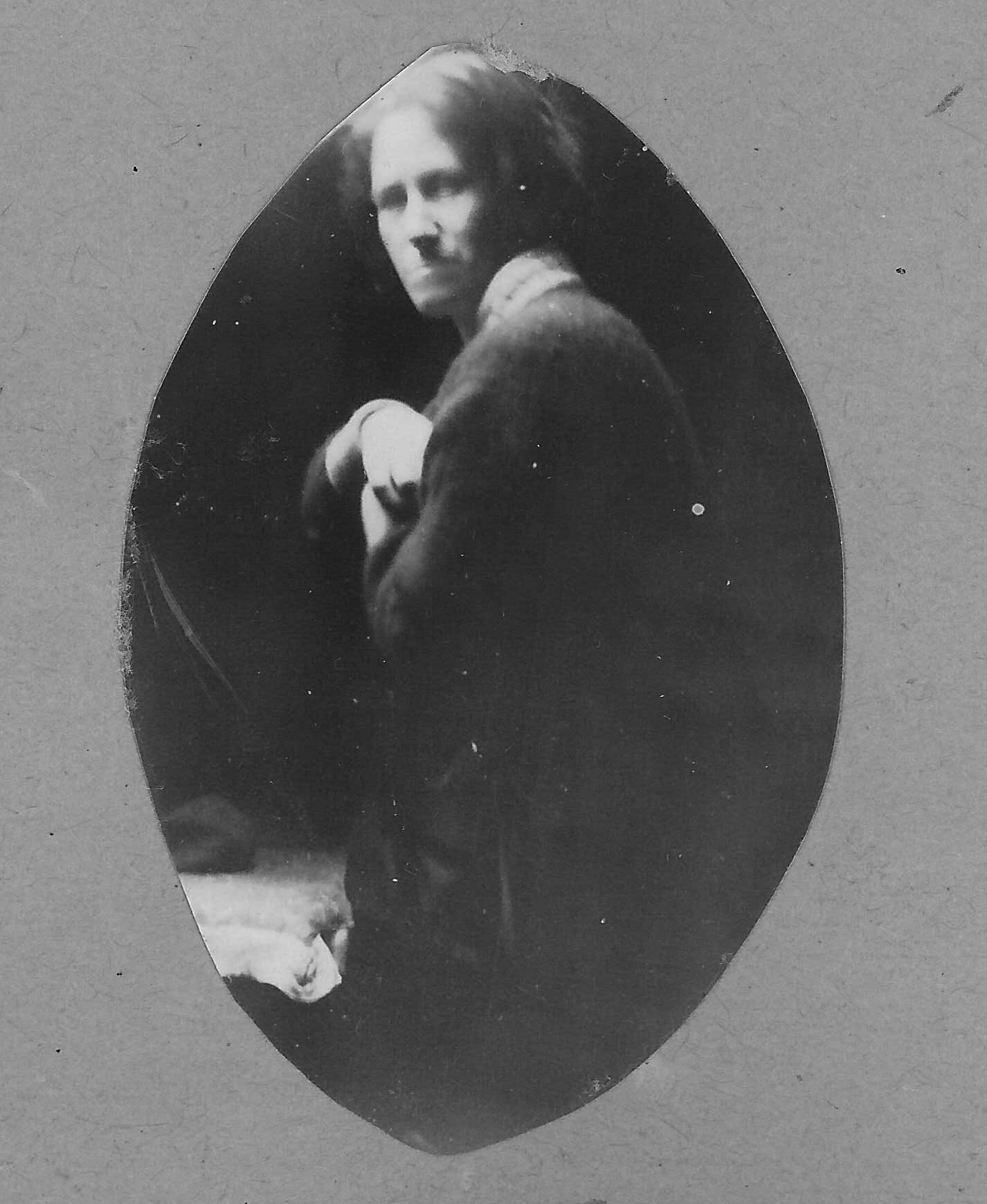
Black and white photograph of Morag MacIntyre (1897-1967).
Morag MacIntyre (1897-1967), shopkeeper at Silversands and the daughter of Hugh MacIntyre and his wife Mary MacMillan, from a small album titled `Idle Days` from Silversands in Vaul, probably dating from the 1910s or early 1920s.
Black and white postcard of D & H MacArthur`s general store in Scarinish.
D & H MacArthur`s general store in Scarinish around 1908, published by the store owners.

Audio cassette recording of Donald Archie MacLean of Kenovay talking to Maggie Campbell in May 2004.
Donald Archie MacLean (Dòmhnall Eàirdsidh a’ Mhuilinn) of Kenovay talking to Maggie Campbell in May 2004 about the ‘Gual Righ’ at the bottom of the Kenovay Road, old stories about Tearlach Iseabail who used to sell coal from the house, and how he feels about the house being knocked down and another built in its place.
The ‘Mary Stewart’ in Scarinish harbour.
Photograph of the schooner ‘Mary Stewart’ in Scarinish harbour in the early 20th century.

Courtesy of Mr Angus Munn
This photograph taken in the 1920s or 1930s shows the ‘Mary Stewart’ in Scarinish harbour with the Temperance Hotel on the right and MacArthurs’ general store on the left. Built by Barclay in Ardrossan in 1868, the sixty-four foot long ‘Mary Stewart’ was rigged as double-topsail schooner and had a tonnage of sixty-five.
Originally trading on the Irish coast, she was bought in 1908 for Donald MacLean of Scarinish by his relation, Dugald MacKinnon. Dugald was known as Dùghall an Òir (Dugald of the gold) because he had had been successful in the Australian Gold Rush.
Donald MacLean, with his sons as crew, traded up and down the West Coast of Scotland carrying coal and other cargo until the late 1930s when steam superseded sail. The remains of the ‘Mary Stewart’ can still be seen in Scarinish harbour.
Black and white photograph of the Mary Stewart in Scarinish harbour.
The Mary Stewart in Scarinish harbour with MacArthur`s Store in the background at the left and the Scarinish Hotel on the right, photographed in the early 20th century.
Nine receipts from coal merchant Charles Lamont of Ruaig from 1940 to 1955.
Nine receipts from coal merchant Charles Lamont of Ruaig to John MacKinnon, Lodge Farm, Kirkapol dated from 1940 to 1955
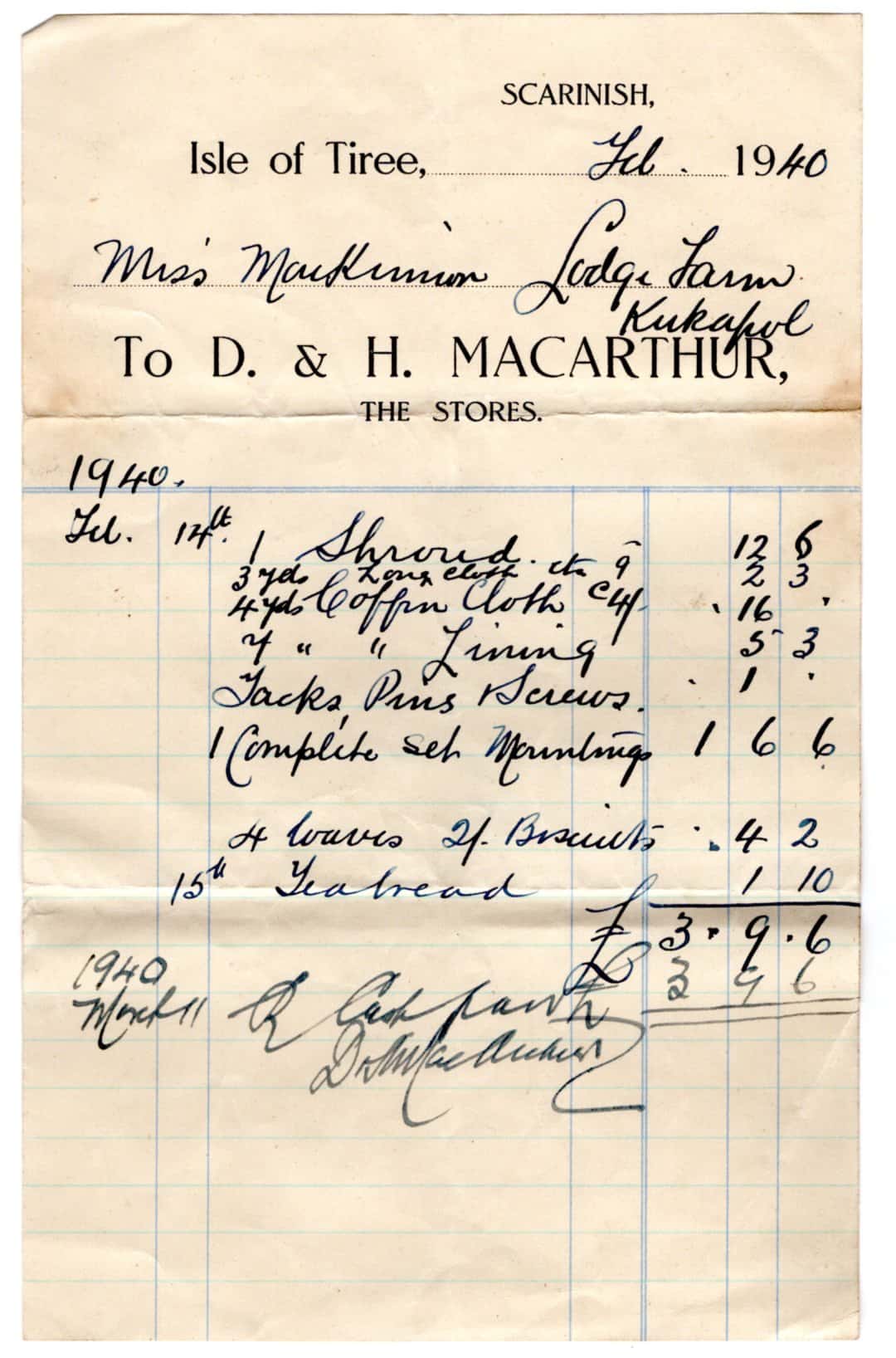
Collection of assorted croft and household receipts paid by John MacKinnon of Lodge Farm, Kirkapol.
Assorted croft and household receipts paid by John MacKinnon of Lodge Farm, Kirkapol including a 1940 bill from J. H. MacDonald for a coffin, a 1940 bill from D. & H. MacArthur Stores in Scarinish a 1934 bill from joiner and contractor Hugh MacDonald of Kenovay, a 1949 wireless licence and a 1975 bill from Andrew Irvine, Tighnabruaich.
Tirey
Transcription of an extract from ‘Tirey’ in ‘The Rev. Dr. John Walker’s Report on the Hebrides of 1764 and 1771’ edited by Margaret M. MacKay.
Courtesy of John Donald Publishers
The Rev Dr John Walker, minister of Moffat and a pioneer of scientific botany and geology, was sent to the Hebrides in 1764 and 1771 by the Commission for Annexed Estates to report on the social conditions, population and the state of manufacture, agriculture and fisheries.
He found the waters round Tiree teeming with fish but no fishing equipment on the island. In 1792, Rev Archibald McColl lamented that the local fishermen seemed unable to compete with those from other islands or the east coast who were taking full advantage of the nearby fishing banks.
The reasons for this he attributed to the daily involvement of crofters with their land and animals and to their poverty which disinclined them to risk what little savings they had purchasing equipment easily lost in bad weather.