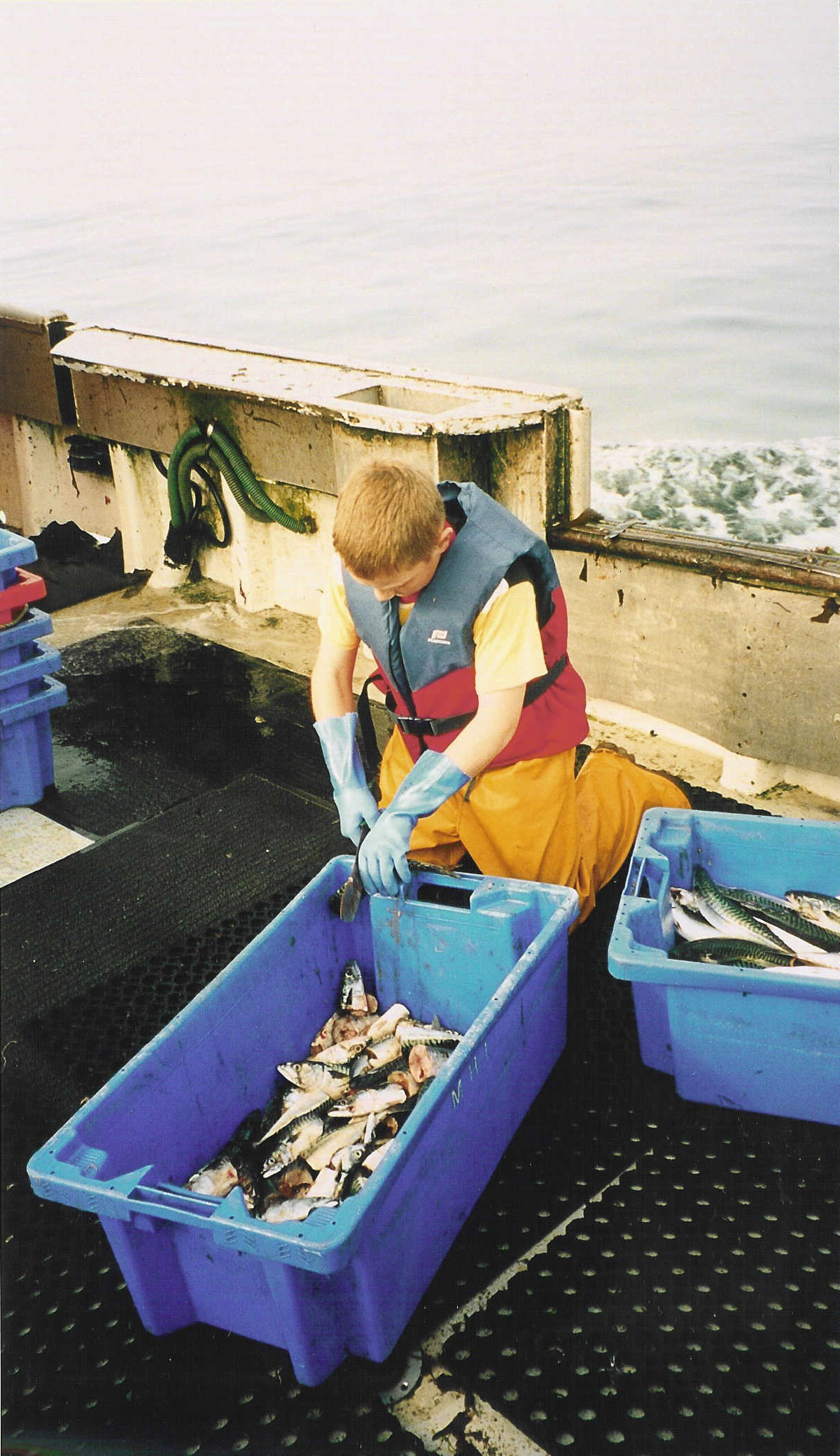
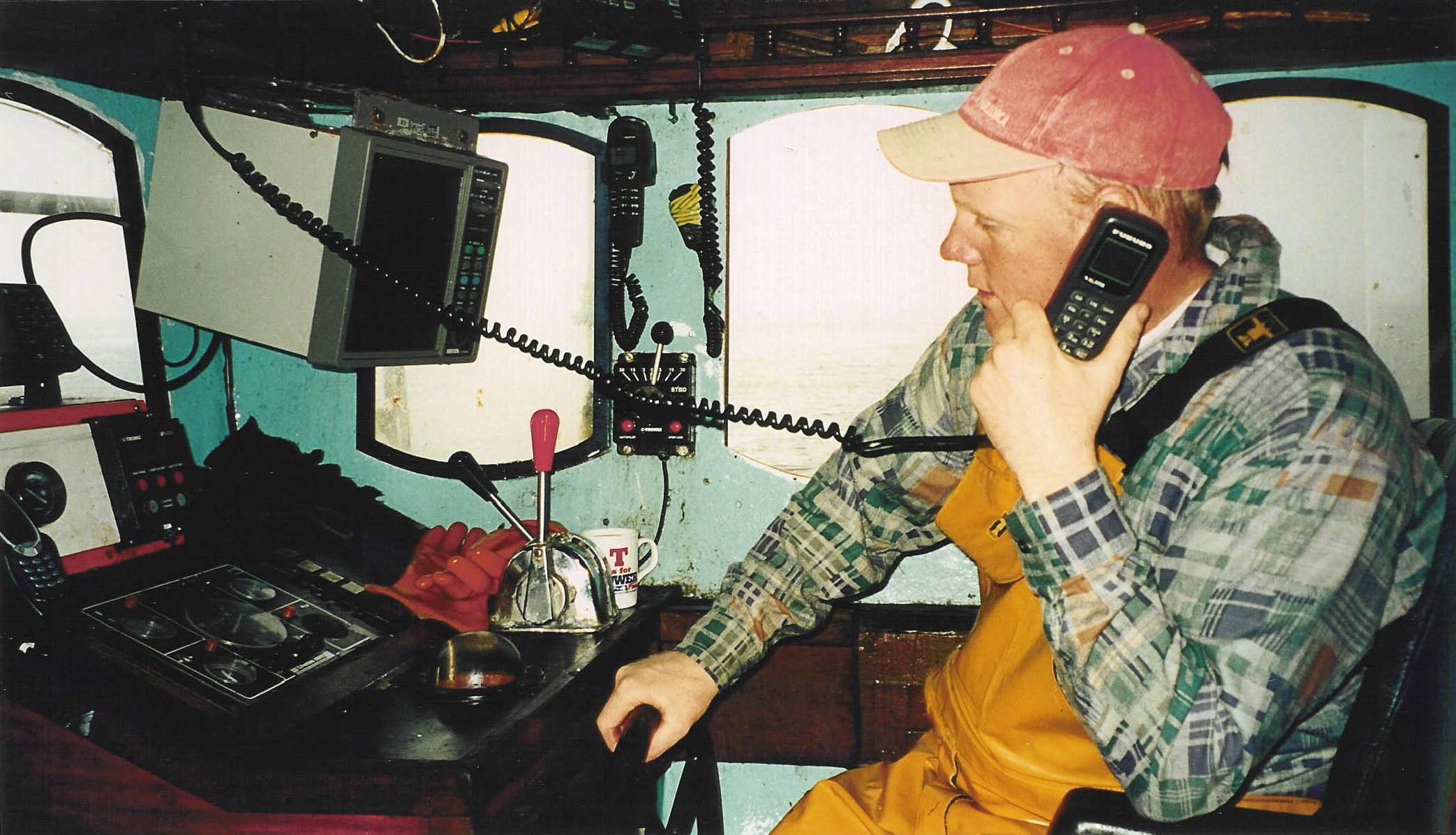
Audio cassette recording of Lachie MacArthur of Mannal talking to Maggie Campbell in January 2001.
Lachie MacArthur of Mannal talks to Maggie Campbell in January 2001 about his work for 32 years as a lorry contractor and one year as a postman, the great benefit of the rubbish skips to the island, his late father’s accidental death by drowning in 1954, the cargo boats `Loch Ard` and `Loch Carron` and the coal puffer `Moonlight`, and fishing out of Balemartine the ‘The Bank’ for cod and flounders. Lachlann ’ic Artair a Manal a’ bruidhinn ri Magaidh Chaimbeul anns an Fhaoilteach 2001 mun obair aige na fear-cùmhnantachaidh airson dha dheug air fhichead bliadhna agus aon bhliadhna na phòsta, am feum mòr a tha na sgudail a’ deànamh air an eilean, athair nach maireann a bha ann an tubaist-bàthaidh ann an 1954, bàtaichean-luchdaich An Loch Ard agus An Loch Carron agus am bàta-guail Moonlight, agus am banca iasgaich airson trosg agus leòbagan.
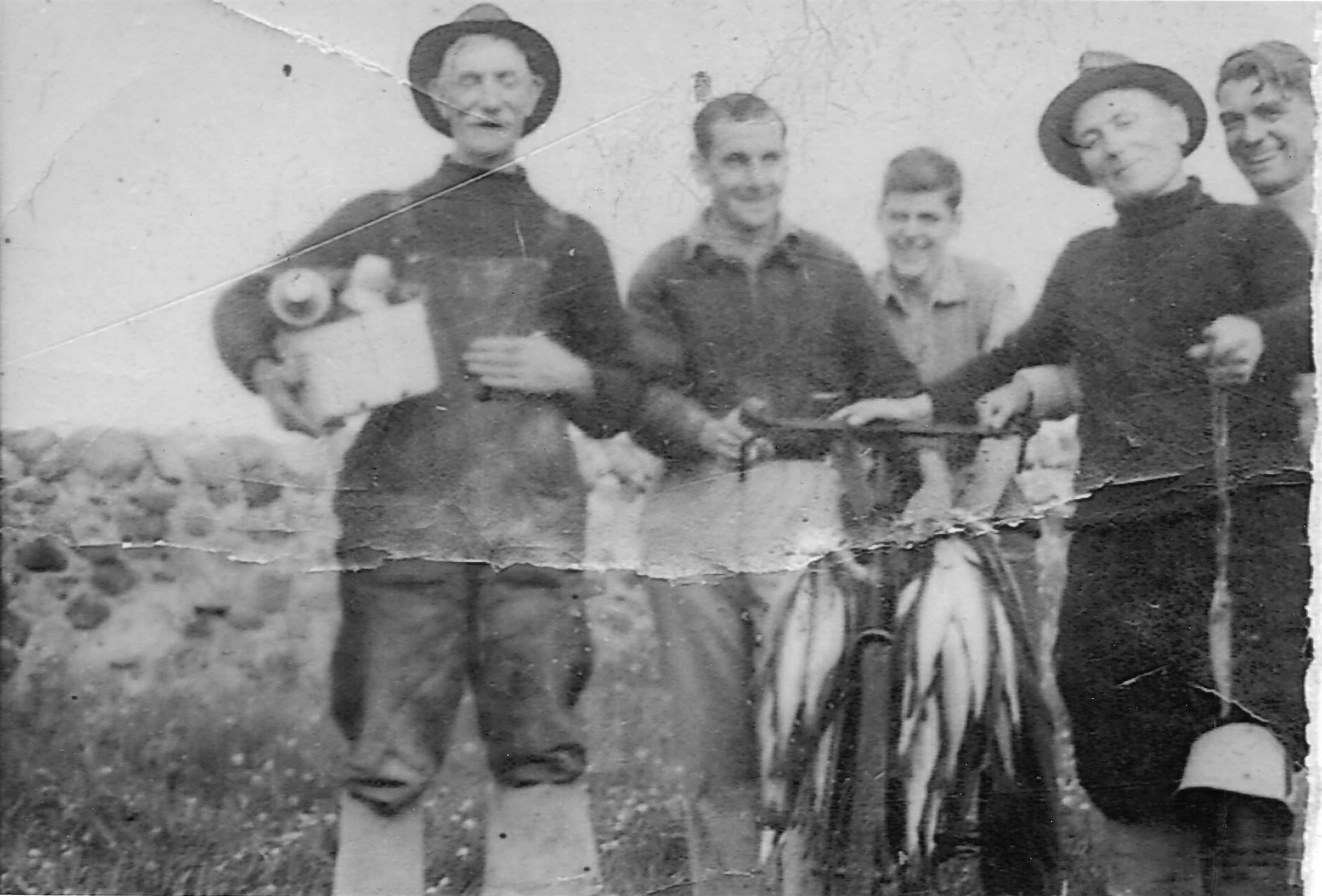
Black and white photograph of a group of men with their fishing catch.
L-R: John MacDonald of Heanish, Lachie MacFadyen, Kennneth Bisset, his father and Will Butler (possibly RAF), taken in the 1940s. Note the catch of fish hanging from the handlebars of the bicycle.
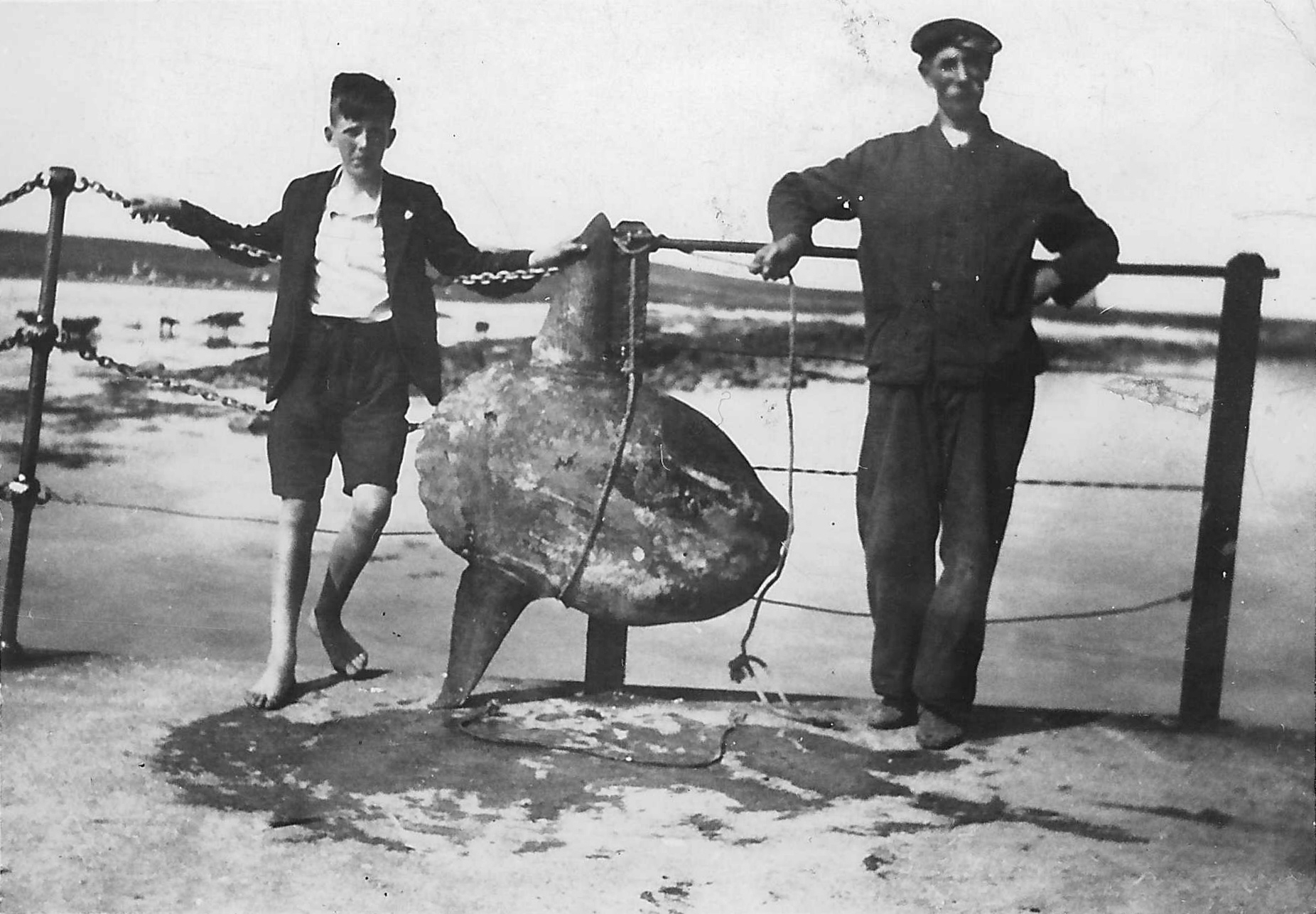
John and Donald MacDonald with a sunfish on Gott Bay pier
Photograph of John and Donald MacDonald with a sunfish on Gott Bay pier.
Courtesy of Dr John MacDonald
John MacDonald of Heanish and his son Donald were photographed with a sunfish on Gott Bay pier in the late 1920s or early 1930s. The ocean sunfish, Mola mola, is the most massive bony fish in the world and can grow over three metres in length.
Sunfish feed on jellyfish, plankton and small fish. They stay primarily in open waters, but can often be seen near kelp beds, large expanses of which surround Tiree. Its name ‘mola’ is Latin for ‘millstone’ which the fish is said to resemble in shape, colour and texture.
They propel themselves by flapping their large fins from side to side. Sometimes they are seen floating sideways in the water and it is commonly thought that they are basking in the sun. They are more often to be found further south in the waters round Cornwall and Wales.
Black and white photograph of John MacDonald on Gott Bay pier in the 1920s.
L-R: John `Nonian` MacDonald of Heanish and his son Donald with a sunfish on Gott Bay pier in the late 1920s or early 1930s. Donald jumped ship in Australia and lived there. (Donald is the brother of Jean MacEwan.)
Audio cassette recording of Jean MacCallum, Balevullin talking to Maggie Campbell in 2000.
(Continued from AC238) Jean MacCallum of Balevullin talks to Maggie Campbell in 2000 about pilgrims preaching in Balevullin School and about going to church, the names and location of various rocks and cliffs near Balevullin, carrageen and fishing, how crofting now is not as close to nature, Easter and the different moons, potatoes and crops that used to be grown, natural fertilisers, the faster pace of life now, Cattle Shows, Clydesdale horses and knitting.
Audio cassette recording of Alasdair MacKechnie and Angus MacLean talking to Maggie Campbell in October 1999.
Alasdair MacKechnie of Mull and Angus MacLean of Scarinish talk to Maggie Campbell in October 1999 about bringing cattle from Tiree to the Ross, the links between the Ross and Hynish when Skerryvore was being built, how fishermen came from South Uist to teach the Ross people how to fish at the time of the potato blight, the exchange of peat for potatoes with Tiree people, regular peat-cutting trips to the Ross from Tiree, the ferry links that used to exists; two songs are sung: Fàgail Loch Buidhe and Mhairi Mhin Mheall-Shieileach. Tha Alasdair ’IcEachairn a Muile agus Aonghas Dhòmhnuill Eòghainn Mhòr a Sgairinis a’ bruidhinn ri Magaidh Chaimbeul anns an Dàmhair 1999 mu bhi toirt beathaichean as Tiriodh gu ’n Ros, an co-cheangal a bha eadar An Ros agus Haoidhnis nuair a bha an Sgeir Mhòr ga togail, mar a thàinig iasgairean a Uibhist a Deas a dh’ ionnsachadh iasgach do mhuinntir an Ros an àm bliadhna a chailleadh am buntàta, an t-suaip mòine ri muinntir Thiriodh airson buntàta, cuairtean riaghailteach do ’n Ros airson mòine, co-cheangal bhàtaichean a b’ àbhaist a bhi ann; tha da òran air an seinn: Fàgail Loch Buidhe agus Mhàiri Mhìn Mheall-Shuilean
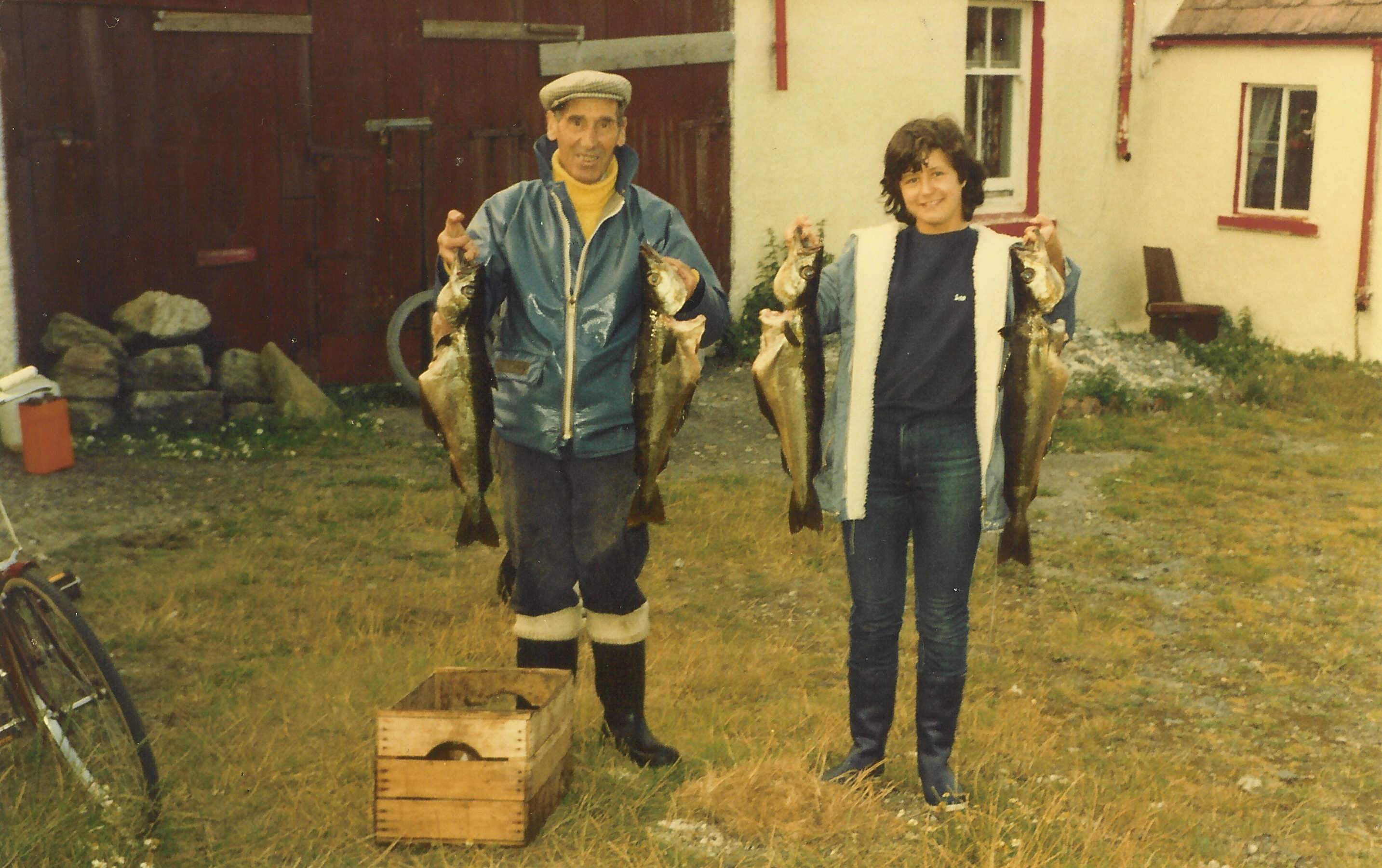
David MacClounnan and Alison MacKay with a catch of lythe
Photograph of David MacClounnan and Alison MacKay in Balephuil with a catch of lythe in 1983.
Courtesy of Mrs Nan MacClounnan
David MacClounnan and Alison MacKay are pictured here with a catch of lythe (pollack) in Bail’ Ur, Balephuil in August 1983. As lythe feed on sand eels, Tiree fishermen would bait their hooks with rubber eels bought from the local shop or sometimes made from the covering of electrical wires.
Lythe were fished from rocks or from a boat, often very successfully. Fish were preserved for the winter by steeping them in brine then packing them in barrels or pails with coarse salt. Larger fish like cod, lythe and ling were split in two.
Once salted, the fish were hung by the tails on a line outside or in the byre to dry. Others were hung in the chimney and were smoked as well.
Colour photograph of David MacClounnan and Alison MacKay in 1983.
David MacClounnan and Alison MacKay in Bail` Ur with a catch of lythe (pollack) in August 1983.