Audio cassette recording of Neil MacLeod of Kilmoluaig talking to Maggie Campbell in November 1998.
Neil MacLeod of Kilmoluaig talks to Maggie Campbell in November 1998 about his schooldays, his work with the Post Office delivering mail in Cornaig at first by bike and then by pony, the general running of the Post Office, the difficulties during blackout in World War II, posting boxes of eggs and potatoes from Tiree, the introduction of the red mail vans in 1956, other postmen, the different ferries and the change in the pace of life.
Photocopied handwritten notes and sketches made by Dr Euan MacKie on 25/7/2000 of George Holleyman`s collections.
Handwritten notes and sketches made by Dr Euan MacKie on 25/7/2000 of the pot shards and flints collected by George Holleyman in Balephuil and Balevullin in 1941-1943.
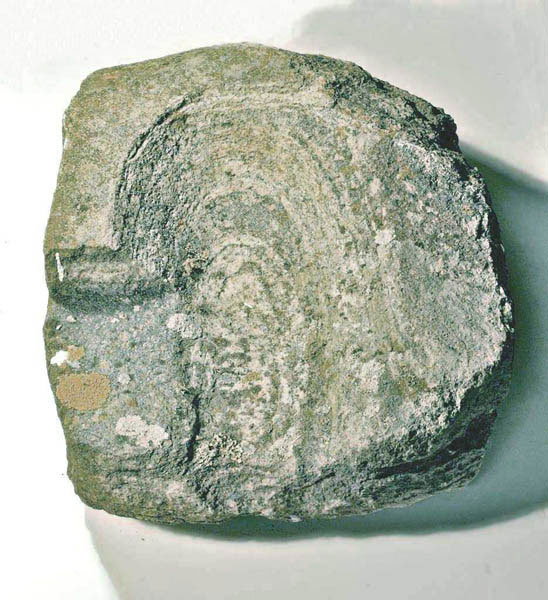
Saddle querns are the most ancient and widely used type of quern-stone. This one was found in Moss in the mid-1980s and may date back to Neolithic times. It was used with a rubbing stone held in the hand, a process that crushed the grain rather than ground it.
Considered women’s work, preparing grain using a saddle quern would have taken many hours and placed great strain on the body, particularly the toes, knees, hips and lower back. They continued in use into the medieval period and were superseded by rotary querns.
Turnbull, in a report on Tiree written in 1768, wrote that meal was made ‘with querns or hand mills which appears to be an expensive and troublesome method. Two women at once, or sometimes three, are commonly employed. By this means there is so much of their time taken up that it greatly retards them from other industry.’
Hardback book `The Souterrains of Southern Pictland` by F. T. Wainwright.
Excavation reports of two souterrains at Ardestie and Carlungie in Angus and a summary of what is known about about all recorded souterrains between the Dee and the Forth.