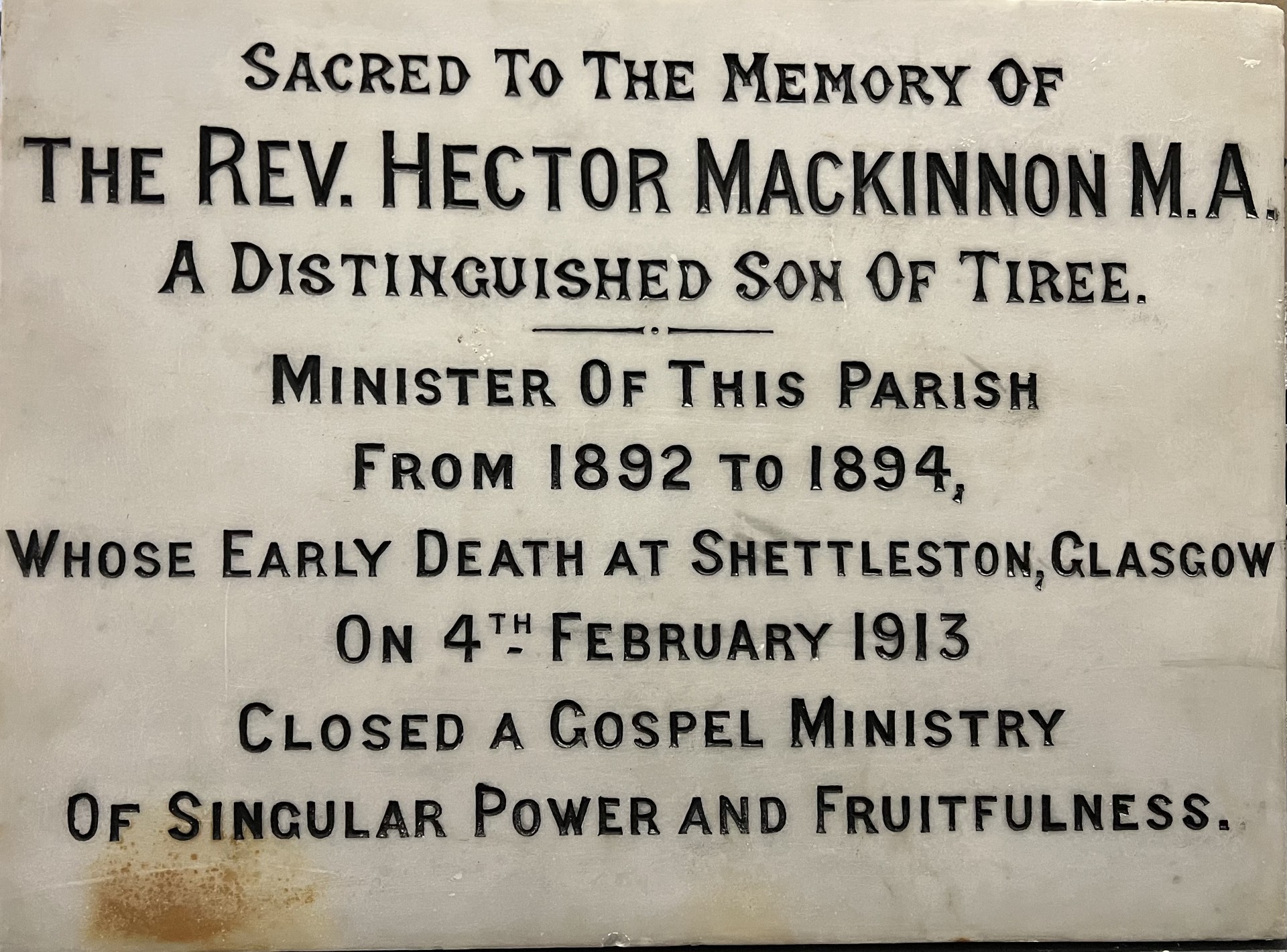
Marble memorial plaque to Rev. Hector MacKinnon, Lodge Farm
from Kirkapol Church of Scotland
removed before the sale of the church and donated to An Iodhlann by the congregation
Sacred to the memory of
the Rev Hector Mackinnon MA
A distinguished son of Tiree
Minister of this Parish
from 1892 to 1894
whose early death at Shettleston, Glasgow
on 4th February 1913
closed a Gospel ministry
of singular power and fruitfulness
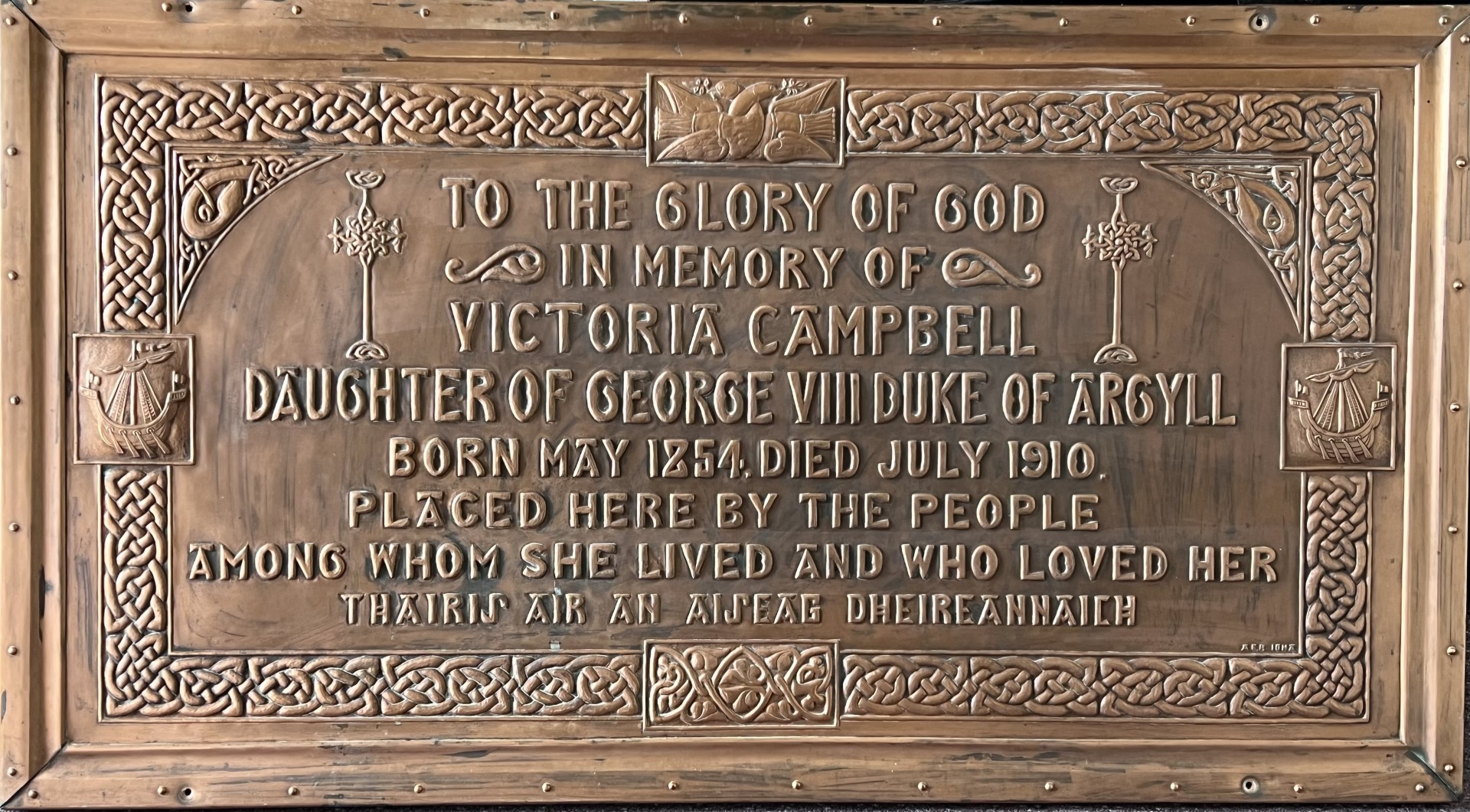
Brass memorial plaque to Lady Victoria Campbell on her death in 1910
from Kirkapol Church of Scotland
removed before the sale of the church and donated to An Iodhlann by the congregation
To the glory of God
in memory of
Victoria Campbell
Daughter of George VIII Duke of Argyll
born May 1854 died July 1910
Placed here by the people
among whom she lived and who loved her
Thairis air an aiseag dheireannaich
Spares for a Tilley lamp
A packet of three prickers by Belgrave Prickers. “Quick and effective for cleaning all stoves and blowlamps. British Made”
A spare mantle
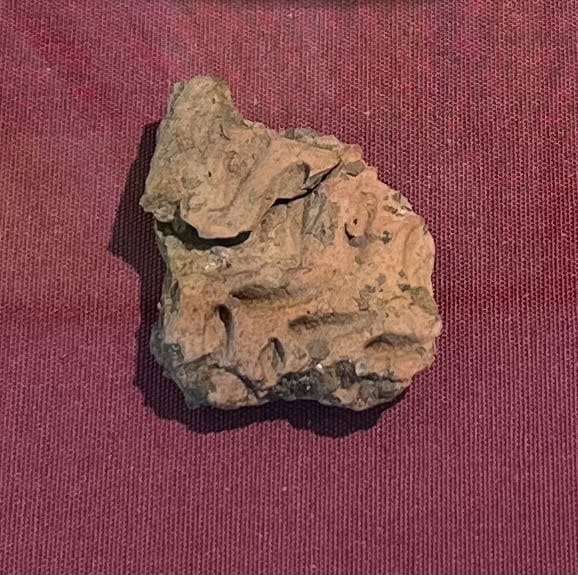
A pottery sherd
A sherd of Iron Age pottery found in an eroded bank at Brock.
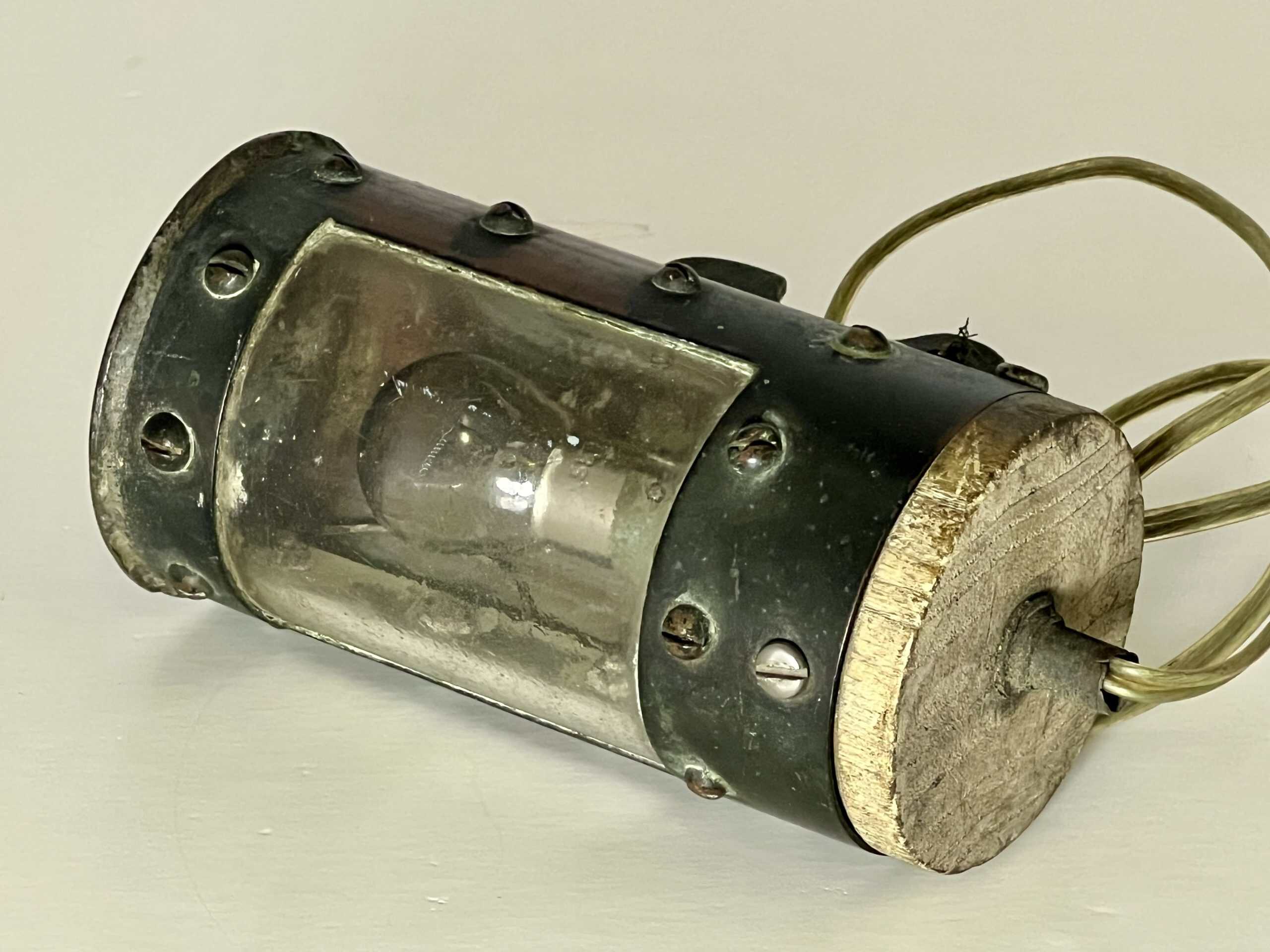
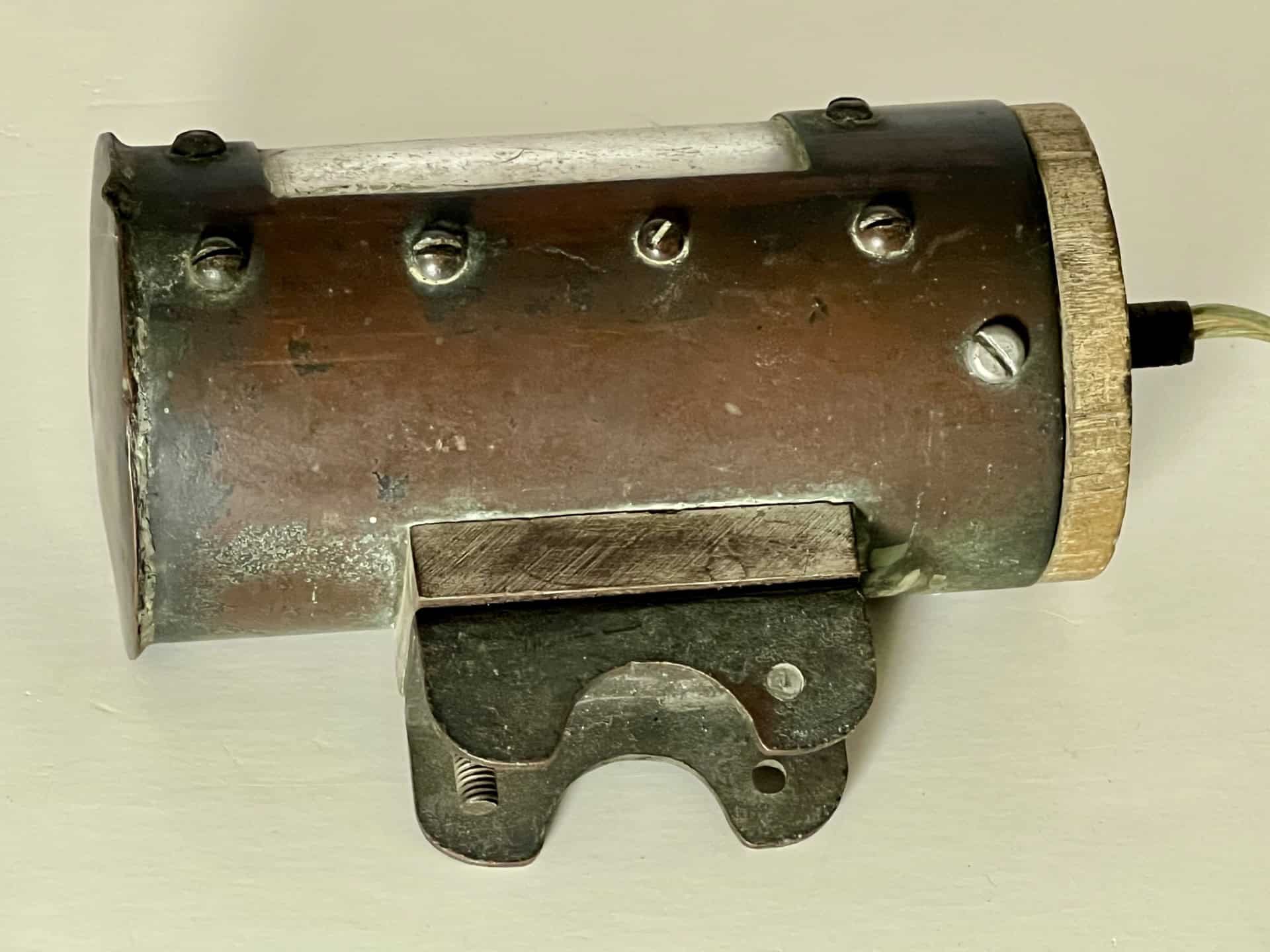
A masthead navigation light, from Donald Brown, Vaul
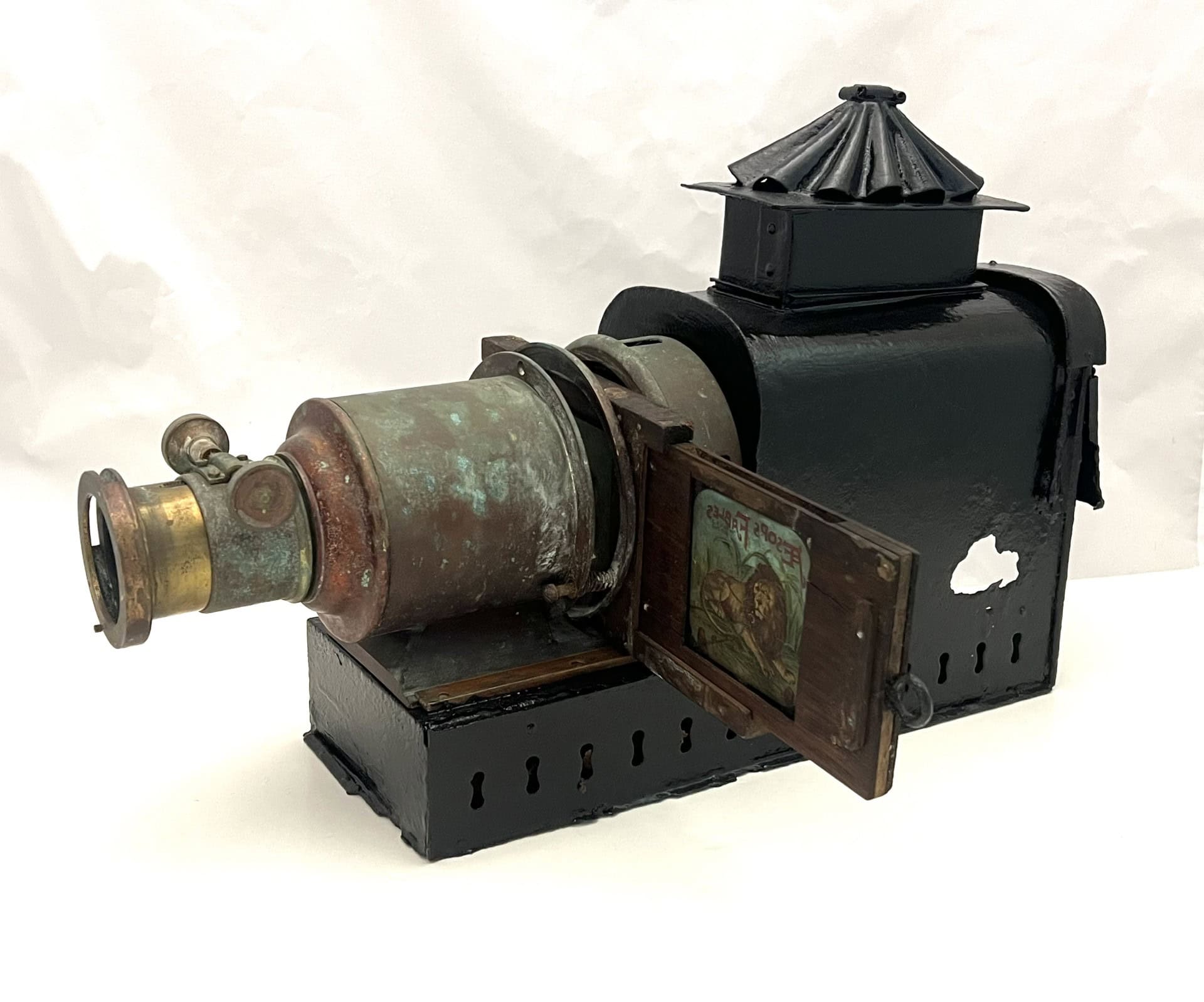
A magic lantern with 14 glass slides
A magic lantern – an early type of image projector
With 14 glass slides, including pictures, bible texts and hymns
These were widely used until the 1950s when superseded by 35mm slide projectors
A lantern (possibly this one) was used at the Baptist Sunday-schools and Temperance meetings in Tiree.
From a collection of items from a byre in Brock
Head of five-tine Wolf Garten cultivator, post-1922.
From a collection of items from a byre in Brock
Cast iron kettle holding 5½ pints from John Law Foundry, Glasgow, 1852–1910
From a collection of items from a byre in Brock
Pipsqueak mini-stove with an integrated hearth made by Anglo-American Stove Company. Date 1870s–1900s. Designed for boats, caravans, railway carriages
This was probably used in a boat
From a collection of items from a byre in Brock
A 6ft (180cm) pit saw blade
Pit saws were used to cut planks from tree trunks, for house and boat building. The “pit” in Brock would have been a hollow in the sand dunes. The log was placed horizontally across the pit or frame and the saw was usually operated by two men: a top-man above and a pit-man guiding the saw from below. This may have been a one-man saw
With the absence of local sawmills the use of pit saws would have continued long into the 1800s and possibly even the 1900s