Record Type: review

2003.184.30

The long jump

Photograph of the long jump at the Agricultural Show sports in 1927.

c103.jpg

Courtesy of Mr Ronnie MacLean

The long jump at the Agricultural Show sports day in Scarinish. This picture is from a small photograph album from Silversands in Vaul titled ‘1927’.

Black and white photograph of the long jump at the 1927 agricultural show.

The long jump at the 1927 Tiree Show sports in Scarinish, from a small photograph album from Silversands in Vaul titled 1927.

2003.184.5

Day out in Scarinish in 1927

Photograph of three young people in Scarinish in 1927.

b178.jpg

Courtesy of Mr Ronnie MacLean

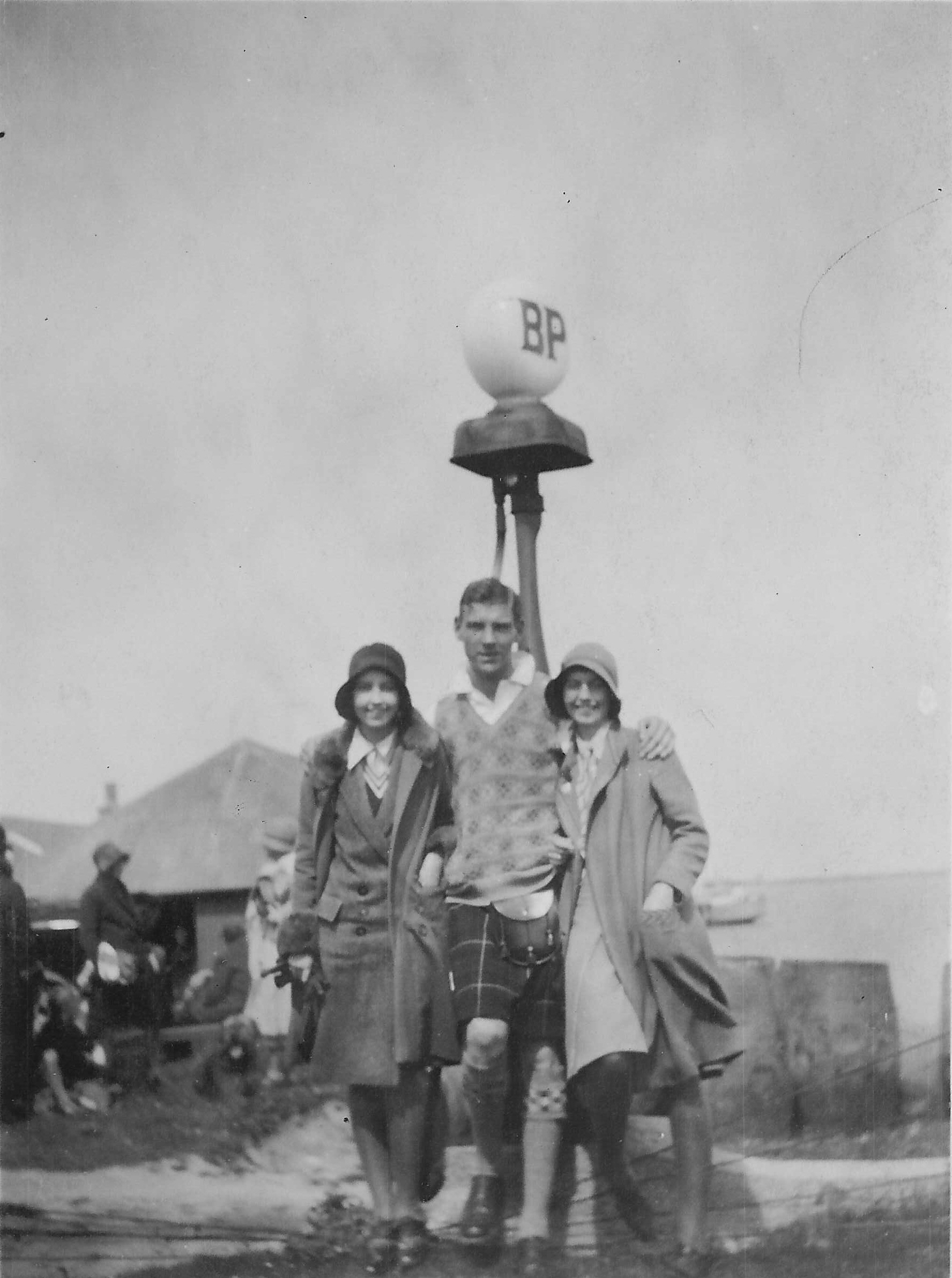
These three young people were photographed in front of the petrol pump in Scarinish on the day of the Tiree Agricultural Show in 1927. One of the major events of the local calendar, it was well attended by locals and visitors alike.

Held in Scarinish school grounds, the Show was a day-long affair with numerous sections for horses, cattle and sheep, poultry, dairy produce and other home industries. After the judging, there were piping and dancing competitions and field sports.

A greasy pole was erected, the prize for which was a bottle of whiskey, much sought after on what was then a temperance island. The last event of the day was a fiercely contested tug-of-war between islanders and visitors.

Black and white photograph of three young people by a petrol pump in the 1920s.

The petrol pump at Gott Bay pier, from a small photograph album from Silversands, Vaul dating from the late 1920s.

2003.184.21

Sarah MacMillan, Hugh and Morag MacIntyre

Photograph of Sarah MacMillan, Hugh and Morag MacIntyre at Silversands in Vaul in 1827.

b194.jpg

Courtesy of Mr Donald Brown

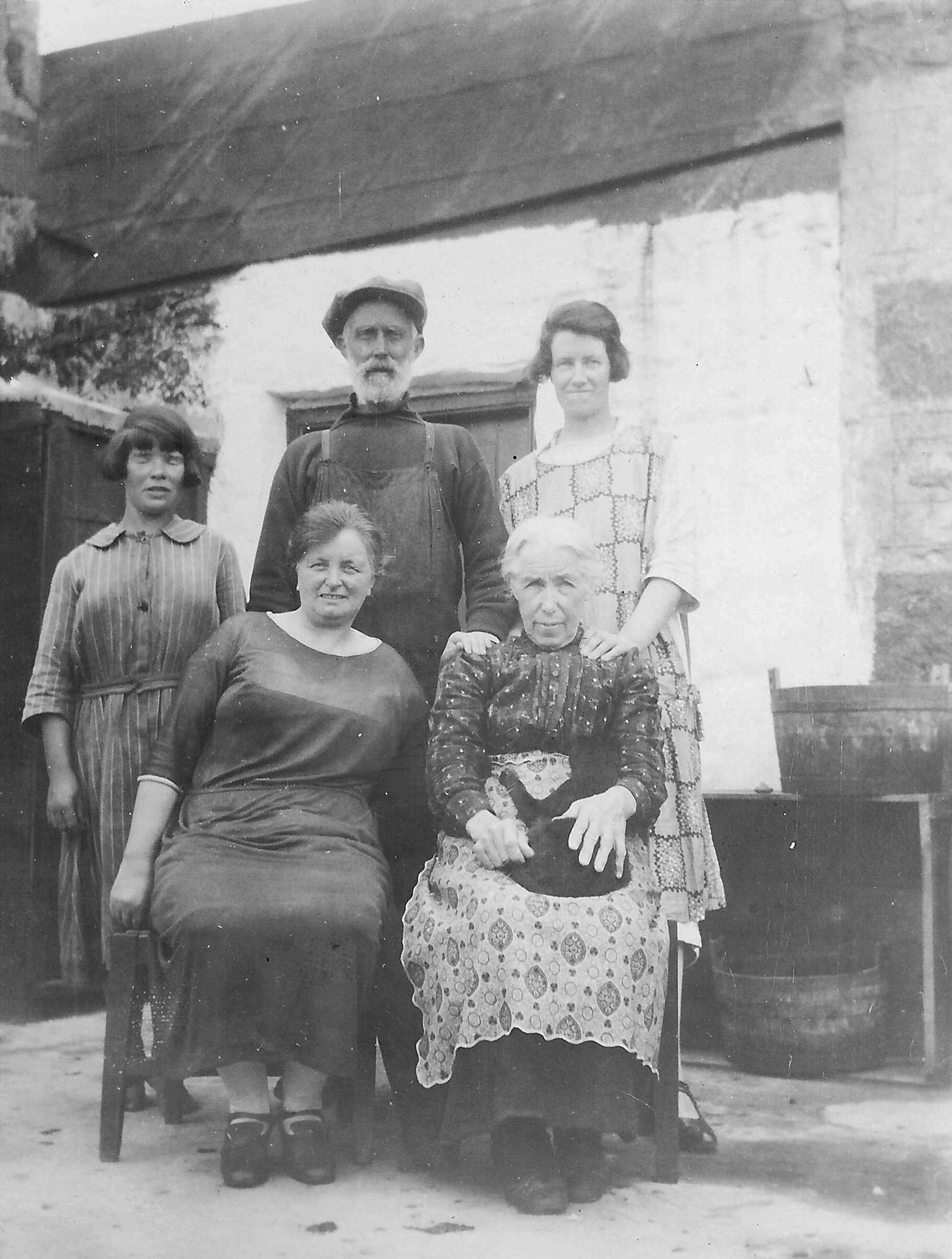
Sarah MacMillan (front right) is pictured with her niece Morag behind her and Morag’s father Hugh MacIntyre outside Silversands in Vaul in 1927. Besides running the shop attached to the house and looking after her aged aunt, Morag also took in visitors during the summer months.

The shop was used as an assembly point for Scottish Airways passengers when the planes landed on Gott Bay beach before 1939. Morag also acted as secretary of the Vaul Golf Club, and players had to pay their green fees to her. A map of the course was on her shop wall.

She never had a bank account and paid all her suppliers by Postal Order purchased at Ruaig Post Office. The shop closed around 1960 after serving the community for almost one hundred years.

Black and white photograph of a group of people outside Silversands in 1927.

Outside Silversands in Vaul in 1927. L-R: (back) unknown; Hugh MacIntyre (1856-1932); his daughter Morag (1897-1967); (front) unknown; Sarah MacMillan (1856-1948), Hugh`s sister-in-law and Morag`s aunt.

2003.184.8

Sand yacht on Gott Bay in the mid-1930s

Photograph of a sand yacht on Gott Bay in the mid-1930s.

b181.jpg

Courtesy of Mr Ronnie MacLean

This sand yacht was photographed on Gott Bay in the mid-1930s. It was brought to the island by two or three Germans who stayed for a few weeks, ostensibly on holiday, though the general consensus of opinion at the time was that they were spies.

Whatever the truth of the matter, they were friendly and let local boys, three of whom are pictured in the photograph, sail the yacht. They also gave lifts to Lachie MacKinnon who was then piermaster and used to walk to work from Brock along Gott Bay.

The yacht had three wheels, its stability coming from the front wheels which were positioned wide apart. The driver steered with one hand using a tiller attached to the rear single wheel and controlled the sail by the sheet with the other hand.

Black and white photograph of a sand yacht on Gott Bay in the 1920s or 30s.

Sand yacht on Gott Bay, from a small photograph album from Silversands in Vaul dating from the late 1920s.

2003.184.27

The Agricultural Show at Scarinish in 1927

Photograph of the 1927 Agricultural Show at Scarinish.

c100.jpg

Courtesy of Mr Ronnie MacLean

Prior to World War II, the Show was held at the school in Scarinish. It was run by a committee comprising of one crofter from each township. The committee met each March to decide on the judges who came from Tobermory, Bunessan, Oban, Kerrera and sometimes as far afield as Stirling.

Crofters would get up at five or six in the morning to walk their animals to the Show venue. The horses were judged in a roped-off area within the school grounds, the cattle and sheep in specially erected pens, ducks and hens in coops at the back of the school.

Home Industry entries, such as butter, cheese, eggs, sewing and knitting, were displayed inside the school itself. To sustain the competitors and spectators, teas were served throughout the day in the marquee. Water for the teas was boiled on an open fire built against the playground wall.

Black and white photograph of the 1927 agricultural show held in Scarinish.

The 1927 Tiree Show with Scarinish School in the background, from a small photograph album from Silversands in Vaul titled 1927.
The Tiree Agricultural Show was started in the 1880s by Tom Barr, the tenant of Balephetrish farm, to encourage the local crofters to improve their breed of horses. Around 1900 a stirk would fetch £4 to £5 whereas a good year-old filly foal would fetch £25 to £30.
Prior to World War II, the Show was held at the school in Scarinish. It was run by a committee comprising of one crofter from each township. The committee which met each March to select judges, all of whom came from outside the island.
The horses were judged in a roped-off area within the school grounds, the cattle and sheep in specially erected pens, ducks and hens in coops at the back of the school and inside the school itself Home Industry entries, such as butter, cheese, eggs, knitting and sewing. Children could enter drawing and painting competitions.
To sustain the competitors and spectators, teas were served throughout the day in the marquee. Water for the teas was boiled on an open fire built against the playground wall.
After the judging, there were piping and dancing competitions and field sports. The piping competition was confined to locals and was often won by John MacLean of the Brae, Cornaigbeg. The sports included running, the high jump and long jump. There was a greasy pole competition, the prize for which was a bottle of whiskey, unusual on a temperance island. It was often won by John Bunting (Willie’s brother). The last event was a fiercely contested tug-of-war between the islanders and visitors.
After the sports, the prizes were given out from the shelter in the playground. The next day, the committee went out for a meal together.
(Information from Donald MacIntyre, Gott)

2003.184.17

Young children at Silversands in Vaul in 1924

Photograph of two young children at Silversands in Vaul in 1924.

b190.jpg

Courtesy of Mr Ronnie MacLean

Sarah MacMillan and Morag MacIntyre of Silversands in Vaul regularly took in summer visitors who left a record of their holidays in a number of small handmade photograph albums. This photograph of two young children is from an album dated 1924.

The children are playing in front of a water butt which collected rain from the roof and would supplement the well water. An outdoor WC can be seen in the background. This almost certainly contained a pail under a plank of wood with a circular hole. Each time it was used, sand was added to pail. The housewife would have the job of burying the contents every day.

Septic tanks were introduced in the thirties and forties. They were flushed with water from a large tank in the outhouse roof which was filled daily by hand pump.

Black and white photograph of two small children playing at Silversands in 1924.

Two small children playing by the water butt at Silversands in 1924. Note the outside WC.

2000.84.1

Planting potatoes at Middleton in the 1920s

Photograph of Alasdair MacDonald planting potatoes with Lizzie MacArthur, Effie and Mary Ann MacDonald at Middleton in the 1920s.

k48.jpg

Courtesy of Mr Lachie MacDonald

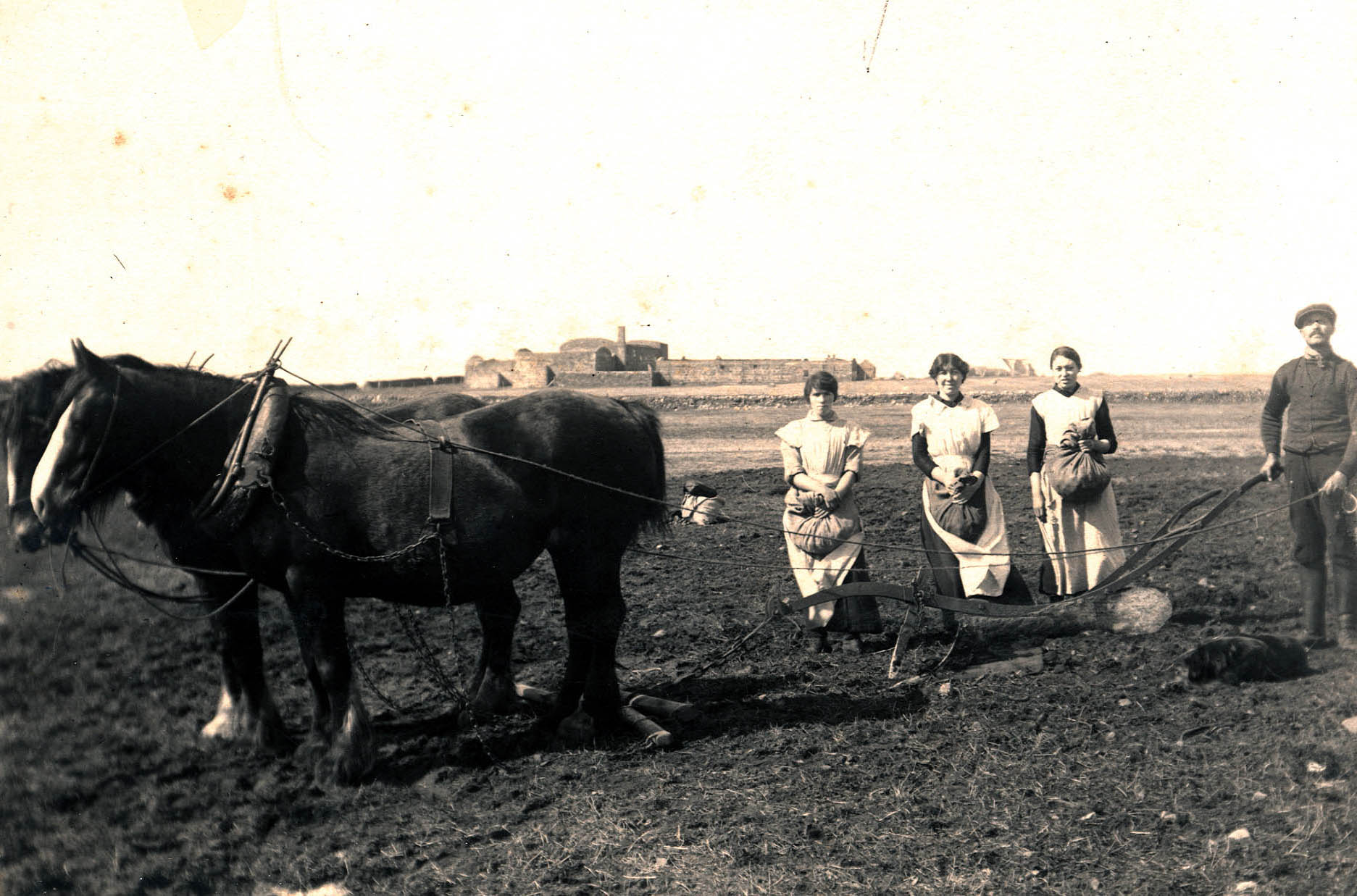
Taken in the 1920s, the photograph illustrates a standard plough used to prepare the ground for sowing corn. Because of the fine sandy soil in most of Tiree, a ridger was not successful.

The women followed in the furrow planting potatoes from the supplies heaped in their sack aprons and the ploughman made a second furrow to cover them. This process was repeated leaving a 45 cm space between the planted furrows for the grubber.

The Middleton seaweed factory operated by the North British Chemical Company can be seen in the background. Known locally as the Glassary, it ceased operation in 1901 and was demolished during World War II.

Black and white photograph of Alasdair MacDonald planting potatoes at Middleton in the 1920s.

Planting potatoes at Middleton, with the Glessary (as it was known) in the backgound in the 1920s. L-R: Lizzie MacArthur, Middleton and Greenhill – aunt of John MacArthur, Middleton Farm; Effie MacDonald, married to the late Archie Walker, Coll and Kenovaay, Tiree – aunt of Lachie MacDonald , Middleton; Mary Ann MacDonald – aunt of Lachie MacDonald, Middleton; Alasdair MacDonald – father of Lachie MacDonald, Middleton. The photograph illustrates a standard plough used to prepare the ground for sowing corn. Because of the fine sandy soils in most of Tiree, a ridger was not successful. Instead, the standard plough was used and the women followed in the furrow with supplies of potatoes heaped in their sack aprons. The ploughman made a second furrow to cover the potatoes. The same process was repeated thus leaving an 18 inch (45cm) space between planted furrows to allow the grubber to be used.

2000.130.2

The souterrain in Kilkenneth in 1918

Photograph of John MacIntyre and his son Colin at the opened souterrain in Kilkenneth in 1918.

k89.jpg

Courtesy of Mr Colin MacKinnon

John MacIntyre (Iain Chailein Mhurchaidh) and his son, Colin, are pictured here at the souterrain in Kilkenneth opened by chance when ploughing in 1918. It was later covered over.

Less than a mile away, a Y-shaped passage was exposed in the 1890s in the sand dunes at Tràigh Ghrianail. Measuring 9.2 metres long, 1 metre wide and 1.5 metres high, it was known locally as An Taigh Falaichte (the hidden house) and used for shelter by those working on the shore. It has since disappeared.

Similar underground structures were built on the mainland around 200 AD. They may have been used as byres or stores, or as places to hide from raiders.

Black and white photograph of John MacIntyre at the souterrain in Kilkenneth around 1920.

John MacIntyre at the rear of the horse and his son Colin at the opened souterrain in Kilkenneth around 1920.