Record Type: review

2003.195.8

Scarinish in 1951

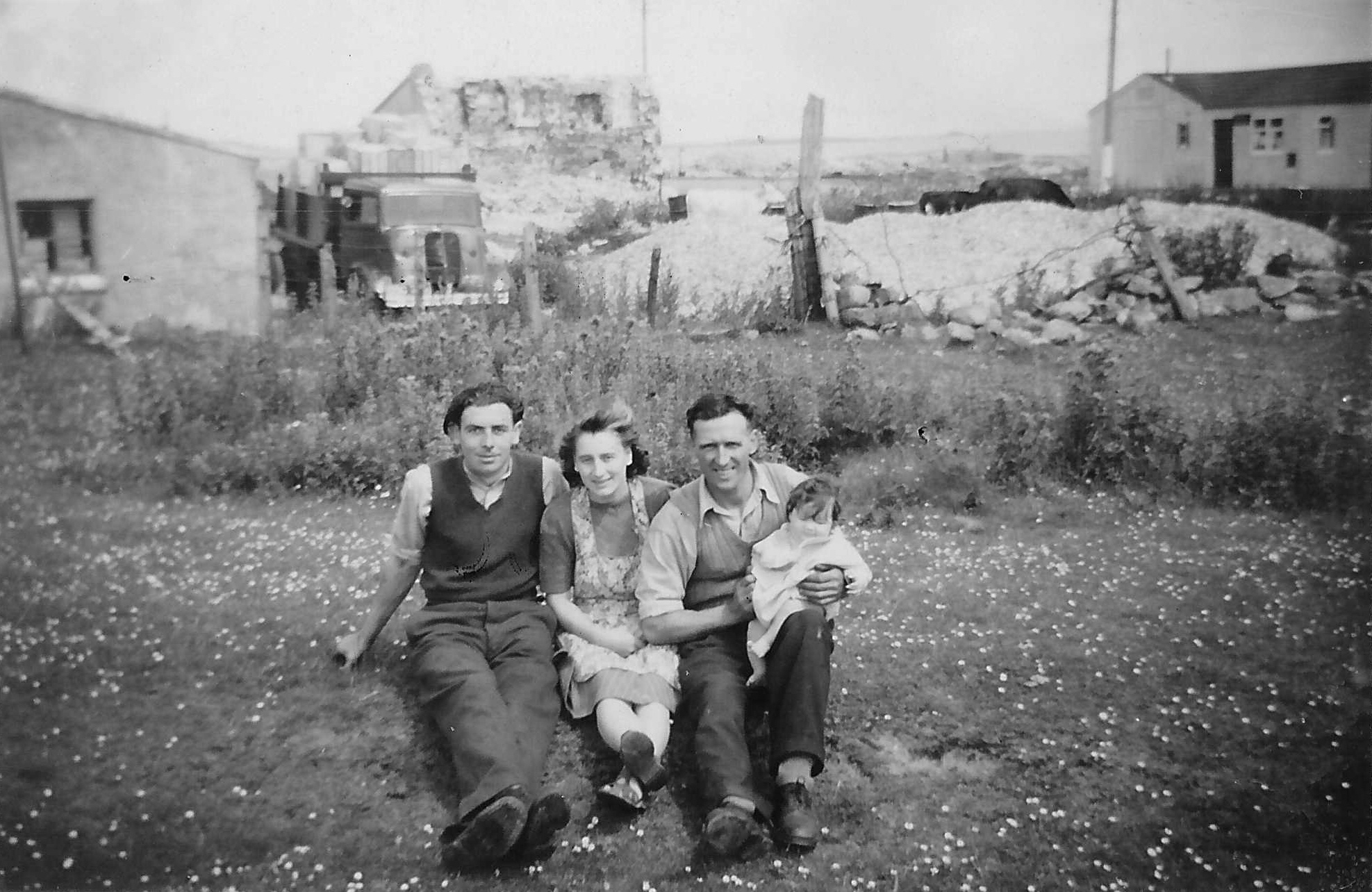
Photograph of Scarinish in 1951 showing the ruins of the Co-op store.
b112.jpg

Courtesy of Mrs Cathie Omand

This photograph taken in Scarinish in 1951 shows Neil MacDonald, Cathy MacNeill and Hugh MacKinnon with Cathy’s daughter Teena sitting in front of the ruins of the Co-op which burnt down in 1948. ‘Taigh na Beairt’ is in background on the right. On the left is Neil MacDonald’s haulage lorry.

The fire began in the back paraffin store and destroyed the shop. There was a concert in Crossapol that evening and people returning home stopped to help salvage a few possessions. The couple who lived above the Post Office in the east end of the building were fortunately visiting in Balephetrish and no-one was hurt.

After the fire, the business moved down to the Church Hall at the pier, and then to a garage behind the Coop itself, while the present day premises were built by John MacFarlane of Balemartine. The shop became self-service around 1972.

Black and white photograph of Neil MacDonald, Hugh MacKinnon, Cathy and Teena MacNeill in 1951.

Scarinish in 1951 with the ruins of the Co-op which burnt down in 1948. ‘Taigh na Beairt’ is in background at the right. On the left is Neil MacDonald’s haulage lorry. L-R: Neil MacDonald (Catherine Mary’s husband); Cathy MacNeill of Scarinish; Hugh MacKinnon, brother of Effie Middleton and Donald Hough, and married to Duncanina MacMaster; Teena MacNeill, Cathy’s daughter.

1999.230.8

Tutors at the first Fèis Thiriodh

Photograph of the tutors at the first Fèis Thiriodh outside Tiree High School in 1990.

f61.jpg

Fèis Thiriodh (the Tiree Festival) started in 1990, following the success of the first Fèis on Barra in 1981. The Fèis is a means of celebrating and transmitting local culture by encouraging young people to sing, play and dance, using Gaelic wherever possible.

The Fèis takes place in the second week of July each year. Between sixty to eighty children from nine to sixteen years old take part in classes for accordion, fiddle, drums, singing, dancing, keyboard, pipes and whistle. Recently mouth organ has become popular. Shinty is also played on the school playing fields.

During the winter the Fèis committee organises instrumental classes at the school and winter ceilidhs. Over the years the island has produced a disproportionate number of musicians, particularly accordion players tutored by Gordon Connell, and pipers tutored by Robert Beck.

Black and white photograph of the tutors at the 1990 Feis Thiriodh.

The tutors at the 1990 Feis Thiriodh outside Tiree High School. L-R: (standing) Alistair Hunter, Tommy Johnston, Donald Iain Brown, Gordon Connell, Roddy Campbell, Don MacKenzie, (sitting) Florence Burns, Anne Johnstone, Mairi MacArthur, unknown, (kneeling) Mark Fallon, Arthur Donald.

1999.230.10

Donald Iain Brown leading the Fèis Bheag in 1990

Photograph of Donald Iain Brown leading the Fèis Bheag in 1990.

f63.jpg

Fèis Thiriodh, the Tiree Fèis, lasts for a week in July. Children over nine years can take part and many come from the mainland, especially those who have Tiree connections.

Children under eight who understand Gaelic are welcome to attend Fèis Bheag (the small fèis) which is conducted entirely through the Gaelic language. Donald Iain Brown is seen in this photograph leading the group in the Primary School at Cornaigmore in 1990.

A founder member of the Fèis, Dr John Holliday, said, ‘The [Gaelic] language is crucial to the culture, stories, singing and dancing. Without the language people can never really have the culture and more needs to be done to develop ways for children to use Gaelic within the arts.’

Black and white photograph of the Feis Bheag in 1990.

The 1990 Feis Bheag in Tiree High School with tutor Donald Iain Brown and John Campbell of Cornaigbeg on the right.

2003.185.10

Bagging fleeces

Photograph of two men bagging sheep fleeces in the 1920s or 1930s.

c123.jpg

Courtesy of Mrs Mairi Campbell

The bagging of fleeces sheared from Tiree sheep. These fleeces were transported off the island. This picture was possibly taken in Balevullin in the 1920s or 1930s.

Black and white photograph of an unknown man bagging fleeces in the 1920s or 1930s.

Bagging fleeces for transport possibly in Balevullin in the 1920s or 1930s.

2003.185.5

George Paterson’s byre

Photograph of George Paterson’s byre at Crossapol in the 1930s.

c118.jpg

Courtesy of Mrs Mairi Campbell

George Paterson and Archie Kennedy were photographed milking cows in George’s cattle byre at Crossapol in the 1930s. The byre was white-washed every year and housed up to ten cows which were mainly Ayrshire and Shorthorns.

The cows were put out to graze in the summer and brought in twice a day to be milked. In winter they were kept inside. The family made butter which they sold as well as milk, and also made cheese for their private use.

Until thirty or so years ago crofters commonly kept a milking cow for their own use. Very few do so now, and with the changes in the law regarding ‘raw’ milk, all milk for sale is imported into the island.

Black and white photograph of George Paterson`s cattle byre at Crossapol in the 1930s.

George Paterson and Archie Kennedy milking cows in George`s cattle byre at Crossapol in the 1930s.

2003.185.11

Driving sheep through Baugh

Photograph of Archie Kennedy and James MacMaster driving sheep through Baugh in the 1960s.

c124.jpg

Courtesy of Mrs Mairi Campbell

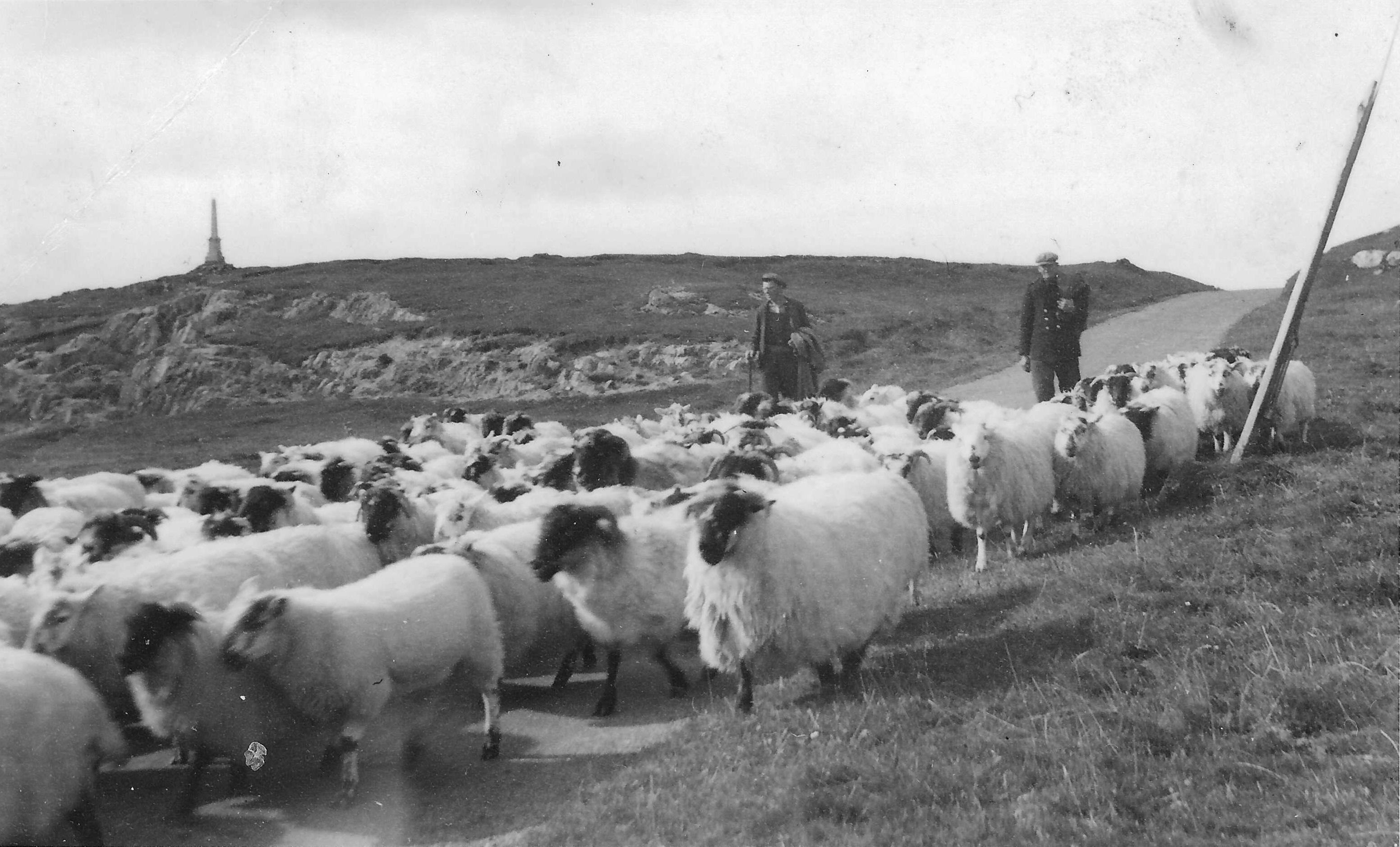
In this photograph of the 1960s, Archie Kennedy of Crossapol and James MacMaster of Kenovay are driving sheep through Baugh on their way to the ferry after lamb sales at Crossapol. The monument to Dr Buchanan can be seen on the hill to the left.

Sheep are generally kept on common grazings; each croft has a souming, the right of grazing on common land, which varies according to township. For instance, in Barrapol each croft has the right to graze five cows and fourteen sheep, whereas in Balephuil the crofts have different soumings.

In the second half of the 19th century, there were between four to five thousand sheep and lambs on the island. Today they number over thirteen thousand.

Black and white photograph of a flock of sheep at Baugh in the 1960s.

Archie Kennedy of Crossapol and James MacMaster of Kenovay herding sheep past the Baugh monument on the way to the ferry after lamb sales in the 1960s.

2003.185.13

Hector J. C. Campbell of Cornaigbeg in the 1970s

Photograph of Hector Campbell of Cornaigbeg setting up potato drills in the 1970s.

c126.jpg

Courtesy of Mrs Mairi Campbell

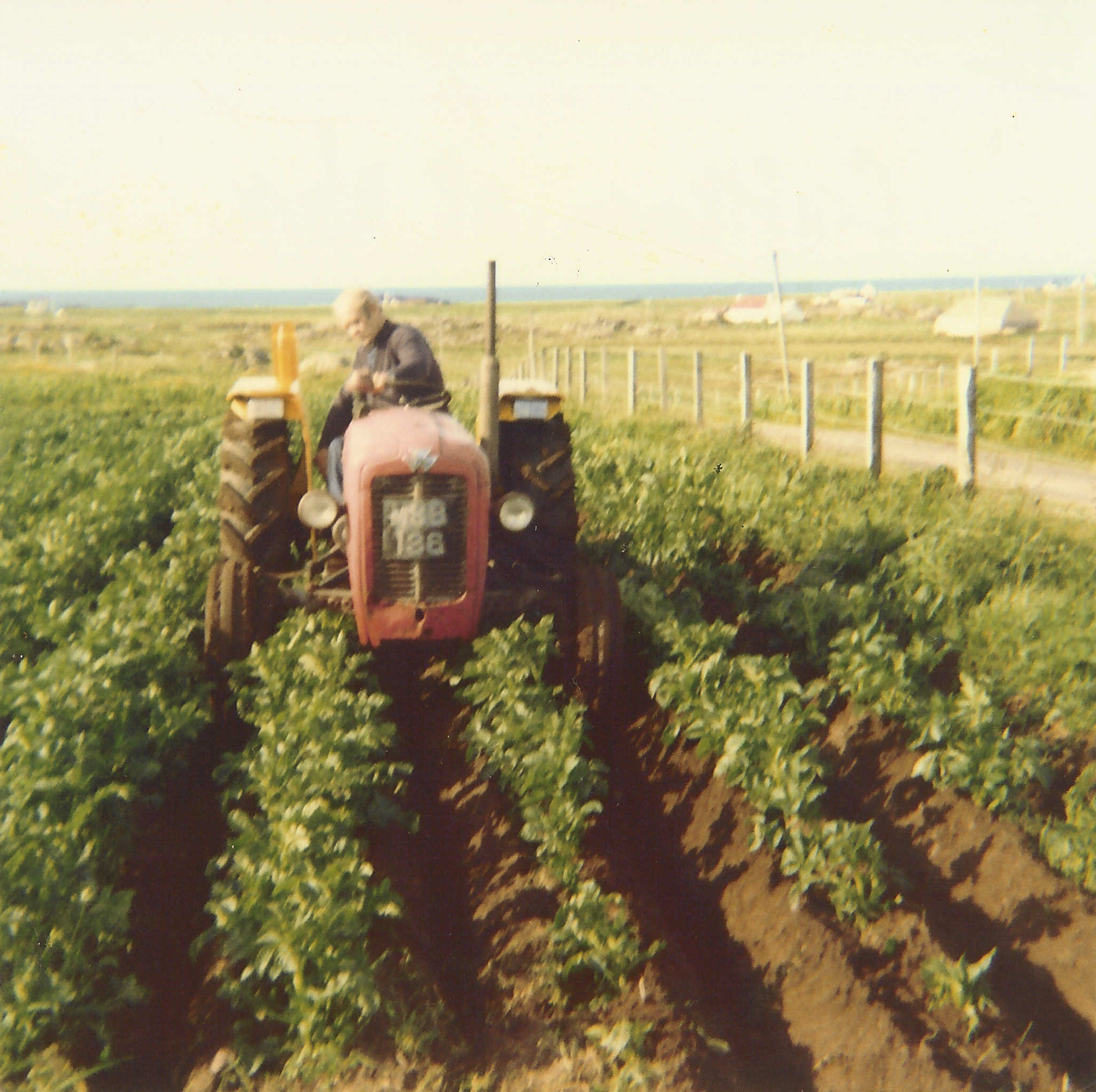
Hector J. C. Campbell on his tractor in the fields at Corrairigh. Hector is setting up the potato drills, this picture was taken in the 1970s.

Colour photograph of Hector J. C. Campbell of Cornaigbeg in the 1970s.

Hector J. C. Campbell setting up potato drills at Corrairigh in Cornaigbeg in the 1970s.

2003.185.17

The pet lamb

Photograph of John Campbell feeding a pet lamb in Cornaigbeg in 1991.

c130.jpg

Courtesy of Mrs Mairi Campbell

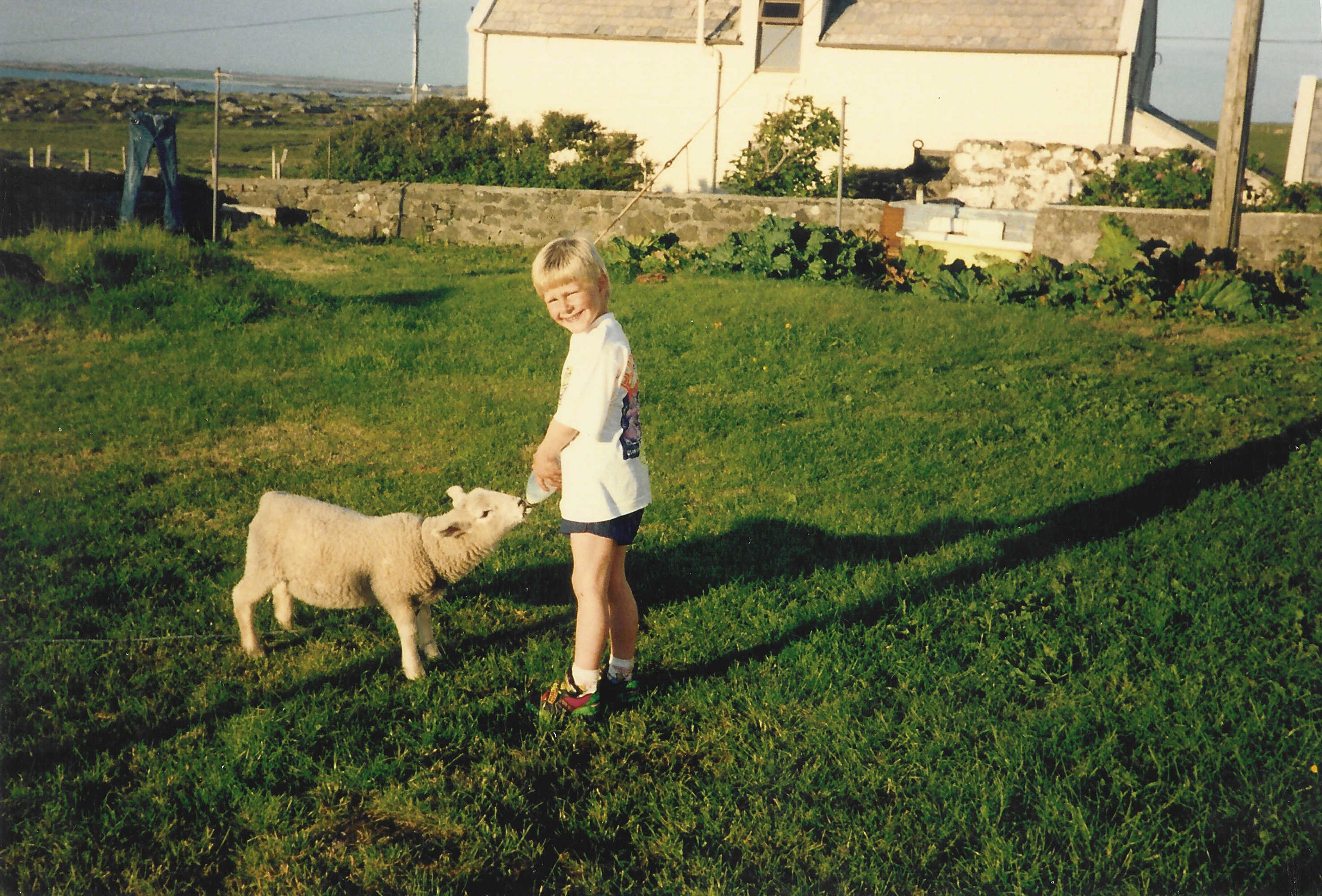
John Campbell feeding a pet lamb at Corrairigh in Cornaigbeg in 1991.

Colour photograph of John Campbell feeding a pet lamb in 1991.

John Campbell feeding a pet lamb at Corrairigh in Cornaigbeg in 1991.

2003.184.5

Day out in Scarinish in 1927

Photograph of three young people in Scarinish in 1927.

b178.jpg

Courtesy of Mr Ronnie MacLean

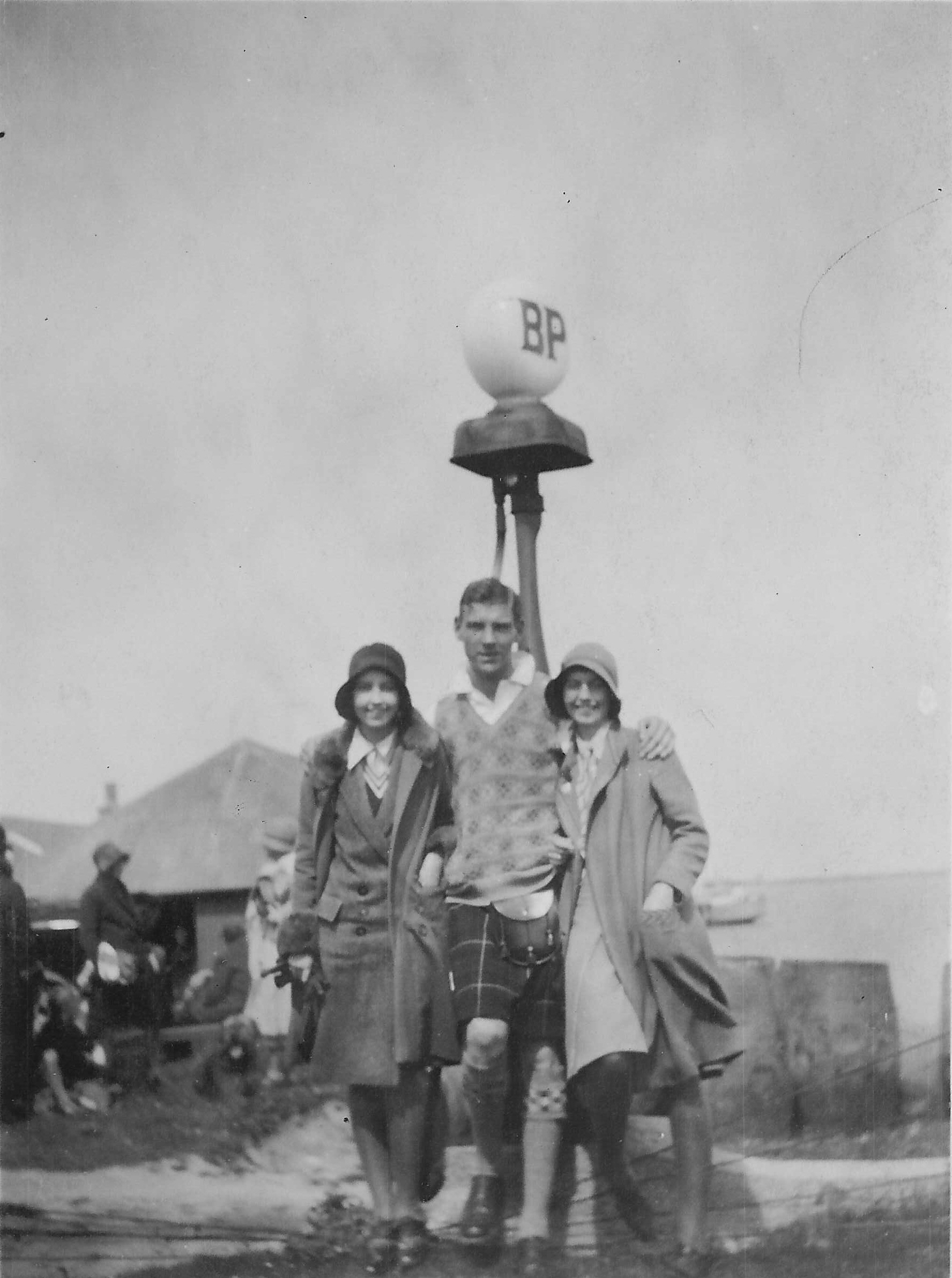
These three young people were photographed in front of the petrol pump in Scarinish on the day of the Tiree Agricultural Show in 1927. One of the major events of the local calendar, it was well attended by locals and visitors alike.

Held in Scarinish school grounds, the Show was a day-long affair with numerous sections for horses, cattle and sheep, poultry, dairy produce and other home industries. After the judging, there were piping and dancing competitions and field sports.

A greasy pole was erected, the prize for which was a bottle of whiskey, much sought after on what was then a temperance island. The last event of the day was a fiercely contested tug-of-war between islanders and visitors.

Black and white photograph of three young people by a petrol pump in the 1920s.

The petrol pump at Gott Bay pier, from a small photograph album from Silversands, Vaul dating from the late 1920s.