Dates: 1940s

1999.109.6

Crossapol NAAFI during World War II

Photograph of Crossapol NAAFI during World War II.

v95.jpg

Courtesy of Mr Willie Dickie

Created in 1921, the Navy, Army and Air Force Institutes (NAAFI) provide retail and leisure services to the British Armed Forces and their families. There were two on Tiree during World War II situated at Crossapol and Hough.

Occasionally in the winter, the clientele would have ‘a bit of session in the NAAFI’, sitting round the stove and plunging red-hot pokers into pints of beer. Pianos apparently didn’t last long. One eyewitness saw a tray loaded with plates of mince and potatoes emptied into the top of the piano. The plates were retrieved but the contents were not.

The RAF Embarkation Unit at Scarinish created their own pub in a Nissen hut which they called the Pier Arms. It had a proper bar, a few tables and chairs and was cosy and warm although the beer was reported to be no better.

Black and white photograph of Crossapol NAAFI during World War II.

Crossapol NAAFI during World War II. L-R: (back) Neil MacDonald, Kenovay (Niall Dubh); (middle) unknown; unknown; Eliza MacLean, Balephetrish; Marion MacDonald, Kenovay; Cathie MacKinnon, Kilmoluaig; Sheena MacKinnon, Cornaigbeg; Chrissie Shaw, Skye; unknown; Effie Dickie nee MacKinnon, Caoles; unknown; unknown; Chrissie Murray, Lewis; unknown; (front) unknown store manager; Isobel Johnston nee MacDonald, Milton; unknown cook, Barra; unknown cook, Lewis; unknown manageress (married to Lochmaddy piermaster); cook Dolly MacLean nee MacCallum, Hough; cook Cathie MacLean, Heylipol; cook Betty Campbell, Skye; van driver Adam; Effie MacDonald, Kinlochleven.

1999.109.7

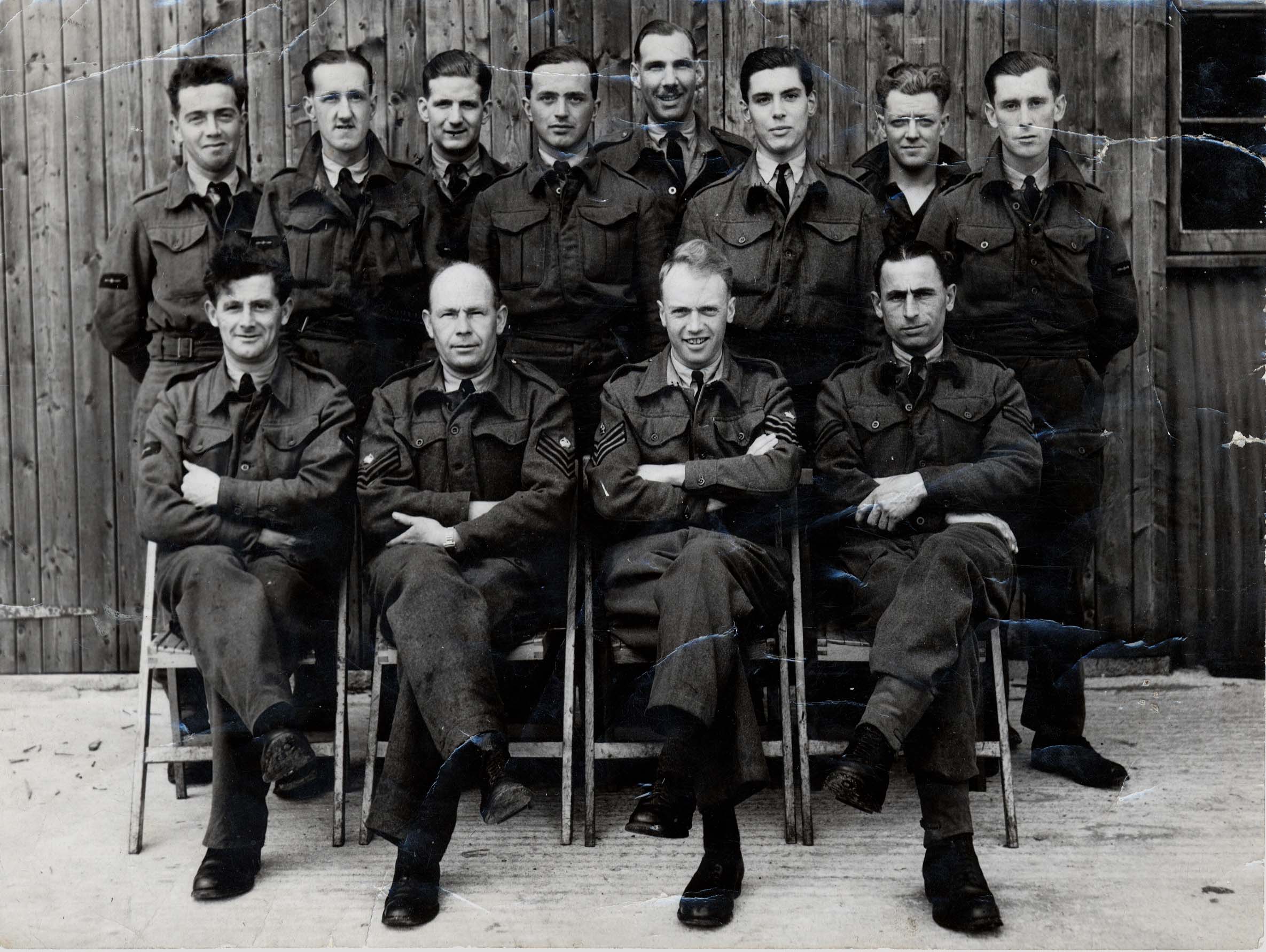
518 Squadron in 1944

Photograph of RAF 518 Squadron in 1944.

v96.jpg

Courtesy of Mr Willie Dickie

In September 1943, 518 Squadron arrived on Tiree to fly weather reconnaissance missions in long-range Halifaxes. Twice a day flights ‘Bismuth’ and ‘Mercer’ left Tiree for a ten-hour-long trip out into the Atlantic at either 20,000 or 50 feet.

Pressure to fly was relentless and in 1944 518 Squadron flew every day but two. Often icing and enormous waves made this dangerous and the Squadron lost twelve aircraft during their spell on Tiree.

Every half hour, weather readings were sent back in code. The resulting forecasts played an important part in the timing of many operations including the D-Day landings which had been delayed by fog.

Black and white photograph of RAF 224 Squadron in 1942.

The full complement of 110 crewmembers of RAF 224 Squadron with a Liberator aircraft around 1942, during World War II. Liberators were used for long-range maritime patrols and anti-submarine operations. 224 Squadron moved to Tiree from Limavady in April, 1942, with their Hudson aircraft, but in July they converted to Liberators. Following their conversion, they had to move south to Beaulieu, Hampshire, in September 1942, for anti-submarine operations in the Bay of Biscay.

2003.155.7

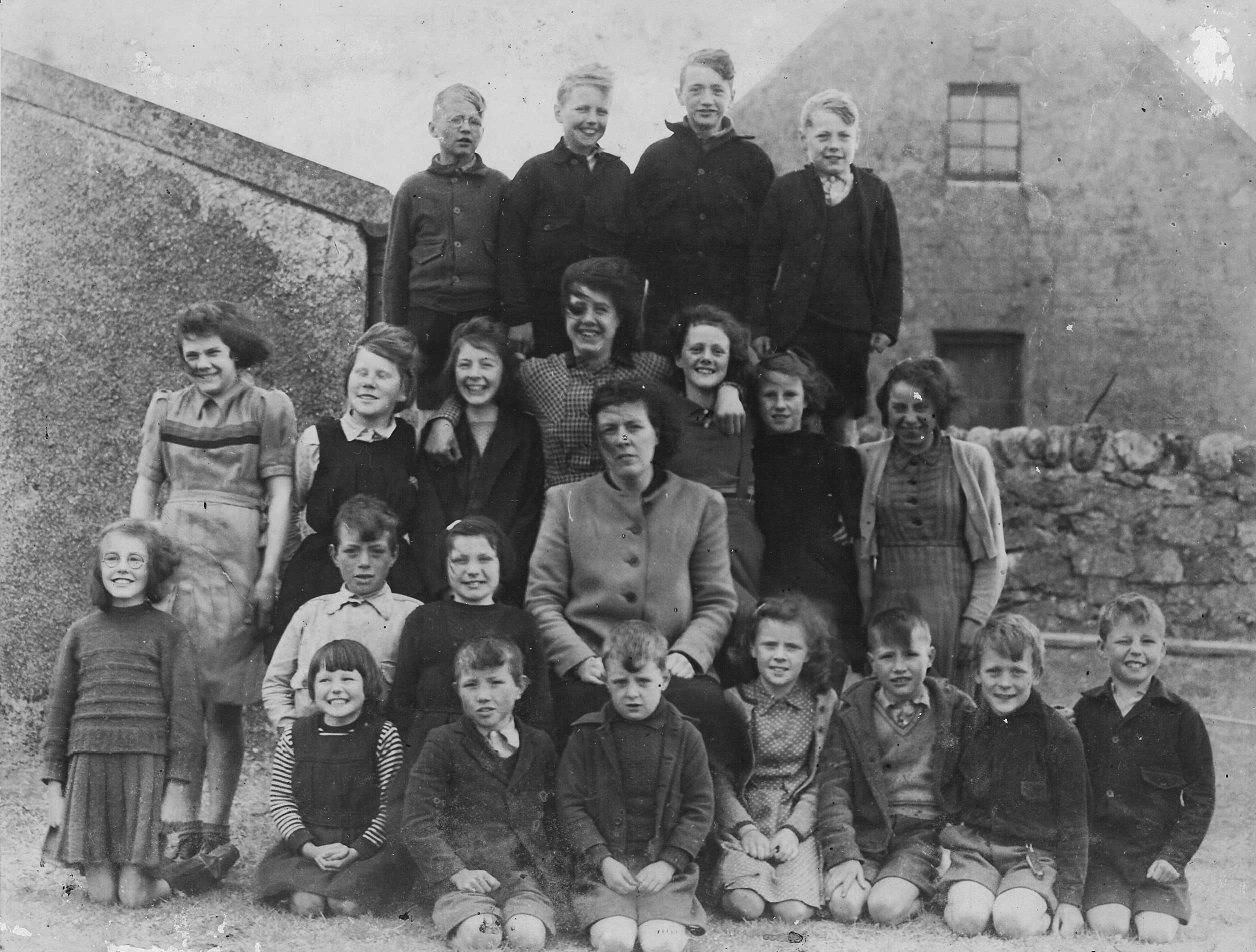
Black and white photograph of Ruaig School, 1944-45.

c195.jpg

Back row (left to right): Robert Purdon, Kirkapol; Jimmy Purdon; Neil MacLean, Mithealum; Archie MacReady; Hugh Archie MacLean, Salum
Second row: Nan Menzies, Salum House; Chrissie Marno; Ella MacKinnon, Vaul; Sadie Menzies, Salum House; Margaret MacKinnon, Ruaig; Fiona MacLeod, Ruaig; Annie Stewart, Croish
Third row: unknown; unknown; teacher Margaret MacLean
Front row: Ethel Woods; possibly Mary Gardner; Alfie Tarbert; Gavin Clark, Ruaig; Catherine Mary MacKinnon, Upper Vaul; Bobby MacLean, Mithealum; Hugh MacKinnon, Ruaig; Tommy Gardner, Kirkapol

(information kindly provided by Ethel MacCallum, Duncan Grant, Fiona MacKinnon and Archie Johnstone: JH June 2020)

2003.148.1.1

Correspondence between Dr Hunter and Argyll County Medical Officer regarding medical supplies, 1945-46.

Copied letters to and from Dr David G Hunter, Baugh, regarding his request for medical supplies for use in emergencies: (1) 3/1/1945 from Dr Hunter to Dr Guy, the County Medical Officer for Argyll, asking whether he can be supplied with the emergency items of two ampoules of normal saline and glucose, a bottle of dried plasma and sterile water, (2) 10/12/1945 from Dr John Guy to Dr Hunter in reply to his letter of 3/12/1945, (3) 10/12/1945 from Dr John Guy to the County Clerk forwarding Dr Hunter`s letter of 3/12/1945 and asking the matter to be put to the Public Health Committee, (4) 10/12/1945 from Dr John Guy to the County Clerk about Dr Hunter`s letter of 3/12/1945, (5) extract from the minutes of a meeting of Argyll Public Health Committee dated 17/1/1946 about Dr Hunter`s request to be supplied with a blood transfusion outfit.

2003.141.8

Cardboard seed box stamped `The British War Relief Society`.

Cardboard box measuring 180 mm x 120 mm x 70mm and stamped with `The British War Relief Society – A gift of seeds from the United States of America` and found in the Nutts` house in Balemartine.

2003.141.8

1997.246.1

Binder `The Island of Tiree 1941 – 1943` containing an account of George Holleyman’s time on Tiree, plus 123 related photographs.

Account by RAF policeman and amateur archaeologist George Holleyman FSA of his time on Tiree between September 1941 and June 1943. Includes seventy-five photographs taken on Tiree by George Holleyman between September 1941 and June 1943, and forty-eight black and white photographs/postcards taken by unknown photographer(s). George Holleyman carried out significant amounts of pioneering archaeological work in Sussex  during the first half of the 20th century along with Drs. Eliot and Cecil Curwen. He was made a Fellow of the Society of Antiquaries  in 1949.

1997.259.1

Scarinish Public School Admission Register 1889-1962.

Scarinish Public School Admission Register from 18th December 1889 to 26th February 1962 giving date of admission, child`s full name, name and address of parent or guardian, date of child`s birth, last school attended, examination results, date and cause of leaving.


This, and all other school admission registers that we held, has now been returned to Argyll & Bute Council archives