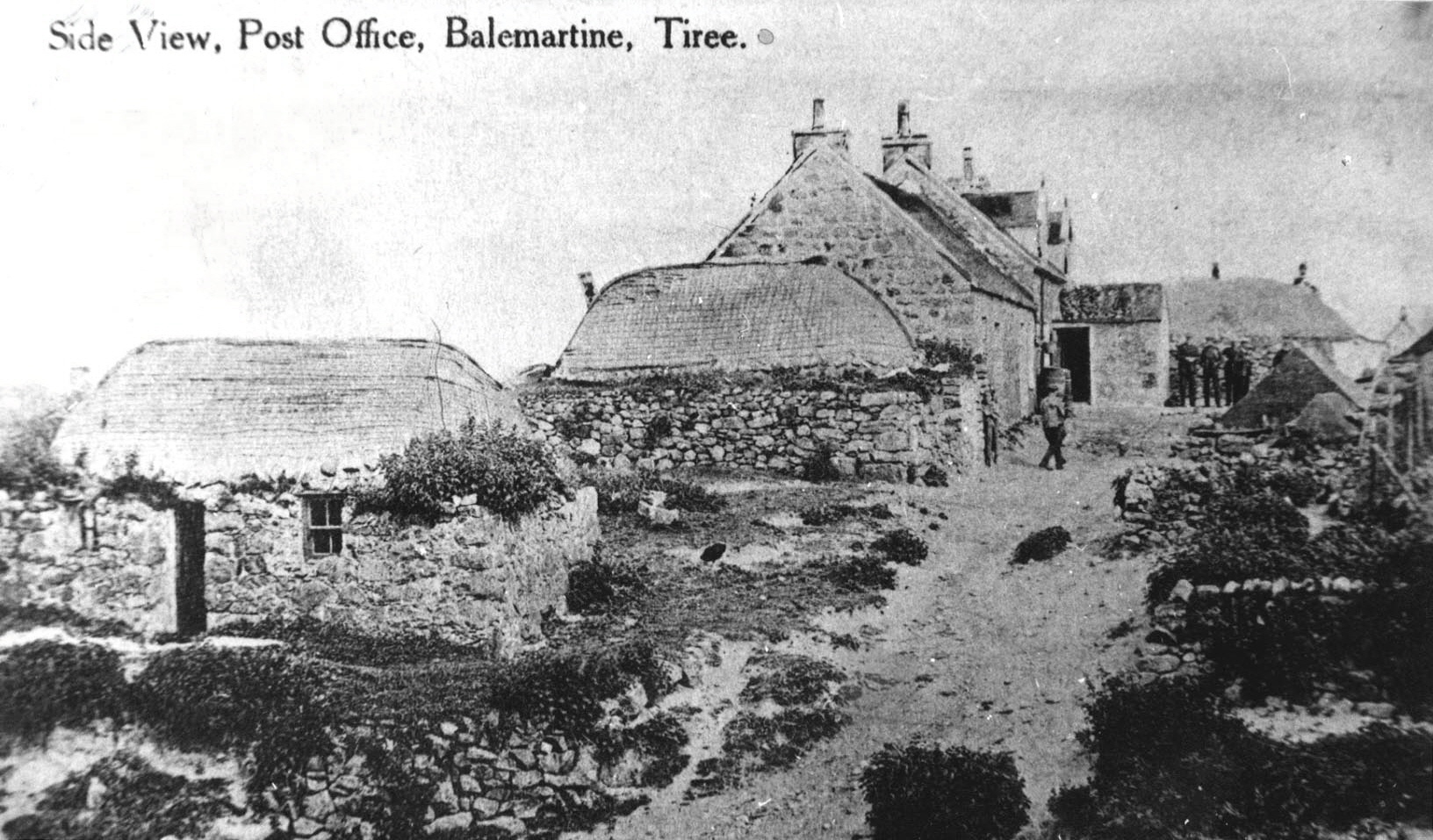
Postcard of Balemartine Post Office in Balinoe in the 1920s.
Courtesy of Mr Neil MacArthur
This postcard of Balemartine shows the Post Office and surrounding houses as they were in the 1920s. Tiree’s first post office was established in 1802 in Scarinish. Originally spelled Tyree, the name was changed in 1889 to avoid confusion with Tyrie in Aberdeenshire.
There were no internal delivery services until the 1880s and these were by foot. In the following decade three sub-post offices were established at Balemartine, Cornaigmore and Ruaig. A fifth office was added in 1934 at Middleton.
At the beginning of World War II a civilian camp was built at Crossapol to house the thousand construction workers engaged in building the Coastal Command aerodrome. A sub-post office was opened at the camp which was later taken over by the RAF. This office closed around 1946.
Black and white postcard of Balemartine Post Office.
The Post Office and thatched houses at Cu’ Dheis in Balinoe, taken in the 1920s.
Basket woven from plastic strips washed up on the shore.
Basket with two carrying handles woven by Ulrike Rawson from blue, black, orange and white plastic strips used to secure packages and found washed up on the shore.
Black and white photograph of a Baptist meeting at Middleton House in 1956.
Baptist meeting at Middleton House in 1956. L-R: Elizabeth and John MacDonald, Barrapol (children at front); (front row) Flora MacDonald, Kilkenneth; Hugh MacEachern, Cornaigbeg; Christina Sinclair, Barrapol; Effie Walker nee MacDonald; Robert Tester (boy); Catriona MacArthur, Middleton Post Office (extreme right); (back row) Lachie MacKinnon, Park House; Charles MacDonald, Middleton (at back); Donald MacIntyre, Gott; Mary MacKinnon, Park House; John MacFadyen, Lochside, Barrapol; Duncan MacPhail, Loch Phuil, Balephuil; John Brown, Balephuil sliabh (behind Robert Tester).
Black and white photograph of Donald MacLean and Donald MacArthur at a coal puffer.
Unloading coal from the puffer at Traigh Iochain, Caoles, with Donald MacLean standing on the cart and Donald MacArthur at the head of the horse, probably 1930s.
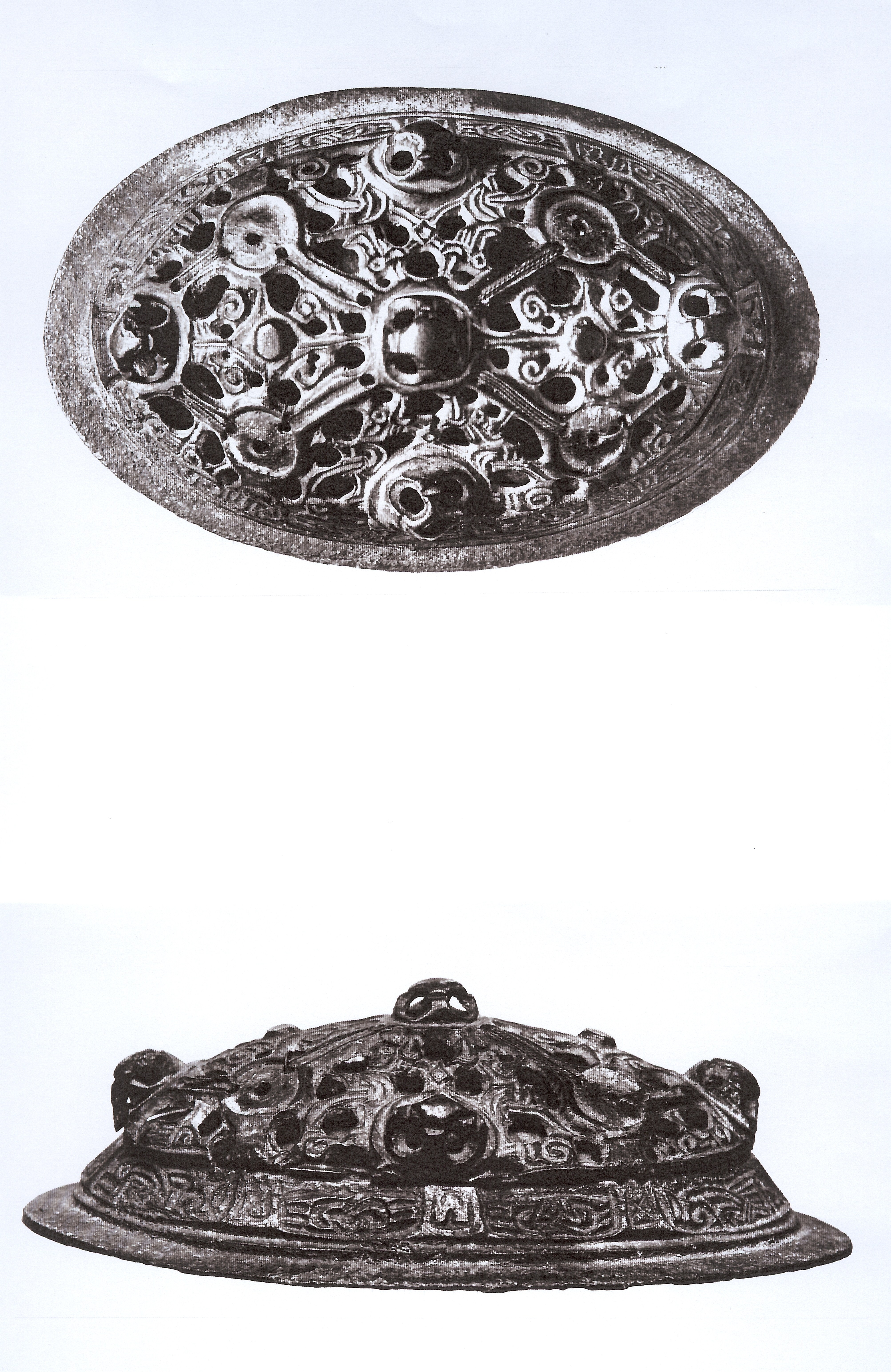
Photocopied photographs of a brooch found in a Viking burial site near Cornaigbeg.
This bronze ‘tortoise’ brooch was found with a bronze brooch-pin in a Viking burial site near Cornaigbeg some time before 1872, and was donated to the Royal Commission on the Ancient & Historical Monuments of Scotland. The exact location of the grave is no longer known.
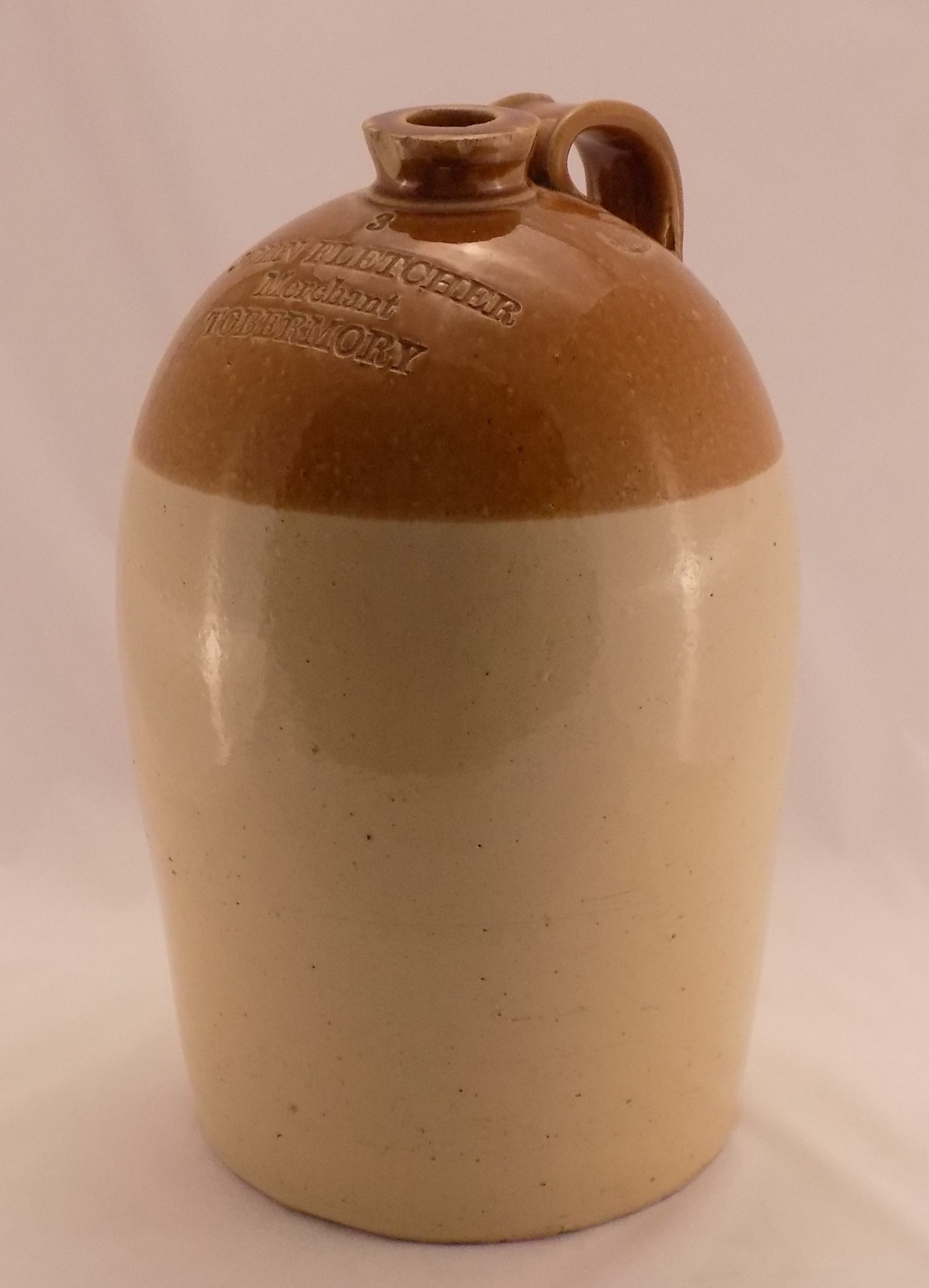
Large glazed stoneware flagon, 425 mm high, bottom three-quarters uncoloured, top quarter in orange-brown, made by Henry Kennedy, Barrowfield Pottery, Glasgow and stamped on the front with `3 JOHN FLETCHER Merchant TOBERMORY`.