Newsletter of Tiree Heritage Society, No. 8, March 2005 and mintues of AGM March 2004.
Newsletter with updates on the proposed comservation of Kilkenneth and St Patrick`s chapels, the Pilgrimage Route, the route guide and a list of publications for sale.
Copy of letter by Claudia Ferguson-Smyth dated 16/2/2005 to Historic Scotland about the Cornaig Congregational chapel.
Letter by Claudia Ferguson-Smyth dated 16/2/2005 to Historic Scotland asking them to consider listing the Congregational chapel at Cornaig, with information about Rev Archibald Farquharson and a description of the chapel.
Local news and events including the Argyll & Bute Planning Design Award, CalMac sailings and tendering, weather ersoion, farmers` markets at the Rural Centre and news from Tiree Heritage Society, Tiree Environmental Action & Recycling, the school and the RSPB.
Lachie MacLean of Kenovay sowing seed using a ‘basgaid churachd’
Photograph of Lachie MacLean sowing seed using a ‘basgaid churachd’.
Courtesy of Mr George Campbell
Lachie MacLean of Kenovay demonstrates in 2003 how seed was sown using a ‘basgaid churachd’. Sowing was a skilled job and not everyone could produce an even spread of seed. Unlike walking, the right arm is flung out as the right foot goes forward.
Allowance had to be made for the direction of the wind, and the seed was easier to cast if this was at your back. It had to be particularly calm for sowing grass seed as it was so light. Barley, being a heavier seed, was easier to throw
The ground was harrowed before sowing and again afterwards to hide the seed from birds. It was then rolled when the shoots were about two inches high.
Copied colour photograph of Lachie MacLean of Kenovay sowing seed using a sowing basket in 2003.
Lachie MacLean of Kenovay sowing seed using a sowing basket in 2003.
‘Barr a’ chinn’ (top of the head) was a common disease affecting children on Tiree, although not found elsewhere, and was usually caused by a fright. The child would become pale, listless and lose his or her appetite. It was said the condition was caused by the descent of two bones in the roof of the mouth.
There were two cures, physical and herbal. In the physical cure, the healer’s index and middle finger or thumb were pressed against the roof of the mouth, pushing the ‘bones’ back. This is remembered as being quite painful.
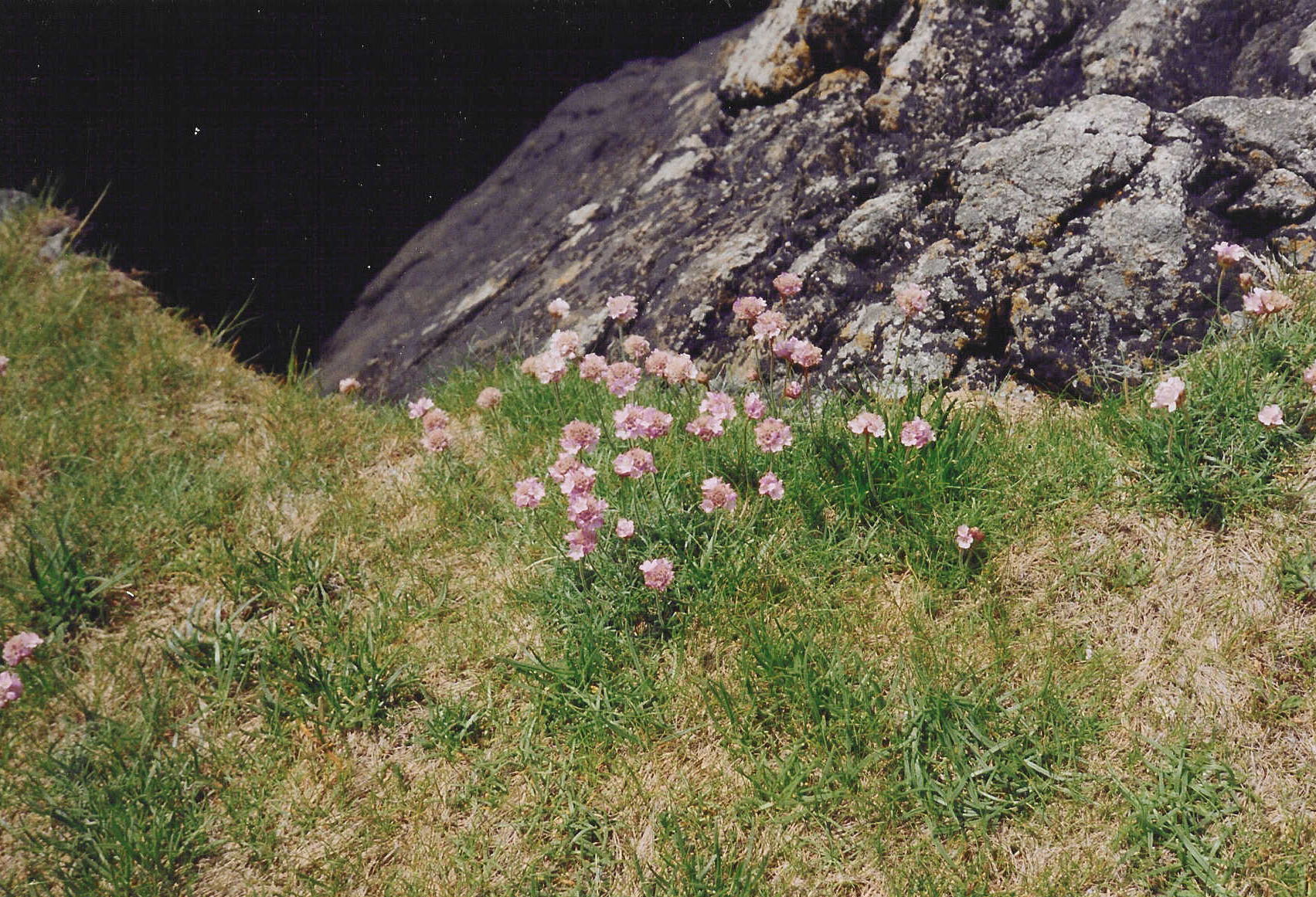
The herbal treatment used the plant sea pink, known locally as ‘barr a’ chinn’. This was collected on the day of the treatment, dried by the fire then put into a small cotton or linen bag which was sewn onto the patient’s vest. Both treatments were accompanied by a rhyme.
Colour photograph of sea pinks.
Clump of thrift or sea pink, known locally as bàrr a’ chinn, photographed by Dr John Holliday in 2000. It was used in a traditional cure for a disease affecting children on Tiree, also known as bàrr a’ chinn, which was not found elsewhere. The child would become pale, listless and lose their appetite, usually after a fright. It was believed that the condition was caused by the descent of two bones in the roof of the mouth.