Transcription of the evidence of Charles MacLean given at the enquiry into the sudden of death of a fishing crew from Mannal in 1860.
Courtesy of Argyll & Bute Archives
In April 1860 two fishing skiffs, one from Mannal and one from Balephuil, were out near Stevenson’s Rock, twenty kilometres to the south-west of Tiree. Both boats were rigged with dipping lugs which require considerable skill when tacking in heavy seas.
In windy weather there is the danger that too much sail will cause the boat to heel over and be swamped. This is apparently what happened to the Mannal boat which was not seen again after leaving the fishing grounds in the early morning.
Lugsails are shortened by lowering the yard and taking in reefs, i.e. hooking the sail to the bow at a point further up the luff (the leading edge of the sail) and tying the excess sail with reefs (cords attached to both sides of the sail). A lugsail may have four to six rows of reefs depending on its size.
Two architects drawings of the Congregational chapel at Cornaig.
Drawing of the west elevation of the Congregational Chapel at Cornaig built by Rev Archibald Farquharson in 1856 with an illustration of the interior as it would have been when in use.
Copy of tinted engraving by T. H. Wilson of Scarinish in 1886.
Tinted engraving of Scarinish in August 1886 by T. H. Wilson showing the tents of the marines who had landed to restore order among the crofters. (Copy of engraving in Filing Cabinet 8 drawer 3)
1805 Irish penny found by John Fletcher in Balemartine in November 2004.
1805 Irish penny dug up by John Fletcher in ground around the shed opposite his house in Balemartine in November 2004 (see 2004.202.1 for letter dated 25/11/2004 from Nick Holmes, numismatics curator with the National Museums of Scotland, identifying and dating the coin).
Black and white photograph of Hugh MacLean and family in Oban in 1965.
Hugh MacLean of Salum, his wife May MacArthur of Tullymet and their four boys, (L-R) Hugh Charles, Peter, Duncan and Donald, outside Oban train station on 22nd February 1965 on their departure for Australia.
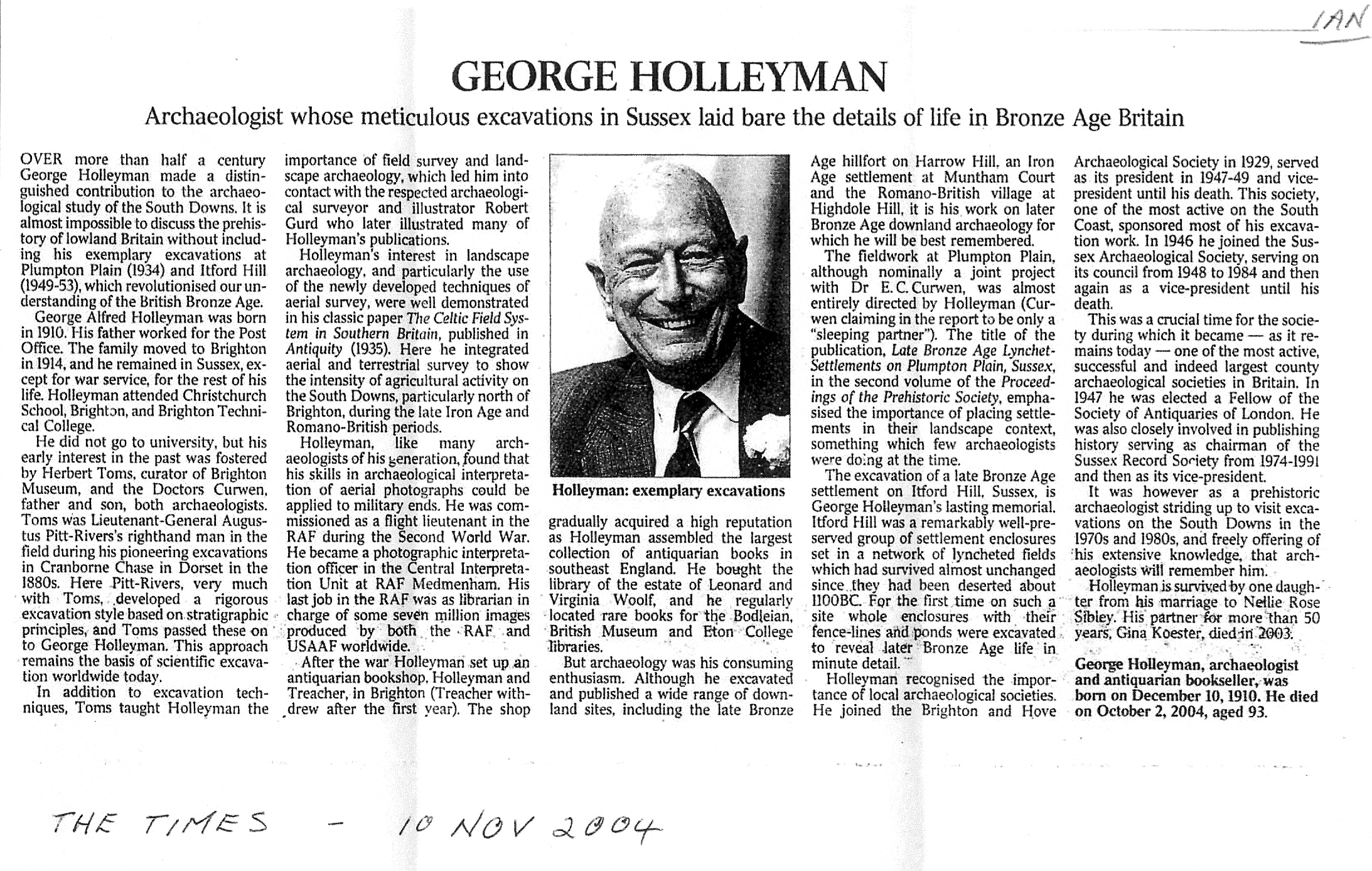
Copied newspaper cutting of an obituary for George Holleyman (1910-2004), an archaeologist who amassed a wealth of historical information and artefacts while he was stationed on Tiree during WWII.