Colour photograph of the ruins at Am Fang Dubh at Kennavara in 2004.
The ruins at Am Fang Dubh at Kennavara where fishermen stayed in the summer, photographed by Dr John Holliday in 2004.


Colour photograph of the ruins at Am Fang Dubh at Kennavara in 2004.
The ruins at Am Fang Dubh at Kennavara where fishermen stayed in the summer, photographed by Dr John Holliday in 2004.
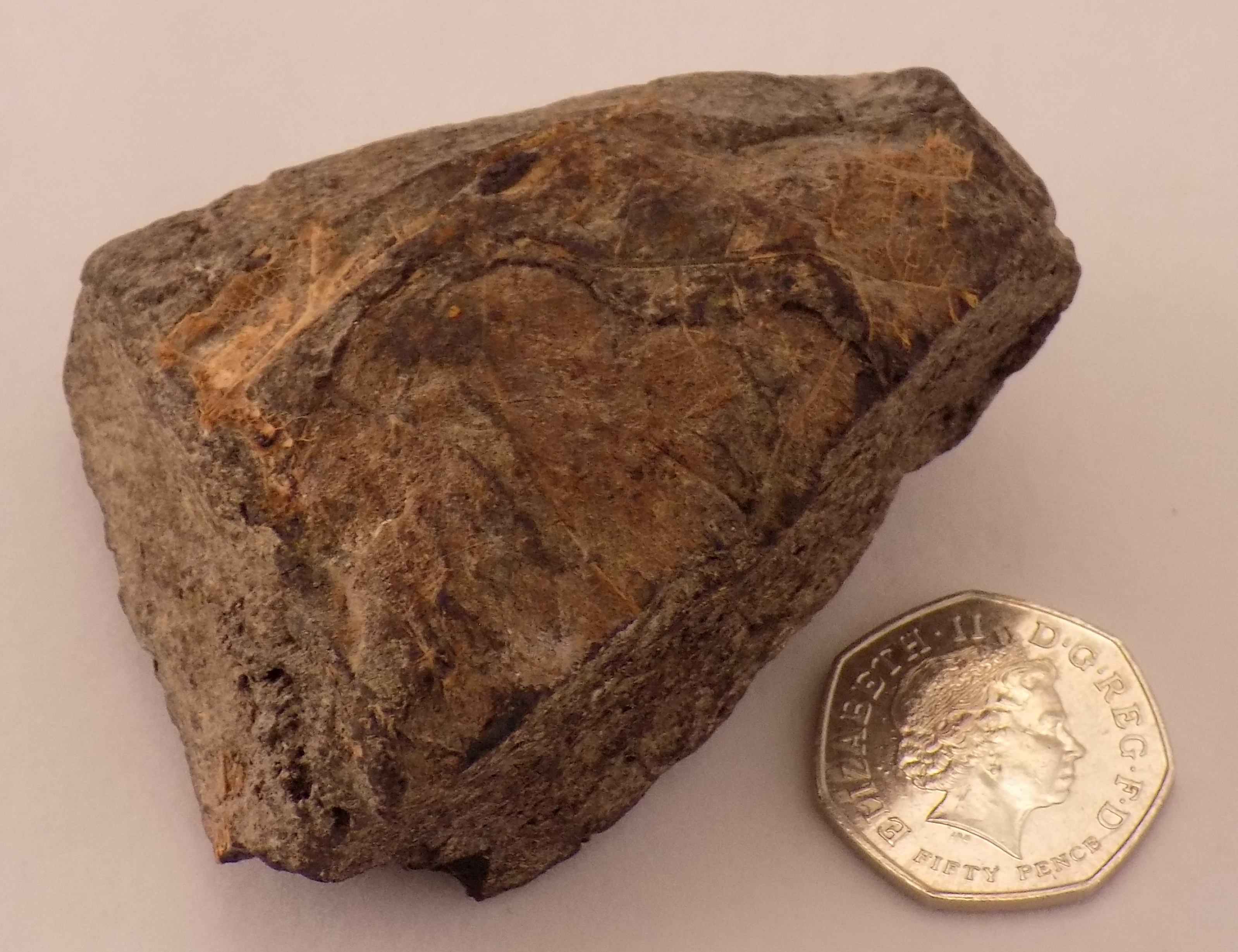
Lump of ‘cutch’, or catechu, used for tanning fishing lines, nets and sails. A resin extracted from the bark of the betel palm, which grows in India and Asia, is boiled with water until the water evaporates, leaving the catechu.
Colour photograph of the fish trap between Eilean nan Gobhar and Heanish in 2004.
The fish trap between Eilean nan Gobhar and Heanish, photographed by Dr John Holliday in 2004.

The shed at Balemartine with the roof made from an old boat, photographed by Dr John Holliday in 2004.

The unpredictability of the sea quite naturally bred a strong sense of the magical and superstitious amongst Tiree’s fishermen. Everything had to be done sun- or clock-wise. Boats were always pushed into the sea stern first and then turned ‘deiseal’, clock-wise.
Women were thought to be unlucky in or near a boat. It was widely thought that it brought misfortune to have a minister on a boat. Even meeting a minister on the way to fishing was a bad sign. If anyone called after a fisherman going to sea it was unlucky and they turned back.
It was bad luck to burn a boat and the old fishermen would pull boats that were no longer seaworthy up on the shore and leave them to rot. Sometimes old boats were made into roofs for outhouses as in this photograph taken in Balemartine.
Red and blue woven blanket.
Red and blue woven blanket made at Brora from wool from the Croft (Creag Glas), Balevullin.

Red and brown woven blanket made at Brora from wool from the Croft (Creag Glas), Balevullin.

Yellow and black woven blanket.
Yellow and black woven blanket made at Brora from wool from the Croft (Creag Glas), Balevullin.

Coastguard Long Service medal with presentation box.
Coastguard Long Service medal presented to Murdoch MacLean, with presentation box with spare ribbon.

Two coastguard badges.
Coastguard Auxiliary Service badge and H.M. Coastguard Coast Life Saving Corps badge belonging to Murdoch MacLean.

Two coin rulers from Scarinish bank.