


Black and white photograph of an RAF airman at Gott Bay pier.
RAF airman at Gott Bay pier with the `Clydesdale` tied up alongside during World War II. (Photograph from Mike Hughes in Filing Cabinet 2 drawer 1)


Black and white photograph of an RAF airman at Gott Bay pier.
RAF airman at Gott Bay pier with the `Clydesdale` tied up alongside during World War II. (Photograph from Mike Hughes in Filing Cabinet 2 drawer 1)
Black and white photograph of an RAF airman at Scarinish harbour.
RAF airman in front of Scarinish harbour with the hotel in the background, taken during World War II. (Photograph from Mike Hughes in Filing Cabinet 2 drawer 1)

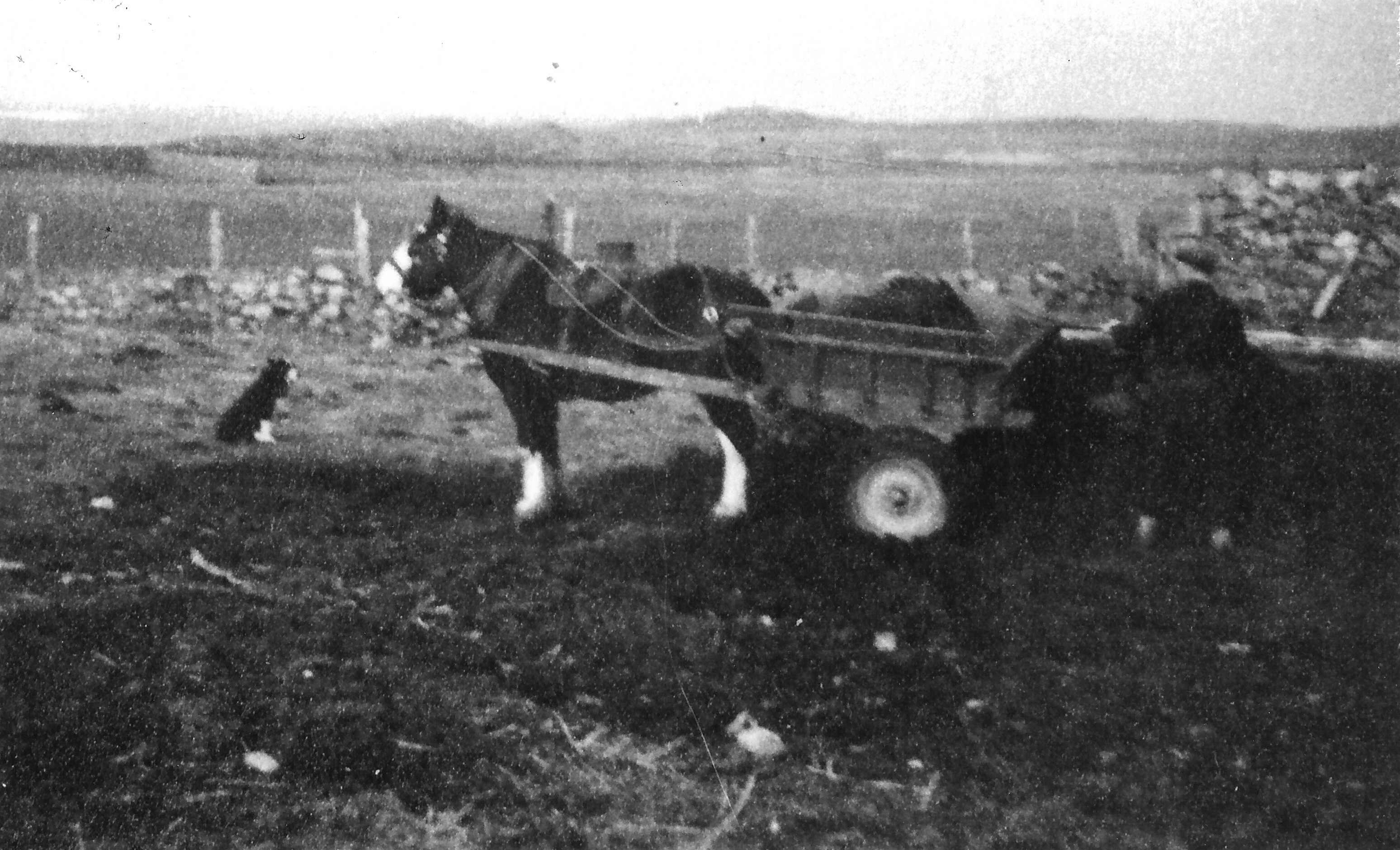
Black and white photograph of a crofter with a horse and cart.
Unknown crofter with a horse and cart in a field, taken during World War II. (Photograph from Mike Hughes in Filing Cabinet 2 drawer 1)
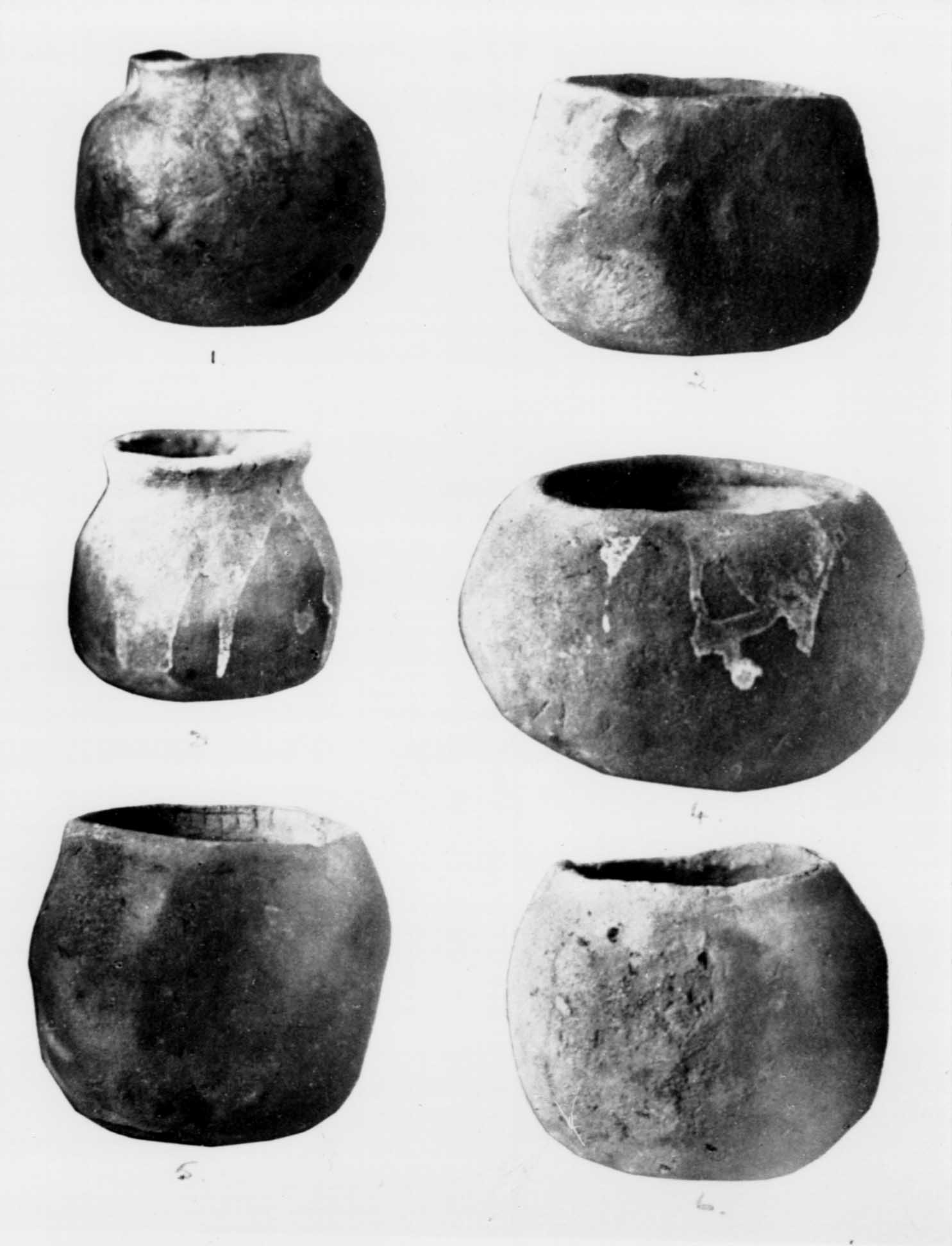
Black and white photograph of six Tiree craggans.
Six Tiree craggans photographed by George Holleyman between 1941 and 1943, and published in the paper ‘Tiree Craggans’, by G. A. Holleyman, in Antiquity 21, December 1947, pp 205-211. On the original slide, the craggans are captioned individually: 1 from Sandaig, 2 from Balevullin, 3-6 made by Hugh MacNeil in 1942.
Black and white photograph of a horn spoon, a serving mallet and a butter pat.
Horn spoon from Balevullin (left); serving mallet made of whalebone found in a ruined cottage in Caoles (middle); wooden butter pat (right), all photographed by George Holleyman.

Black and white photograph of Hugh MacNeill, Balevullin.
Hugh MacNeill of Balevullin, Tiree demonstrates how his mother, Flora MacNeill, would make small clay pots known as craggans which were believed to have special healing properties. Photographed by George Holleyman.

Black and white photograph of SS Laristan in 1942.
The SS Laristan on the rocks at Craignish in 1942 photographed by George Holleyman.

The wreck of the ‘Ocean Tide’
Photograph of the wreck of the ‘Ocean Tide’ off Mannal in 1942.

Courtesy of Ms Linda Gowans
George Holleyman, an archaeologist in the RAF police posted to Tiree during World War II, photographed the wreck of the ‘Ocean Tide’ in January 1942. A trawler from Leith, the ‘Ocean Tide’ had run aground off Mannal in poor weather.
Repeated attempts were made by RAF personnel and three local volunteer coastguards to shoot a line to the stricken vessel without success. Buffeted by the wind and the incoming tide, the trawler was listing so badly it was in danger of turning over.
The crew made a last desperate attempt to save themselves and launched a small boat. Within minutes they lost control and were driven on to a rocky promontory. By luck, two of the lines had caught on the rocks and the six crew members, one of them injured, were able to struggle ashore.
Black and white photograph of SS Ocean Tide in 1942.
The SS Ocean Tide on the rocks at Mannal in January 1942 photographed by George Holleyman.
Black and white photograph of Mrs Kennedy, Balevullin.
Mrs Kennedy of Balevullin making a haycock, photographed by George Holleyman.

Isabella MacLean of Kilmoluaig with her cows
Photograph of Isabella MacLean with her cows in Kilmoluaig.

Courtesy of Ms Linda Gowans
Isabella MacLean was photographed with her cows by George Holleyman, an archaeologist in the RAF police posted to Tiree during World War II. Her father was a crofter and fisherman, known locally as ‘The Mate’. Isabella herself was known as Bella Mhate.
She lived on her own in a thatched cottage on her eighteen acre croft in Kilmoluaig. The cottage had an earthen floor and all her furniture, including her box bed, was made from driftwood. Lighting was by oil lamp.
Her income came from a herd of six cattle and a flock of around forty sheep. She also had grazing rights on another croft. Neither croft was cultivated but she grew a small patch of potatoes. Bella was also an expert cheese maker.
Black and white photograph of Isabella MacLean, Kilmoluaig.
Isabella MacLean (Bella Mhate) of Kilmoluaig with her cows, photographed by George Holleyman in the early 1940s.