


Colour photograph of Cornaigbeg in the snow in December 2000.
Cornaigbeg in the snow in December 2000, photographed by Rosaleen Campbell..
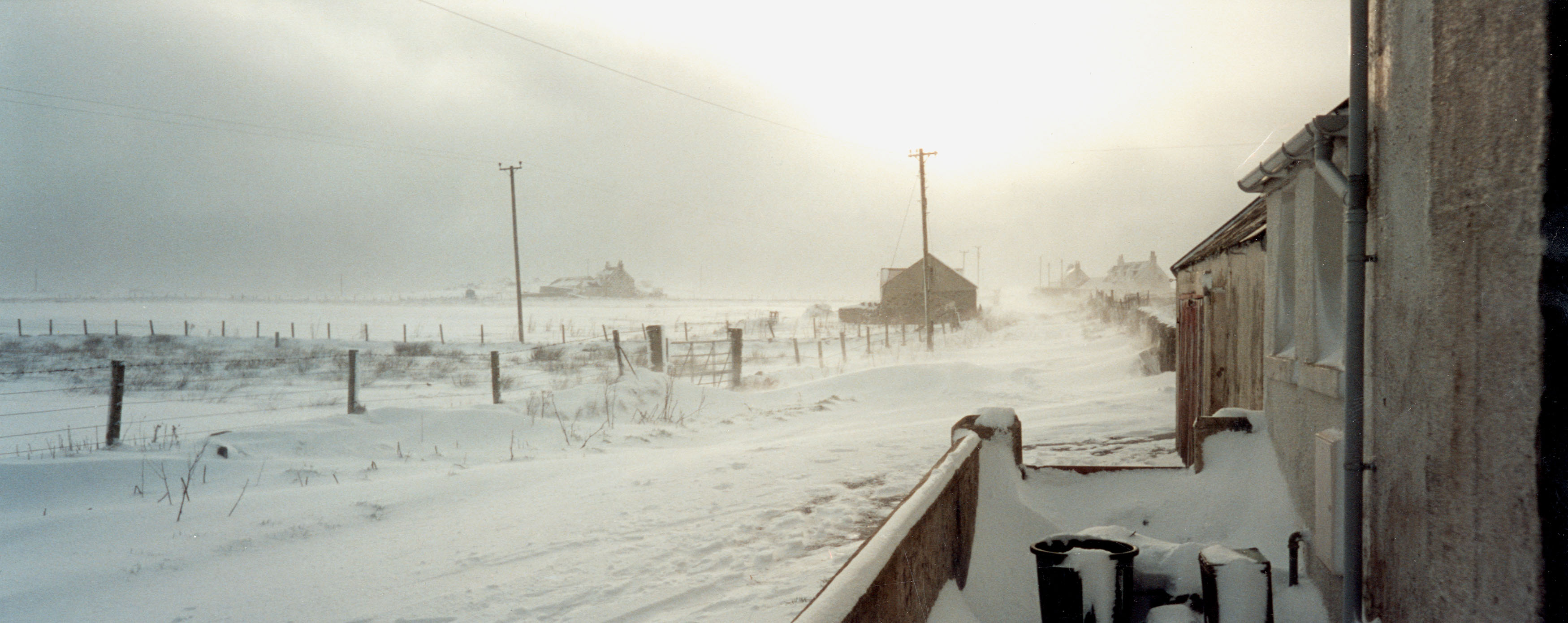

Colour photograph of Cornaigbeg in the snow in December 2000.
Cornaigbeg in the snow in December 2000, photographed by Rosaleen Campbell..
Colour photograph of An Iodhlann in the snow in 2000.
An Iodhlann in the snow in December 2000.

Colour photograph of P.C. Danny Lapsley in the snow in 2000.
P.C. Danny Lapsley in the snow at the top of the Pier Road, Scarinish in December 2000.

Colour photograph of Scarinish Schoolhouse in the snow in 2000.
Scarinish Schoolhouse in the snow in December 2000.
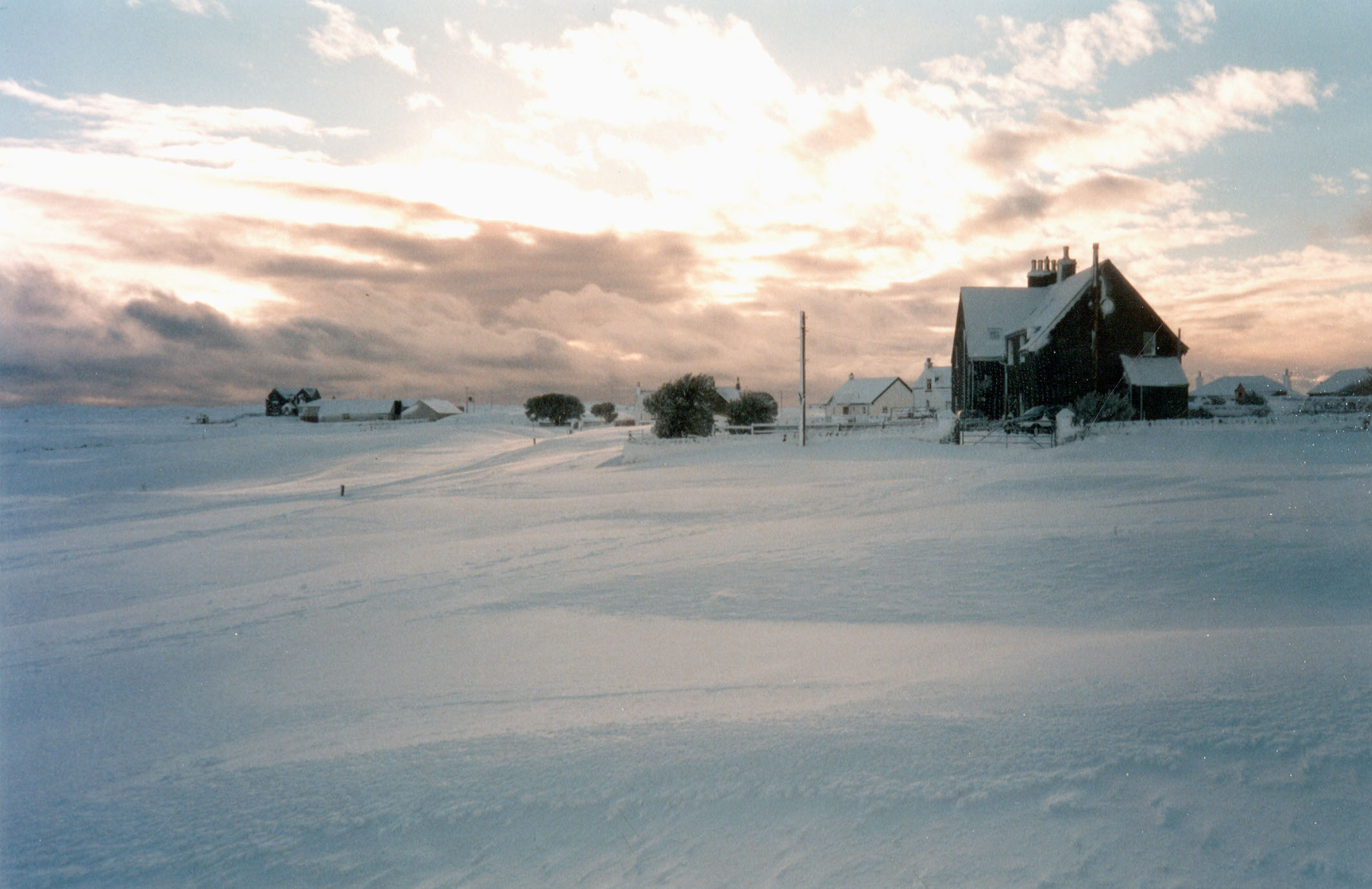
Scarinish in the snow
Photograph of snow in Scarinish in December 2000.
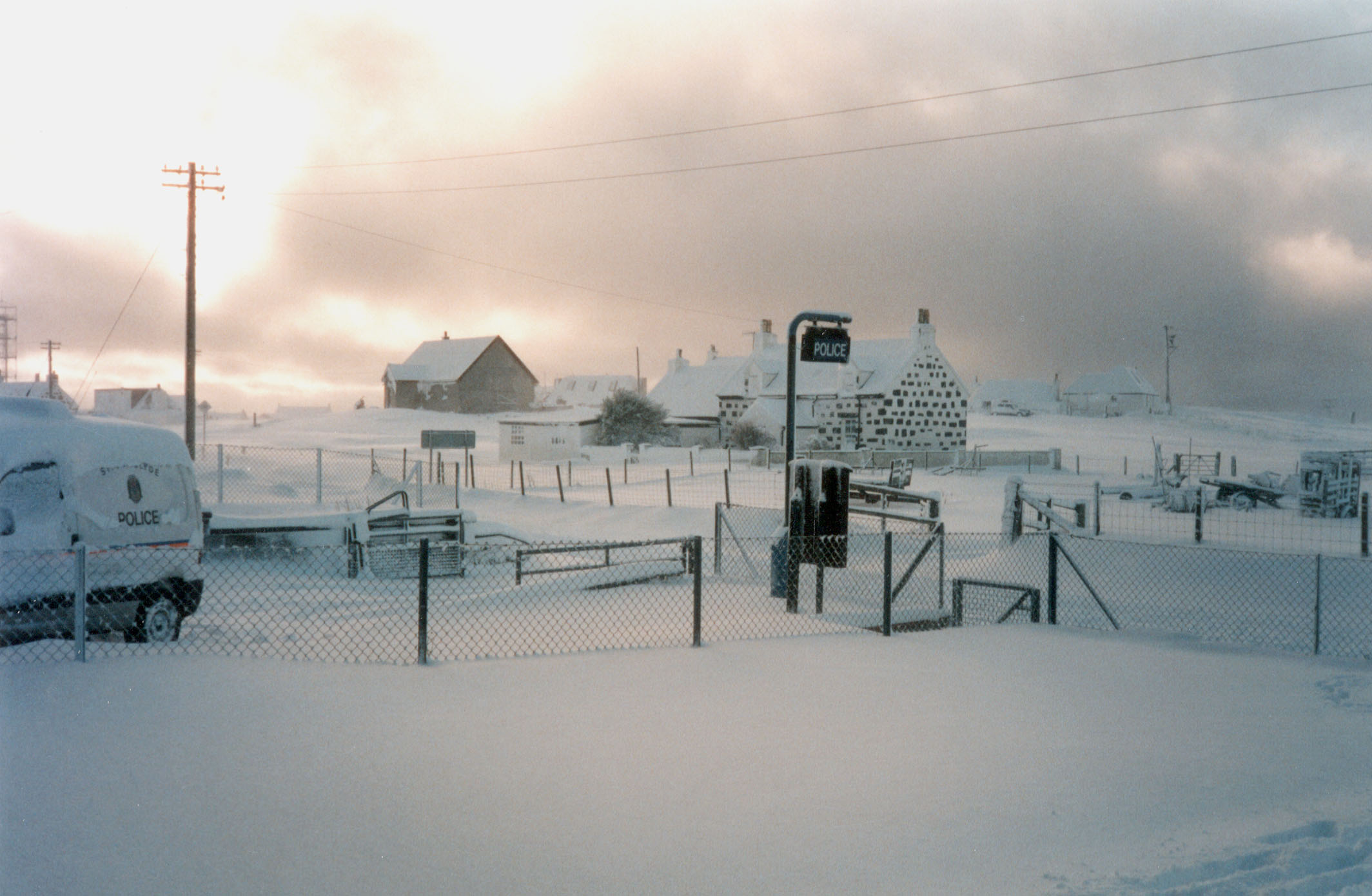
Courtesy of Danny Lapsley
This photograph was taken by Tiree’s policeman Danny Lapsley from the front of the Police Station in Scarinish during the last week of December 2000. Not since 1953 had Tiree experienced such a heavy fall of snow.
Many roads were blocked for several days; the ice and the lack of salt made for treacherous driving conditions on the few roads that were open. Snow drifts closed the runways at the airport which, together with the planned holiday cancellations, resulted in one of the longest known periods without a service aircraft.
The island’s children took full advantage of the weather to build snowmen and indulge in snowball fights. Normally falls of snow are light and melt away within a few hours.
Colour photograph of Scarinish in the snow in 2000.
Scarinish in the snow in December 2000 viewed from the police station.
Colour photograph of Scarinish in the snow in December 2000. Photographed by art teacher Brian Milne from the rear of the schoolhouse.

Printout of colour scan of RAF `Met` sorties during World War II.
Map of the eastern North Atlantic with weather reconnaisance flight patterns over the North Atlantic and North Sea flown by the RAF during World War II.
Copy of letter dated 8/3/2004 to Katinka Stentoft from Alasdair Sinclair of Brock.
Information about Norse settlements of Tiree and difficulties in identifying them: the effects of wind-blown sand on the landscape, the scarcity of stone for building, the frequent winter flooding and the need for ditching, and the road-building programme during World War II (with three pages of photocopied photos). (For Katinka Stentoft`s settlement survey see 2004.40.1)
Paperback book `The Hebrides – A Natural Tapestry` by J. M. Boyd and I.L. Boyd.
The second volume of a trilogy spanning the complete natural history of the Hebrides.
Audio cassette recording of Alasdair Sinclair talking about the history and people of Brock.
Alasdair Sinclair talks about the history of Brock from the late 18th century, describing each of the houses in detail and giving a history of all the families who lived there.