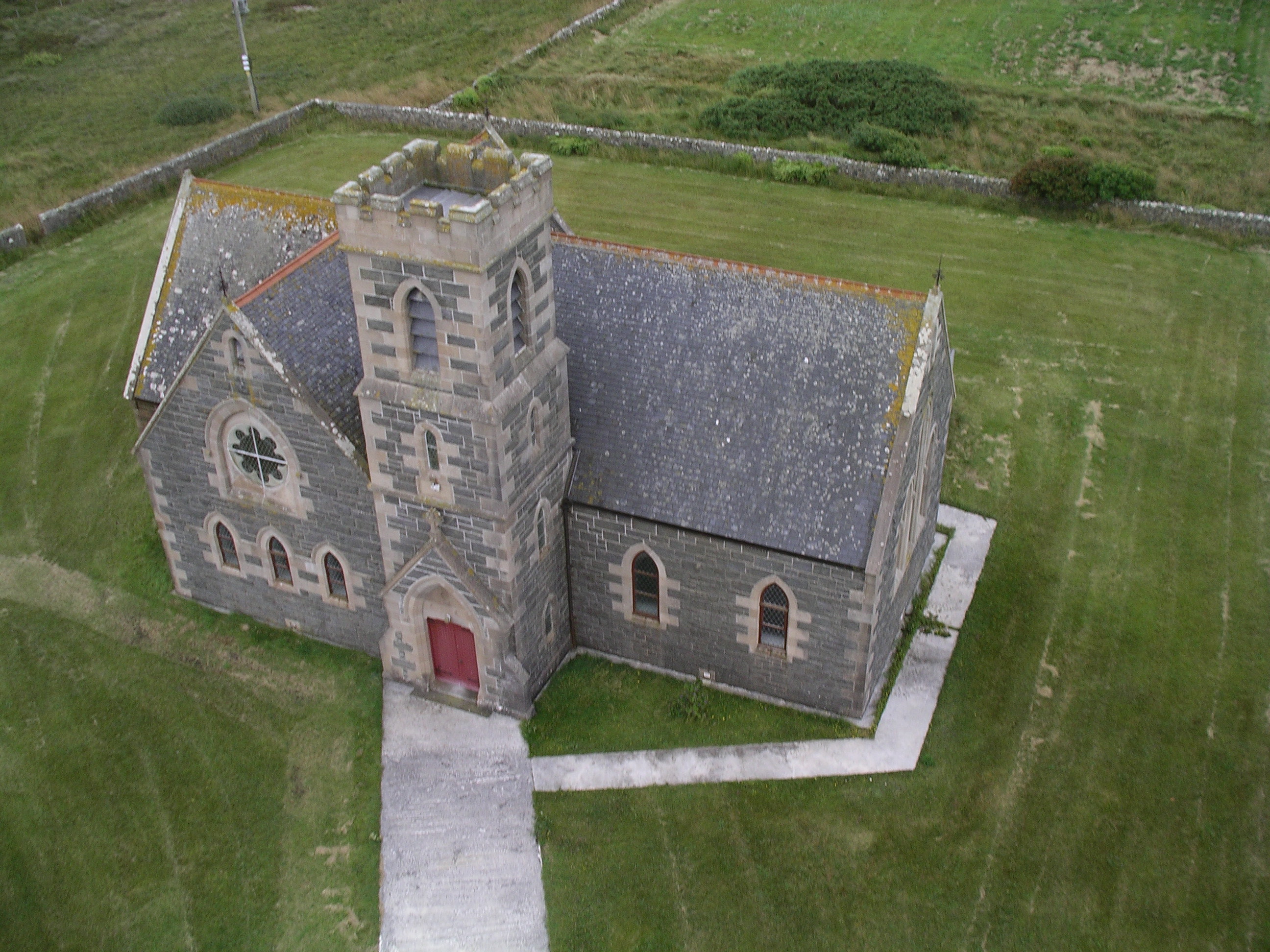
Copied newspaper article about the Congregational Chapel at Cornaig.
Article about saving the Congregational Chapel at Cornaig, suggesting it may have built by the Skerryvore stonemasons, also the state of Tiree`s listed buildings and new housing developments and comments by Councillor Ian Gillies.
List of donors of Church funds found in a byre opposite Hynish House
Hand-written list of donors` names and addresses, and amount of money received by Rev. D. MacDonald. Names include: Chrissie MacDonald, Edinburgh; Anonymous; Neil MacArthur, The Store, Balemartine; John MacLean, Balemartine; Flora MacLean, Balemartine; John MacFarlane, Balemartine; Flora MacIntyre, Balemartine; Donald MacLean, Roadside; Balemartine; Hector Campbell, The Store, Balemartine; Peggie MacKinnon, Springfield, Balemartine; Miss Wilson, Schoolhouse, Balemartine; Margaret ?, Ruaig; Mr Hume, Heylipol Farm; Mrs Kennedy, Ardliu, Balinoe; A MacDonald, Mannal; Dr Hunter, Baugh; Chistina MacKinnon, The Store, Balemartine; Mrs MacKinnon, The Farmhouse, Balemartine.
Letter from the minister Rev. W. J. MacLeod mentioning Hugh MacLean, Salum and his family leaving for Australia, and including the Kirk Session financial statement for the 1964.
Folder with typewritten account `The Buildings of Tiree` by Geoffrey Stell, ca 1970.
Typewritten account `The Buildings of Tiree` by Geoffrey Stell typed on paper from publishers Gee & Co of the Strand, London, plus an accompanying map of Tiree hand-drawn by Mary Robertson.
Built in 1842, Kirkapol Church serves the eastern half of Tiree. It is almost square and resembles a typical non-conformist chapel in design. The masonry is local rubble with sandstone dressings and quoins of pink granite brought from the Ross of Mull.
The church contains a memorial to the Rev. Hector MacKinnon, a native of Tiree, who began his ministry here (1892-94) and later became so powerful a preacher he was called the ‘Spurgeon of the North’.
Nearby are the remains of a former parish church dating from the 14th century dedicated to St Columba and a smaller 13th century chapel, both probably built on the sites of earlier churches. The name Kirkapol derives from the Norse for Church Town.
Black and white postcard of Kirkapol Church.
Postcard of Kirkapol Church in the 1950s. (Original in Filing Cabinet 5 drawer 1)