Isabella MacLean of Kilmoluaig with her cows
Photograph of Isabella MacLean with her cows in Kilmoluaig.
Courtesy of Ms Linda Gowans
Isabella MacLean was photographed with her cows by George Holleyman, an archaeologist in the RAF police posted to Tiree during World War II. Her father was a crofter and fisherman, known locally as ‘The Mate’. Isabella herself was known as Bella Mhate.
She lived on her own in a thatched cottage on her eighteen acre croft in Kilmoluaig. The cottage had an earthen floor and all her furniture, including her box bed, was made from driftwood. Lighting was by oil lamp.
Her income came from a herd of six cattle and a flock of around forty sheep. She also had grazing rights on another croft. Neither croft was cultivated but she grew a small patch of potatoes. Bella was also an expert cheese maker.
Black and white photograph of Isabella MacLean, Kilmoluaig.
Isabella MacLean (Bella Mhate) of Kilmoluaig with her cows, photographed by George Holleyman in the early 1940s.
Black and white photograph of Mary MacLean, Balevullin.
Mary MacLean with two sheep photographed by George Holleyman outside her thatched cottage in Balevullin in the early 1940s. Note the whale vertebrae in the foreground.
Mary MacLean of Balevullin
Photograph of Mary MacLean of Balevullin at her spinning wheel.
Courtesy of Ms Linda Gowans
George Holleyman, an archaeologist in the RAF police posted to Tiree during World War II, photographed Mary MacLean at her spinning wheel in the garden of her croft at Balevullin. Mary kept five cows and around twenty-five sheep and grew no crops other than potatoes.
To the right of the photograph is the top stone of a rotary quern. It is thought that rotary querns were introduced to Britain by the Romans around 2,000 years ago. Two women would sit on the ground with the quern between them, feeding grain into the central hole in the upper stone which was rotated by hand using a handle.
This was enormously time-consuming work. In ‘The Statistical Account of Scotland’ of the 1790s, Rev. Archibald MacColl estimated ‘by the lowest calculation, the work of 50 women is yearly lost at grinding’.
Black and white photograph of Mary MacLean, Balevullin.
Mary MacLean spinning wool in her garden at Balevullin, photgraphed by George Holleyman in the early 1940s. Note the drystone walling and quern stone.
Black and white photograph of Maggie.
Photograph from a small album from Silversands, Vaul, titled Maggie, probably taken in the late 1920s to early 1930s.
The Coaling Station at Brock
Photograph of a coal puffer beached on Gott Bay at Brock in the 1930s.
Around the middle of the 19th century, when local peat deposits had run out and peat was no longer readily available from adjacent islands, coal was shipped to Tiree in sailing smacks and schooners owned and sailed by Tiree men.
Later in the century and into the 1900s, coal was brought in by steam-driven lighters known as puffers. As there are no secure harbours in Tiree, the puffers, like the schooners before them, were beached at spring tides on several of the sandy bays around the island.
The coal was discharged into horse-drawn carts of a half tonne nominal capacity. One such coaling station was at Brock on the east end of the island.
Black and white photograph of the coaling station, Brock.
Photograph from a small album from Silversands, Vaul, titled `The Coaling Station, Brock` of a puffer discharging coal into horse-drawn carts, probably taken in the late 1920s to early 1930s. Around the middle of the 19th century, when local peat deposits had run out and peat was no longer readily available from adjacent islands, coal was shipped to Tiree in sailing smacks and schooners owned and sailed by Tiree men. Later in the century and into the 1900s, coal was brought in by puffers. As there are no secure harbours in Tiree, the puffers like the schooners before them were beached at spring tides on several of the sandy bays around the island. The coal was discharged into horse-drawn carts of a half tonne nominal capacity. One such coaling station was at Brock on the east end of the island.
Black and white photograph of a collier on the beach at Brock.
Photograph from a small album from Silversands, Vaul, titled `Collier on the beach at Brock` of a puffer waiting to discharge coal into horse-drawn carts, probably taken in the late 1920s to early 1930s. For additional information see catalogue for 1997.176.7.
Black and white photograph of the new road to Silversands, Vaul.
Photograph from a small album from Silversands, Vaul, titled `The new road to Silversands`, probably taken in the late 1920s to early 1930s.
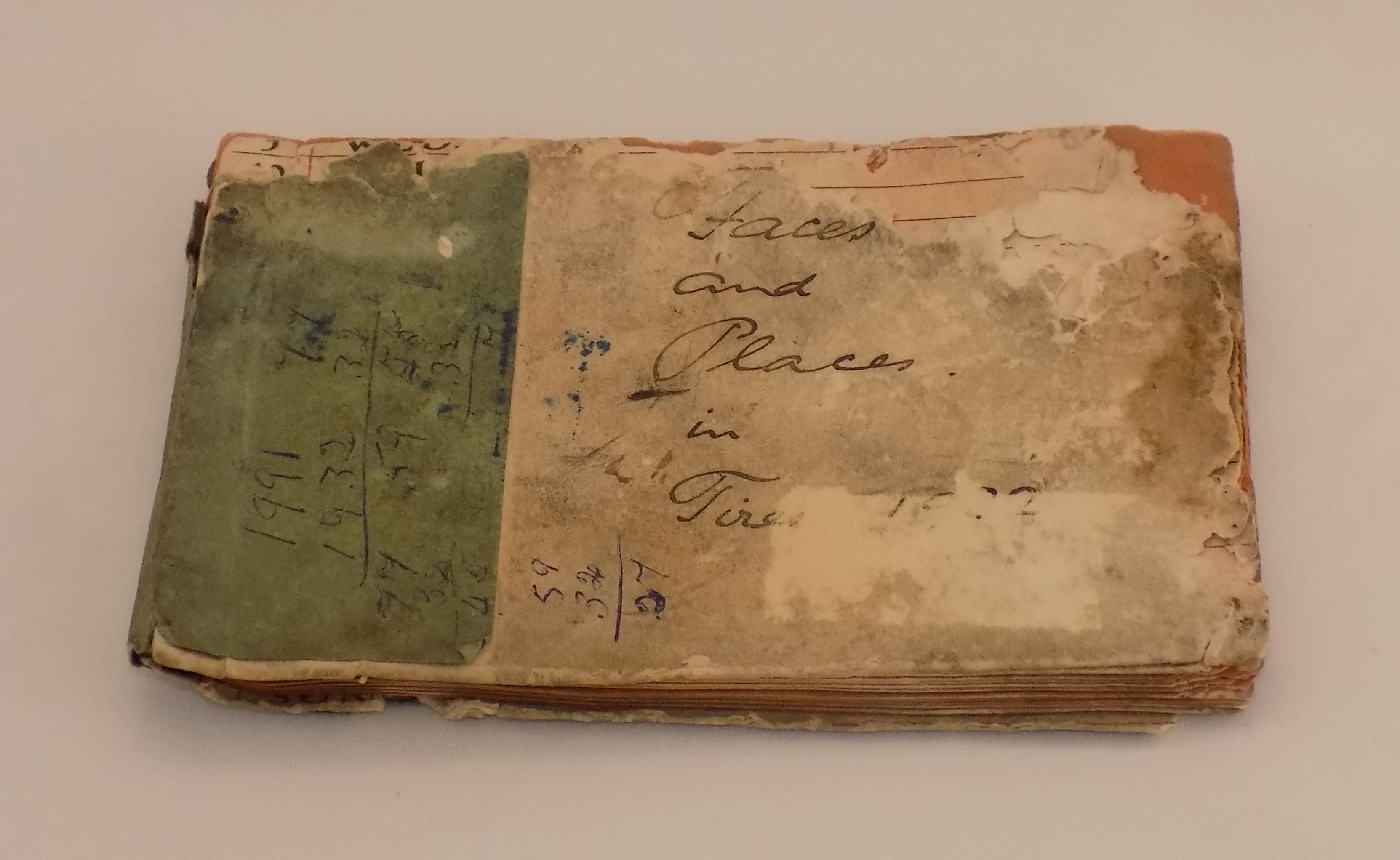
Small photo album titled `Places and Faces in Tiree 1932`.
Small photograph album titled `Places and Faces in Tiree 1932` said to come from Silversands and containing 17 black and white photographs with captions.

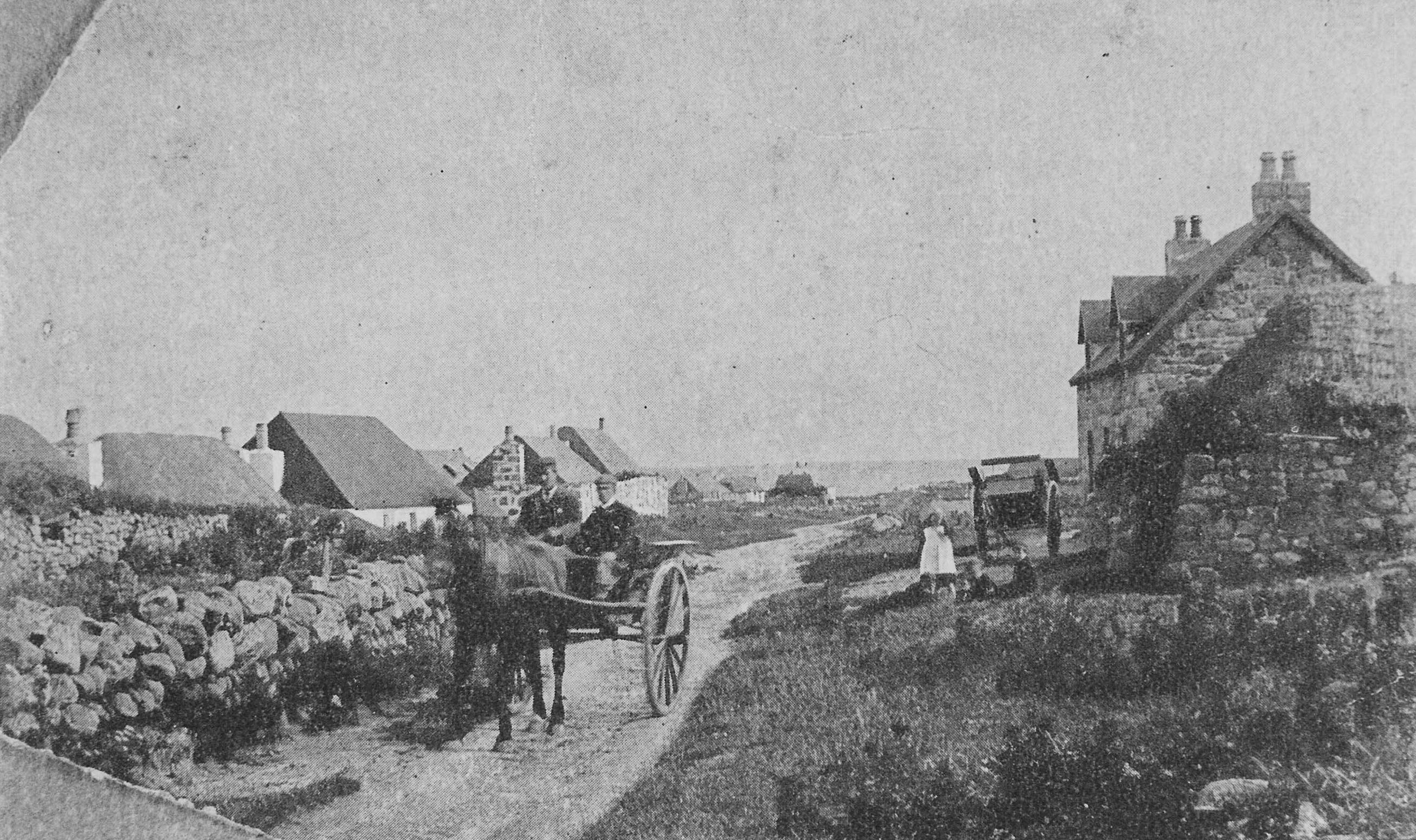
Black and white photograph of Mannal.
View of Mannal looking south with two men in a horse-drawn cart and children playing at the side of the road. (Original photograph 1997.178.1)
Outside the general store in Scarinish in 1910
Photograph of Calum MacLean, Hugh MacArthur and Peter Anderson outside the general store in Scarinish in 1910.
Courtesy of Mr Angus MacLean
Calum MacLean, Hugh MacArthur and Peter Anderson are pictured in 1910 outside the shop in Scarinish owned and run by Hugh and his brother Dan. As well as a general store, the building contained a Post Office and a hardware department upstairs
Calum MacLean (Calum Bùidsear) from Moss opened a butcher’s shop in Scarinish in 1930s on a site previously housing a baker and cobbler. The business was taken over by Donald and Nan MacLean in 1953.
Peter Anderson came to Tiree in 1886 as the island’s first gamekeeper. A keen ornithologist, he published ‘The Birds of the Island of Tiree’ in ‘The Scottish Naturalist’ in 1913
Black and white photograph of Scarinish shop in 1910.
Scarinish shop, 1910. L-R: Calum MacLean (butcher in Scarinish), Hugh MacArthur (partner in shop), Peter Anderson (gamekeeper). (Original photograph 1997.178.1)