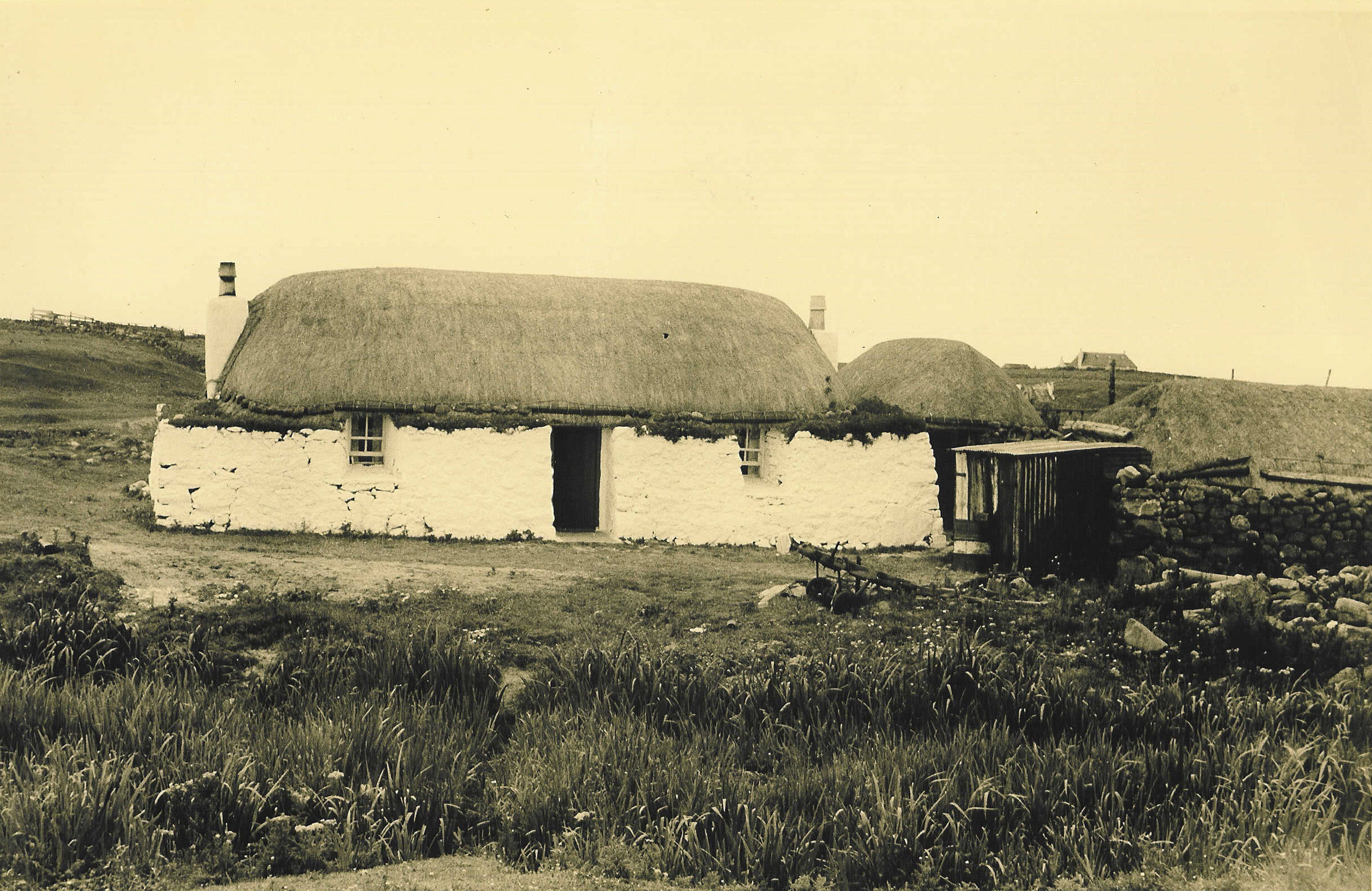
Object Type: photograph

2003.21.1

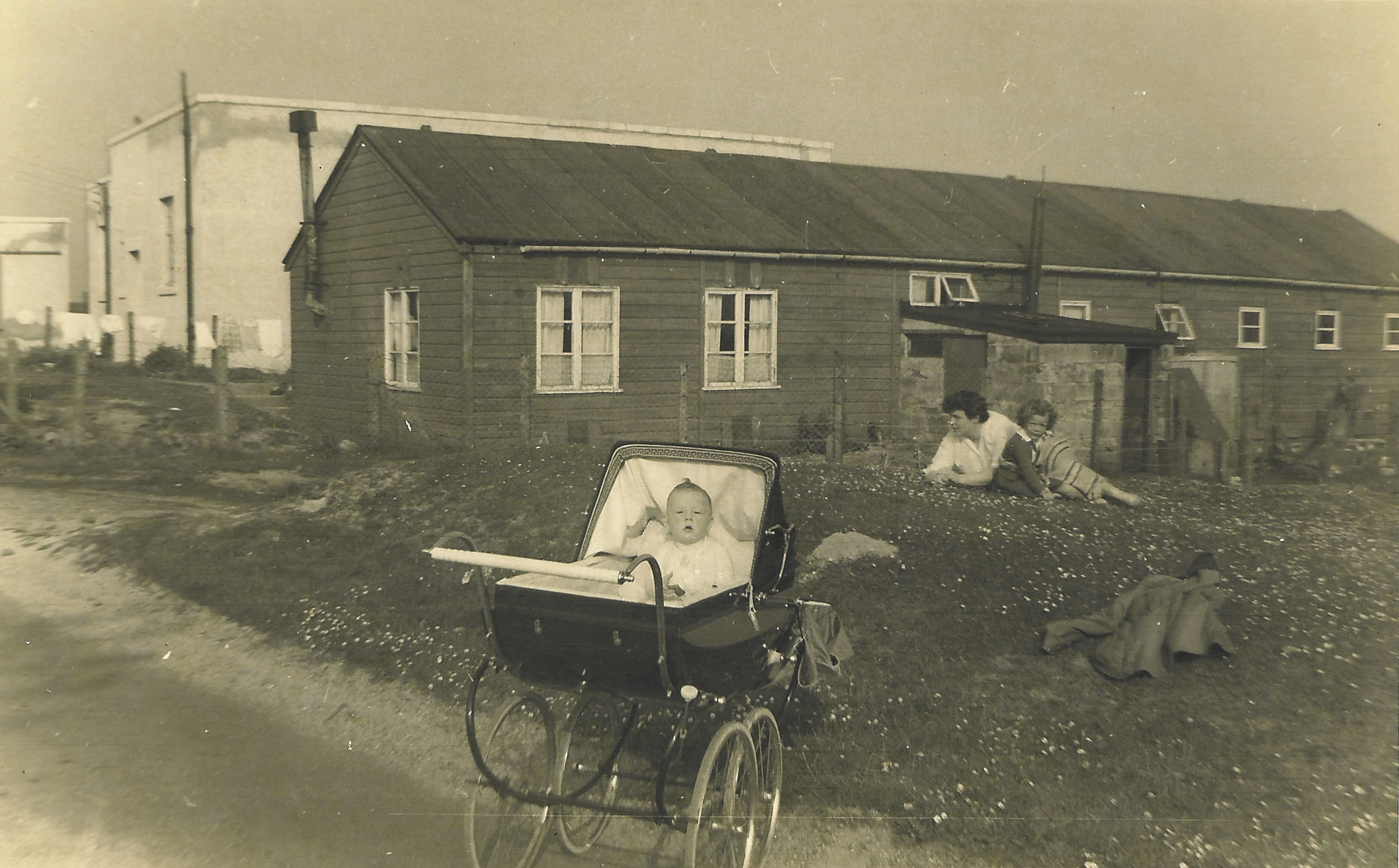
Photograph of Mary MacPhee, her baby, and a friend outside the old telephone exchange at Scarinish in 1949.
u50.jpg

Courtesy of Mrs Mary MacPhee

Mary T. MacPhee, a friend and Mary’s son, either Christopher or Neil Urquhart in the pram, pictured outside the old telephone exchange in Scarinish in 1949. Mary had previously worked shifts at the Pitt Street exchange in Glasgow which had around two hundred operators.

In Scarinish, Mary worked twenty-four hours a day. The building had three bedrooms, a bathroom, a kitchen and a sitting room which contained the switchboard. The operator had to connect all calls by hand. If a call came in at night an alarm bell rang in the operator’s bedroom.

Mary recalls there being only around five private telephones on the island in 1949. Calls cost one penny, sixpence or a shilling and all were monitored. The operator would interrupt to advise when the time was nearly up.

2003.22.1

Alick MacNeill’s turn-out at a 1950s Agricultural Show

Photograph of Alick MacNeill, Donald MacLean and Donald MacIntyre at an Agricultural Show at Crossapol in the early 1950s.

u51.jpg

Courtesy of Mr Donald MacIntyre

The Tiree Agricultural Show was started in the 1880s by Tom Barr, the tenant of Balephetrish farm, to encourage local crofters to improve their stock of breeding horses and their income. Around 1900, a stirk (one-year-old calf) would fetch £4 to £5 whereas a good year-old filly foal would fetch £25 to £30.

At the Shows in the 1950s prizes were given for the best horse in a number of classes: Clydesdale geldings and mares, Highland ponies, cross geldings, mares, fillies or colts and any breed of foal. There was also a special prize for the best horse, cart and harness.

Alick MacNeill of Main Road Farm in Balephuil, Donald MacLean of Vaul and Donald MacIntyre of Gott are pictured at a Show at Crossapol in the early 1950s. By this time tractors had replaced the horse and Alick’s turn-out was the only entrant in its class.

Black and white photograph of Alick MacNeill, Donald MacLean and Donald MacIntyre.

Agricultural show at Crossapol in 1951 or 52. L-R: Alick MacNeill, Main Road Farm, Balephuill; Donald MacLean, Vaul; Donald MacIntyre, Gott.

2003.18.18

Johnny MacKay of Balephuil

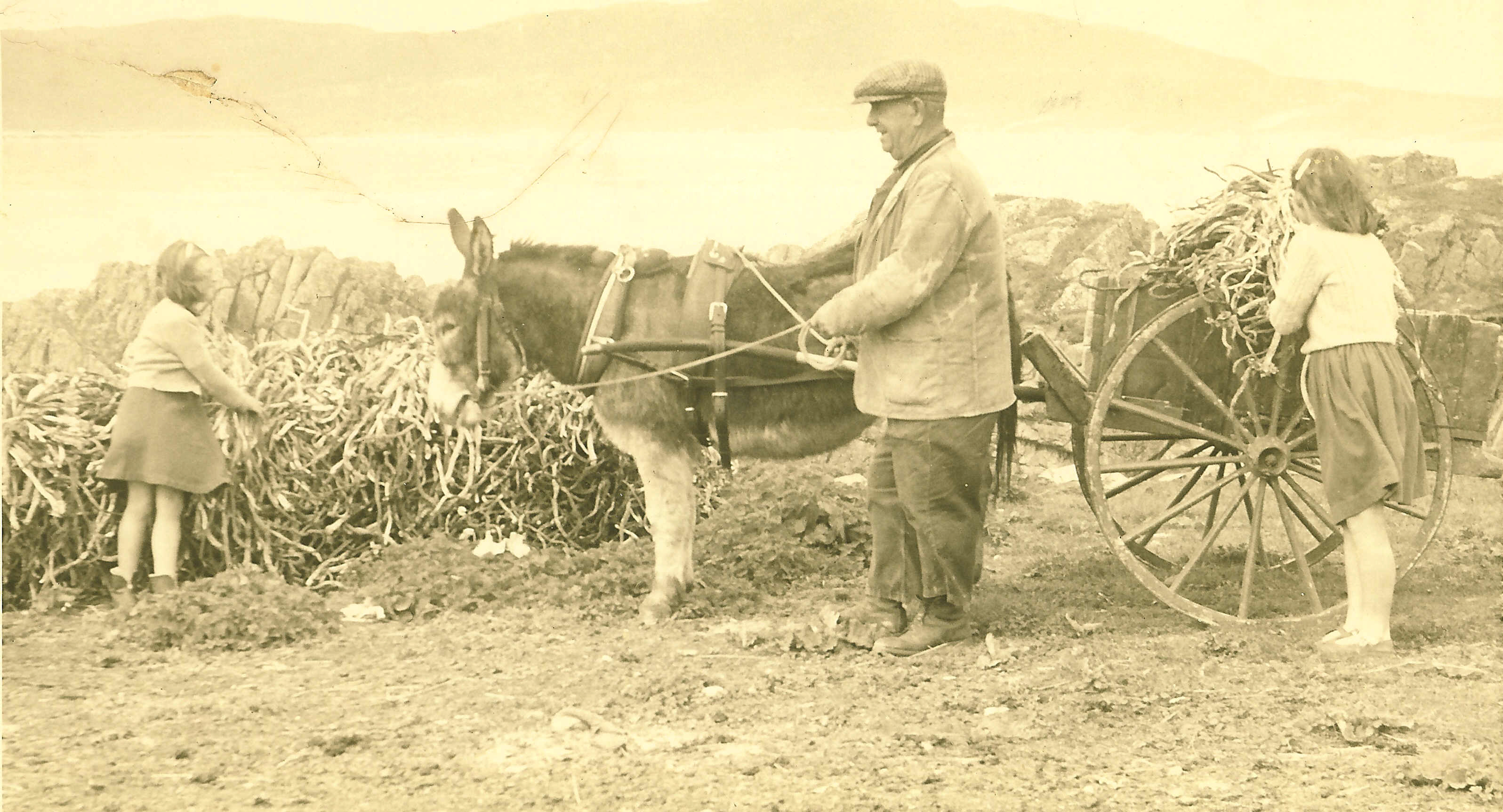
Photograph of Johnny MacKay of Balephuil transporting tangles with a donkey and cart in 1957.

u23.jpg

Courtesy of Mr Alan Boyd

Morton Boyd photographed Johnny MacKay of Am Bail’ Ur in Balephuil in 1957 transporting dried kelp, known as tangles, with a donkey and cart. The tangles would be sent each year to the mainland for processing into alginates which are widely used to thicken food and size cloth.

Seaweed has also been used from the earliest times as animal fodder, for medicinal use, for human consumption – a milk pudding made from carrageen is still widely eaten on Tiree – and as a fertiliser for hay meadows and particularly for potatoes.

Crofters collecting seaweed divided the shoreline between them but occasionally disputes arose. As late as 1914 the Land Court had to adjudicate between crofters in Caoles, one of whom was ‘only allowed to take seaweed from the boundary of Ruaig to Ardeas until Old St. Patrick’s Day’ while his neighbour had free access to the beaches.

Black and white photograph of Johnny MacKay in 1957.

Johnny MacKay of Bail` Ur, Balephuill, collecting dry tangles in 1957.