


Colour photograph of of the interior of the shop at Cnoc Mor, Balemartine.
The interior of the shop at Cnoc Mòr, Balemartine.


Colour photograph of of the interior of the shop at Cnoc Mor, Balemartine.
The interior of the shop at Cnoc Mòr, Balemartine.
Photocopied newspaper article about the captain and crew of the SS `Ocean Tide`.
Article about Captain Neil MacFadyen and two engineers of the SS `Ocean Tide` who were awarded the Lloyd`s Medal for Bravery at Sea in 1944.

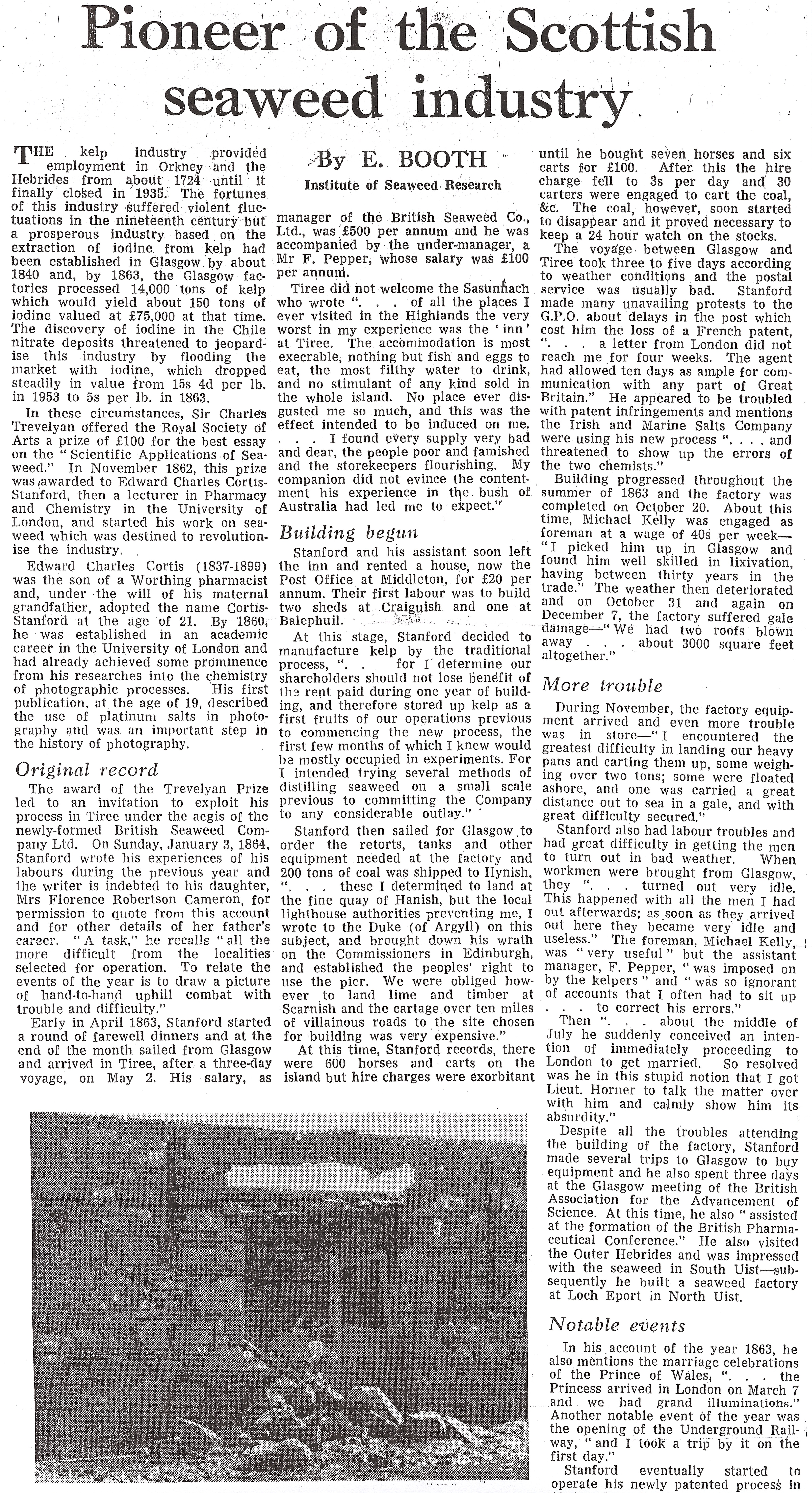
Photocopied newspaper article about Curtis-Stanford.
Article about Curtis-Stanford and the Middleton seaweed factory.
De Havilland Rapide over Sandaig
Photograph of a de Havilland Rapide over Sandaig.

Courtesy of Mr Donald MacKinnon
The first commercial flights from Renfrew Airport began in 1933 to Campbeltown and Islay. The following year a 29 year old businessman, George Nicholson from County Durham, set up Northern and Scottish Airways to take over these routes and develop others.
In October 1935, Nicholson was flown by his chief pilot, David Barclay, on a reconnaissance trip to Tiree. Islanders were woken early as he flew for some time low over the island, landing at 6 a.m. on An Tràigh Mhòr, the beach at Gott Bay. In May 1936, Colin MacPhail was appointed Northern and Scottish Airways local manager.
On 1st July 1936 David Barclay flew the first commercial flight to Tiree via Islay and landed on the Reef in a De Havilland Rapide, a fabric-covered twin engine biplane that could carry eight passengers.
Black and white photograph of a de Havilland Rapide over Sandaig after World War II.
De Havilland Rapide over Sandaig after World War II. The `X` off shore on the right marks the spot where the Sturdy went down.
Black and white postcard of Heylipol church.
Postcard of Heylipol Church.

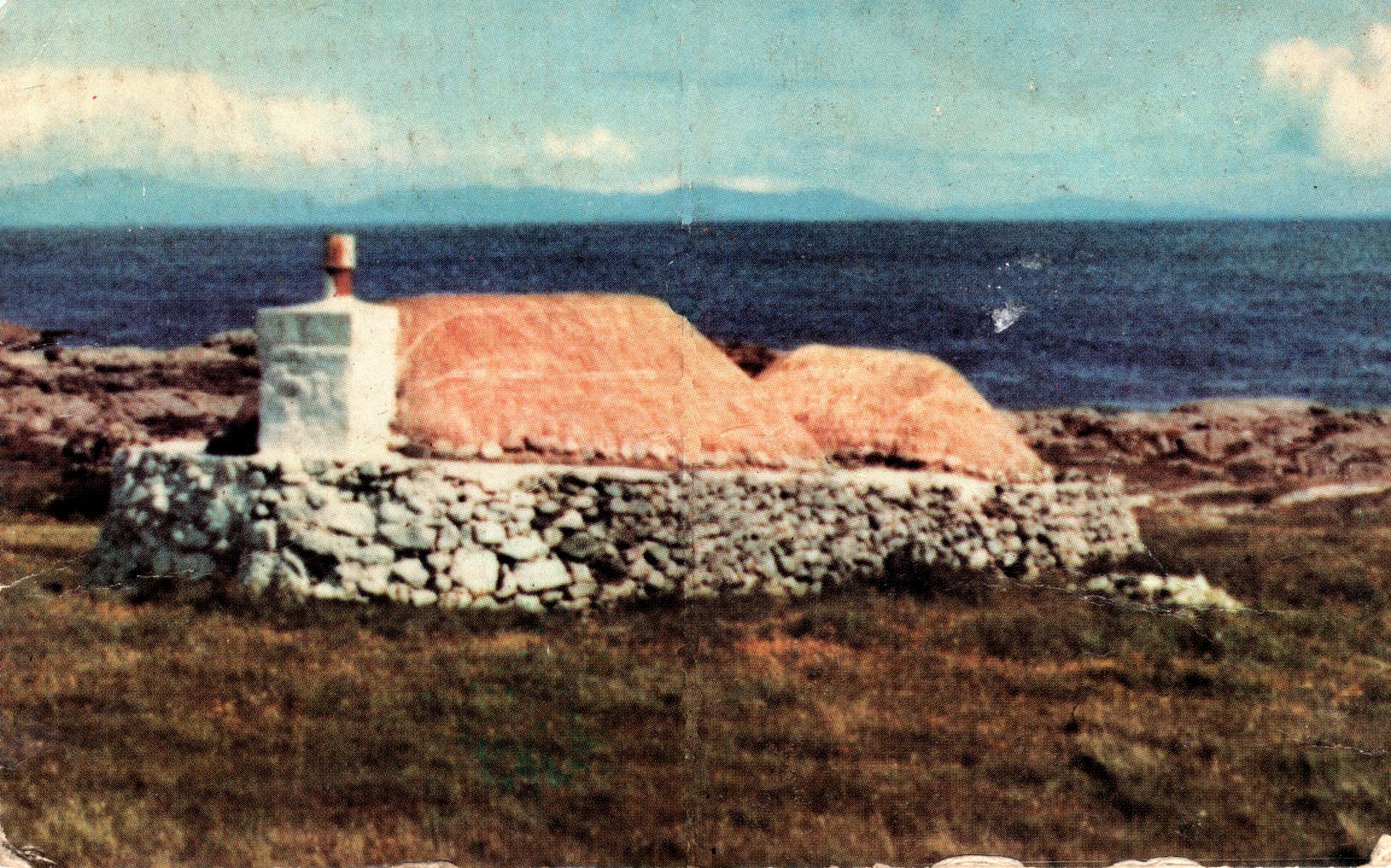
Colour postcard of a thatched house at Milton.
Postcard of a thatched house at Milton with the mountains of Mull in the distance.
Black and white photograph of Hector MacDonald of Balemartine.
Hector MacDonald (Eachann Mhic Neill) who was one the Land League leaders and lived in ‘Mull View’ in Balemartine.

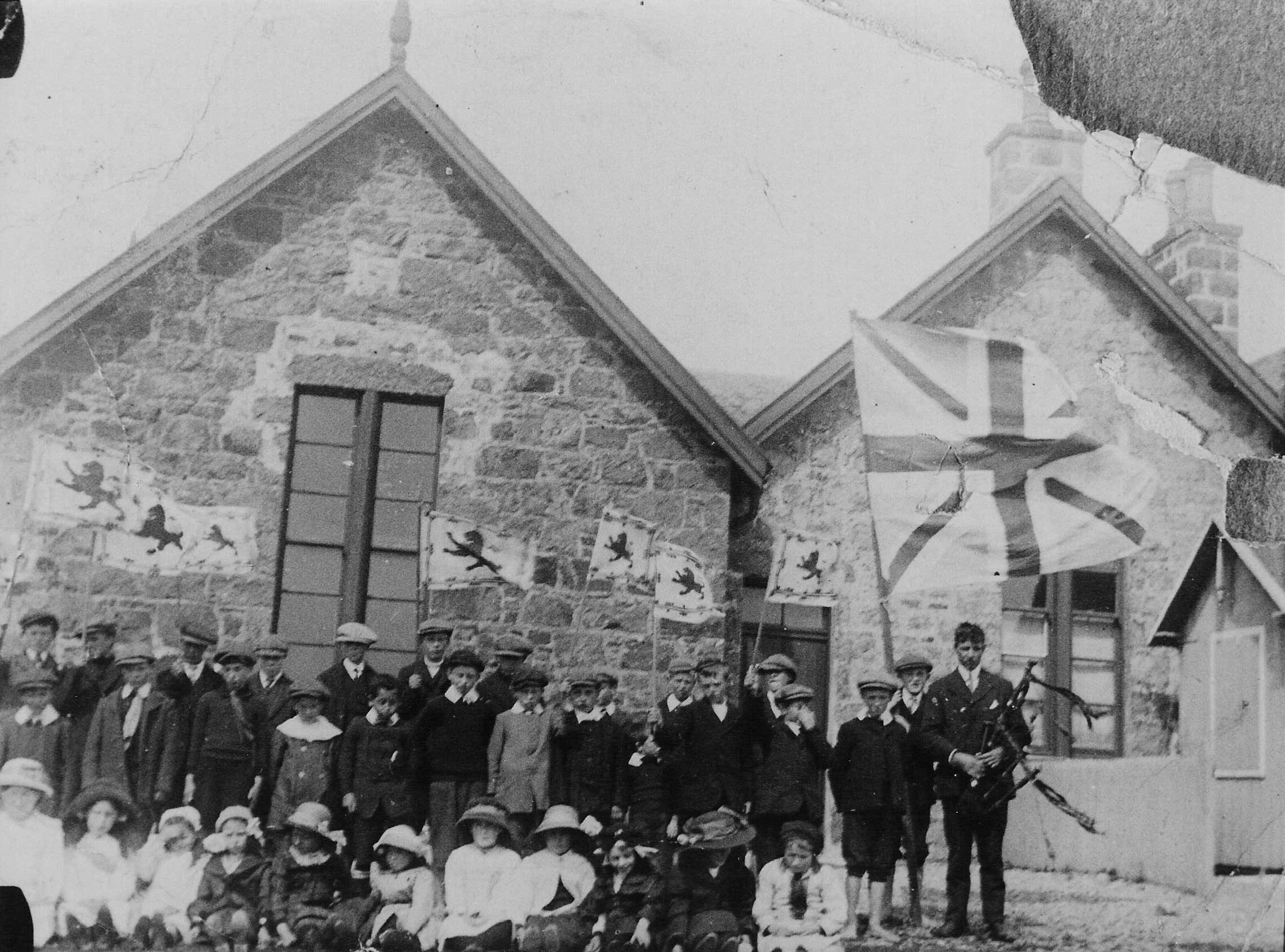
Heylipol School
Photograph of Heylipol School in the early 20th century.
Courtesy of Mrs Annie Kennedy
Archie Kennedy with his pipes at Heylipol School.
Black and white photograph of Heylipol School pre-World War I.
Heylipol School pre-World War I. The piper is Archie Kennedy.
Photocopied extracts from Argyll Estates Tiree Rent Ledger for Cornaig mill in 1828, 1833, 1849-1852.
Documents showing rental and arrears for Cornaig mill in 1828, 1833 and 1849-52.

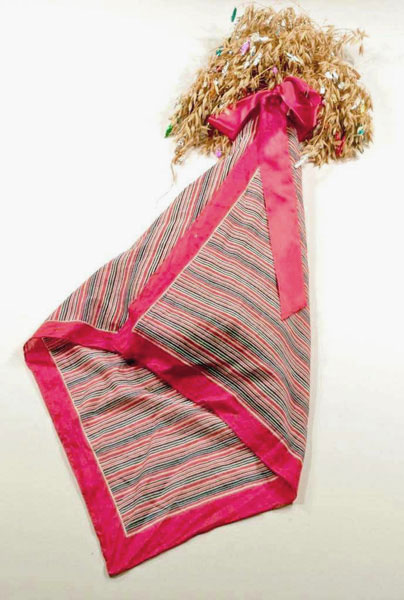
A’ Chailleach Bhuain / The Old Woman of the Harvest made by Hector J. C. Campbell in around 1990.
Courtesy of Mrs Flora MacPhail
On Tiree the last sheaf of corn to be harvested was called A’ Chailleach Bhuain, a tradition that was found all over northern Europe and likely to date from the dawn of farming in Neolithic times. The Corn-spirit was believed to live in the corn, giving it the strength to grow vigorously. As the harvest proceeded, this spirit became concentrated in the remaining crop. The final sheaf to be cut was then regarded as containing its essence. On Tiree, the ‘cailleach’ was fed to the horses before they started the spring ploughing in the belief that the power of the Corn-spirit would be transmitted to the soil for the new year’s growth. This four thousand year old harvest tradition died out before 1910 in Sandaig, in the 1920s in Balinoe and into the 1950s in Heylipol and Balephuil.