


Carding comb.
Wooden carding comb with metal prongs set in leather. Part of a pair that would have been used to tease out the fibres of sheep’s wool to prepare it for spinning into thread.


Carding comb.
Wooden carding comb with metal prongs set in leather. Part of a pair that would have been used to tease out the fibres of sheep’s wool to prepare it for spinning into thread.
Colour photograph of sheep-dippers at Balephuil in 1988.
Taking a break from sheep-dipping at Balephuil in 1988. L-R: Hector Kennedy, Neil MacDonald, Hector Brown, Hannah Williams and David MacClounnan.

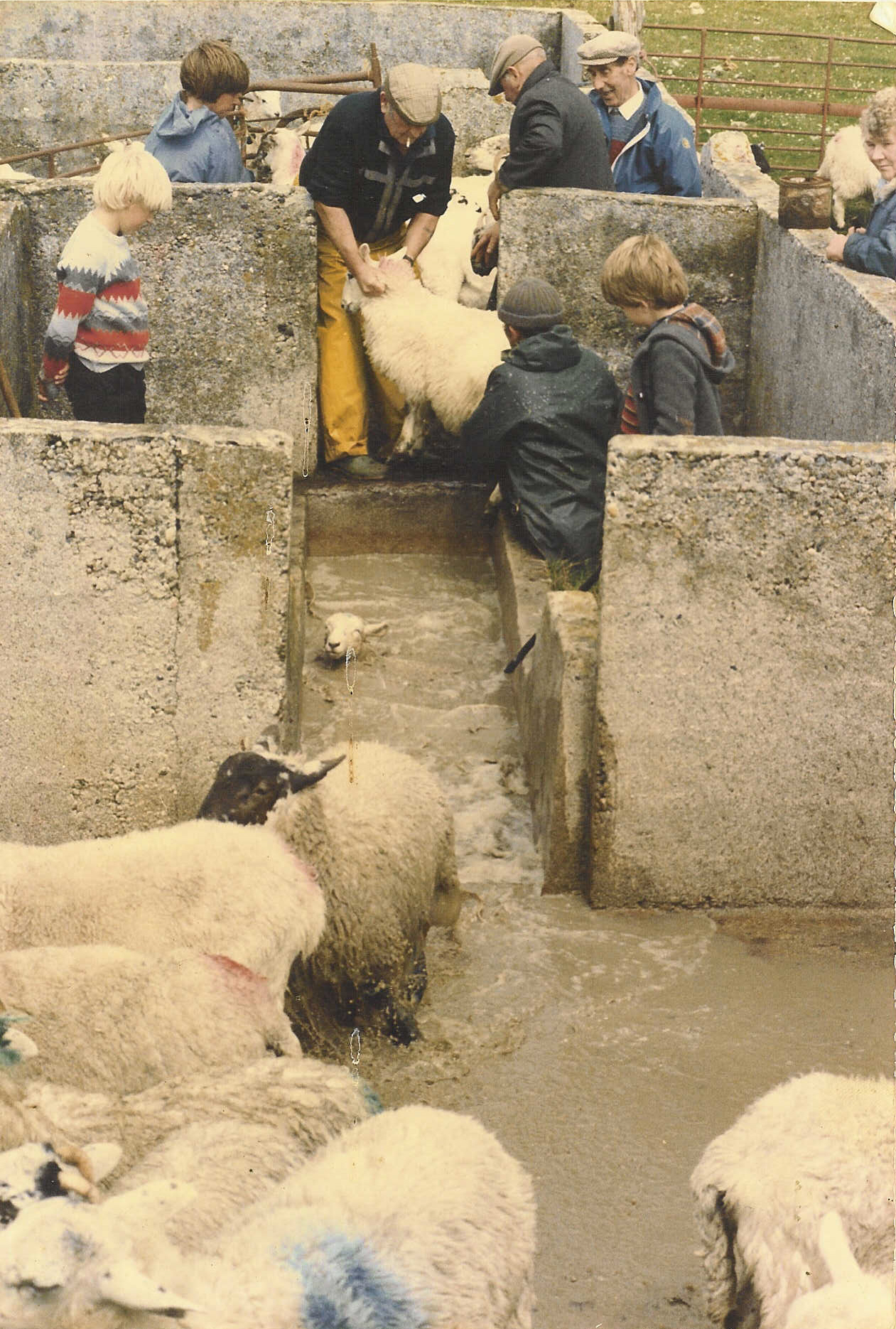
Dipping sheep at Balephuil in 1987
Photograph of sheep-dipping at Balephuil in 1987.
Courtesy of Mrs Nan MacClounnan
This photograph shows sheep being put through a dip-bath at Balephuil in 1987. Twice-yearly dipping was compulsory up to 1989 in an effort to eradicate scab, a disease caused by a parasitic mite that can result in severe loss of condition and death, especially of lambs. Dipping also treated other parasites such as blowfly maggots and ticks.
The majority of dips contain organophosphates (OP) which were originally developed as chemical warfare agents. The effects of exposure can include headache, exhaustion, blurred vision, muscle twitching and confusion. People subsequently handling sheep can also be at risk.
As well as being hazardous to health, sheep dips are harmful to wildlife and the environment, and their disposal is problematical. Nowadays most crofters on Tiree use non-OP pour-on treatments to control parasites on their sheep.
Colour photograph of sheep-dipping in Balephuil in 1987.
Sheep-dipping in Balephuil in August 1987. L-R: (front) Etty MacDonald, unknown, unknown, (back) unknown, John MacPhail, John Brown, David MacClounnan.
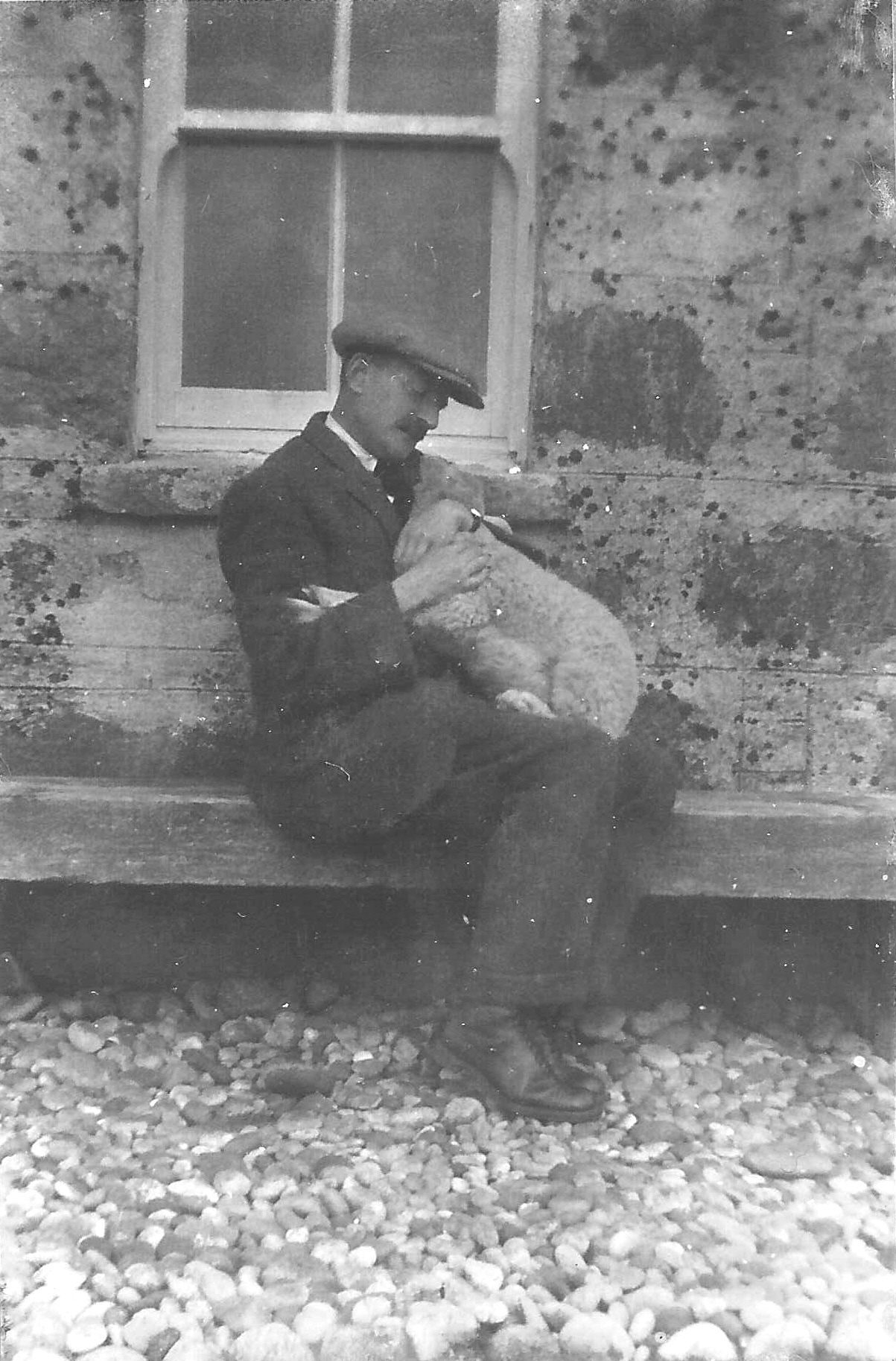
Black and white photograph of an unknown man with a pet lamb from a small album from Silversands.
`Da Pheata` (two pets) from a small album from Silversands, Vaul, titled `Idle Days` probably dating from the 1920s or early 1930s.
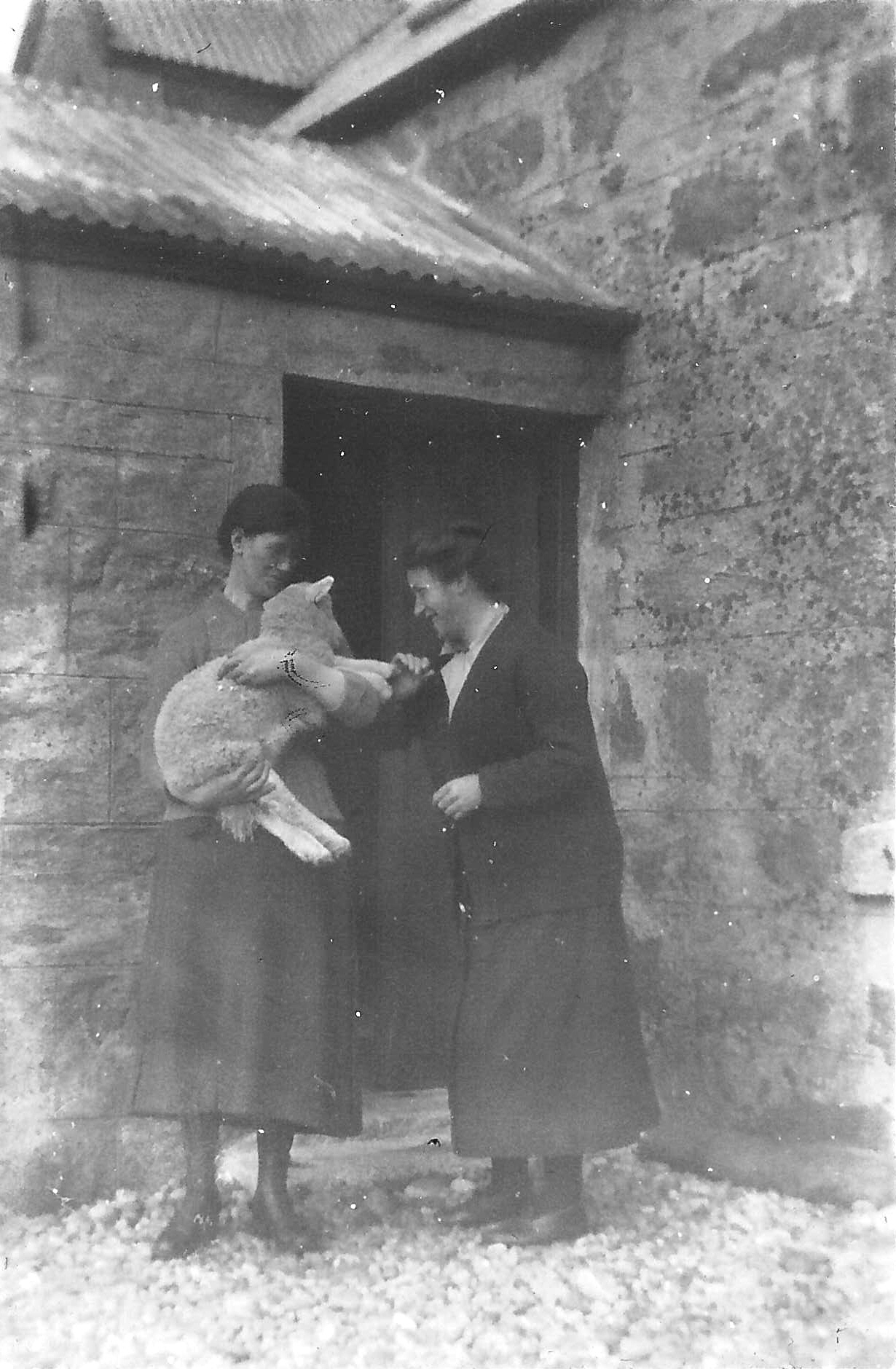
Black and white photograph of two unknown women with a pet lamb from a small album from Silversands.
`Tri pheatichean` (three pets) from a small album from Silversands, Vaul, titled `Idle Days` probably dating from the 1920s or early 1930s.
Black and white photograph of sheep-dipping at Kennavara in 1933.
Sheep-dipping day for Barrapol at Kennavara in 1933.

Black and white postcard of the fank at Kennavara in the 1930s.
The fank at Kennavara after sheep-dipping in the 1930s. L-R: (back) John MacGillivery`s wife; Niall Brownlie, Barrapol (Johann MacKinnon`s brother); John Brownlie (Johann and Niall`s father); D. C. MacKinnon, John MacGillivery`s half-brother; Margaret MacGillivery, John`s daughter; Hugh MacGillivery, John`s son; Marianne or Annie, John`s sister; John MacFadyen, Annabella MacNeill`s father; (front) Malcolm MacDonald, shepherd in Barrapol, Johann`s half-brother; John Wright; Donald MacLean, father of Hugh, Willie and Angus; Hugh MacKinnon (Eoghann Ban); Archie Sinclair, brother of Alasdair, A` Chachaleith Dhubh, Grianal; Willie MacNeill, from the Land who worked for the MacNivens.

Black and white photograph of sheep-shearing in the 1920s.
Sheep-shearing in the 1920s, probably at Lodge Farm, Kirkapol. On the left are Jessie Campbell and her niece Elsie MacKinnon.

Colour photograph of Donald MacIntyre of Gott inspecting lambs at the first sale at the new mart in 2003.
Donald MacIntyre of Gott, Tiree`s oldest crofter, inspecting lambs at the first sale at the new mart on the day of the opening of the Rural Centre in August 2003.
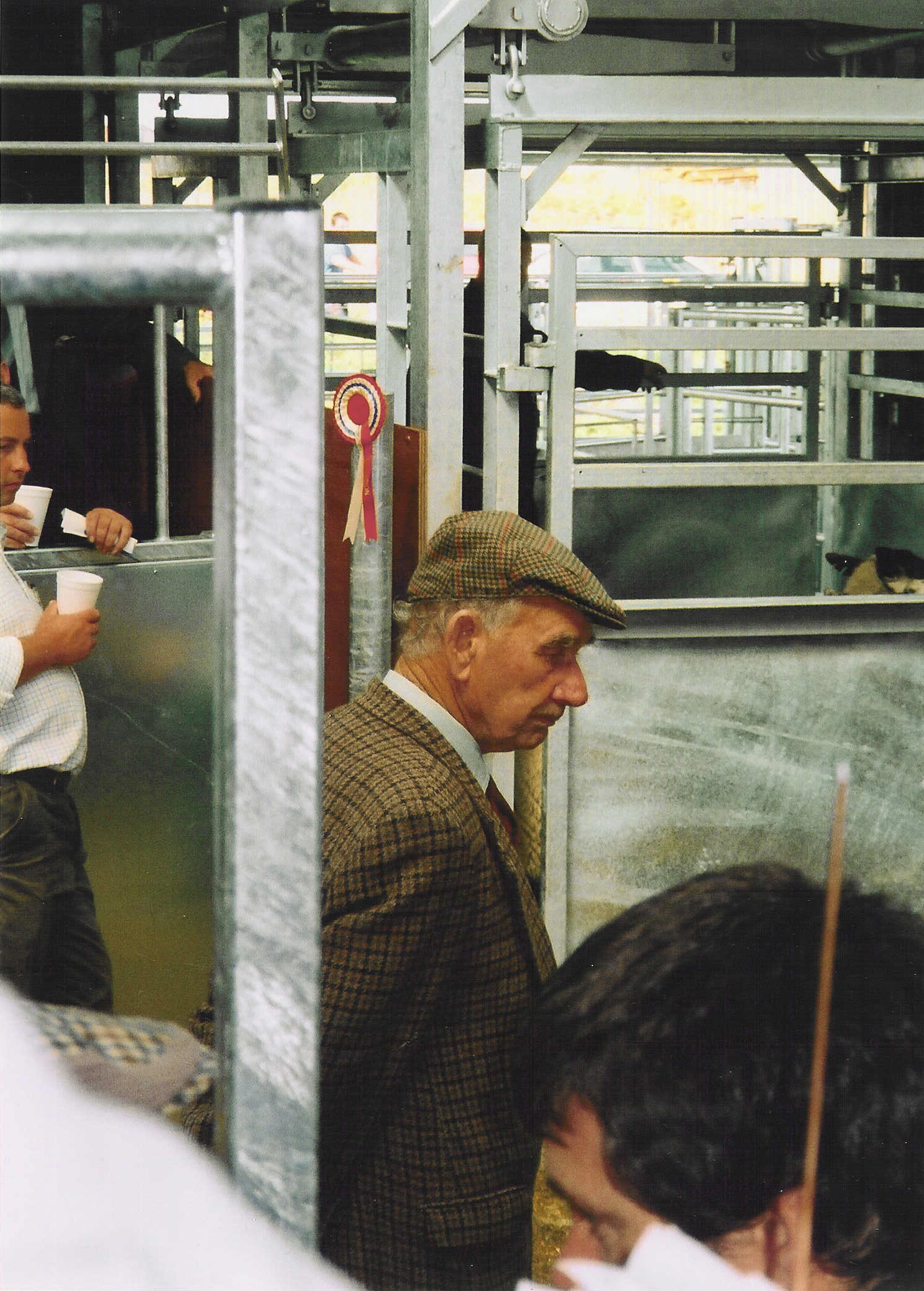
First sale at the new mart
Photograph of the first sale at the new mart at Crossapol in 2003.
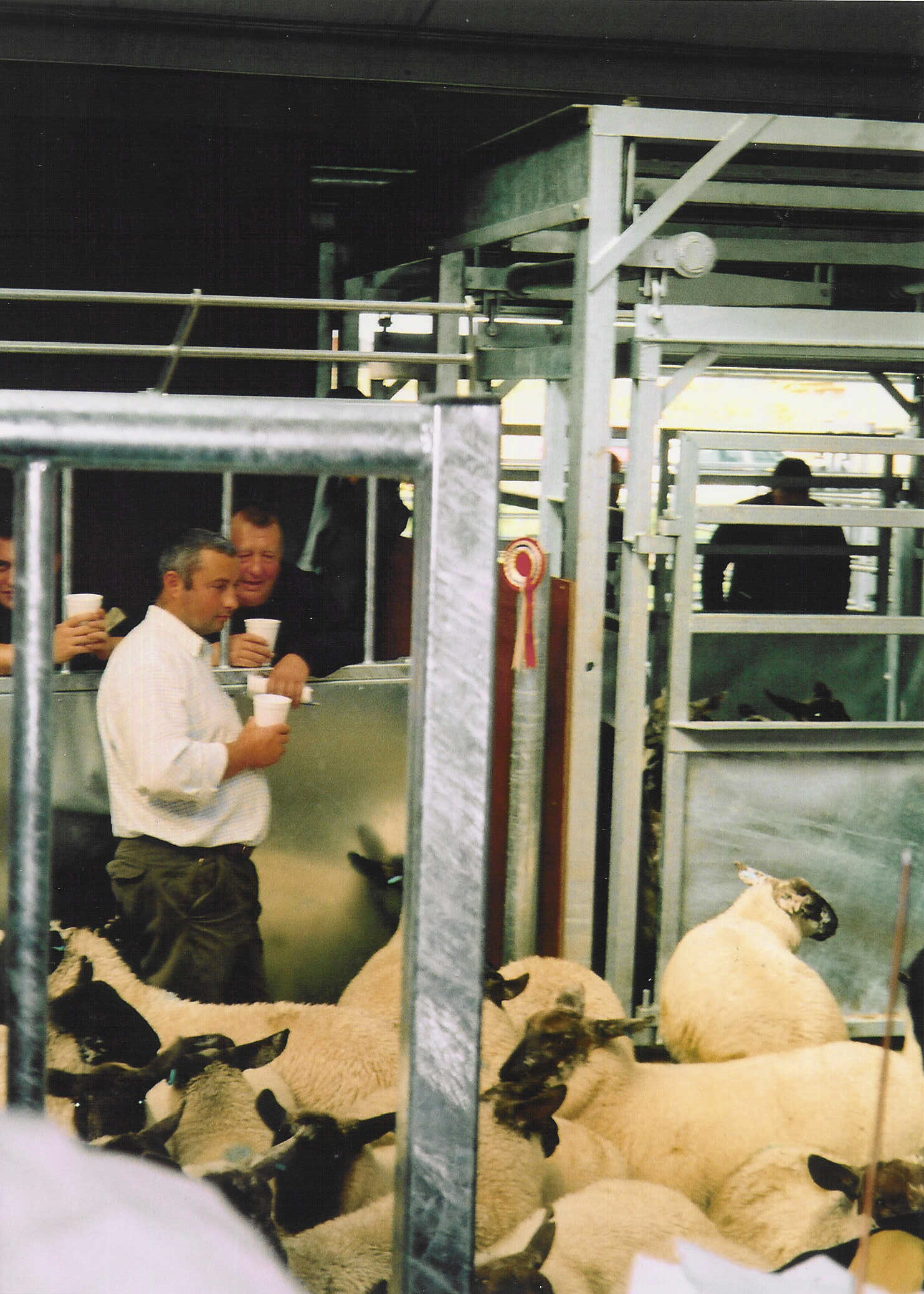
For many years crofters on Tiree battled to secure funding to replace the old market stance at Crossapol which had very limited facilities. During sheep and cattle sales, the lorries for transporting livestock caused an obstruction on the main road to the west of the island.
Funding for the project amounting to £532,000 was finally secured in December 2002. The funders were Argyll & the Islands Enterprise, Argyll & Bute Council, the Scottish Land Fund, SEERAD, the Esmee Fairbairn Foundation, United Auctions, Scottish Natural Heritage and Investors in Society.
The Rural Centre was officially opened on the 21st August 2003. The ribbon at the entrance to the Centre was cut by Donald MacIntyre and Iain MacInnes, the island’s oldest and youngest crofters respectively. The following day saw the first sale of a pen of eight lambs donated by the directors of Tiree Rural Development.
Colour photograph of the first sale in the new mart in 2003.
Lambs in the first sale at the new mart on the day of the opening of the Rural Centre at Crossapol in August 2003.