


Black and white postcard of the Mary Stewart in Scarinish harbour.
Postcard of the Mary Stewart in Scarinish harbour.
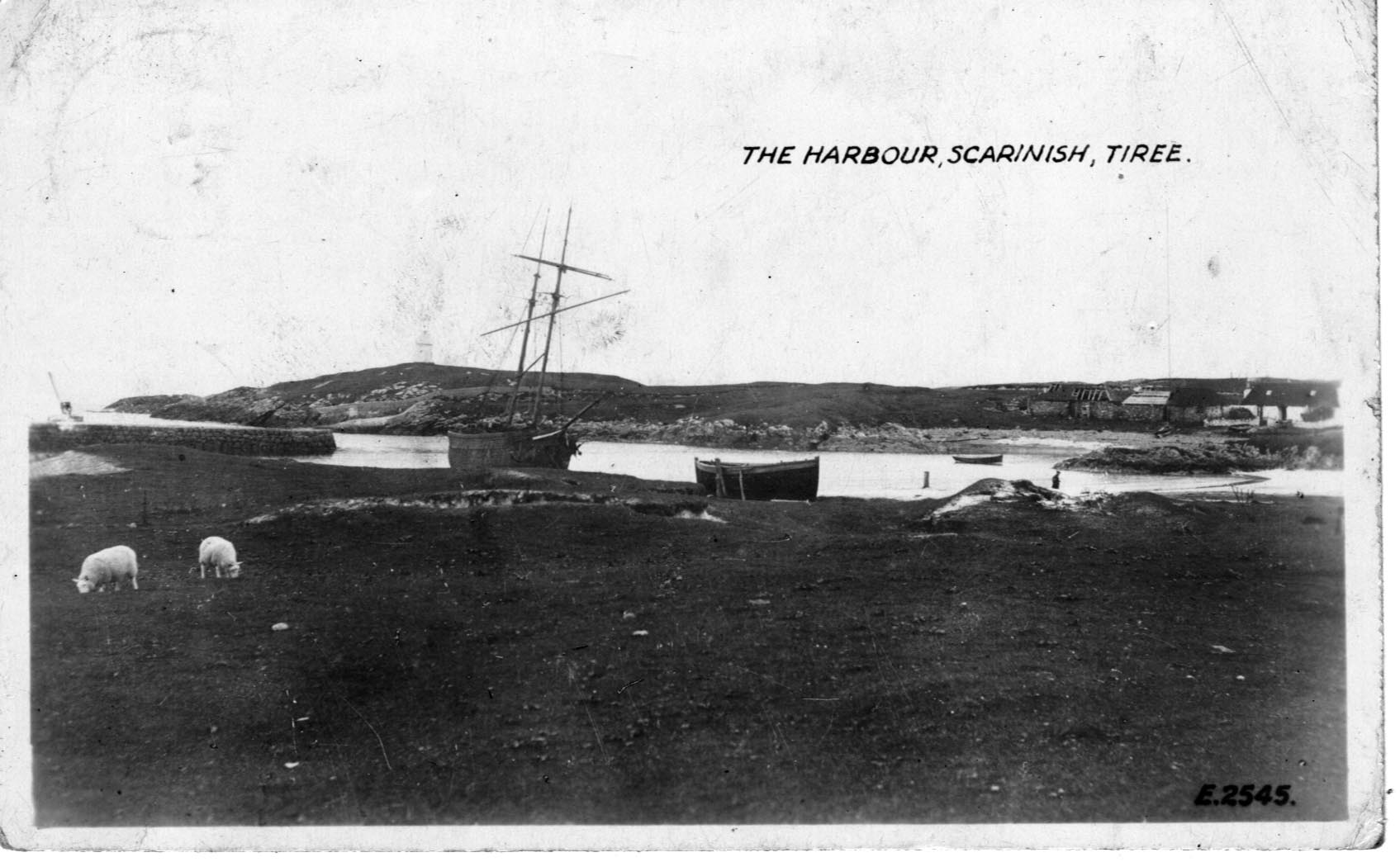

Black and white postcard of the Mary Stewart in Scarinish harbour.
Postcard of the Mary Stewart in Scarinish harbour.
Black and white photograph of the Mary Stewart in Scarinish harbour in 1937.
The Mary Stewart in Scarinish harbour in 1937.

Black and white postcard of Scarinish harbour.
View of Scarinish harbour with the hotel on the left and the Mary Stewart on the right. Behind the Mary Stewart are the radio masts built in 1942 and demolished shortly afterwards.

Black and white photograph of the Mary Stewart in Scarinish harbour.
The Mary Stewart beached in Scarinish harbour, taken in the late 1930s early 1940s.

Audio cassette recording of Iain MacDonald talking to Reg Knapman in Scarinish in 1982
Iain MacDonald (Iain Noan) talks to Reg Knapman in 1982 about the MacLeans in Cornaig and Scarinish and their relation to Rossdhu, his grandfather and the `Mary Stewart`, starting work, WWII, CalMac ships and the service years ago, Tiree working boats, Flora Campbell and her family, the MacLeans and MacDonalds of Kenovay, the Rev. James Curry, Dr Armstrong and Kenneth MacKenzie, the piermaster.
Black and white photograph of the `Mary Stewart`.
The `Mary Stewart` in full sail, from a newspaper photograph taken around the 1920s.

Twenty-two photographs of Tiree from RCAHMS, 1900-1977
.
Black and white photograph of Scarinish harbour.
Scarinish harbour with the Mary Stewart, probably taken in the 1930s. The building in the background was originally built as a church, then used intermittently as a prison and latterly as a store by the owners of the Mary Stewart. It was pulled down to make roads during World War II.
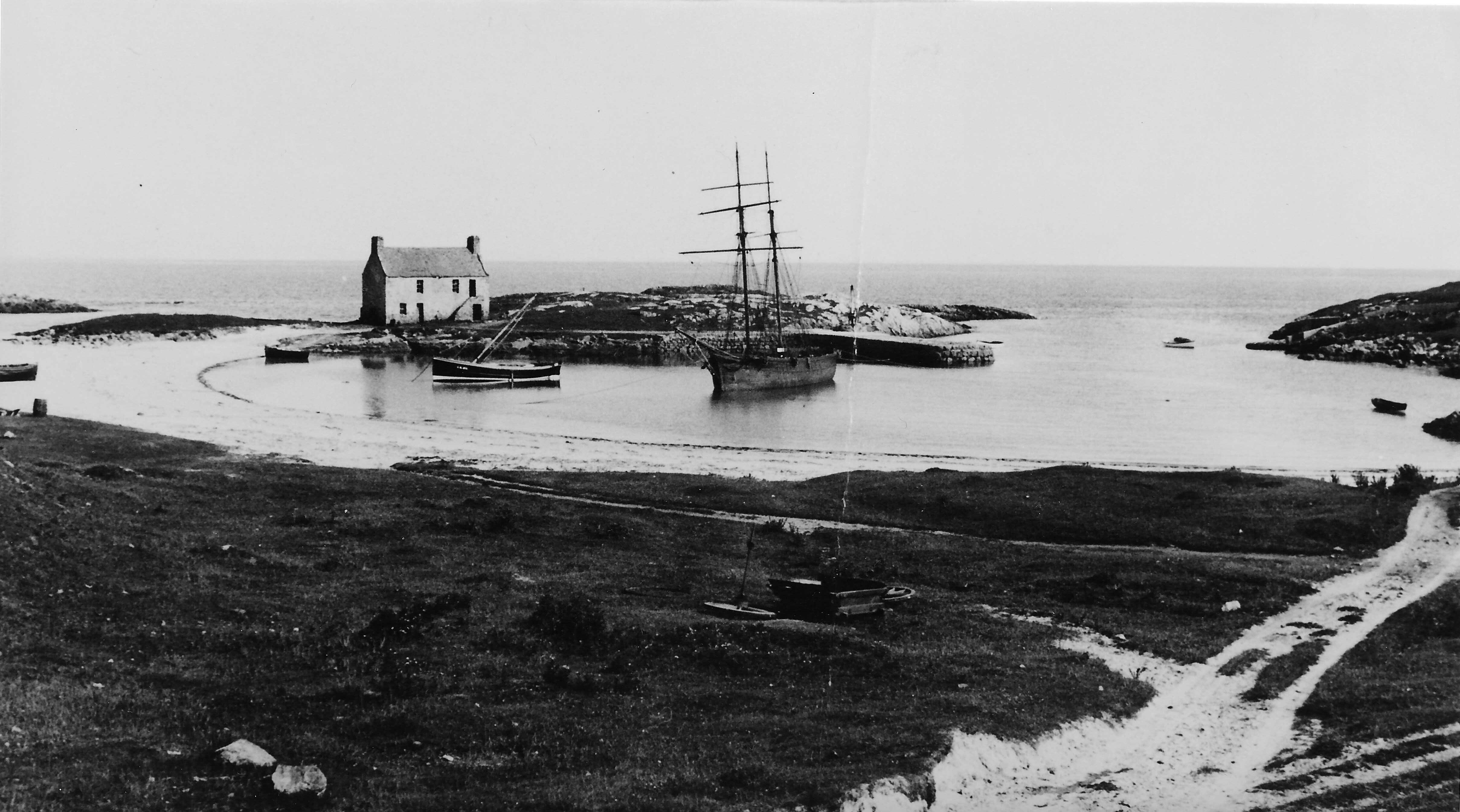
The ‘Mary Stewart’ in Scarinish harbour in the 1930s
Photograph of the schooner ‘Mary Stewart’ in Scarinish harbour in the 1930s.
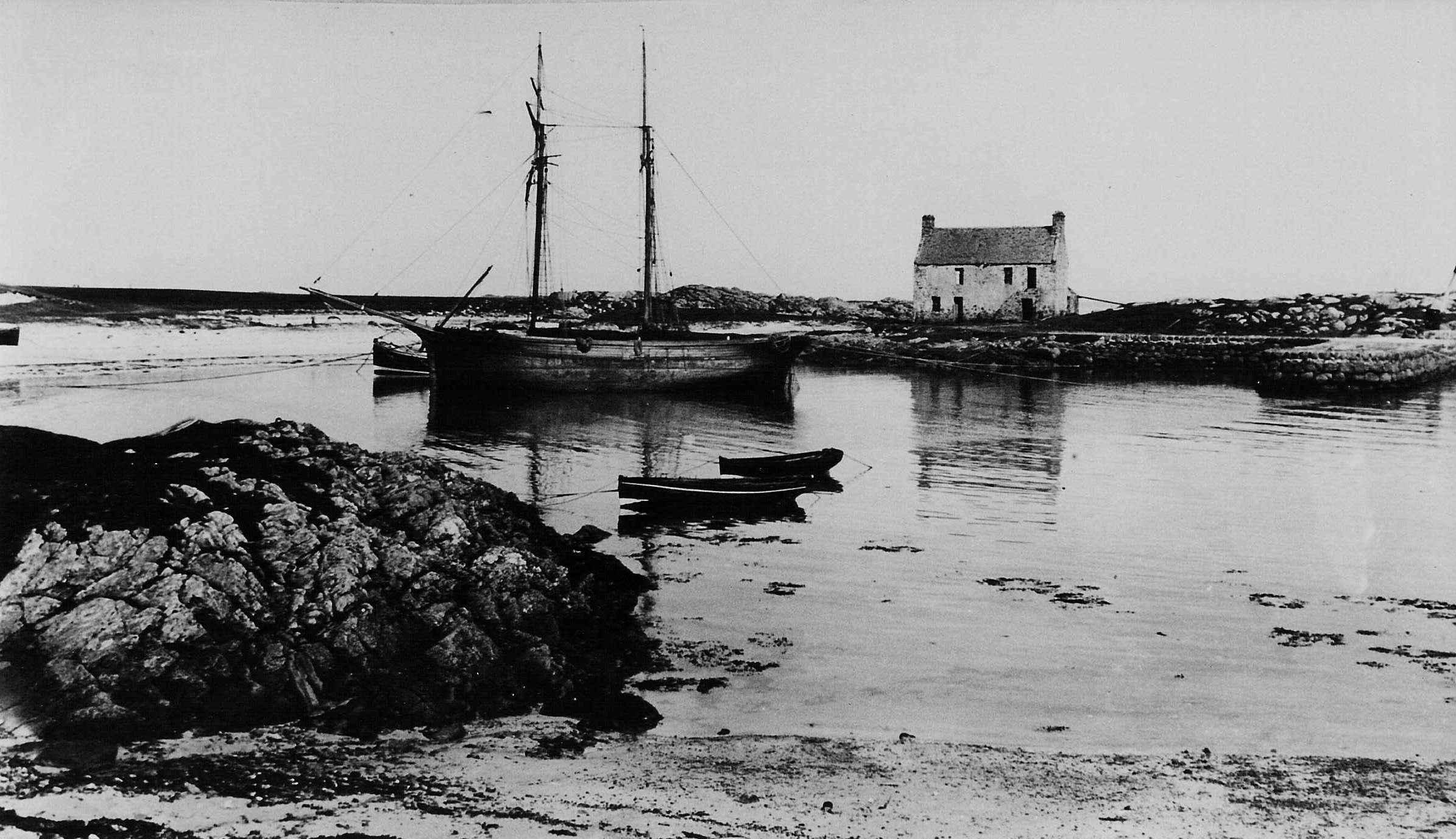
Courtesy of Mrs Netta Martin
Taken in the early 1930s, this view of Scarinish harbour shows the topsail schooner ‘Mary Stewart’ in her final resting place. For the previous thirty years she had traded up and down the west coast carrying coal and other cargo.
Also anchored in the harbour are two lobster boats. Commercial lobster fishing began on Tiree after 1880 when the railway to Oban was opened, allowing shellfish to be sent live to the London markets for the first time.
Said to have been originally built as a church, the building in the background was used as a store by the owners of the ‘Mary Stewart’. It was pulled down to make the road to the pier during World War II.
Black and white photograph of Scarinish harbour.
Scarinish harbour with the Mary Stewart, probably taken in the 1930s. The building in the background was originally built as a church, then used intermittently as a prison and latterly as a store by the owners of the Mary Stewart. It was pulled down to make roads during World War II.
Black and white photograph of the `Mary Stewart` in Gott Bay.
The `Mary Stewart` in Gott Bay with the pier to the right.