Handwritten letter dated 1894 from Jessy Wallace (sister of Rev John Gregorson Campbell), to a solicitor in Edinburgh regarding payment of £5 to her sister Mrs MacLean. At the time of writing, Jessy is living in Hynish.


Handwritten letter dated 1894 from Jessy Wallace (sister of Rev John Gregorson Campbell), to a solicitor in Edinburgh regarding payment of £5 to her sister Mrs MacLean. At the time of writing, Jessy is living in Hynish.
Black and white photo postcard of Scarinish Harbour, date stamped 1907.

Intricately hand-carved, ornate, wooden picture frame from Lodge Farm, Kirkapol. Probably made by a local during one of Lady Victoria Campbell’s woodworking classes in around 1900.

Black and white portrait photograph of Rev James Taylor, Baptist minister.

Bagpipes (disassembled) belonging to postman Archibald McLean (d.1951) of Dunview Cottage (thatched house), Scarinish. Archie would practice playing the pipes outside the house. Archie married Janet MacTaggart, Earnal (b. Greenock). Their daughter Katie (Catriona Archie Mhor) worked in the telephone exchange in Scarinish.
Sepia tone portrait photograph of Colin Cameron and his wife Jessie McDonald (b. 1877) on their wedding day in Brunswick, Australia on 13 November 1927. Jessie was the daughter of Hugh MacDonald (1850-1927) and his first wife. He emmigrated with his parents from Balinoe to New Brunswick, Australia, in 1853.

Scanned record sheet issued by the Commonwealth War Graves Commission for Private Hector McDonald, Balemartine (1894-1916), who died in battle during WWI, and is remembered in Cambrin Churchyard, France. Hector was the son of Hector and Chistina Campbell McDonald of Balemartine.
Click here to view 2021.36.1
Simple white clay pipe adorned with three metal bands marked ‘ECB London’, ‘MS’ and ‘U’, and ‘EP’, which probably came from other pipes.

Dr D A Higgins of the Society for Pipe Research, told us that it is a typical Scottish clay pipe of late C19th or early C20th date. Thick, chunky pipes like this were favoured in Scotland and made by many different manufacturers. Those from the larger firms often had a pattern number on the left hand side of the stem [this one does not].
The metal bands are nothing to do with the pipe, but could well have come from others. Briar pipes typically had a metal band like these to join the wooden bowl with a vulcanite stem. Some, more expensive, clays with stems of vulcanite or other materials also had a metal band. The diamond-shaped band could have come from a ‘Bulldog’ pattern of pipe, which had a diamond-shaped stem section. These bands would have been made since the mid C19th as composite pipes only really came into circulation after around 1850.
Digitised copy of a marine and landscape map of Tiree. The landscape is depicted in detail, including crofts, field boundaries, schools, churches, mills, shops, smithies, fanks, quarries, stores, kelp sheds, Middleton Chemical Works, ruins, standing stones, pasture, blown sand, raised beaches. No surveyor is listed.
From the archives of the Dukes of Argyll at Inveraray Castle, made available through the Written in the Landscape project.
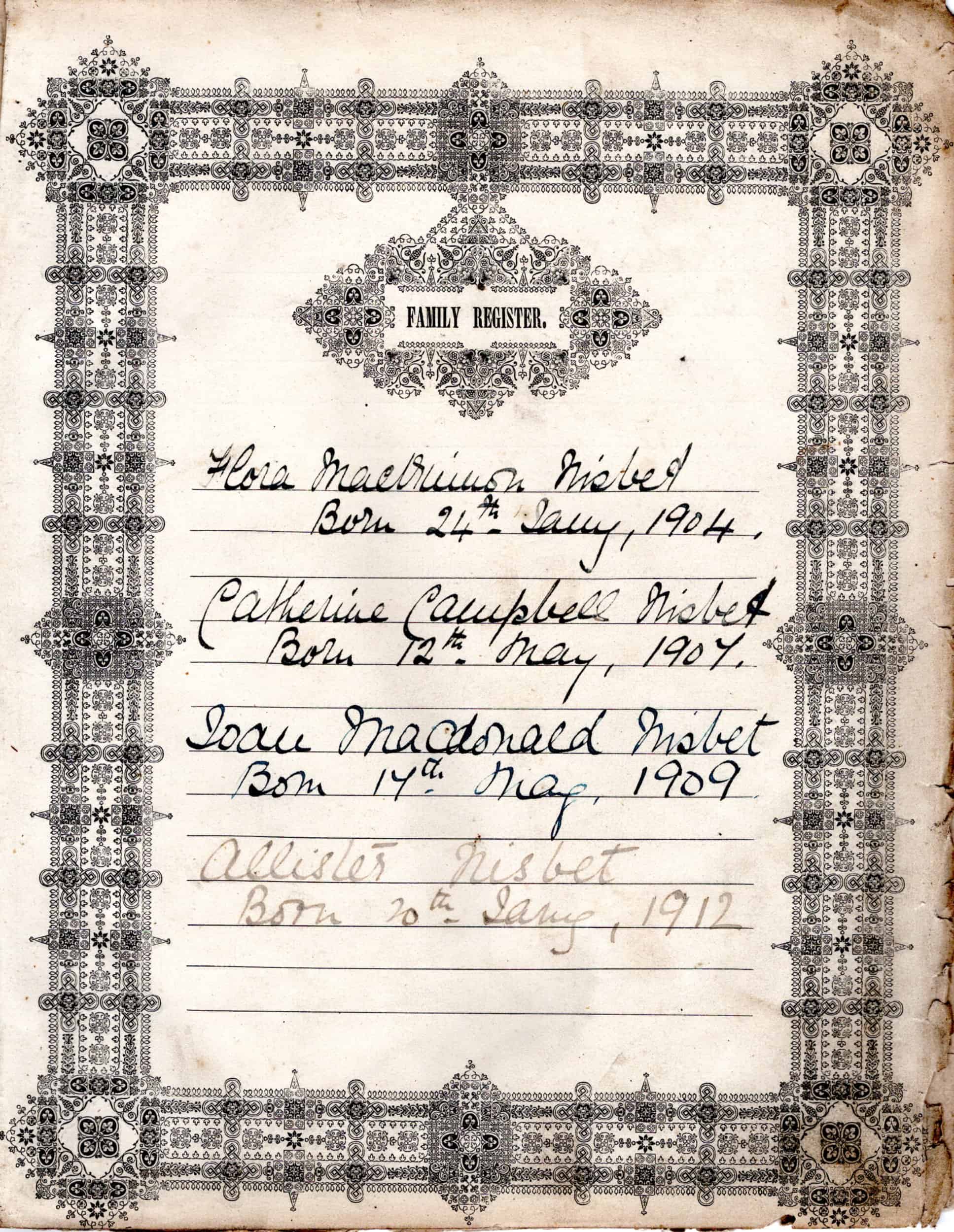
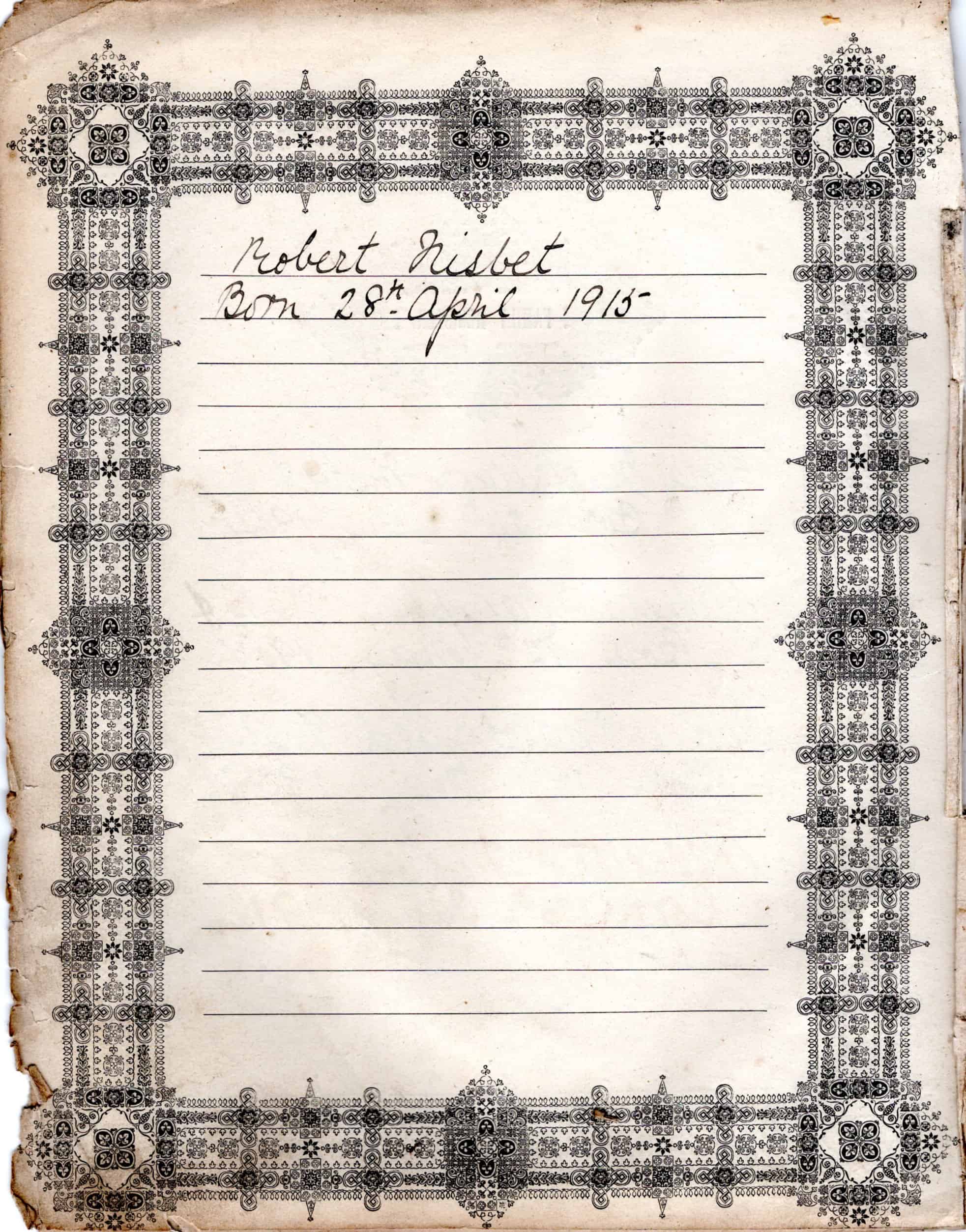
Large, leather-bound Brown’s Bible (1868) belonging to the Nisbet family of Heanish. Handwritten on the inside, on a Family Register page, are the names and dates of birth of the Nisbet children: Flora, Catherine, Joan, Allister and Robert.