


Metal funnel for pouring parrafin into lamps
Black-painted metal funnel, with metal mesh filter, for pouring parrafin into lamps (presence of filter suggests that it may have been for a machine, e.g. lawnmower?).


Metal funnel for pouring parrafin into lamps
Black-painted metal funnel, with metal mesh filter, for pouring parrafin into lamps (presence of filter suggests that it may have been for a machine, e.g. lawnmower?).
Collection of metal tools from a ruin in the 1970s
Assemblage of eight black-painted tools, length of straw rope and a pair of glasses, collected by Ailean Boyd from ruins in the 1970s: forge tongs, head of an open clay spade used for heavy soils of bottoms of ditches, pony shoe, turf edger head, hammer wrench, ash scraper, fork head, unknown head.

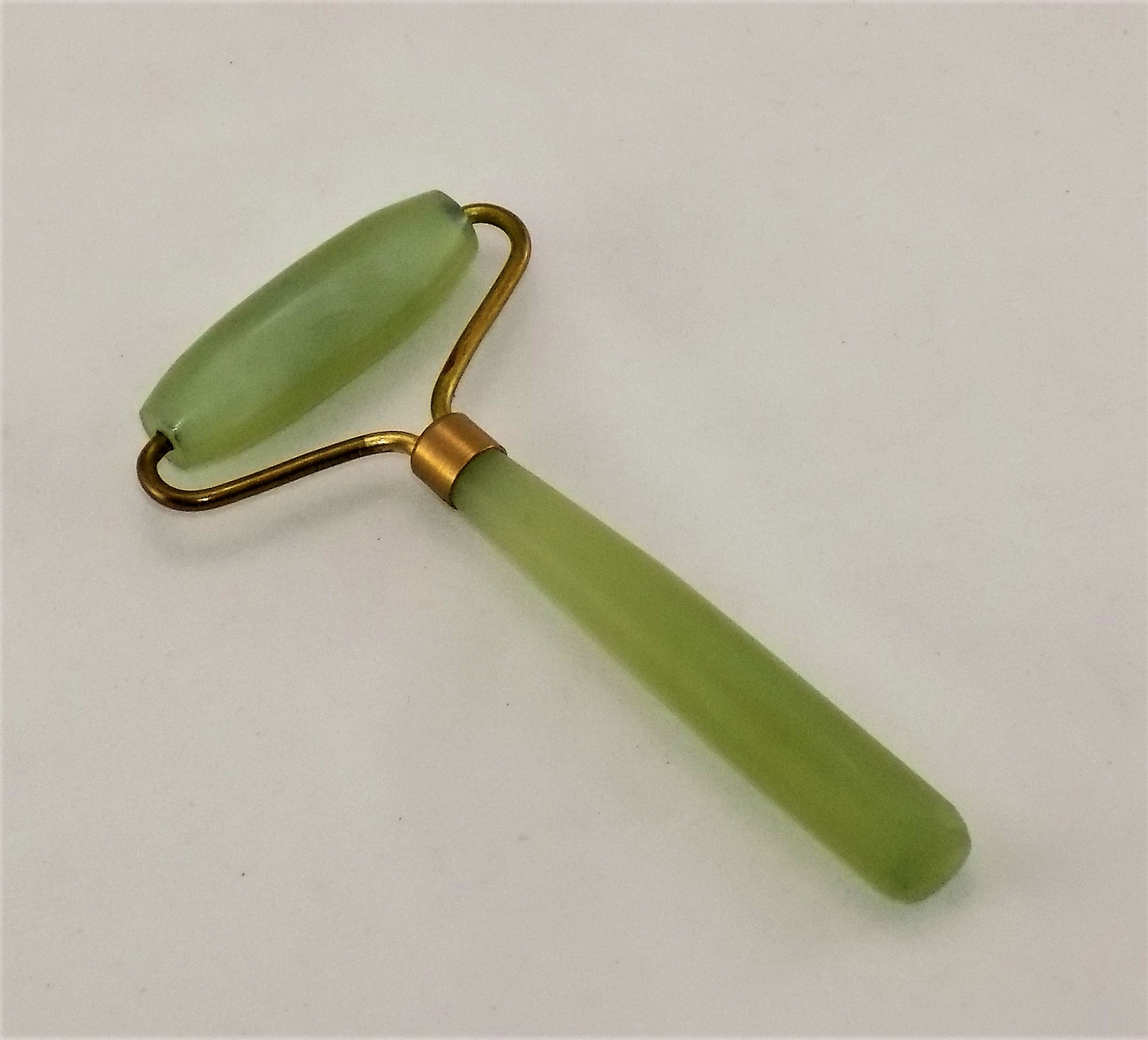
Jade/onyx signature blotter
Short-handled roller made of green jade, or onxy, and brass for rolling across blotting paper that has been placed over a signature. It was probably once part of a writing set. Originally on display as a mystery object (roller for screenprinting; smoothing hand-made paper; polish starched shirt collars; Chinese face massager) and identified by the senior photographer of Bonhams Auctioneers, Edinburgh.
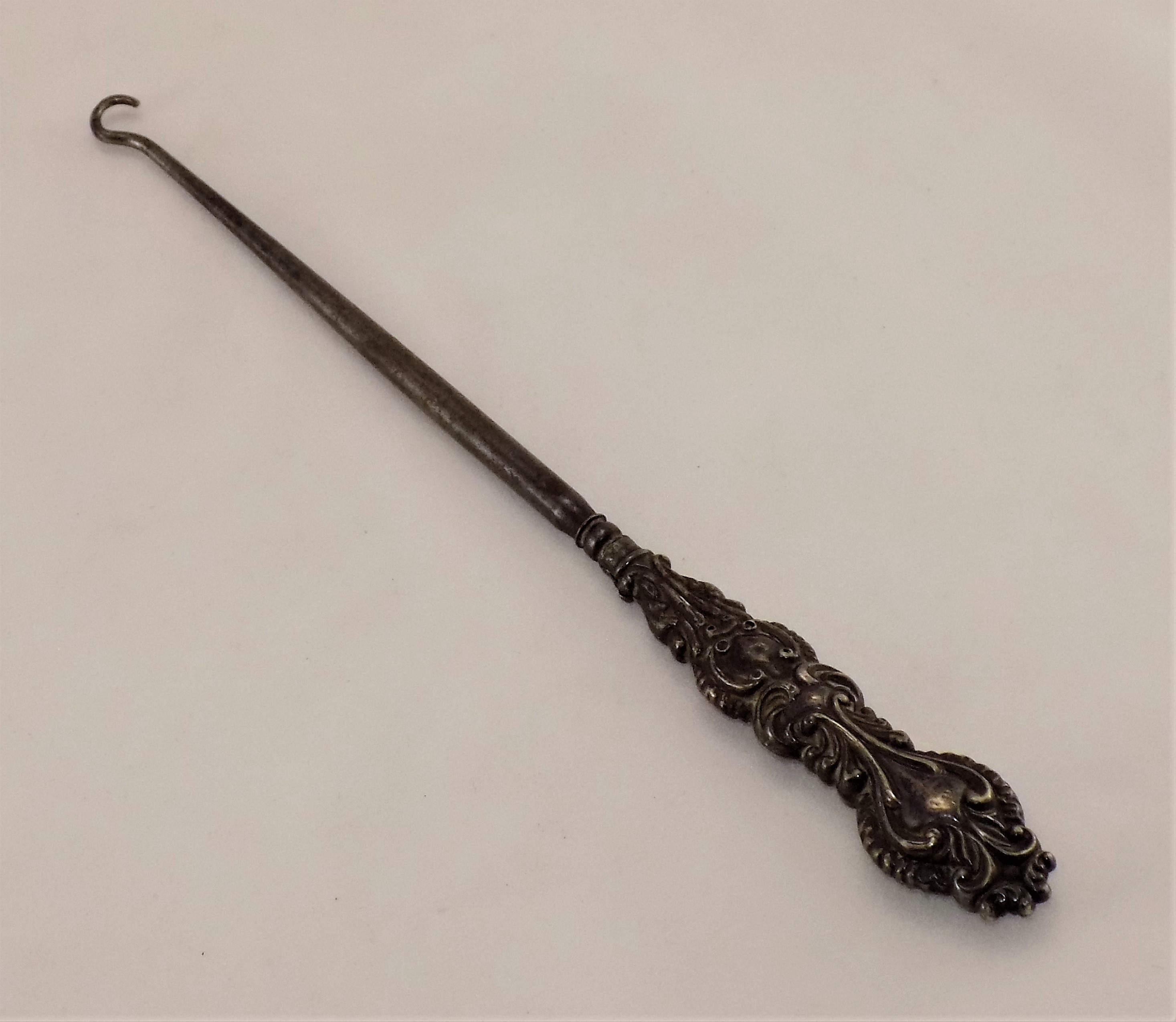
Long-handled, ornate, silver/silver-plated (?) button hook used by ladies to lace up their long ankle boots.
Metal rod used for drilling rock
Short steel rod or `jumper` with star-shaped end for drilling rock given to Dr Holliday by Iain Sinclair (Alasdair Sinclair, Brock`s brother) in response to An Iodhlann article in An Tirisdeach 2012. Shaft stamped with `Rawlplug star drill G – 15/16″ England`, and thought to be made after 1913 (see 2012.135.3).

Information about steel rock drill / `jumper`.
Handwritten letter dated 24/9/12 from Iain Sinclair (Alasdair Sinclair`s brother) to Dr John Holliday, with information about a steel rod for drilling rock or `jumper` (2012.135.2).
Click here to view 2012.135.3
Long metal rod used for drilling rock / `jumper`
Long metal (iron?) rod with star-shaped end used for drilling rock in combination with a compressor. From Baugh quarry during WWII. Given to Dr Holliday by Donald MacKinnon, Hough, in response to article in An Tirisdeach.
Tool for twisting rope
Corra-shùgan / rope twister. Iron and wooden tool for hand-twisting rope. From the croft of John MacNeill, Balemartine. Given to Alan Boyd by Chrissie MacArthur in 1972. Similar to 2013.164.4 pictured.

Bone tool
Bone tool found at an un-named dùn on Tiree in the 1970s.
Plunger butterchurn
Vertical plunger churn or `lanaid` for buttermaking in the late 1860s to 1950s. Cylindrical and made of wood bound with metal hoops, with wooden plunger rod and lid. This design was used all over Tiree until the smaller glass churns of the 1950s took their place.
This butter churn belonged to John Brown of Balephuil before passing to the Findlater family. The plunger was repaired by Norman McIver.
