


Black and white photograph of an RAF airman at Gott Bay pier.
RAF airman at Gott Bay pier with the `Clydesdale` tied up alongside during World War II. (Photograph from Mike Hughes in Filing Cabinet 2 drawer 1)


Black and white photograph of an RAF airman at Gott Bay pier.
RAF airman at Gott Bay pier with the `Clydesdale` tied up alongside during World War II. (Photograph from Mike Hughes in Filing Cabinet 2 drawer 1)
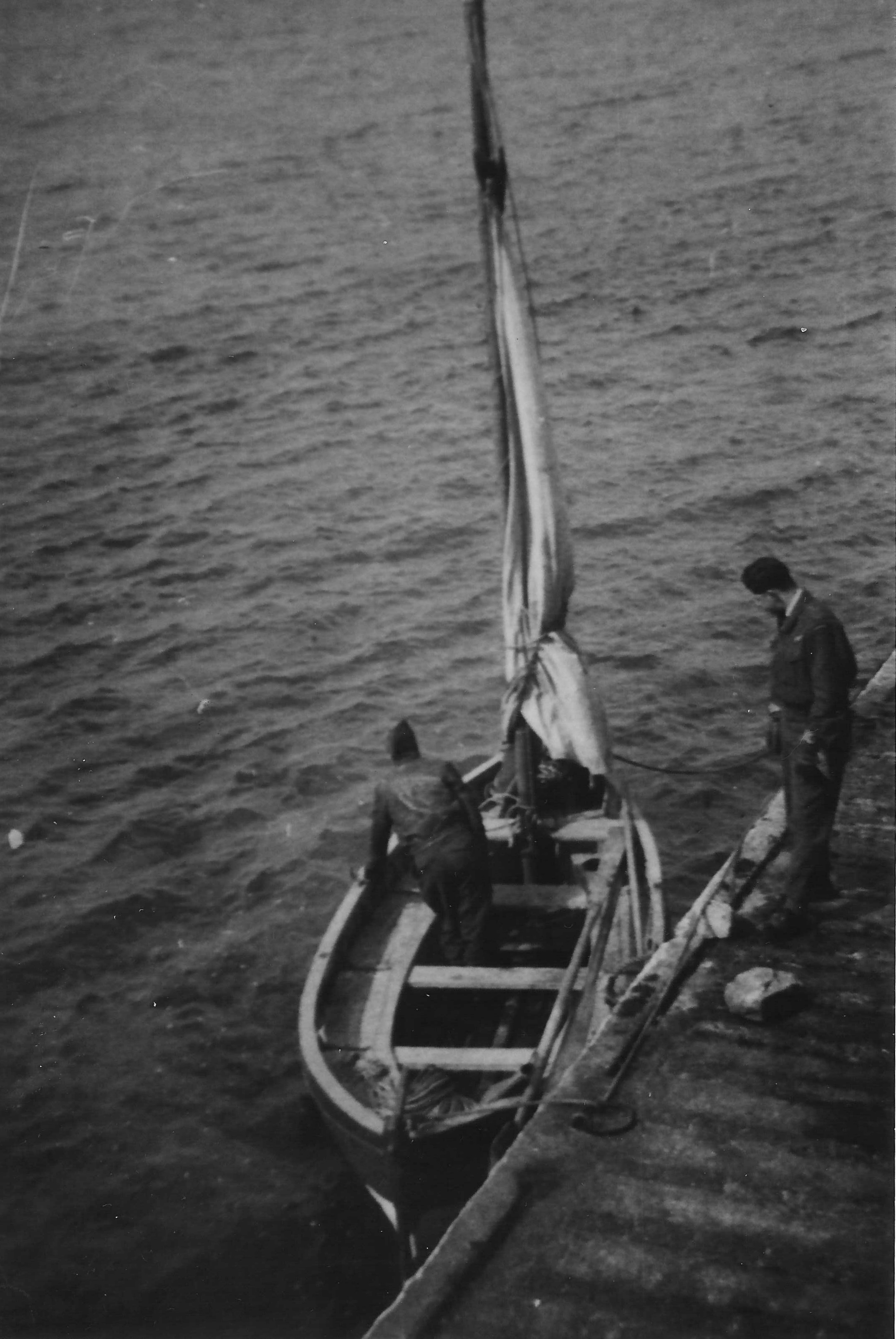
Black and white photograph of two RAF airmen with a sailing dinghy.
Two RAF airmen with a sailing dinghy taken during World War II. (Photograph from Mike Hughes in Filing Cabinet 2 drawer 1)
Black and white photograph of SS Laristan in 1942.
The SS Laristan on the rocks at Craignish in 1942 photographed by George Holleyman.

The wreck of the ‘Ocean Tide’
Photograph of the wreck of the ‘Ocean Tide’ off Mannal in 1942.

Courtesy of Ms Linda Gowans
George Holleyman, an archaeologist in the RAF police posted to Tiree during World War II, photographed the wreck of the ‘Ocean Tide’ in January 1942. A trawler from Leith, the ‘Ocean Tide’ had run aground off Mannal in poor weather.
Repeated attempts were made by RAF personnel and three local volunteer coastguards to shoot a line to the stricken vessel without success. Buffeted by the wind and the incoming tide, the trawler was listing so badly it was in danger of turning over.
The crew made a last desperate attempt to save themselves and launched a small boat. Within minutes they lost control and were driven on to a rocky promontory. By luck, two of the lines had caught on the rocks and the six crew members, one of them injured, were able to struggle ashore.
Black and white photograph of SS Ocean Tide in 1942.
The SS Ocean Tide on the rocks at Mannal in January 1942 photographed by George Holleyman.
Black and white photograph of Scarinish harbour.
Scarinish harbour with the Mary Stewart, probably taken in the 1930s. The building in the background was originally built as a church, then used intermittently as a prison and latterly as a store by the owners of the Mary Stewart. It was pulled down to make roads during World War II.
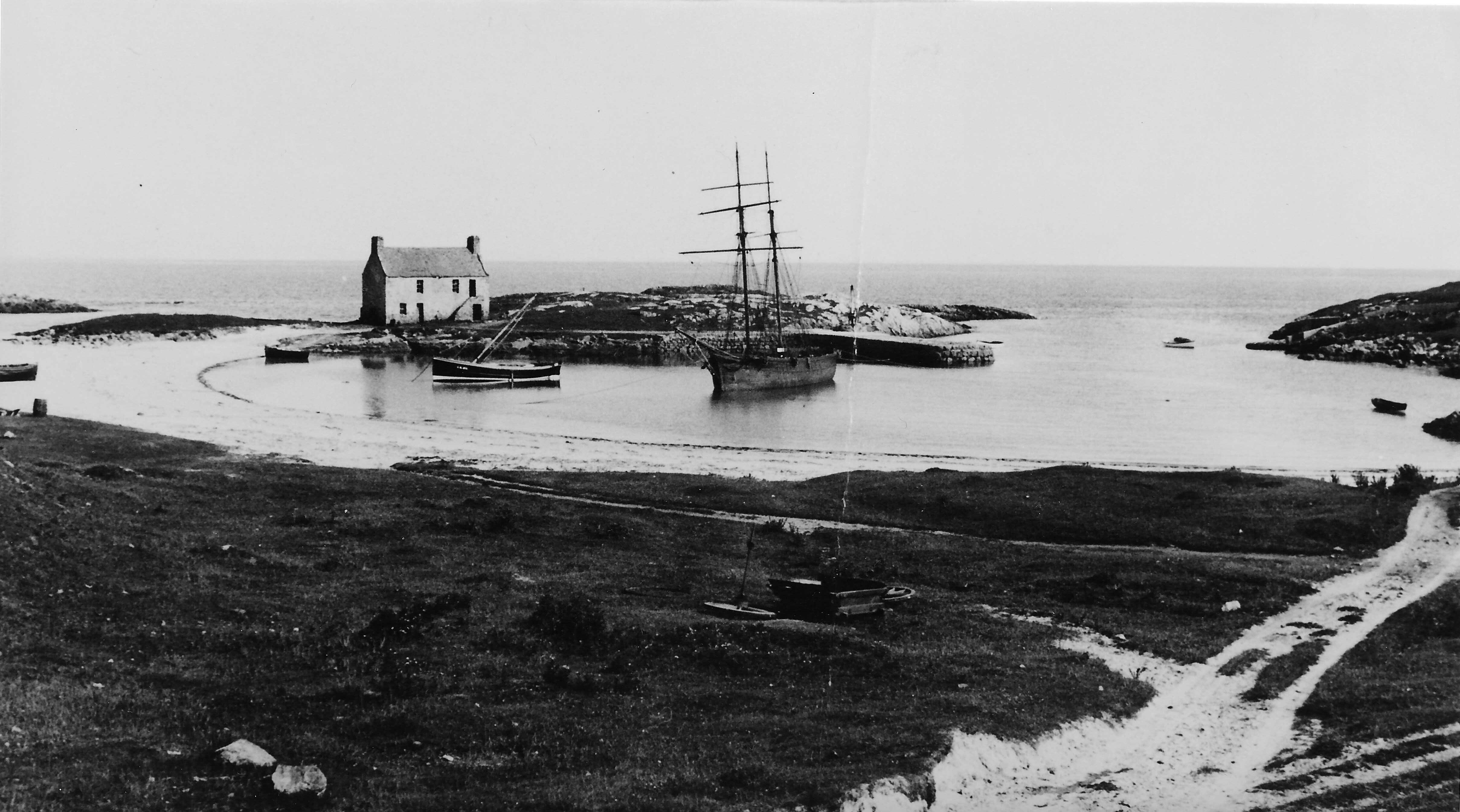
The ‘Mary Stewart’ in Scarinish harbour in the 1930s
Photograph of the schooner ‘Mary Stewart’ in Scarinish harbour in the 1930s.
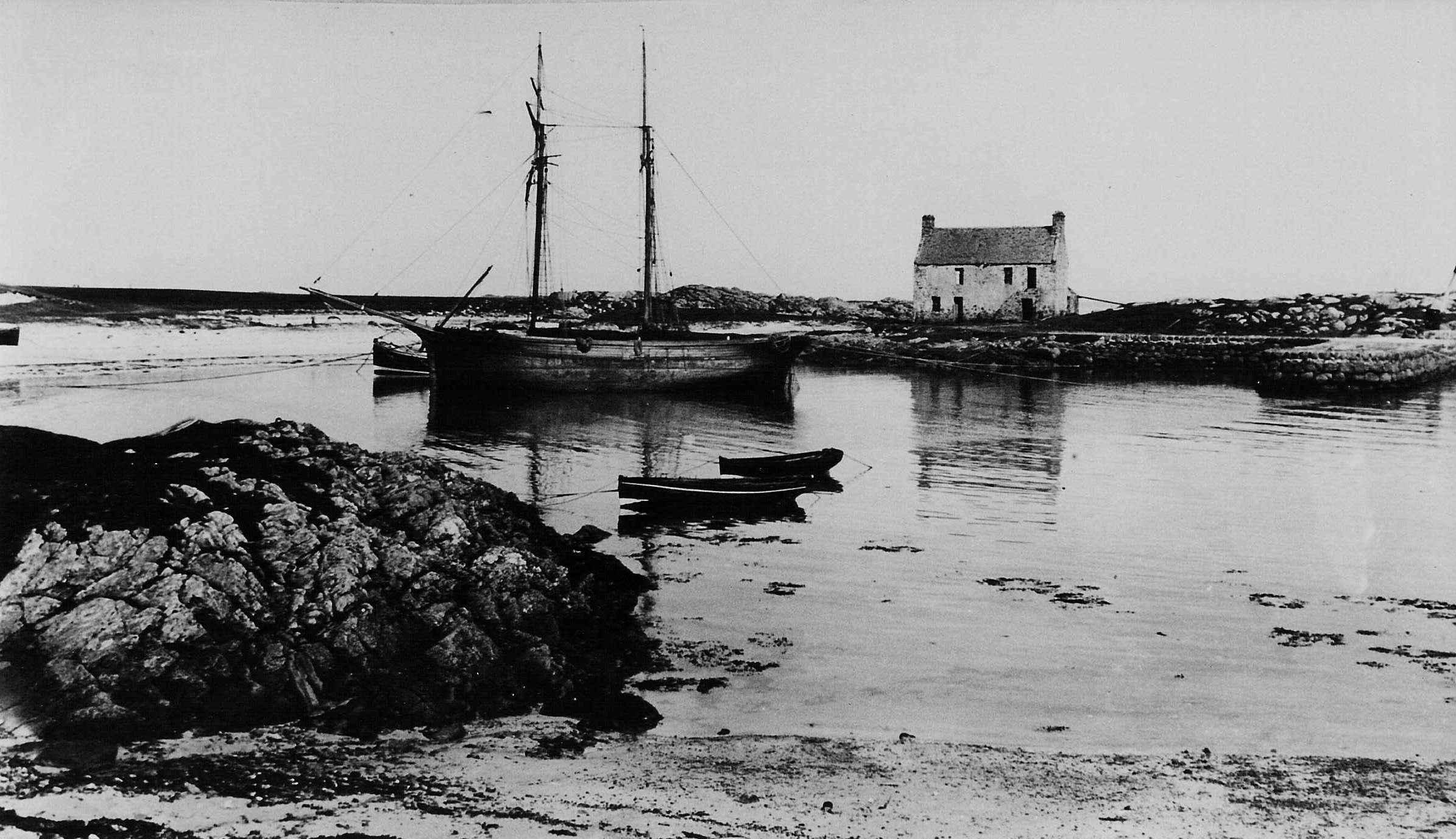
Courtesy of Mrs Netta Martin
Taken in the early 1930s, this view of Scarinish harbour shows the topsail schooner ‘Mary Stewart’ in her final resting place. For the previous thirty years she had traded up and down the west coast carrying coal and other cargo.
Also anchored in the harbour are two lobster boats. Commercial lobster fishing began on Tiree after 1880 when the railway to Oban was opened, allowing shellfish to be sent live to the London markets for the first time.
Said to have been originally built as a church, the building in the background was used as a store by the owners of the ‘Mary Stewart’. It was pulled down to make the road to the pier during World War II.
Black and white photograph of Scarinish harbour.
Scarinish harbour with the Mary Stewart, probably taken in the 1930s. The building in the background was originally built as a church, then used intermittently as a prison and latterly as a store by the owners of the Mary Stewart. It was pulled down to make roads during World War II.
Black and white photograph of a coal puffer.
Coal puffer probably taken on Gott Bay in the late 1920s to early 1930s.

Black and white photograph of people aboard an unknown ship.
Group photograph from a samml album from Silversands, Vaul, of six unknown men aboard an unknown ship, probably taken in the late 1920s to early 1930s.

The Coaling Station at Brock
Photograph of a coal puffer beached on Gott Bay at Brock in the 1930s.

Around the middle of the 19th century, when local peat deposits had run out and peat was no longer readily available from adjacent islands, coal was shipped to Tiree in sailing smacks and schooners owned and sailed by Tiree men.
Later in the century and into the 1900s, coal was brought in by steam-driven lighters known as puffers. As there are no secure harbours in Tiree, the puffers, like the schooners before them, were beached at spring tides on several of the sandy bays around the island.
The coal was discharged into horse-drawn carts of a half tonne nominal capacity. One such coaling station was at Brock on the east end of the island.
Black and white photograph of the coaling station, Brock.
Photograph from a small album from Silversands, Vaul, titled `The Coaling Station, Brock` of a puffer discharging coal into horse-drawn carts, probably taken in the late 1920s to early 1930s. Around the middle of the 19th century, when local peat deposits had run out and peat was no longer readily available from adjacent islands, coal was shipped to Tiree in sailing smacks and schooners owned and sailed by Tiree men. Later in the century and into the 1900s, coal was brought in by puffers. As there are no secure harbours in Tiree, the puffers like the schooners before them were beached at spring tides on several of the sandy bays around the island. The coal was discharged into horse-drawn carts of a half tonne nominal capacity. One such coaling station was at Brock on the east end of the island.
Black and white photograph of a collier on the beach at Brock.
Photograph from a small album from Silversands, Vaul, titled `Collier on the beach at Brock` of a puffer waiting to discharge coal into horse-drawn carts, probably taken in the late 1920s to early 1930s. For additional information see catalogue for 1997.176.7.
