Island House
Postcard of Island House, the Tiree residence of the Duke of Argyll.
Loch an Eilein (loch of the island) lies to the west of Crossapol. An ancient castle was situated on an island in the loch, with a causeway and drawbridge between it and the shore. It was occupied by the MacLeans of Duart, and probably by the MacDonalds of the Isles before them.
Lachlan Mòr MacLean was denounced as a rebel in 1588 and his estates were forfeited six years later. Tiree stayed in the actual, if not legal, possession of the MacLeans until the island passed to the Campbells of Argyll in 1674.
The Earl of Argyll built the present building in 1748, at which time the channel between the island and the shore was filled in using forced labour.
Black and white postcard of Island House, Heylipol.
Island House, Heylipol. (Original postcard in Filing Cabinet 8 drawer 2)
Black and white postcard of Mannal.
View of Mannal.
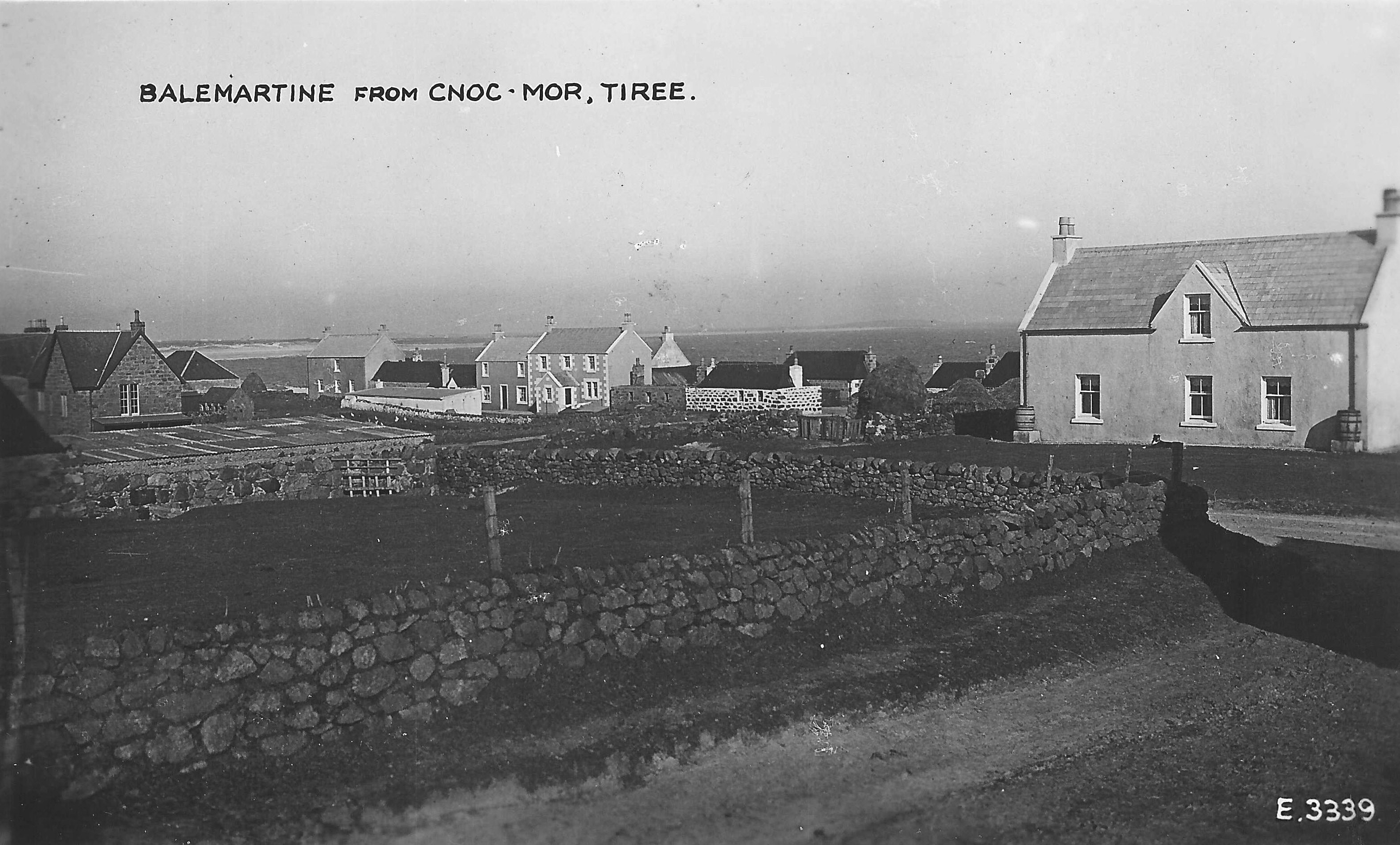
Black and white postcard of Balemartine from Cnoc Mor.
Balemartine from Cnoc Mor. (Original postcard in Filing Cabinet 8 drawer 2)
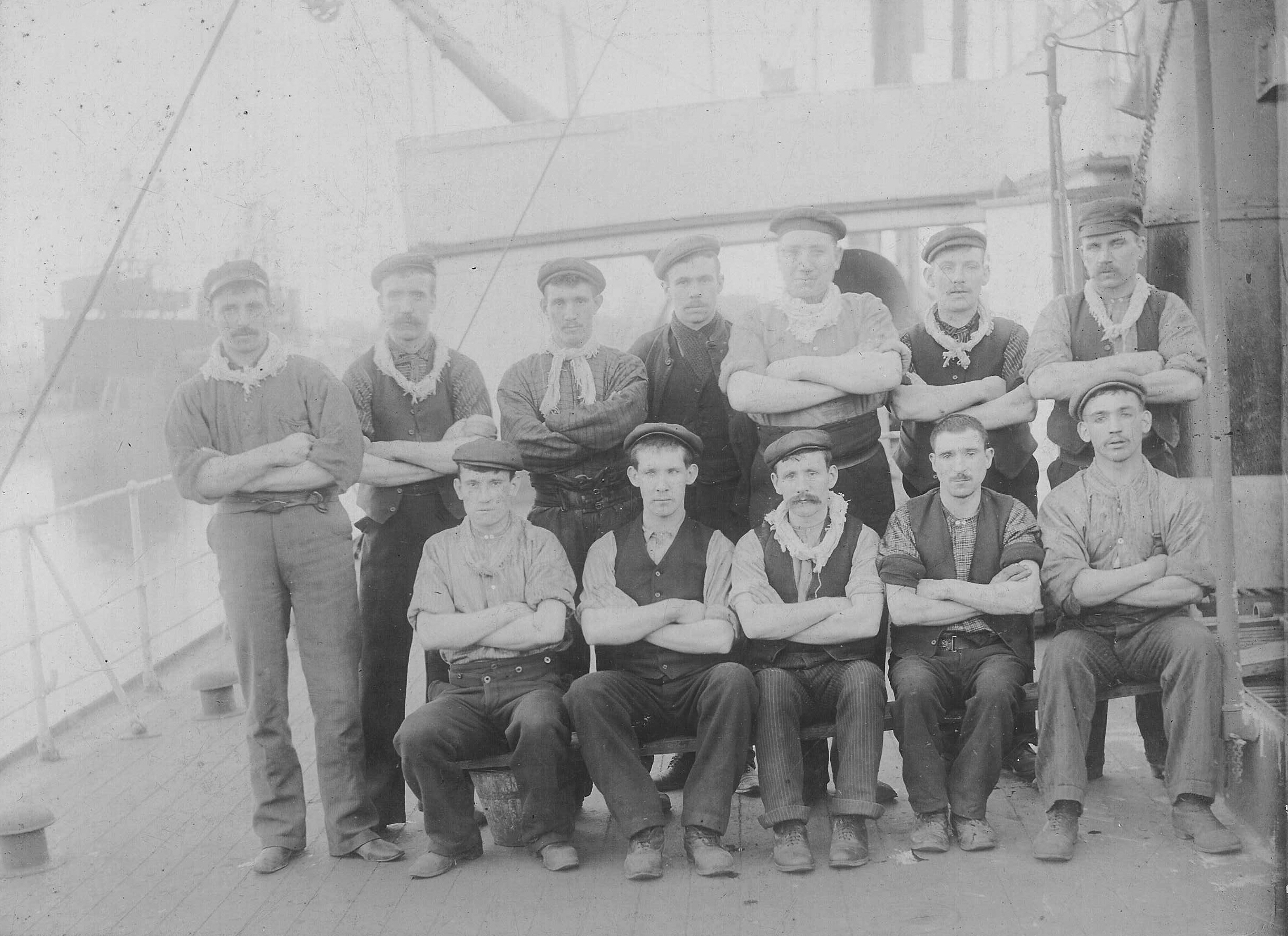
Black and white photograph of unknown ship`s crew.
Unknown ship`s crew photographed in Montreal, Canada. (Original postcard in Filing Cabinet 8 drawer 2)
Black and white photograph of unknown ship`s crew.
Unknown ships crew. (Original postcard in Filing Cabinet 8 drawer 2)
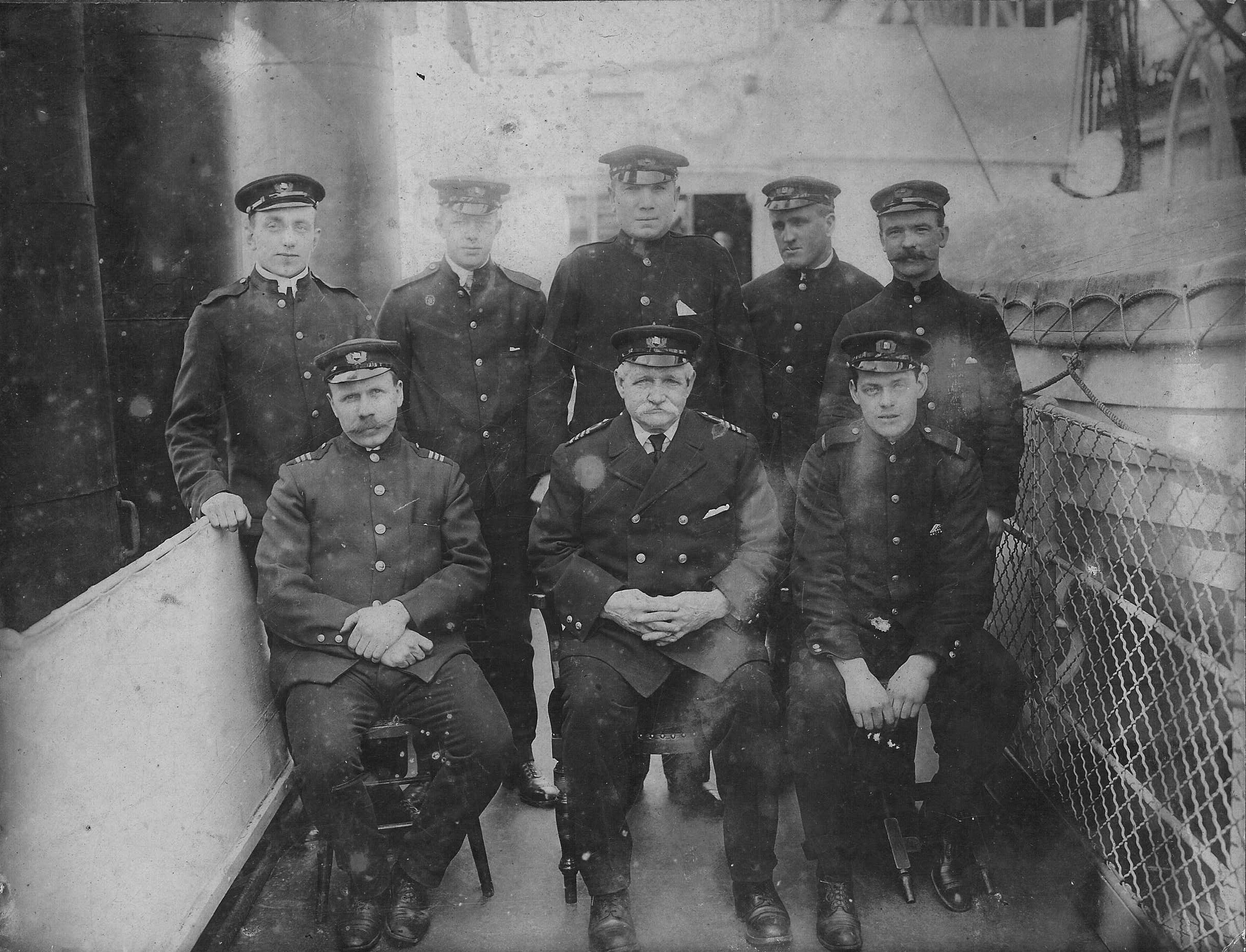
Black and white photograph of Chief Steward John MacLean of Balevullin.
Centre in the back row is Chief Steward John MacLean from the Croft, Balevullin, possibly photographed in Canada. (Original postcard in Filing Cabinet 8 drawer 2)
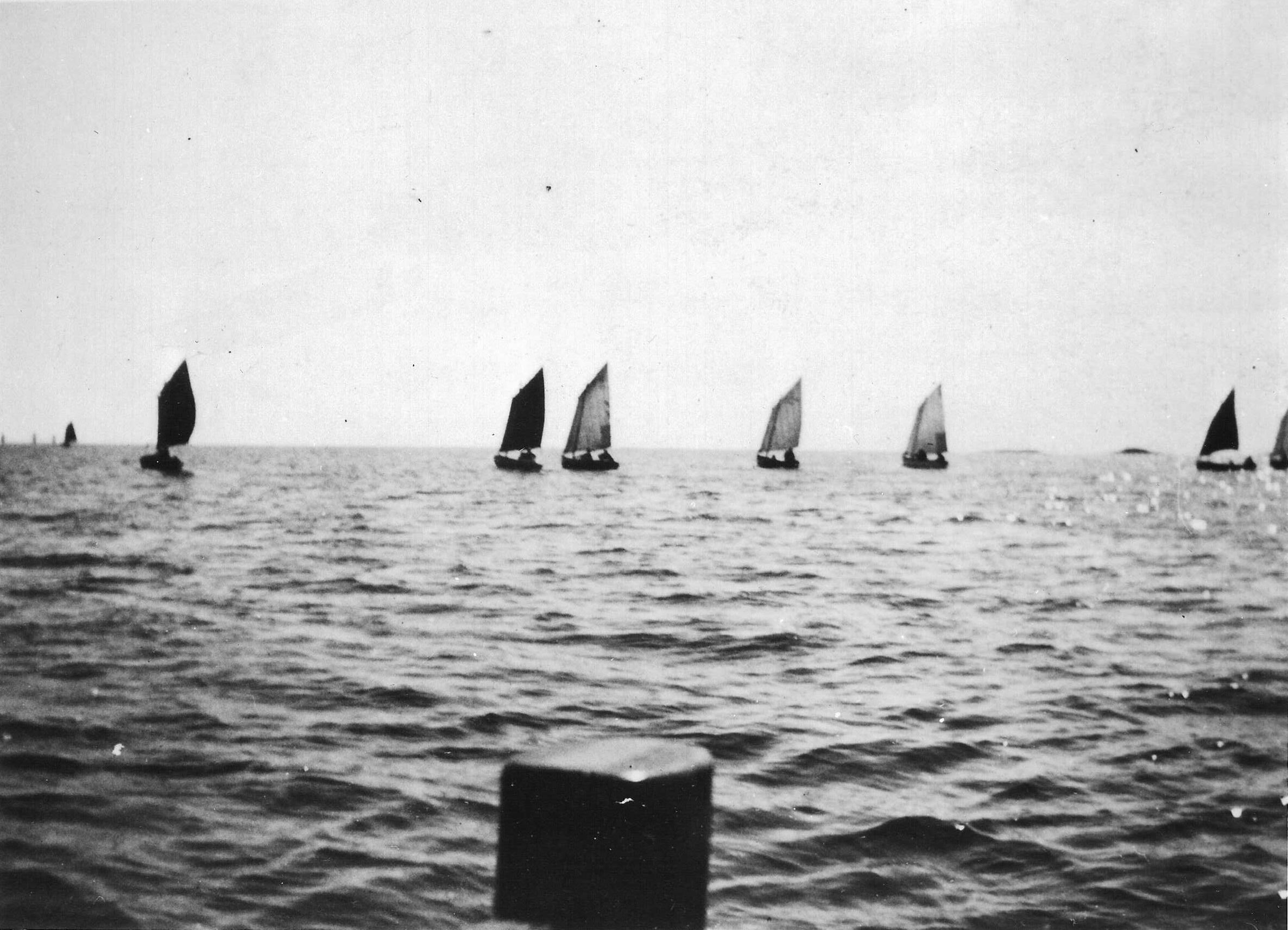
Black and white photograph of a Tiree regatta in 1937.
The Tiree regatta in 1937.
Spectators at the Agricultural Show in 1968
Photograph of spectators at the Agricultural Show at Crossapol in 1968.
Courtesy of Mrs Nonnie MacFadyen
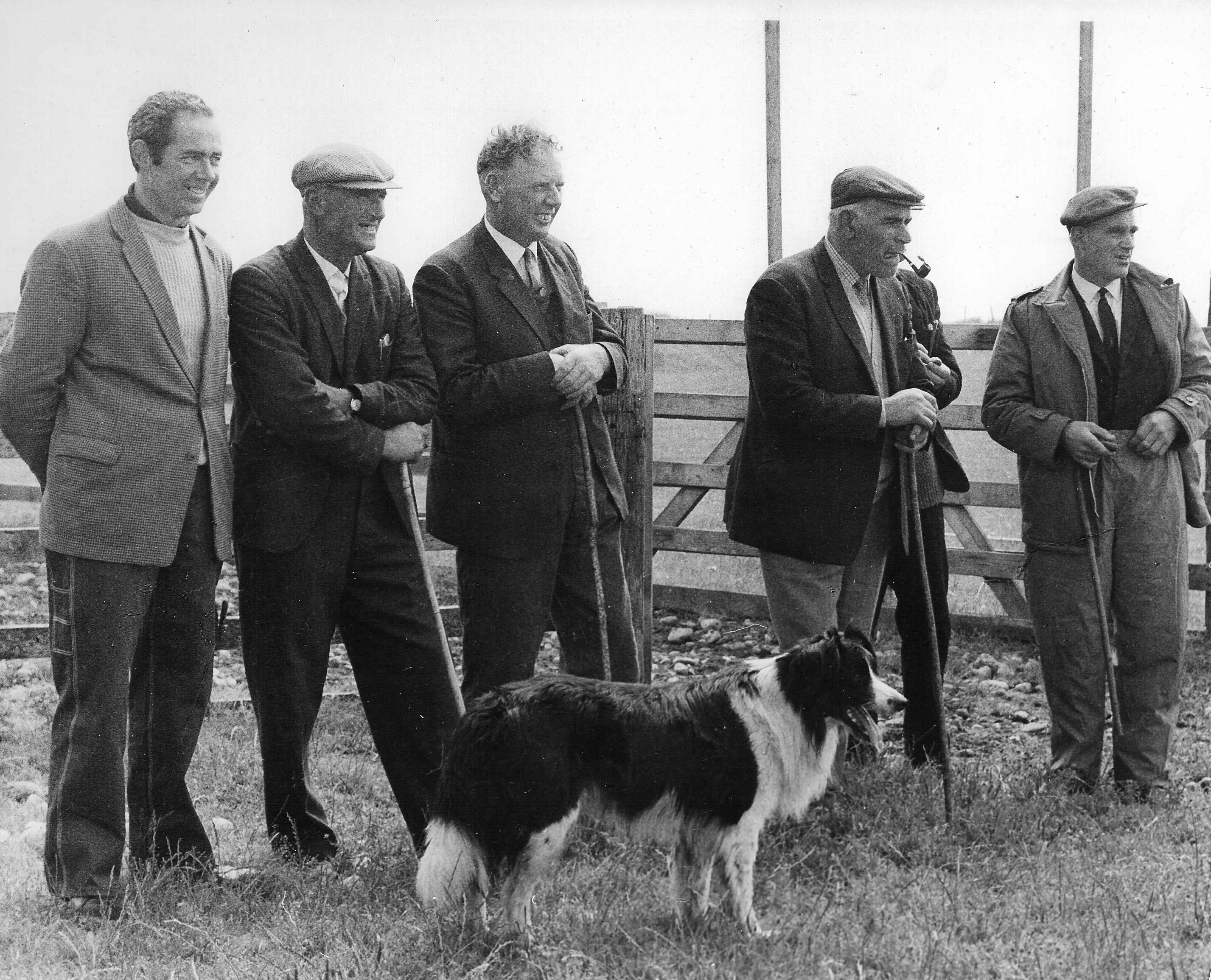
Pictured from left to right are Donald MacLean, Hugh MacKinnon of Kenovay, Alasdair MacFadyen of Crossapol, Archie MacArthur and John MacArthur, both from Middleton, at the Tiree Agricultural Show at Crossapol in 1968.
Black and white photograph taken at 1968 Agricultural Show in Crossapol.
The Agricultural Show at Crossapol in 1968. L-R: Donald MacLean; Hugh MacKinnon, Kenovay; Alasdair MacFadyen, Crossapol; Archie MacArthur, Middleton; John MacArthur, Middleton (Iain Theonaidh).
The Fever Hospital at Heanish
Photograph of the Fever Hospital at Heanish.
Courtesy of Mr Alasdair MacArthur
From the middle of the nineteenth century, Sanitary Laws were applied on Tiree to keep the island clean and infected patients were isolated. In 1892 the Sanitary Inspector visited the island and cautioned “several parties in regard to dung heaps in my opinion too near to houses”.
In 1893 three people died from typhoid which affected Balephuil. In 1895 an epidemic of scarlet fever swept through Tiree. The County Medical Officer, Dr. McNeill, had recommended the building of an isolation hospital on the island in 1893 and in 1905 the Fever Hospital was built in Heanish.
Made of corrugated iron lined with wood, it comprised two-bedded wards set at each end of the building with a kitchen, nurse’s room and bathroom in the centre. Outside was a washhouse, mortuary, disinfecting room and coalhouse. It was last used in the 1940s and sold in the 1960s as a private house.
Black and white postcard of Heanish machair and old the Fever Hospital.
Heanish machair and old the Fever Hospital. (Original postcard in Filing Cabinet 8 drawer 2)
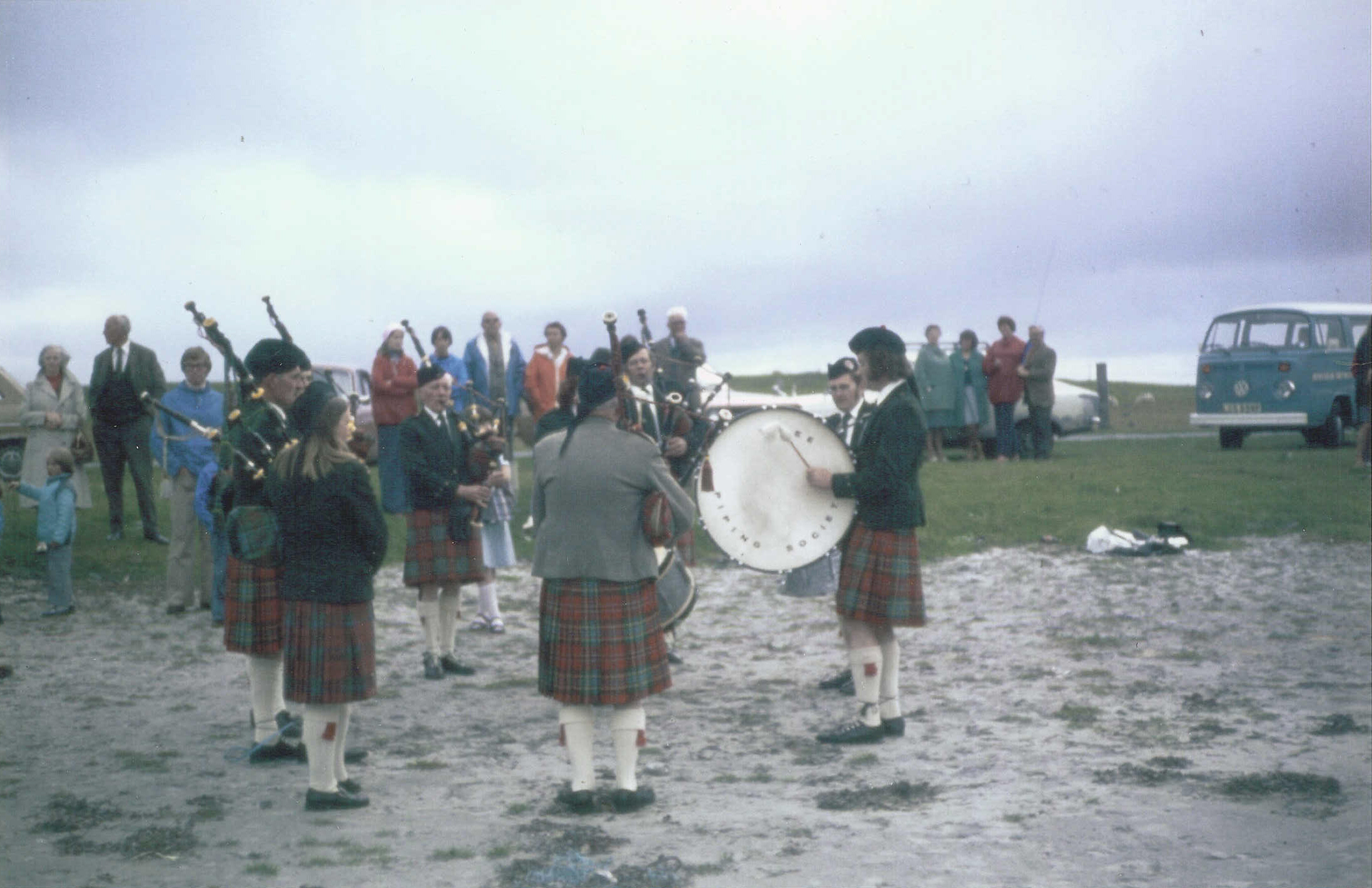
Copy of colour photograph of the pipe band at the Lodge in June 1977.
Tiree Pipe Band playing the Queen`s 25th Jubilee celebrations near the Lodge Hotel in June 1977.