Black and white photograph of the RAF badge of 281 Squadron.
The RAF badge of 281 Squadron, produced by the College of Arms in January 1943.


Black and white photograph of the RAF badge of 281 Squadron.
The RAF badge of 281 Squadron, produced by the College of Arms in January 1943.
The victorious Scotland team
Photograph of the victorious Scotland team in the ‘international’ football match played at RAF Tiree in 1944.

Courtesy of Mr Willie Dickie
In 1944, the RAF Sports Officer on Tiree was Dan Squires who batted for Surrey County cricket team before the war. He would coach players in the gymnasium and they would practise on a wicket set up on the airfield.
Athletic Days were regular events. Bets on the races were taken by the station’s Accounts Officer, the Hon. John Grimston, with the profits going to help the war effort.
Football was a popular sport with the young men on the base and in May 1944 Dan organised a special ‘international’ between ‘Scotland’ and ‘England’ which was won by the Scottish team.
Black and white photograph of the `Scotland` football team in May 1943.
The victorious Scotland football team who played against England in Tiree on 30th May 1944. L-R: (back) referee Cowan, Morton, Jamieson, Gillespie, Anderson, Holmes, Preston, (front) Willie Dickie, Byrne, Duncan, Liddell and Shiels.
Black and white photograph of unknown group at RAF Tiree.
unknown – not indexed
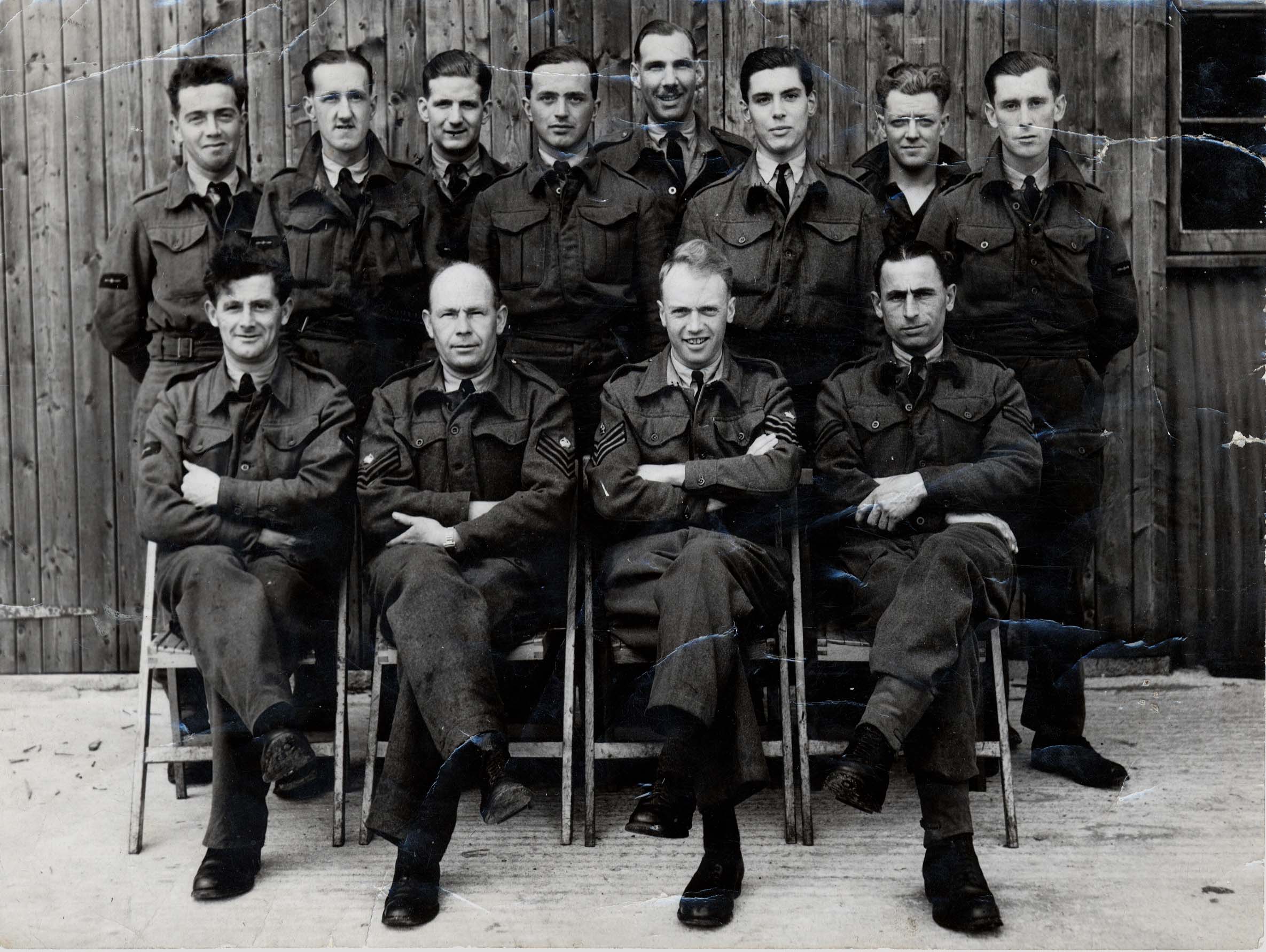
Black and white photograph of the Electrical Section at RAF Tiree in July 1944.
The Electrical Section at RAF Tiree in July 1944. L-R: (back) L. Holden, A. Bairds, Willie Dickie, R. Murdens (?), F. Mitchell, K. Salt, J. Silvester, A. McDonald, (front) T. Heaps, Chippy Hambrooke, Chippy Couray (?), W. Strickland.
Crossapol NAAFI during World War II
Photograph of Crossapol NAAFI during World War II.

Courtesy of Mr Willie Dickie
Created in 1921, the Navy, Army and Air Force Institutes (NAAFI) provide retail and leisure services to the British Armed Forces and their families. There were two on Tiree during World War II situated at Crossapol and Hough.
Occasionally in the winter, the clientele would have ‘a bit of session in the NAAFI’, sitting round the stove and plunging red-hot pokers into pints of beer. Pianos apparently didn’t last long. One eyewitness saw a tray loaded with plates of mince and potatoes emptied into the top of the piano. The plates were retrieved but the contents were not.
The RAF Embarkation Unit at Scarinish created their own pub in a Nissen hut which they called the Pier Arms. It had a proper bar, a few tables and chairs and was cosy and warm although the beer was reported to be no better.
Black and white photograph of Crossapol NAAFI during World War II.
Crossapol NAAFI during World War II. L-R: (back) Neil MacDonald, Kenovay (Niall Dubh); (middle) unknown; unknown; Eliza MacLean, Balephetrish; Marion MacDonald, Kenovay; Cathie MacKinnon, Kilmoluaig; Sheena MacKinnon, Cornaigbeg; Chrissie Shaw, Skye; unknown; Effie Dickie nee MacKinnon, Caoles; unknown; unknown; Chrissie Murray, Lewis; unknown; (front) unknown store manager; Isobel Johnston nee MacDonald, Milton; unknown cook, Barra; unknown cook, Lewis; unknown manageress (married to Lochmaddy piermaster); cook Dolly MacLean nee MacCallum, Hough; cook Cathie MacLean, Heylipol; cook Betty Campbell, Skye; van driver Adam; Effie MacDonald, Kinlochleven.
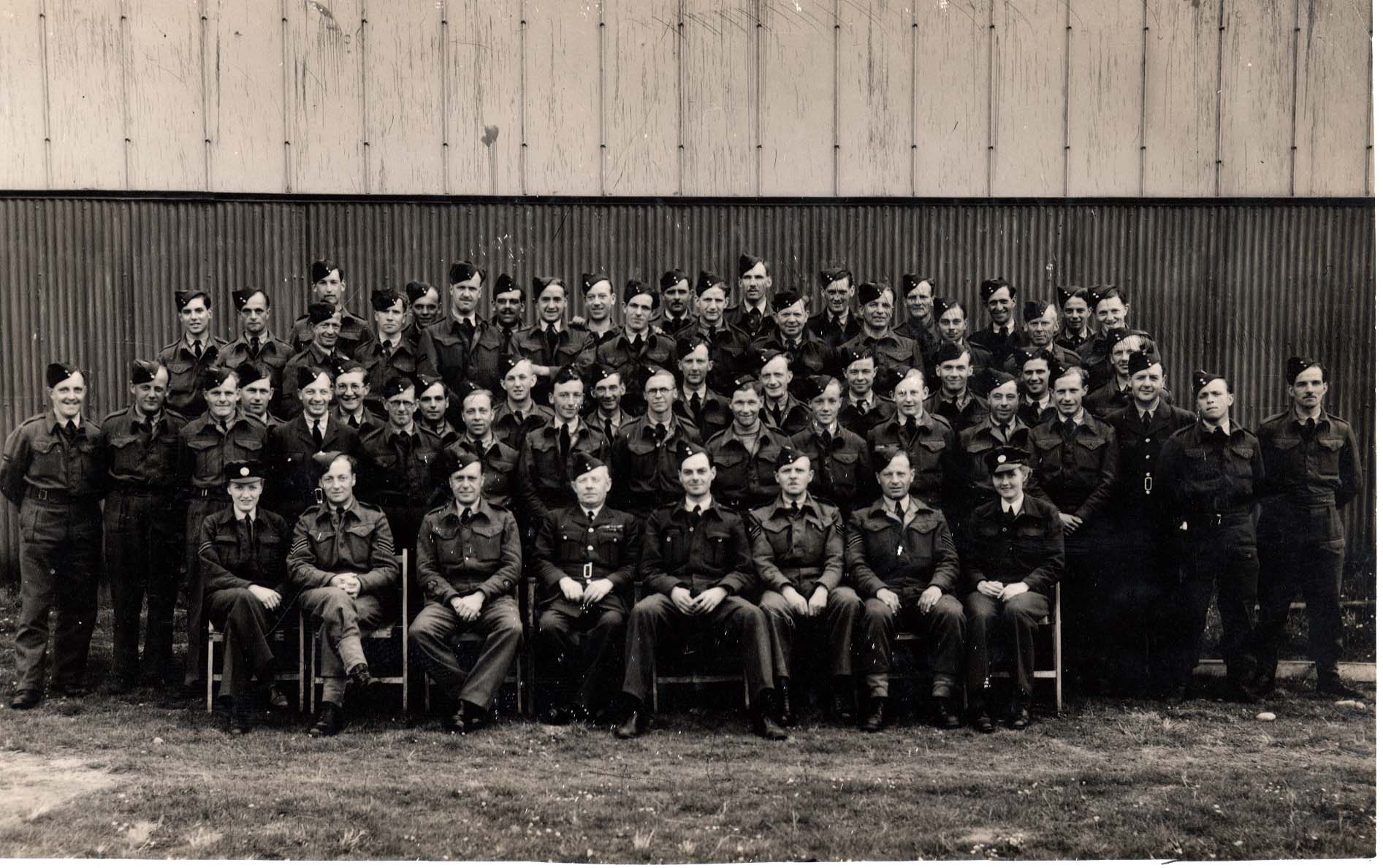
518 Squadron in 1944
Photograph of RAF 518 Squadron in 1944.

Courtesy of Mr Willie Dickie
In September 1943, 518 Squadron arrived on Tiree to fly weather reconnaissance missions in long-range Halifaxes. Twice a day flights ‘Bismuth’ and ‘Mercer’ left Tiree for a ten-hour-long trip out into the Atlantic at either 20,000 or 50 feet.
Pressure to fly was relentless and in 1944 518 Squadron flew every day but two. Often icing and enormous waves made this dangerous and the Squadron lost twelve aircraft during their spell on Tiree.
Every half hour, weather readings were sent back in code. The resulting forecasts played an important part in the timing of many operations including the D-Day landings which had been delayed by fog.
Black and white photograph of RAF 224 Squadron in 1942.
The full complement of 110 crewmembers of RAF 224 Squadron with a Liberator aircraft around 1942, during World War II. Liberators were used for long-range maritime patrols and anti-submarine operations. 224 Squadron moved to Tiree from Limavady in April, 1942, with their Hudson aircraft, but in July they converted to Liberators. Following their conversion, they had to move south to Beaulieu, Hampshire, in September 1942, for anti-submarine operations in the Bay of Biscay.
Black and white photograph of the schoolgirls staying at Craigenard Hostel, Oban.
Schoolgirls staying at Craigenard Hostel, Oban, including the dux of Oban High School, Margaret MacLean (1907-1997) of the Croft, Balevullin (6th from left, 2nd front row). (Original in Filing Cabinet 8 drawer 2)

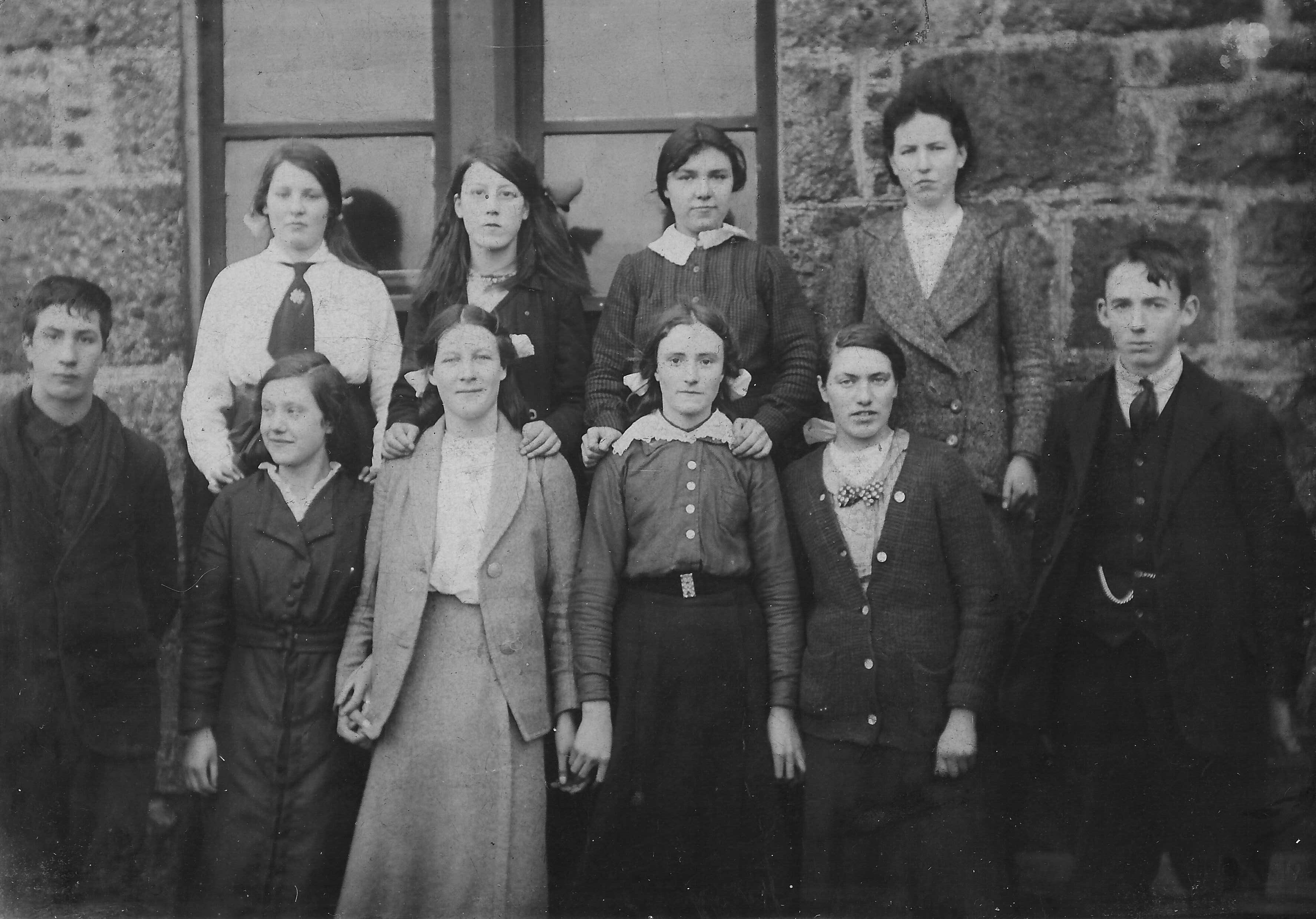
Black and white photograph of Cornaig School in the late 1910s.
Cornaig School in the late 1910s. Duncan MacLean, the first vet in Tiree (1st left, front row); Marion (Morag) MacLean of Balevullin (2nd left, back row). (Original in Filing Cabinet 8 drawer 2)
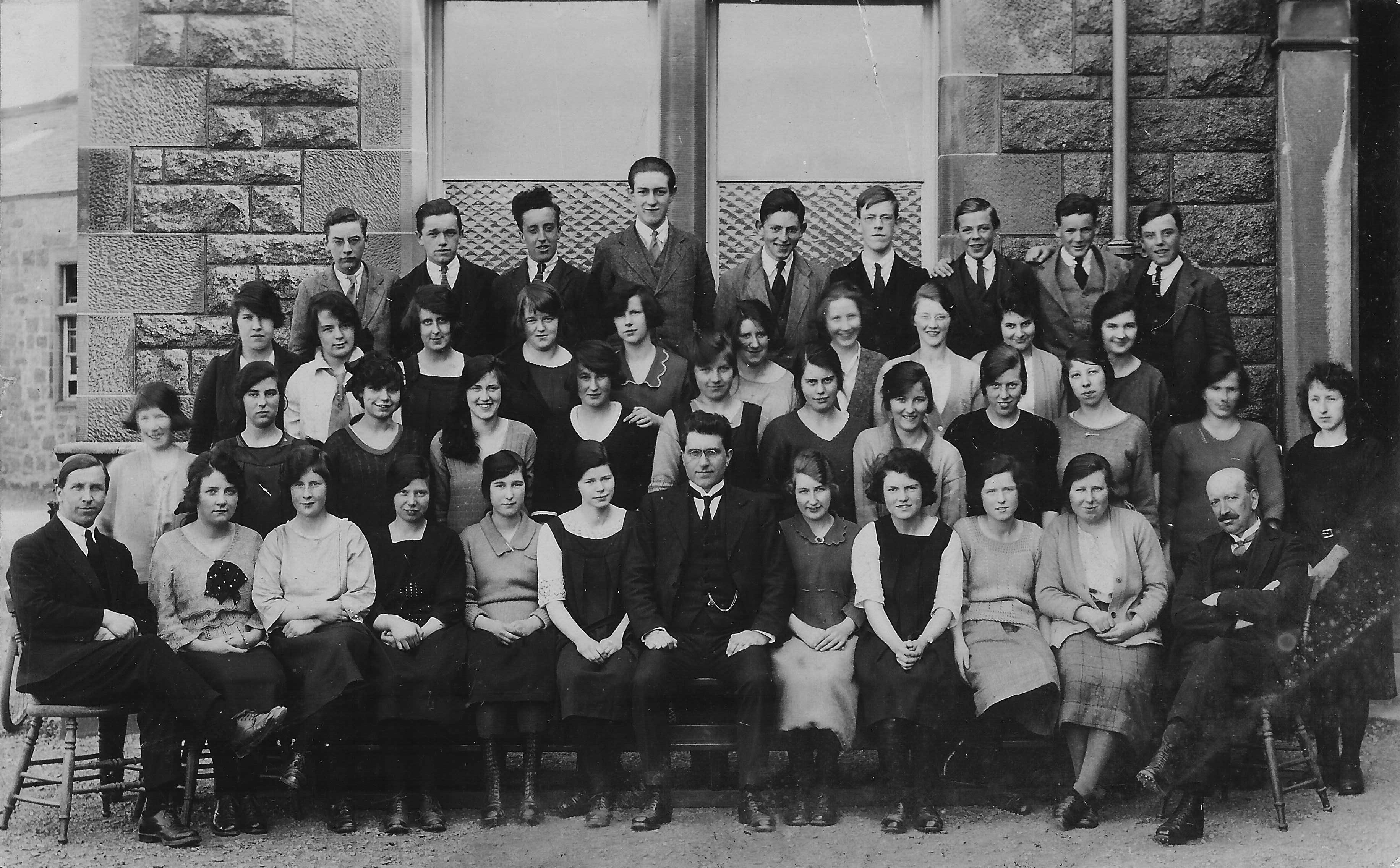
Black and white photograph of Oban High School.
Oban High School in the mid-1920s. The dux Margaret MacLean of the Croft, Balevullin is 4th from the right in the second row. (Original in Filing Cabinet 8 drawer 2)
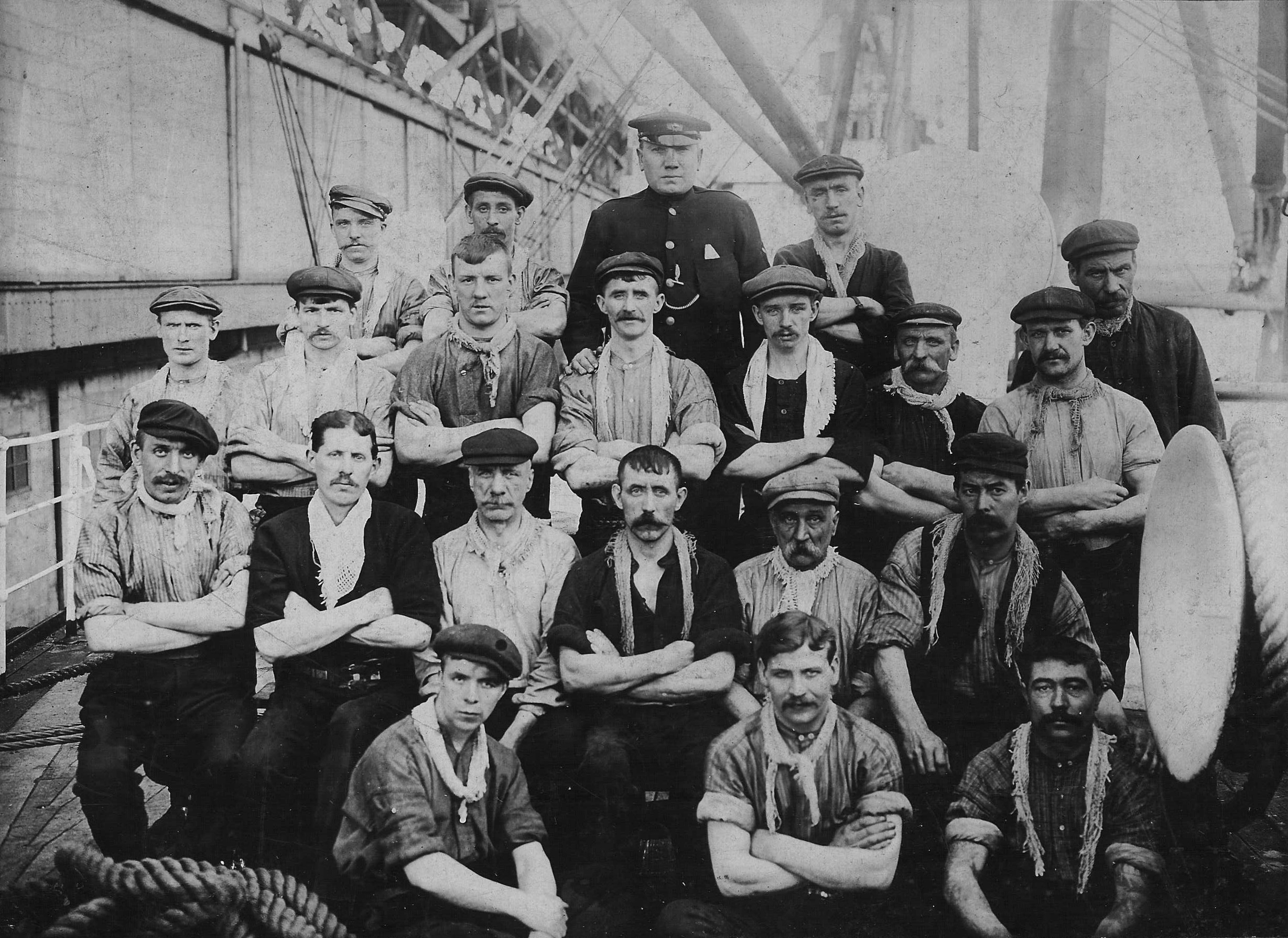
Black and white photograph of Chief Steward John Maclean with stokers and greasers.
Chief Steward John MacLean of Balevullin with the ship`s stokers and greasers, possibly photographed in Canada. (Original in Filing Cabinet 8 drawer 2)