Colour photograph of Taigh Mairi Nic Mhaoilein in Balevullin in 2003.
Taigh Màiri Nic Mhaoilein in Balevullin photographed by Dr John Holliday in 2003.
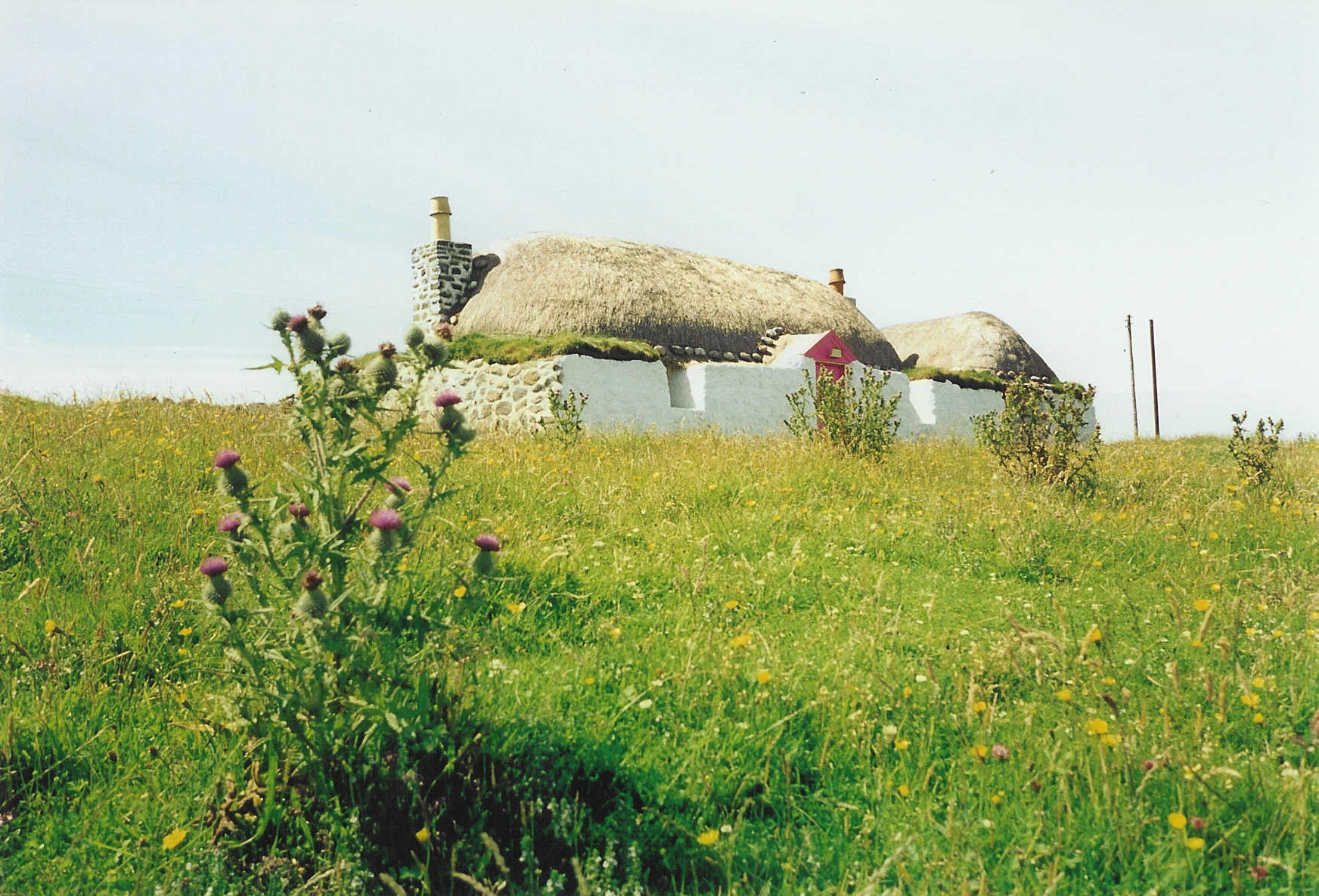

Colour photograph of Taigh Mairi Nic Mhaoilein in Balevullin in 2003.
Taigh Màiri Nic Mhaoilein in Balevullin photographed by Dr John Holliday in 2003.
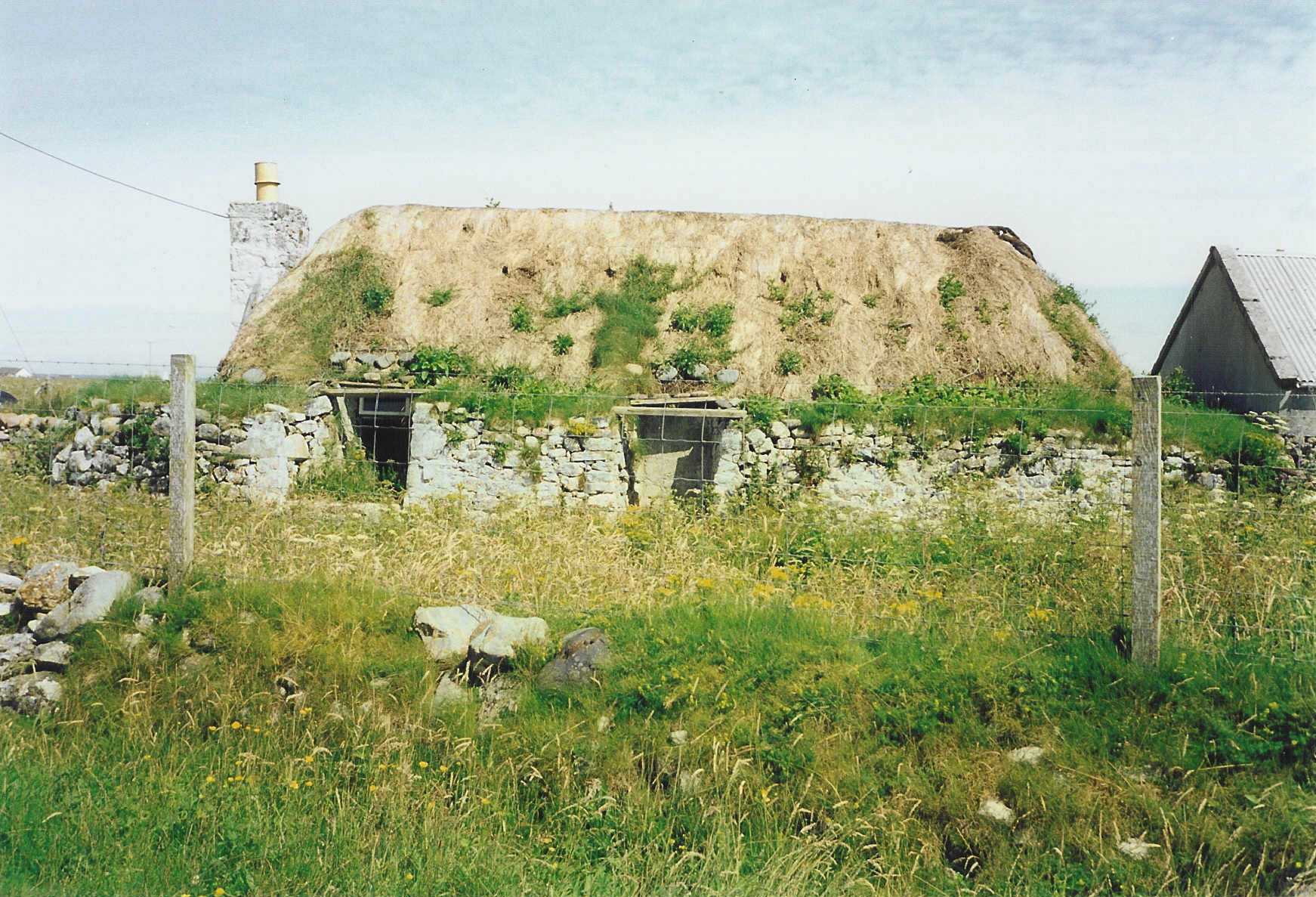
Colour photograph of Taigh Neilidh Neill an Drobhair, Barrapol in 2003.
The chimney of Taigh Neilidh Nèill an Drobhair, Barrapol photographed by Dr John Holliday in 2003.

Colour photograph of Taigh Dhonnchaidh Dhomhnaill `ic Neill in Balevullin in 2003.
Taigh Dhonnchaidh Dhomhnaill ’ic Nèill in Balevullin photographed by Dr John Holliday in 2003.
Colour photograph of the August 1975 regatta.
Tiree Regatta in August 1975, won by Donald MacFarlane and Donald MacIntyre in `Tinnie`.

Copy of black and white photograph of Brock.
Brock. L-R: Taigh Raonaild and, hidden behind it, Taigh Clèireich; Taigh Cìorstaidh; Taigh Uilleim; Taigh Iain Mhòir and Taigh Èairdsidh. (Original in Filing Cabinet 8 drawer 3)

Effy Thomson and her daughter Cathie pumping water from a well at Ruaig
Photograph of Euphemia Thomson with her daughter Catherine pumping water from a well at Ruaig in 1944.

Courtesy of Ms Cathie Thomson
In this photograph taken in 1944, Cathie Thomson is watching her mother Effie pump water from a well at Ruaig. Before the mains water supply became generally available in the 1950s, most houses had their own well.
Wells were made by lowering open-ended concrete boxes about one metre square into a suitable hole dug in the ground. The sand or soil would then be dug out from the bottom of the box and another box laid on top until the well was around three to four metres deep.
The well would be covered with a slab and a hand pump installed. Before the days of concrete, wells would be lined with stones, a dangerous job as the water-logged soil was liable to collapse.
Black and white photograph of Euphemia Clark of Ruaig and her daughter Catherine Ann Thomson.
Euphemia Thomson nee Clark of Ruaig with her daughter Catherine Ann drawing water from the pump in Ruaig in 1944. (Original in Filing Cabinet 8 drawer 3)
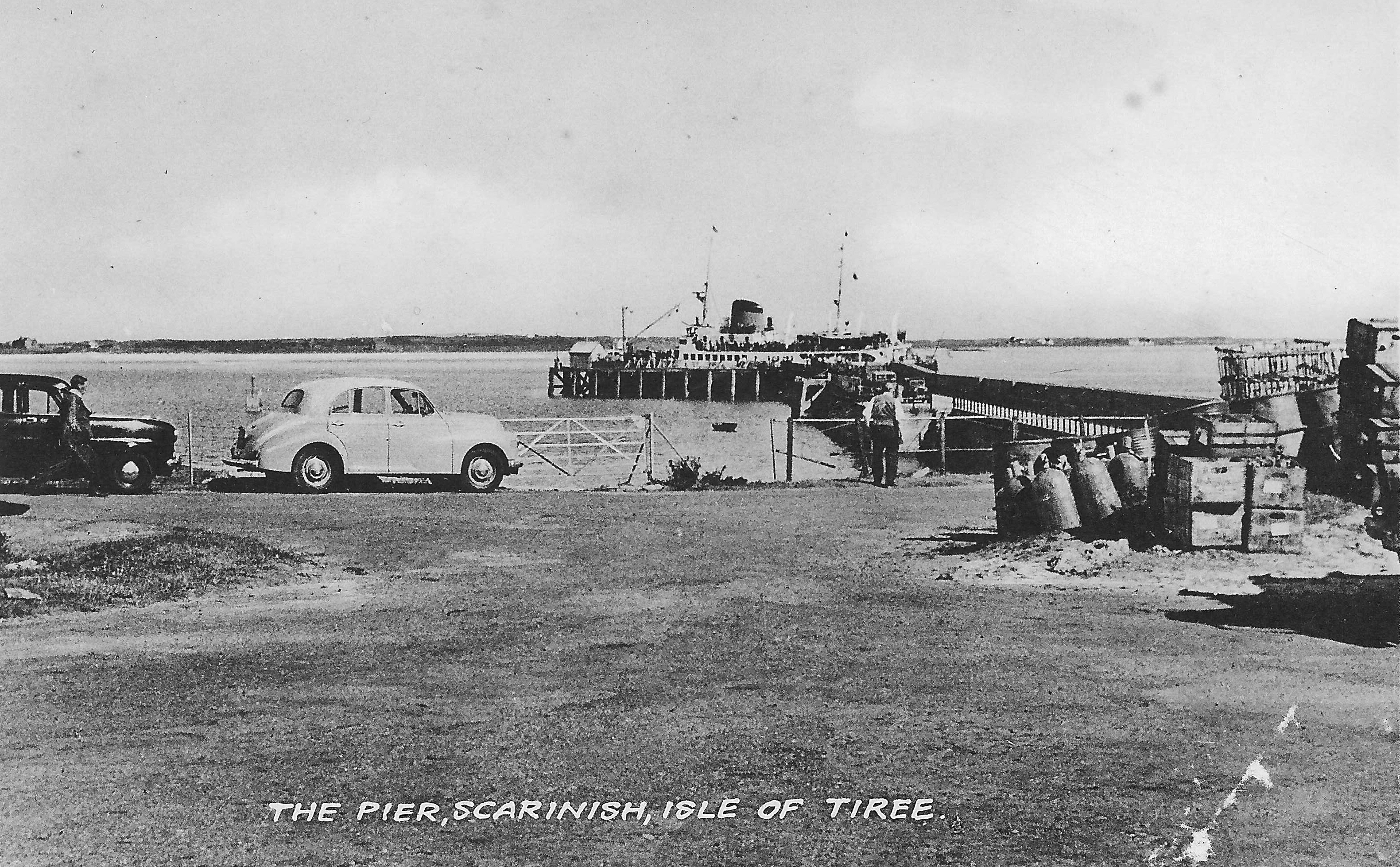
Copy of a postcard of Gott Bay pier.
Postcard of the ferry at Gott Bay pier. (Original in Filing Cabinet 8 drawer 3)
Black and white postcard of a painting of the Lodge Hotel.
Postcard of a painting of the Lodge Hotel by A. D. Bell in 1964.

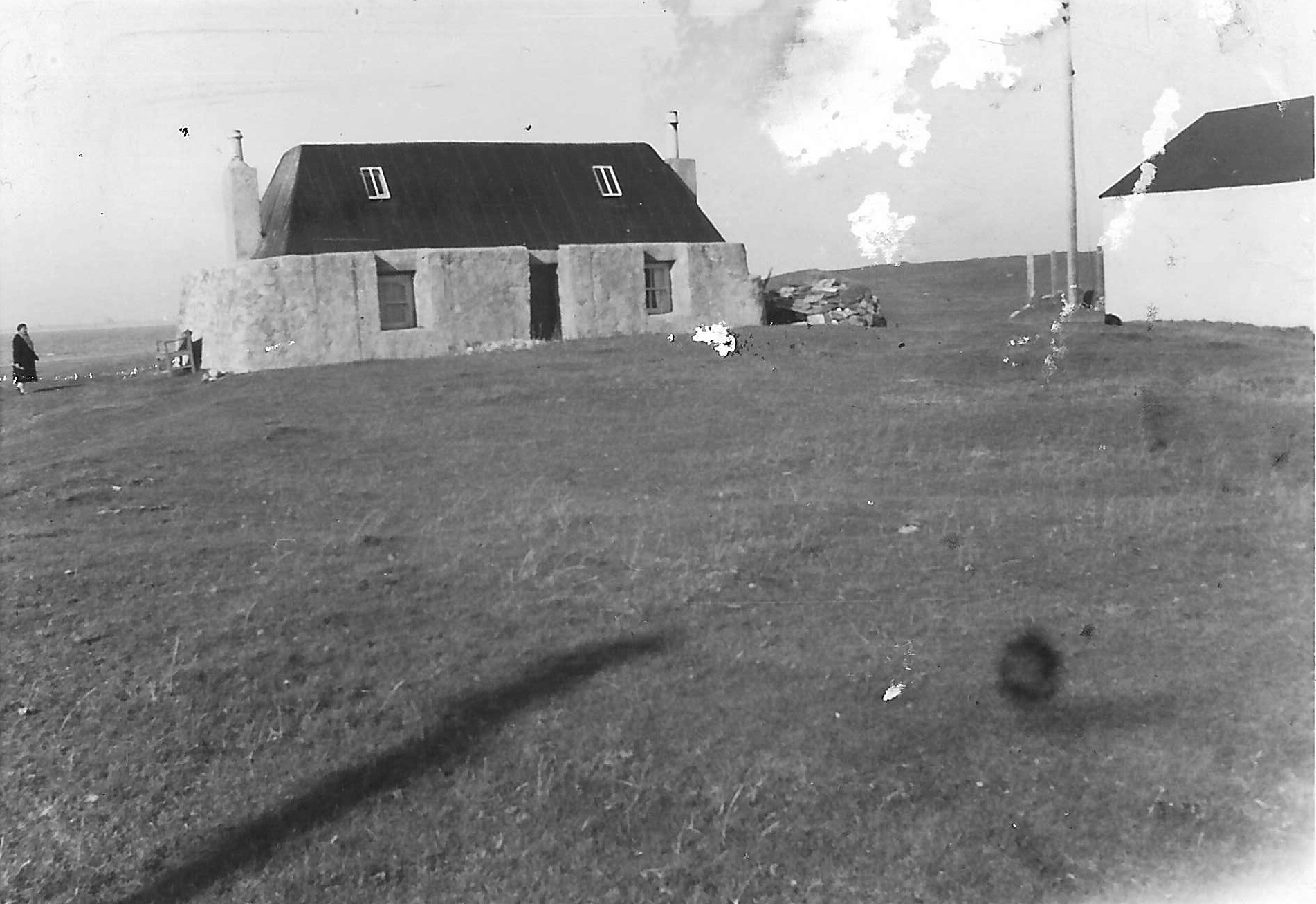
Black and white photograph of the Clark house in Ruaig.
The Clark house in Ruaig in the mid-1950s.
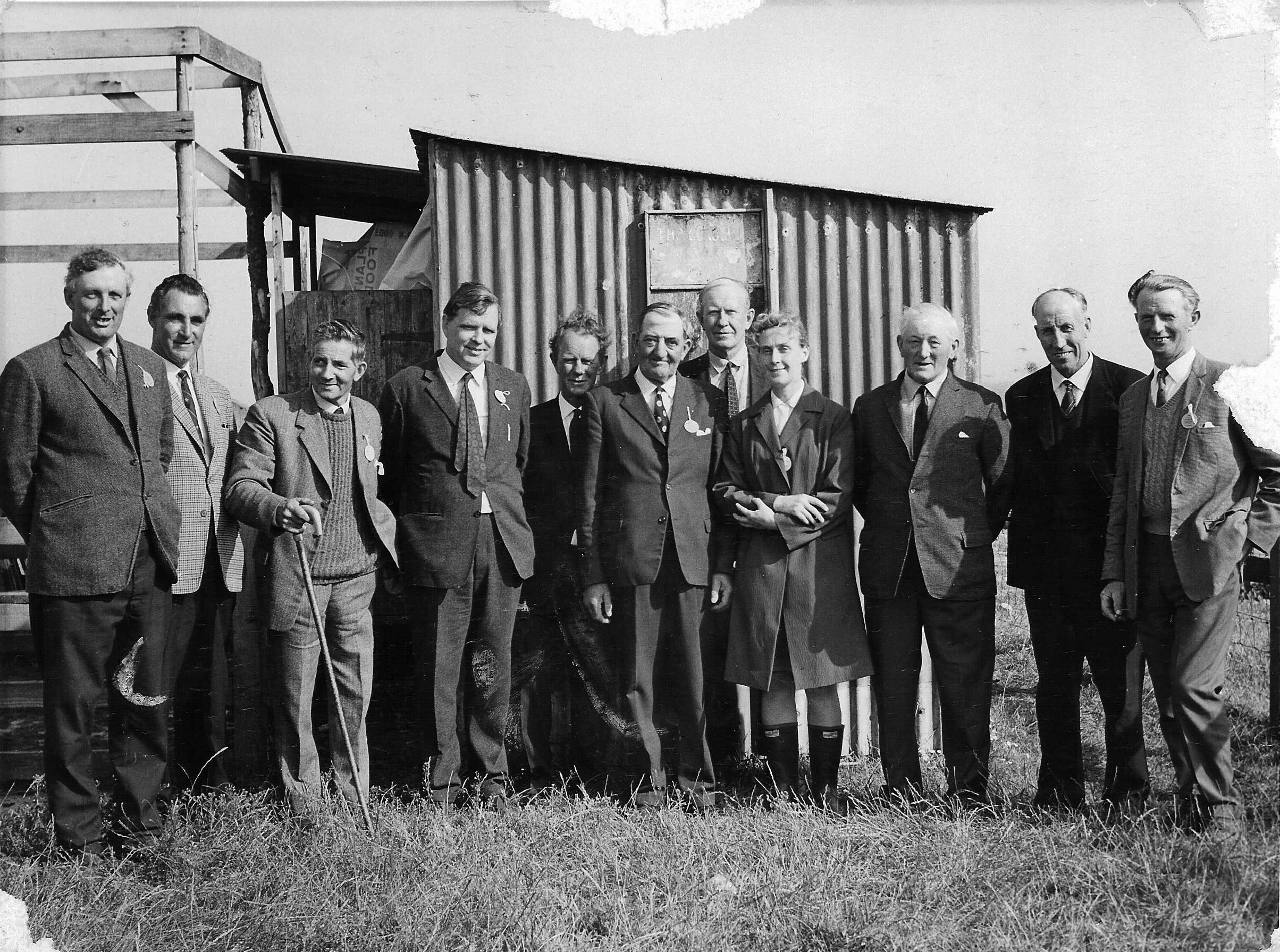
Black and white photograph of crofters at a Cattle Show in late 1950s early 1960s.
Crofters at the Cattle Show in Crossapol in the late 1950s early 1960s. L-R: Iain MacKinnon, Ruaig; Lachlan MacKinnon, Parkhouse, Balephetrish; Sheep Judge Henry Tyson, Taynuilt; Dairy Judge Malcolm MacGregor, Oban; Lachlan MacFarlane, East Hynish; Hugh Campbell, Balemartine; James Campbell, Heylipol; Beef Judge Anne McLarty, Oban; Charles MacLean, Caoles; Neil MacLean, Hough; John MacFadyen, Barrapol.