


Copied postcard of Scarinish harbour.
Postcard of Scarinish harbour.
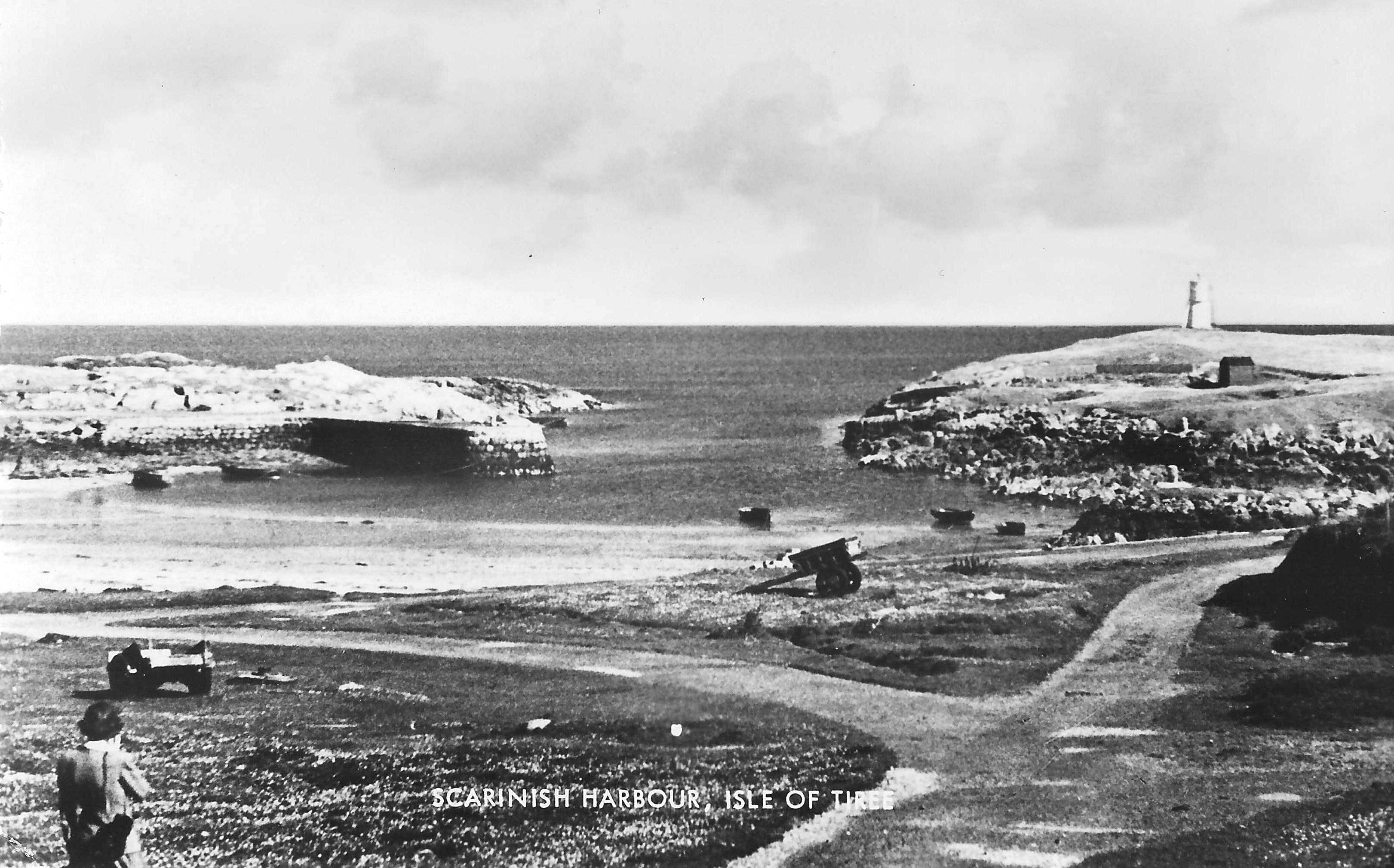

Copied postcard of Scarinish harbour.
Postcard of Scarinish harbour.
Colour photograph of a cross incised on a rock at the Kirkapol chapels.
One of the crosses incised on rocks behind the smaller of the Kirkapol chapels, photographed by Rev Bob Higham in September 2005.

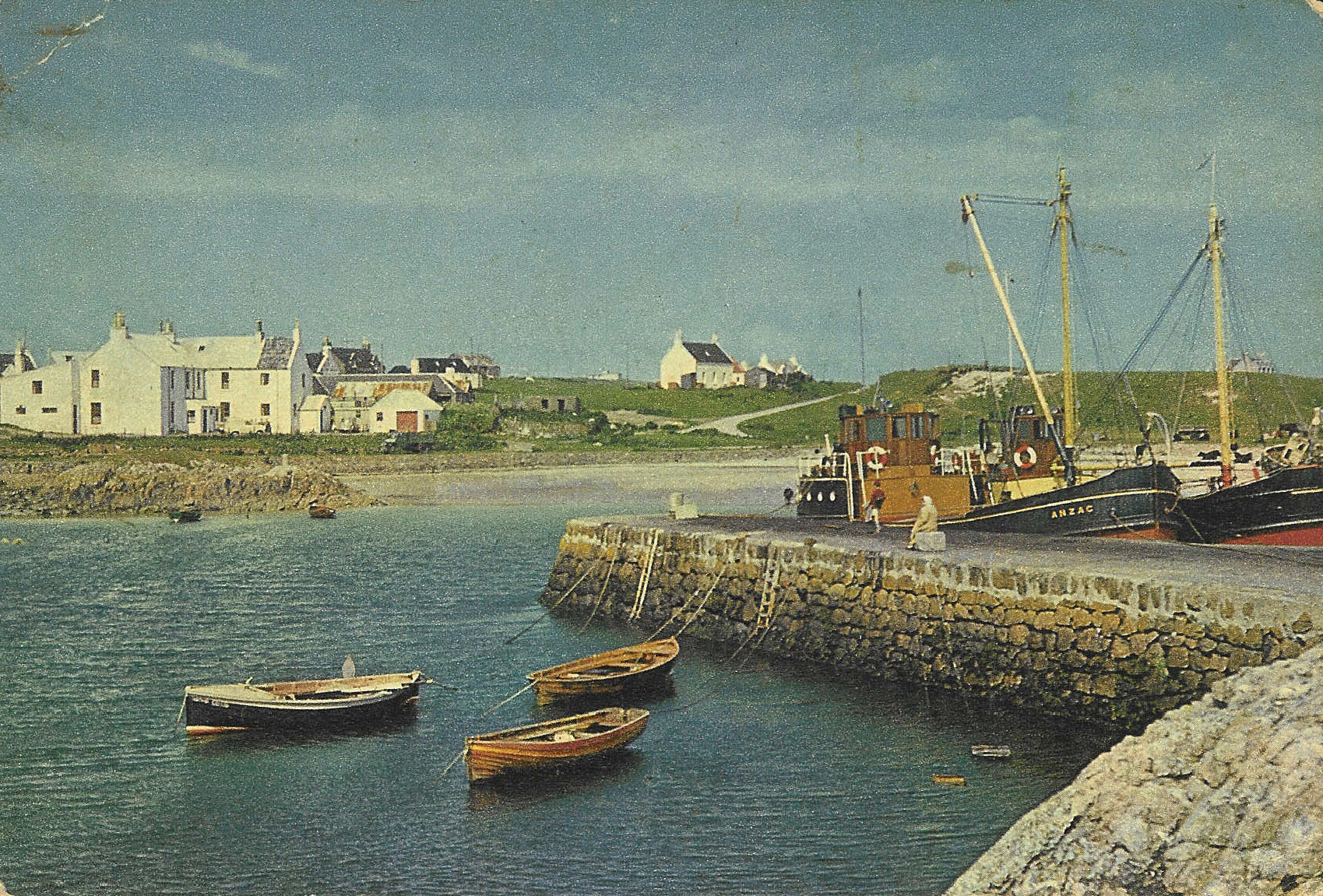
Copy of a postcard of Scarinish harbour by J. Arthur Dixon Studios.
Postcard of Scarinish harbour by J. Arthur Dixon Studios.
Copy of a postcard of Loch a` Phuill by J. H. Rutter (Dixon Postcards).
Loch a` Phuill by J. H. Rutter (Dixon Postcards).

Copy of a postcard of the Hynish complex by Sue Anderson.
Postcard of the Hynish complex by Sue Anderson.
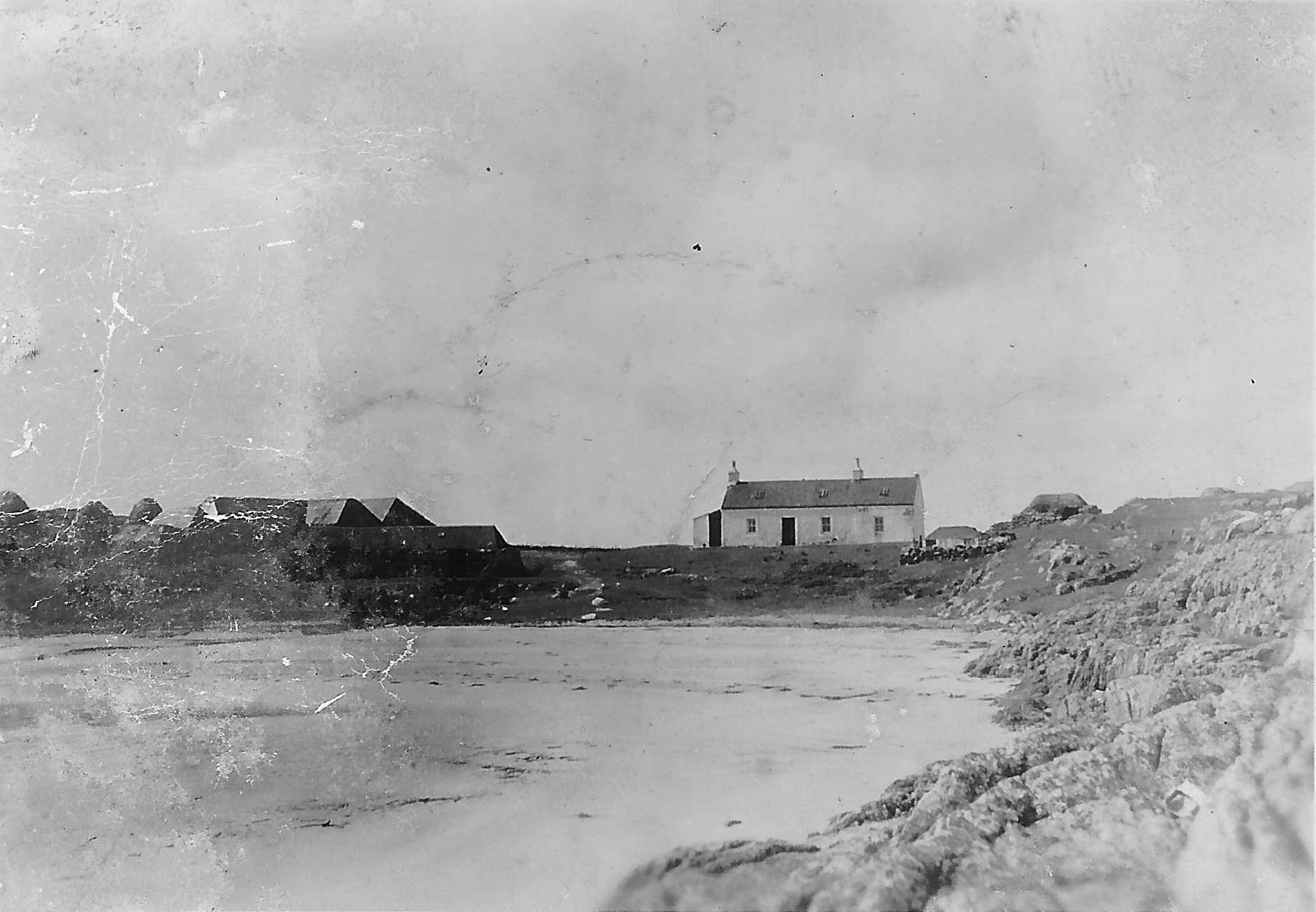
Copied photograph of the house and outbuildings at Port Bàn in Caoles. Found in a tin of cards, brochures and photographs at the refuse dump.
Neil and Donald MacKinnon of Brock in their skiff, the ‘Tunnag’
Photograph of Neil and Donald MacKinnon of Brock in their skiff, the ‘Tunnag’, in the 1930s.

Courtesy of Mr Alasdair Sinclair
Neil MacKinnon, holding aloft a lobster, and his brother Donald, both from Brock, are pictured in their skiff, the ‘Tunnag’, in the early 1930s. The old men were very fussy about placing the single-entrance creels precisely so that the entrance faced the rocks where the lobsters were hiding.
Their great-nephew Alasdair Sinclair remembers, as a ten year old boy, having the job of rowing the boat while Neil placed the creels. The ‘Tunnag’ was eight feet wide with long, narrow-bladed oars. While he was trying to manoeuvre the boat, the pernickety old man would be saying, ‘Chan eil sin ceart idir. Feuch a-rithist e!’ (That’s not right at all. Do it again!)
Lobsters often hide inshore at low tide in small crevices in the rocks called ‘faichean’. Knowledge of their whereabouts were kept secret and passed down through the family.
Black and white photograph of Neil and Donald MacKinnon of Brock in the early 1930s.
L-R: Neil MacKinnon of Brock, holding aloft a lobster, and his brother Donald, both from Brock, in the skiff `Tunnag` in the early 1930s. (Neil and Donald were brothers of Alasdair Sinclair`s grandmother.)
Black and white photograph of William MacKinnon of Brock in the early 1930s.
William MacKinnon of Brock making a lobster creel in the late 1920s or early 1930s. William was the brother of Neil and Donald in photo G191. Taigh Uilleim in Brock is named after him.

Making lobster creels at Brock
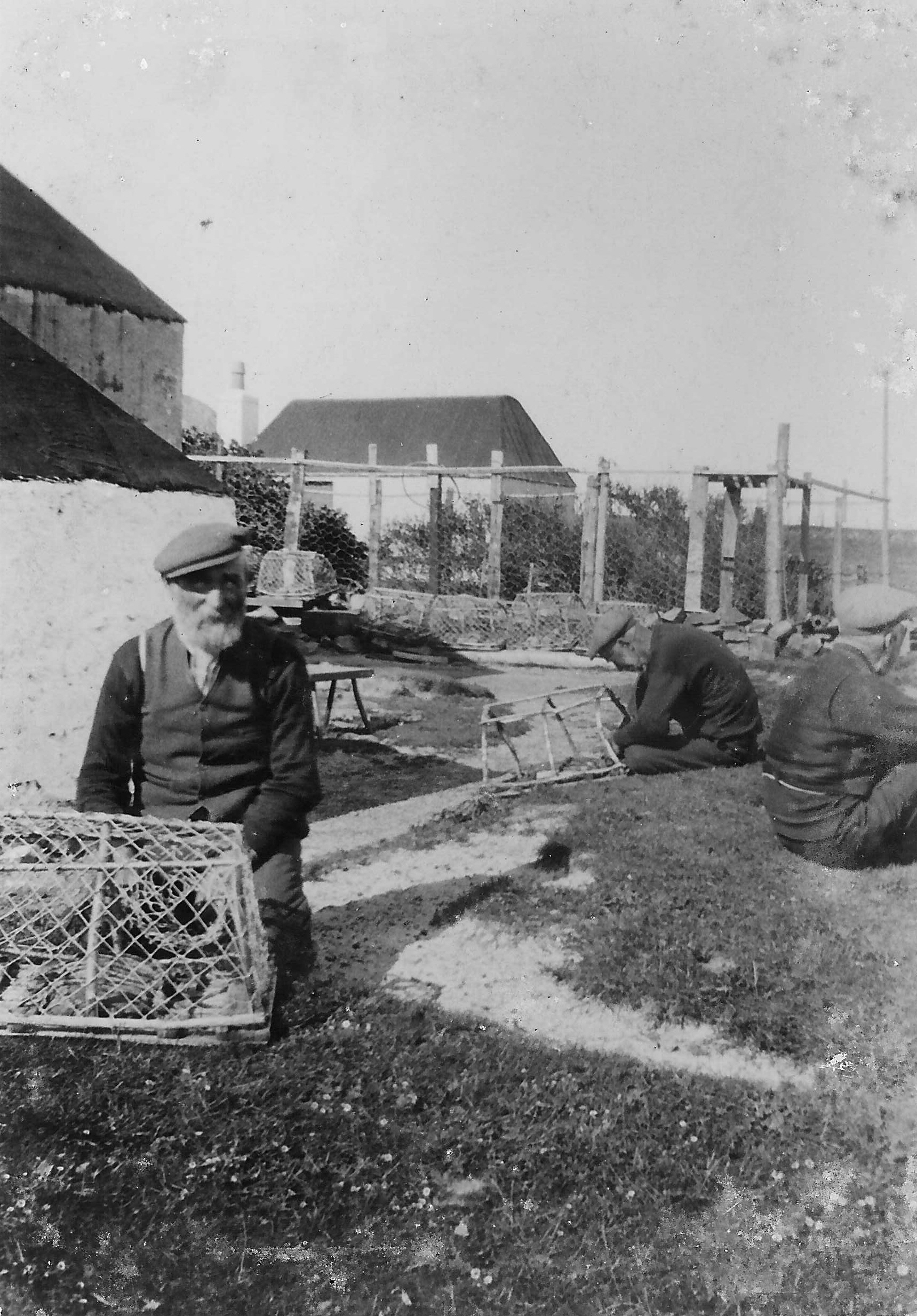
Photograph of William and Neil MacKinnon and Archibald MacLeod making lobsters creels at Brock.
Courtesy of Mr Alasdair Sinclair
Brothers William and Neil MacKinnon and their neighbour Archibald MacLeod (Èairdsidh Nèill) are pictured making lobster creels at Brock in the late 1920s or early 1930s. They would make about twenty creels each winter.
The base was made from old bits of wood and the ribs, known as ‘staingean’, from hazel branches brought from Mull. These were soaked in water for up to a week then passed through a fire to soften them before being bent to form the frame.
The net was hand knitted from manilla twine using a net needle and a wooden gauge to control the mesh size. A flat stone to keep the creel on the bottom was put in before the net was laced up. The entrance was formed over a ring made from galvanised fence wire.
Black and white photograph of William and Neil MacKinnon and Archibald MacLeod of Brock in the early 1930s.
Making lobsters creels at Brock in the late 1920s or early1930s. L-R: William MacKinnon, his brother Neil and Archibald MacLeod (Èairdsidh Nèill). William and Neil were brothers of Alasdair Sinclair’s grandmother and Archibald was Duncan Grant’s great-uncle.
Black and white postcard of Brock in the 1920s.
Brock in the 1920s. L-R: Taigh Uilleim, ruin of Taigh Raonaild, Taigh Clèirich and Taigh Chìorstaidh.
