Journal extract about the HMS Racoon shipwrecked off Malin Head in 1918.
Information about HMS Racoon shipwrecked off Malin Head in 1918, also includes artist`s impression. Two bodies were washed ashore on Tiree, one of whom is buried in Kirkapol cemetery.
Black and white photograph of a group of Cameronians (Scottish Rifles, 52nd Battalion) in 1940 or 1941.
Group of Cameronians (Scottish Rifles, 52nd Battalion) in 1914-1915. Second left in the front row is Hugh MacKinnon of Brock (Alasdair Sinclair`s uncle).
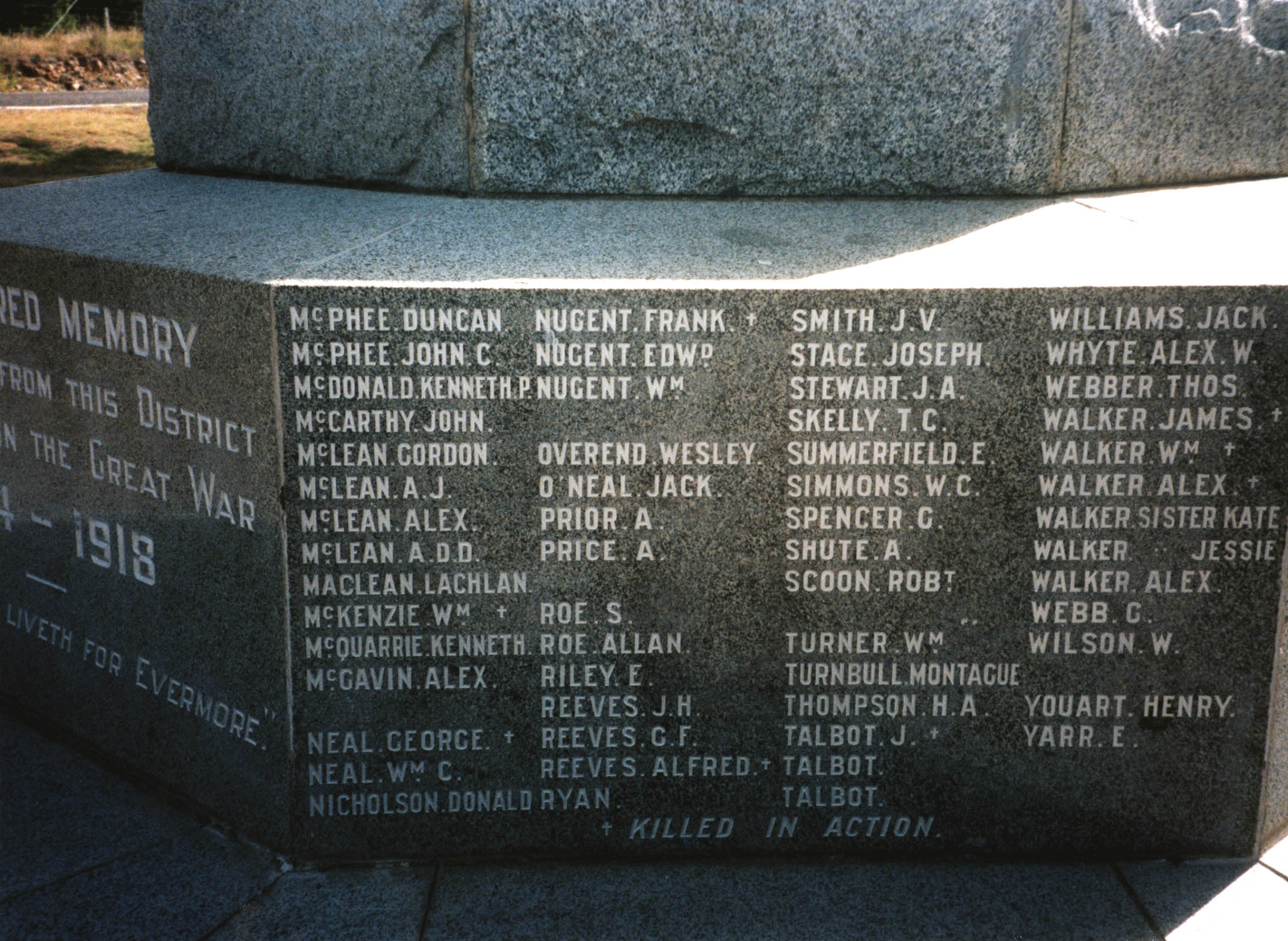
Colour photograph of the names on a war memorial in New Zealand.
War memorial in New Zealand with the name A. J. MacLean (Donald A. MacLean`s father) who enlisted during WWI while in New Zealand. His name was added to the list of those killed in action despite surviving the war.
Photocopied newspaper article about Malcolm Campbell, Balemartine, who survived four sinkings in the two World Wars.
Newspaper article ‘Survived Four Sinkings in Two Wars’ published in the Campeltown Courier, 8th May, 1943. The story of Malcolm Campbell, a ship`s carpenter from Tiree, whose ship was sunk twice in World War I and who was torpedoed twice in four months during World War II.
Photocopied leaflet `Tiree Food Producers Sent To Prison`.
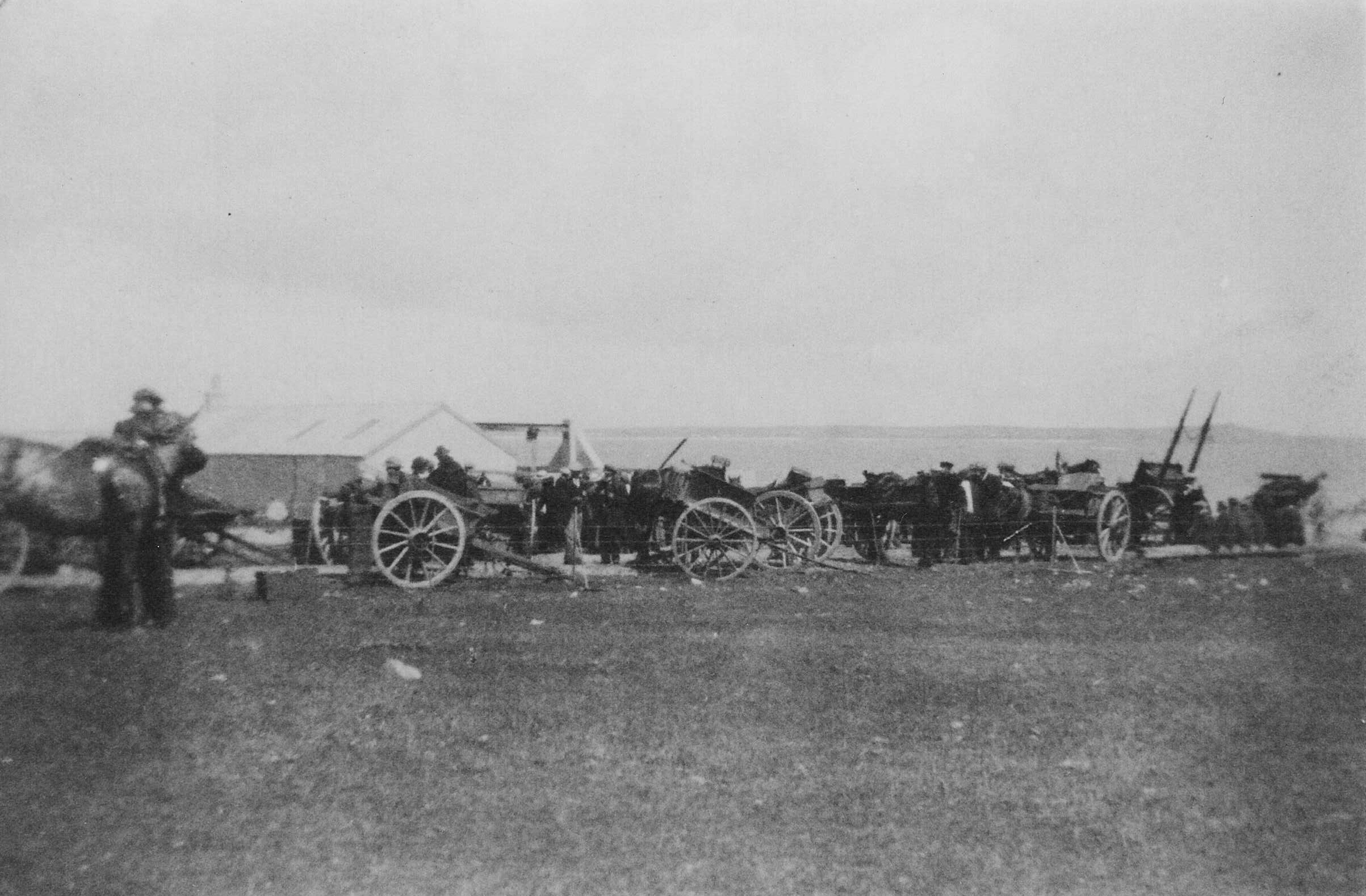
Leaflet produced by the Highland Land League about eight Tiree men who were sent to prison in 1918 for occupying land in Balephetrish leased by Thomas Barr.
Transcription of a Highland Land League publication of 1918 titled ‘Tiree Food Producers Sent To Prison’.
Courtesy of Mr Hugh MacLeod
During World War I, the Government encouraged people to cultivate unused land. It also instructed the Board of Agriculture for Scotland in 1914 to break up large farms for returning servicemen. The Board decided to take over the lease of 137 acres of Balephetrish farm for small holdings.
However, Thomas Barr, the tenant of Balephetrish farm, claimed £1,243 in compensation which the Board refused to pay although it allocated the land to a number of applicants. By 1918, eight Tiree cottars could wait no longer and ploughed 30 acres of Balephetrish farm and planted potatoes and other crops.
They were arrested and taken to Oban where they were welcomed like heroes by the local branch of the Highland Land League. At the subsequent court hearing they were found guilty and sentenced to ten days in prison with the recommendation that ‘they be treated to the privileges of political prisoners’.
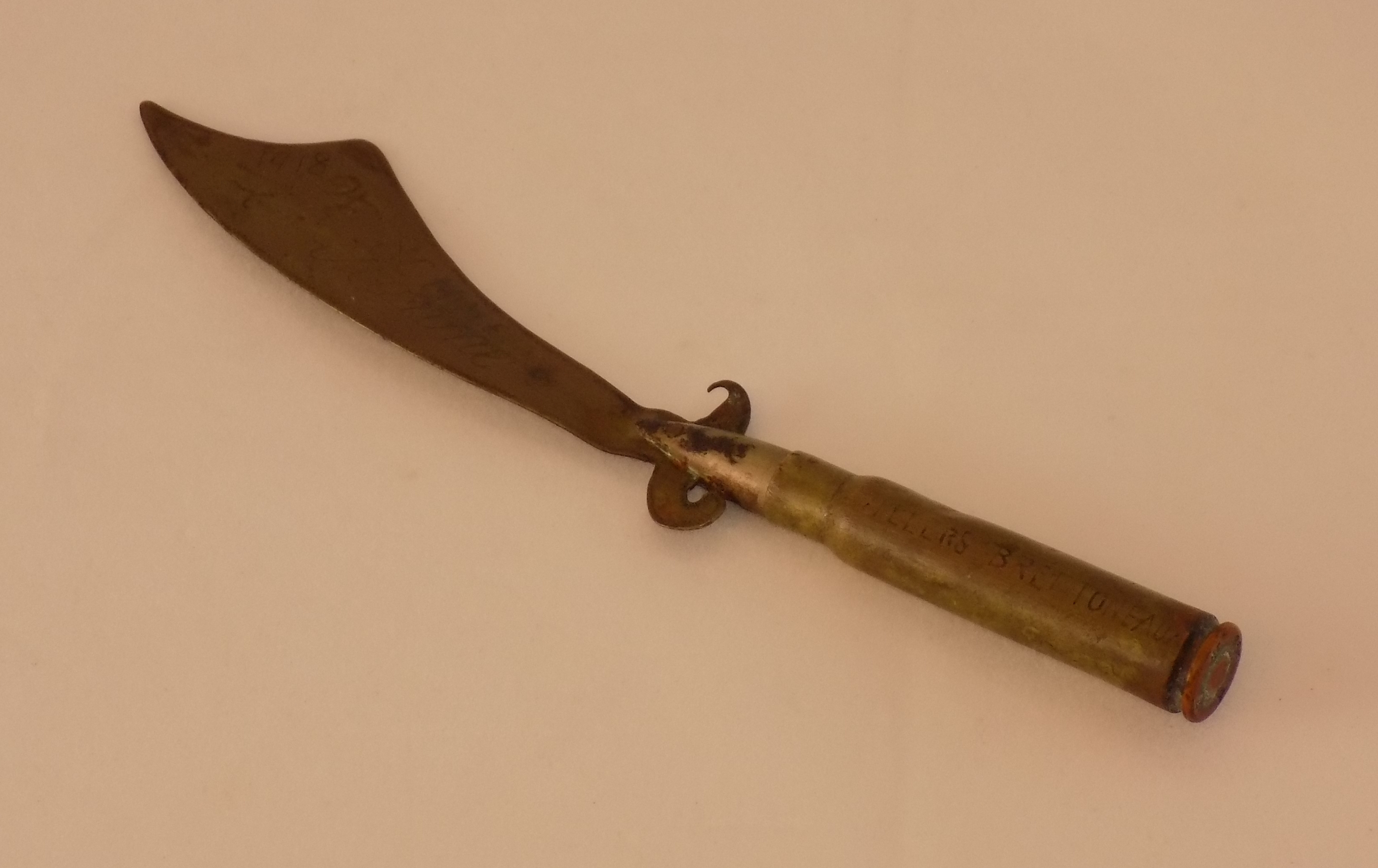
Brass letter-opener commemorating the Battle of the Somme, made from bullet casings and inscribed “1918 Somme” on the blade, although the original inscription appears to have been “so eronne”, which could be a person’s name or meaning ‘so wrong’. The handle is inscribed with “Villers Brettoneaux”, with the digits 3, 16, S67 and a symbol on the base.