


Black and white photograph of an RAF truck at Balephuil.
RAF truck at Balephuil during World War II. (Photograph from Mike Hughes in Filing Cabinet 2 drawer 1)


Black and white photograph of an RAF truck at Balephuil.
RAF truck at Balephuil during World War II. (Photograph from Mike Hughes in Filing Cabinet 2 drawer 1)
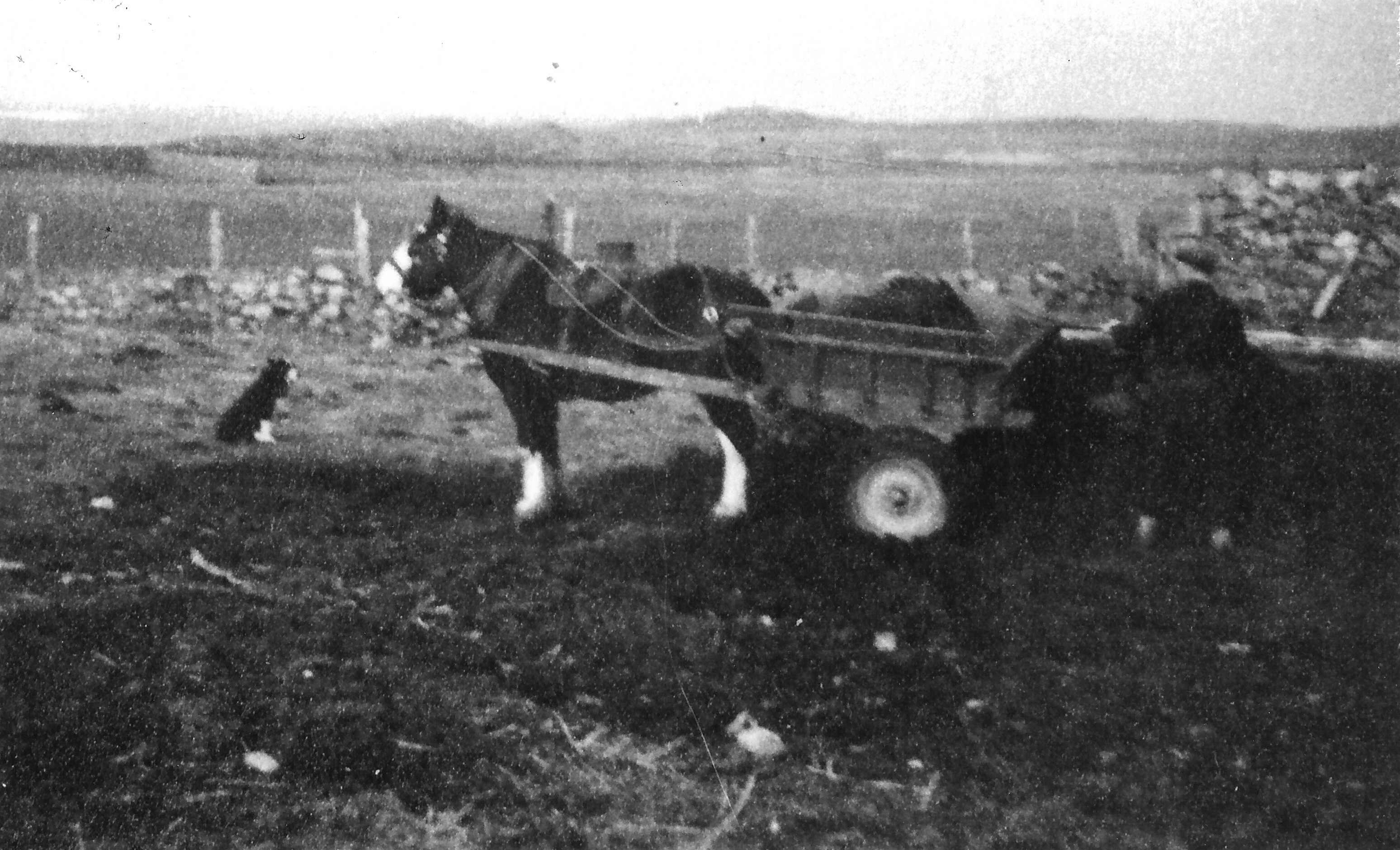
Black and white photograph of a crofter with a horse and cart.
Unknown crofter with a horse and cart in a field, taken during World War II. (Photograph from Mike Hughes in Filing Cabinet 2 drawer 1)
Black and white photograph of two airmen struggling against a gale with their bicycles during World War II.
Two unknown airmen with bicycles, probably on the Reef, during World War II. (Photograph from Mike Hughes in Filing Cabinet 2 drawer 1)

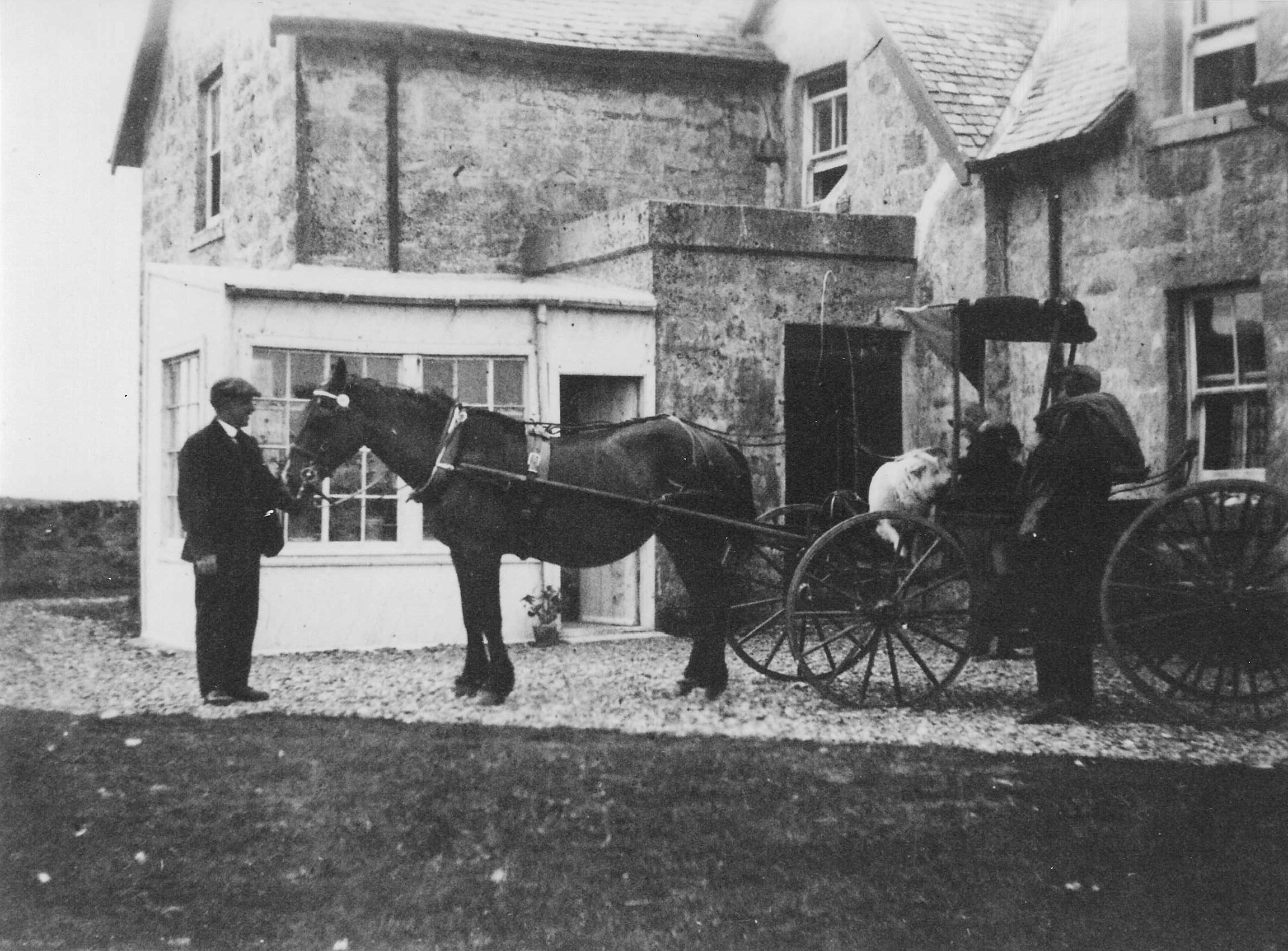
Black and white photograph of John MacKinnon, Lodge Farm.
John MacKinnon of Lodge Farm, Kirkapol is pictured here outside the Lodge with Lady Victoria Campbell’s buckboard. The daughter of the 8th Duke of Argyll, Lady Victoria contracted polio in 1859 when 5 years old and was lame for the rest of her life. When rough seas or low tides made it impossible for passengers to board the lighter for the mail-boat at either of the small piers at Scarinish harbour, the boat was run in as far as possible on the beach at Gott Bay. ‘Faithful John’ would drive the horse and buckboard through the water to the stranded lighter to transfer Lady Victoria, fortunately always without accident.
Hugh MacKinnon and the first plane on Tiree
Photograph of Hugh MacKinnon and the first plane on Tiree.

Courtesy of Mrs Netta Martin
Hugh MacKinnon (Eòghann Dhòmhnaill), known as the Contractor, is pictured here on the Reef with the first plane to land on Tiree. The two-seater Moth piloted by Captain A. N. Kingwill was brought over from Renfrew by the Tiree Association for their Sports Day in July 1929.
The Contractor owned one of the few cars on Tiree at the time and took the pilot to his house for lunch. The first passengers on a short trip over the island included the Contractor himself and John MacLean (Iain a’ Ghaffer) of Kilkenneth.
Kingwill went on to fly with Sir Alan Copburn’s flying circus and made the first scheduled landing at a municipal airport later that year when he piloted a Moth into Wythenshawe Airport at Manchester.
Black and white photograph of the Tiree Association Sports Day in the late 1920s.
Tiree Association Sports Day, 1927 or 1928. Since its foundation in 1900, the Tiree Association has organised an annual Sports Day on Tiree which continues to this day. In 1927 or ’28, Captain A. N. Kingwill was hired to fly the first plane to the island, bringing with him the day’s newspapers. Short flights on the plane were on offer at 2/6d (12p) a time and Captain Kingwill gave a display of stunt-flying. Hugh MacKinnon, a local contractor from Crossapol, pictured behind the wheel of his car in E24, presented him with a medal.
The Coaling Station at Brock
Photograph of a coal puffer beached on Gott Bay at Brock in the 1930s.

Around the middle of the 19th century, when local peat deposits had run out and peat was no longer readily available from adjacent islands, coal was shipped to Tiree in sailing smacks and schooners owned and sailed by Tiree men.
Later in the century and into the 1900s, coal was brought in by steam-driven lighters known as puffers. As there are no secure harbours in Tiree, the puffers, like the schooners before them, were beached at spring tides on several of the sandy bays around the island.
The coal was discharged into horse-drawn carts of a half tonne nominal capacity. One such coaling station was at Brock on the east end of the island.
Black and white photograph of the coaling station, Brock.
Photograph from a small album from Silversands, Vaul, titled `The Coaling Station, Brock` of a puffer discharging coal into horse-drawn carts, probably taken in the late 1920s to early 1930s. Around the middle of the 19th century, when local peat deposits had run out and peat was no longer readily available from adjacent islands, coal was shipped to Tiree in sailing smacks and schooners owned and sailed by Tiree men. Later in the century and into the 1900s, coal was brought in by puffers. As there are no secure harbours in Tiree, the puffers like the schooners before them were beached at spring tides on several of the sandy bays around the island. The coal was discharged into horse-drawn carts of a half tonne nominal capacity. One such coaling station was at Brock on the east end of the island.
Black and white photograph of a collier on the beach at Brock.
Photograph from a small album from Silversands, Vaul, titled `Collier on the beach at Brock` of a puffer waiting to discharge coal into horse-drawn carts, probably taken in the late 1920s to early 1930s. For additional information see catalogue for 1997.176.7.

Black and white photograph of Elizabeth Milne with Calum Mor.
Elizabeth Milne, Lady Frances Balfour’s grand-daughter, with Calum Mòr from Lodge Farm in the 1910s.
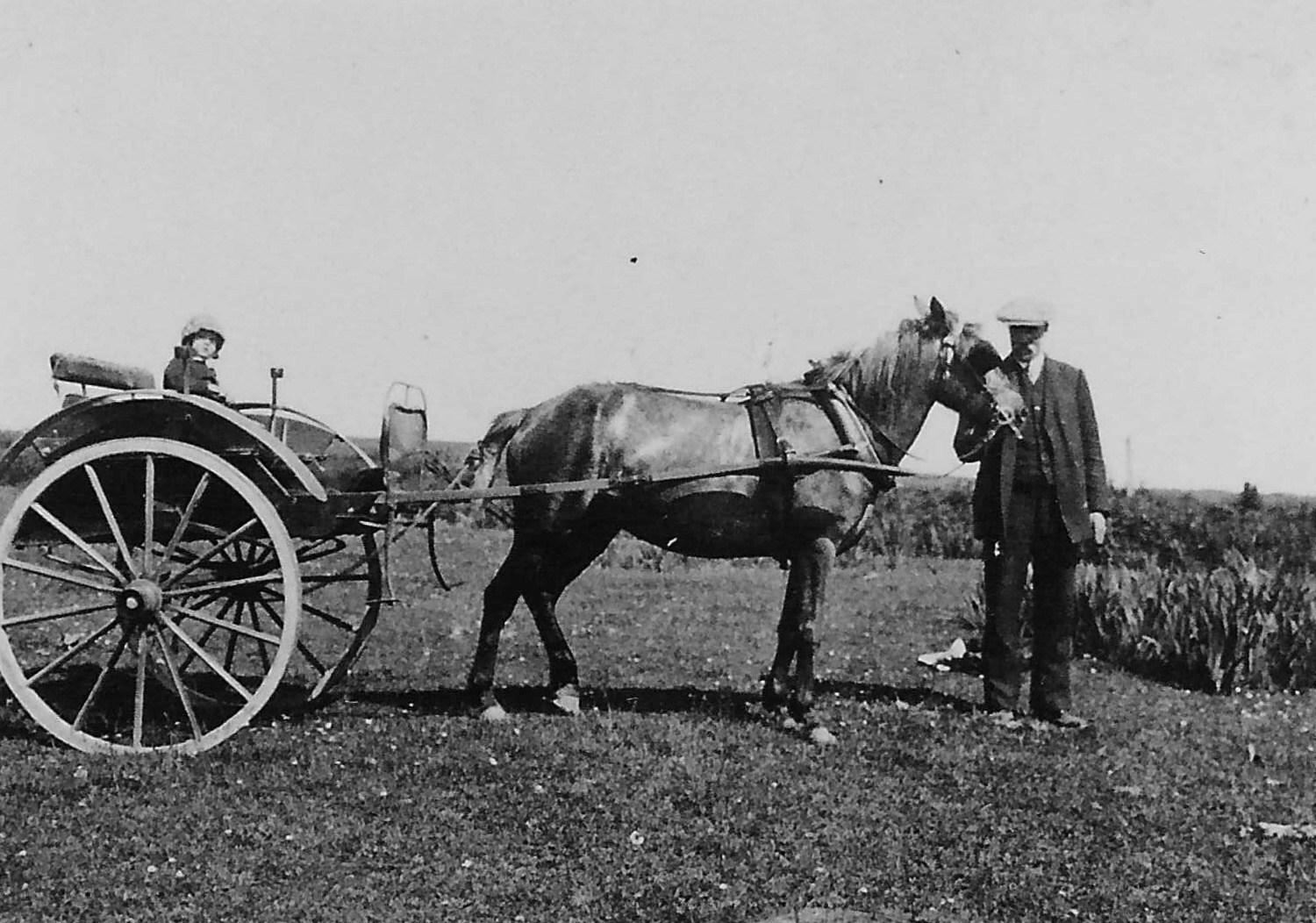
Black and white photograph of Elizabeth and Catriona Milne with a horse and cart.
Lady Frances Balfour`s grand-daughters Elizabeth and Catriona Milne with a horse and cart in 1923. The horse Sheila belonged to Calum Mor from Lodge Farm.

John MacKinnon outside the Lodge at Kirkapol
Photograph of John MacKinnon outside the Lodge at Kirkapol.

Courtesy of Mrs Jean Lindsay
John MacKinnon of Lodge Farm, Kirkapol is pictured here outside the Lodge with Lady Victoria Campbell’s buckboard. The daughter of the 8th Duke of Argyll, Lady Victoria contracted polio in 1859 when she was five years old and was lame for the rest of her life.
When rough seas or low tides made it impossible for passengers to board the lighter for the mail-boat at either of the small piers at Scarinish harbour, the boat was run in as far as possible on the beach at Gott Bay.
‘Faithful John’, as he was dubbed by Lady Victoria, would drive the horse and buckboard through the surf to transfer her to the stranded lighter, fortunately always without accident.
Black and white photograph of the Lodge during World War I.
Lady Victoria`s buckboard outside the Lodge during World War I.
John MacKinnon of Lodge Farm, Kirkapol is pictured here outside the Lodge with Lady Victoria Campbell’s buckboard. The daughter of the 8th Duke of Argyll, Lady Victoria contracted polio in 1859 when 5 years old and was lame for the rest of her life.
When rough seas or low tides made it impossible for passengers to board the lighter for the mail-boat at either of the small piers at Scarinish harbour, the boat was run in as far as possible on the beach at Gott Bay.
‘Faithful John’ would drive the horse and buckboard through the water to the stranded lighter to transfer Lady Victoria, fortunately always without accident.