


Black and white photograph of two men fishing in a boat.
Two unknown men out fishing with bamboo rods from a boat.


Black and white photograph of two men fishing in a boat.
Two unknown men out fishing with bamboo rods from a boat.
Black and white photograph of two men fishing in a skiff.
Two unknown men out fishing in a skiff.

The herring drifter ‘Eriskay’
Photograph of the herring drifter ‘Eriskay’.

Courtesy of Mr Iain MacDonald
The east coast herring drifter, ‘Eriskay’, was bought by Donald Archie MacDonald of Skipinnish, Ruaig. During the Tiree herring boom of 1914-1921, it was used to take catches of herring to the Broomielaw in Glasgow, returning with city goods.
The boiler was below the wheelhouse and kept the man at the wheel warm in the winter and too hot in the summer. The boat went on fire around 1930 in Milton harbour where its boiler can still be seen at low tide.
Donald Archie went on to build the ‘Deirdre’, a 26 foot long motor boat powered by a converted car engine, which took passengers from Tiree on day trips to Iona and Fingal’s Cave.
Photograph of the herring drifter `Eriksay`.
The herring drifter `Eriskay` owned by Donald Archie MacDonald of Skipinnish in Ruaig. It was used to take catches of herring to the Broomielaw in Glasgow during the Tiree herring boom of 1814-1821, returning with city goods. It went on fire around 1830 in Milton harbour where its boiler can still be seen at low tide.
Twenty-seven colour photographs of Milton taken by Strathclyde Police.
Twenty-seven colour photographs of the burnt-out fishing boats at Milton taken from a Strathclyde Police helicopter after the accident on 20th March 2004.
Two haddock hooks.
Two No. 19 Mustad-square flatted tinned haddock hooks with long shanks, made in Norway, and used on Tiree for catching flounders. Cost in mid-20th century 2/3d for 100.
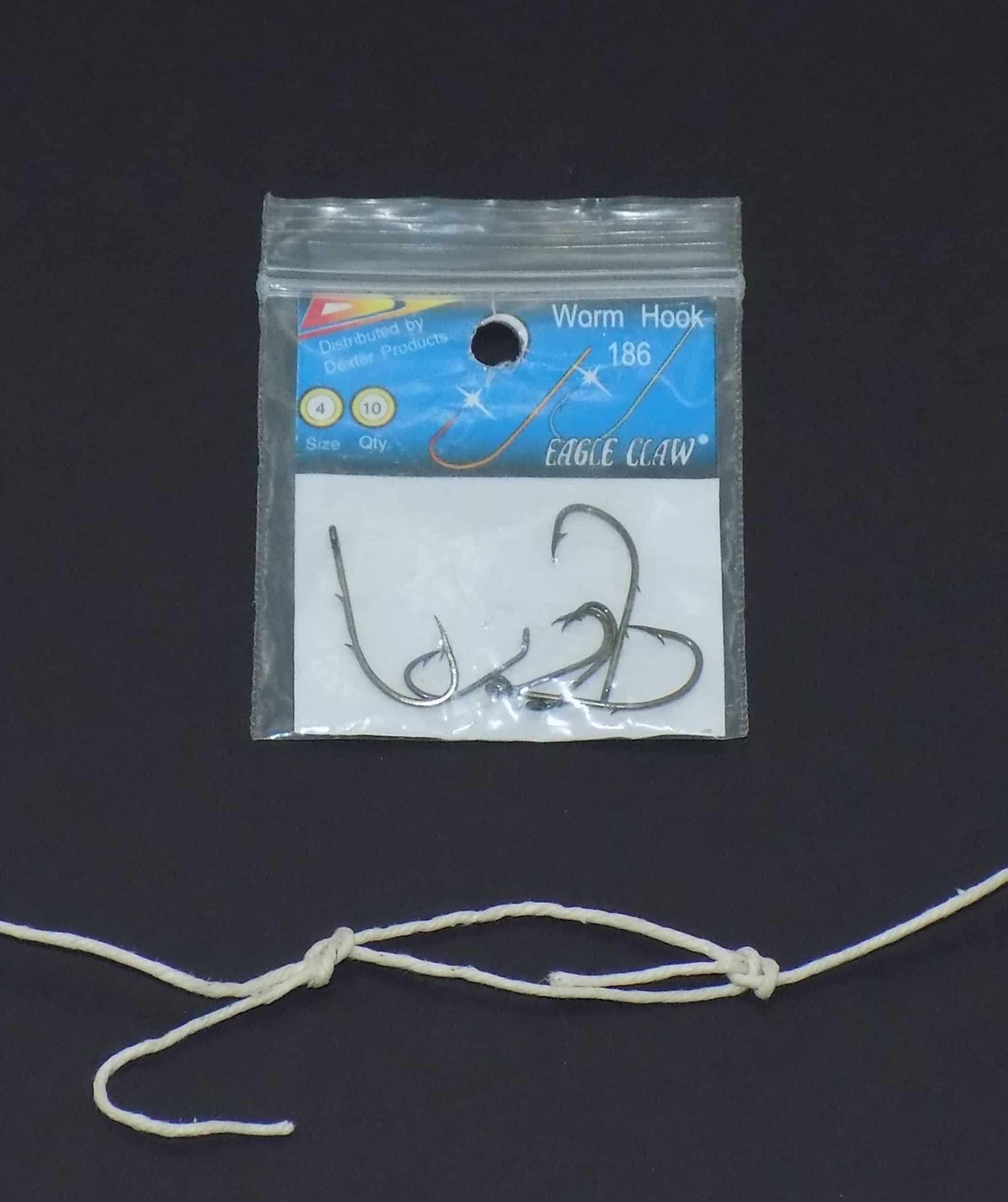
Packet of assorted angling hooks (2 small, 3 medium) and piece of string tied with bowline.
Colour photograph of the cnotagan at Carraig Mhic Eòghainn, Baugh.
The bowl-like cnotagan at Carraig Mhic Eòghainn, a fishing rock at Baugh, photographed by Dr John Holliday in 2000. Cnotagan were used to grind bait, usually limpets and whelks.

Neil and Donald MacKinnon of Brock in their skiff, the ‘Tunnag’
Photograph of Neil and Donald MacKinnon of Brock in their skiff, the ‘Tunnag’, in the 1930s.

Courtesy of Mr Alasdair Sinclair
Neil MacKinnon, holding aloft a lobster, and his brother Donald, both from Brock, are pictured in their skiff, the ‘Tunnag’, in the early 1930s. The old men were very fussy about placing the single-entrance creels precisely so that the entrance faced the rocks where the lobsters were hiding.
Their great-nephew Alasdair Sinclair remembers, as a ten year old boy, having the job of rowing the boat while Neil placed the creels. The ‘Tunnag’ was eight feet wide with long, narrow-bladed oars. While he was trying to manoeuvre the boat, the pernickety old man would be saying, ‘Chan eil sin ceart idir. Feuch a-rithist e!’ (That’s not right at all. Do it again!)
Lobsters often hide inshore at low tide in small crevices in the rocks called ‘faichean’. Knowledge of their whereabouts were kept secret and passed down through the family.
Black and white photograph of Neil and Donald MacKinnon of Brock in the early 1930s.
L-R: Neil MacKinnon of Brock, holding aloft a lobster, and his brother Donald, both from Brock, in the skiff `Tunnag` in the early 1930s. (Neil and Donald were brothers of Alasdair Sinclair`s grandmother.)
Two fishing rods made from World War II box kite struts.
Two fishing rods made from World War II box kite struts with hooks, flies and weights and used for fishing piocaich (saithe) and ronnaich (mackerel) from a boat.
Length of cotton herring net, dyed with catechu plant extract.
