


Black and white photograph of prize-winning cow at the 1927 agricultural show.
Prize-winning cow at the agricultural show of 1927, from a small photograph album from Silversands in Vaul titled 1927.
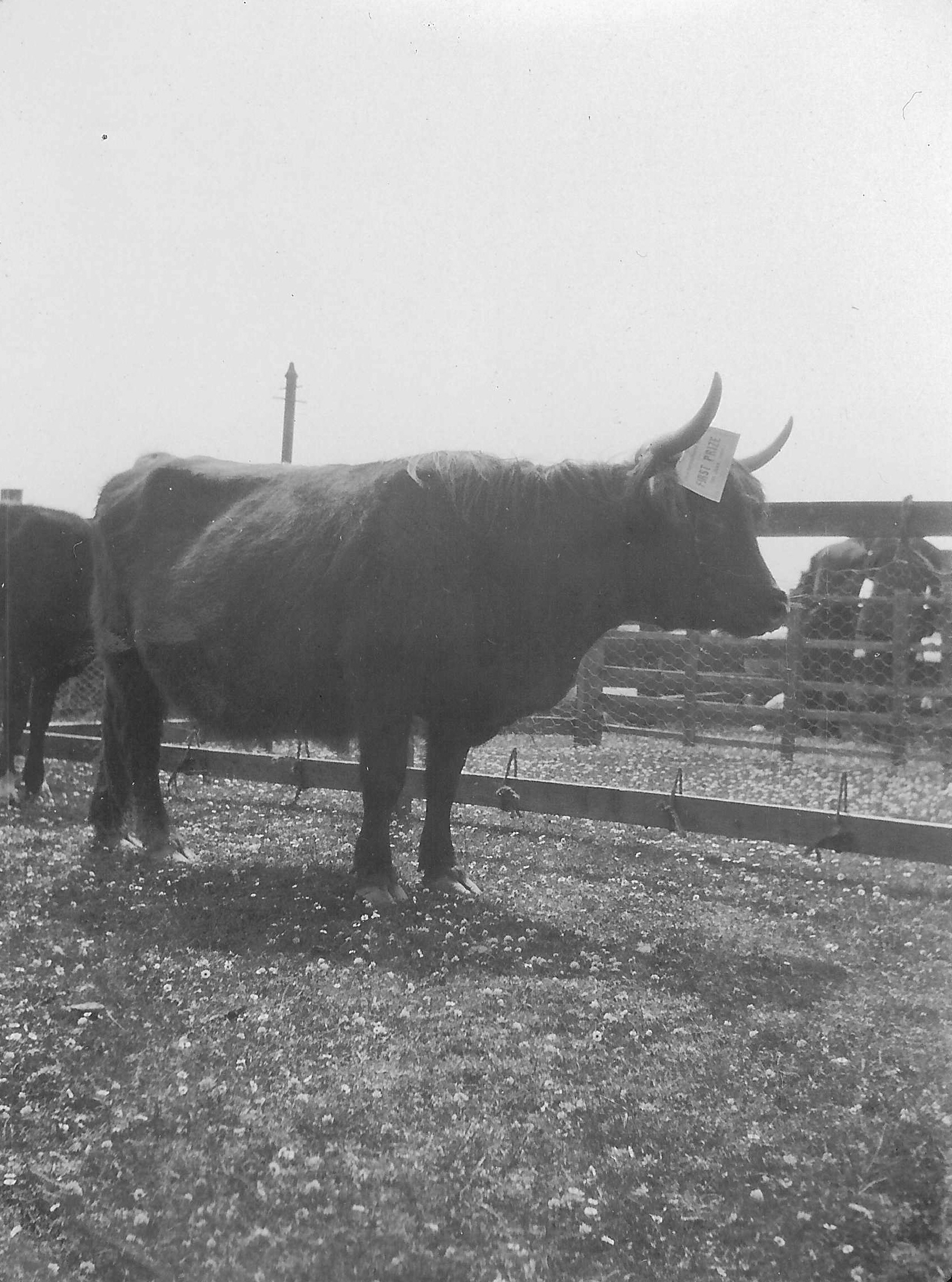

Black and white photograph of prize-winning cow at the 1927 agricultural show.
Prize-winning cow at the agricultural show of 1927, from a small photograph album from Silversands in Vaul titled 1927.
Black and white photograph of a champion Clydesdale mare at the 1927 agricultural show.
Champion Clydesdale mare belonging to John MacNeill of Greenhill at the agricultural show of 1927, from a small photograph album from Silversands in Vaul titled 1927.
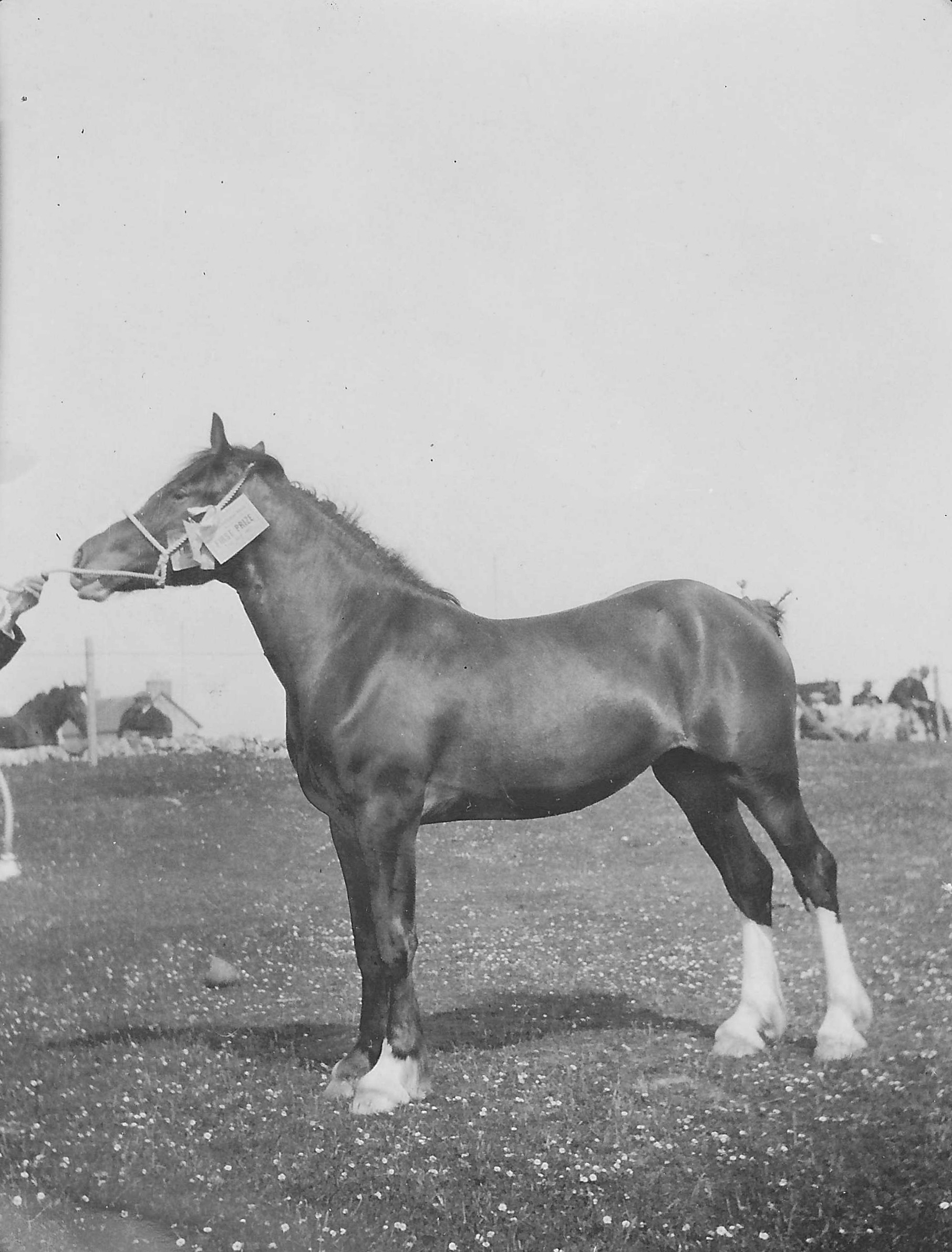
Black and white photograph of a champion mare at the 1927 agricultural show.
Champion mare at the 1927 Tiree Show in Scarinish, from a small photograph album from Silversands in Vaul titled 1927.

Black and white photograph of a prize-winning Clydesdale mare at the 1927 agricultural show.
Prize-winning Clydesdale mare at the 1927 Tiree Show in Scarinish, from a small photograph album from Silversands in Vaul titled 1927.

Black and white photograph of Hugh MacIntyre.
Hugh MacIntyre 1856-1932, father of Morag (see photos B129 & B131) and brother-in-law of Sarah MacMillan (see photo B191), from a small photograph album from Silversands in Vaul titled ‘1927’.

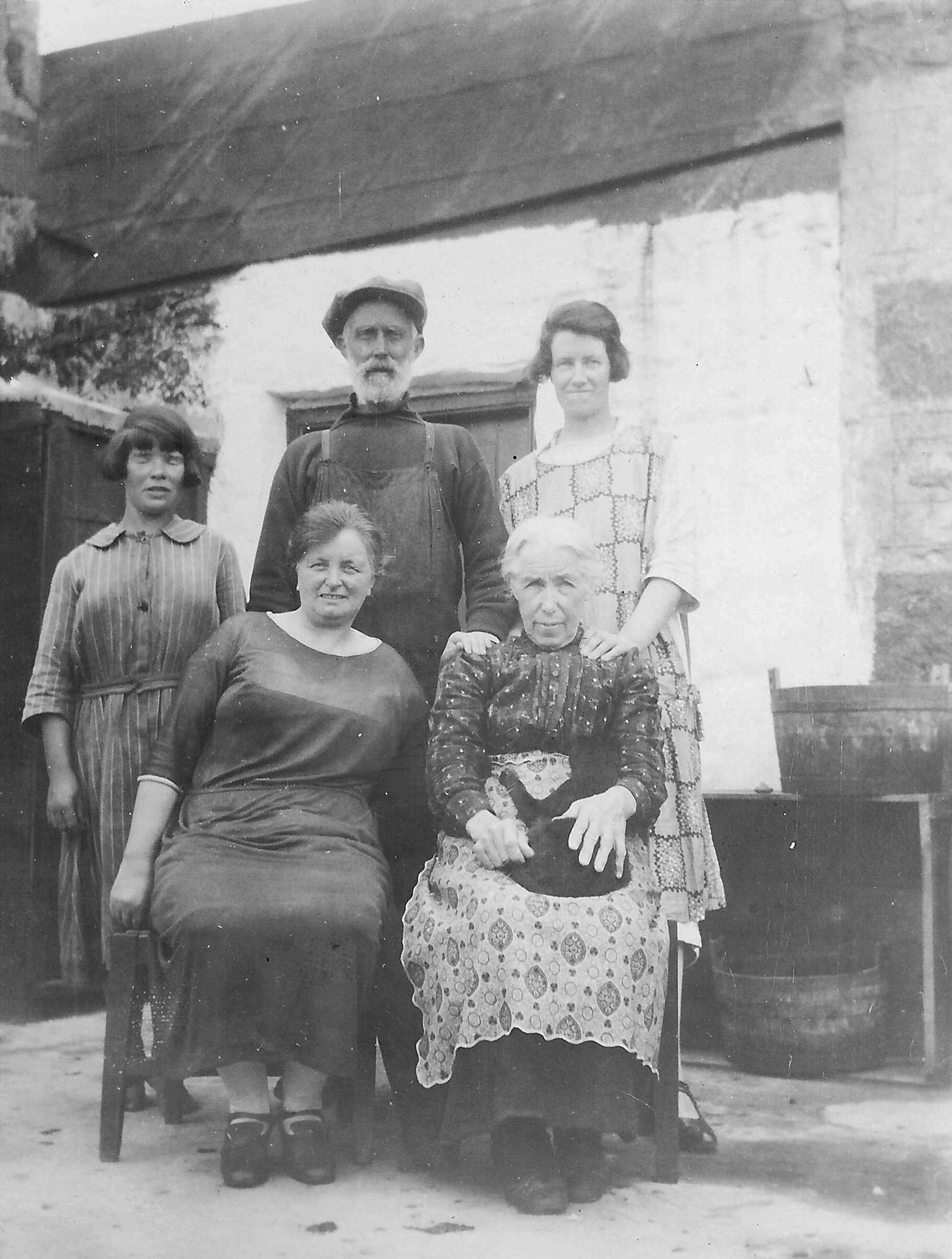
Sarah MacMillan, Hugh and Morag MacIntyre
Photograph of Sarah MacMillan, Hugh and Morag MacIntyre at Silversands in Vaul in 1827.
Courtesy of Mr Donald Brown
Sarah MacMillan (front right) is pictured with her niece Morag behind her and Morag’s father Hugh MacIntyre outside Silversands in Vaul in 1927. Besides running the shop attached to the house and looking after her aged aunt, Morag also took in visitors during the summer months.
The shop was used as an assembly point for Scottish Airways passengers when the planes landed on Gott Bay beach before 1939. Morag also acted as secretary of the Vaul Golf Club, and players had to pay their green fees to her. A map of the course was on her shop wall.
She never had a bank account and paid all her suppliers by Postal Order purchased at Ruaig Post Office. The shop closed around 1960 after serving the community for almost one hundred years.
Black and white photograph of a group of people outside Silversands in 1927.
Outside Silversands in Vaul in 1927. L-R: (back) unknown; Hugh MacIntyre (1856-1932); his daughter Morag (1897-1967); (front) unknown; Sarah MacMillan (1856-1948), Hugh`s sister-in-law and Morag`s aunt.
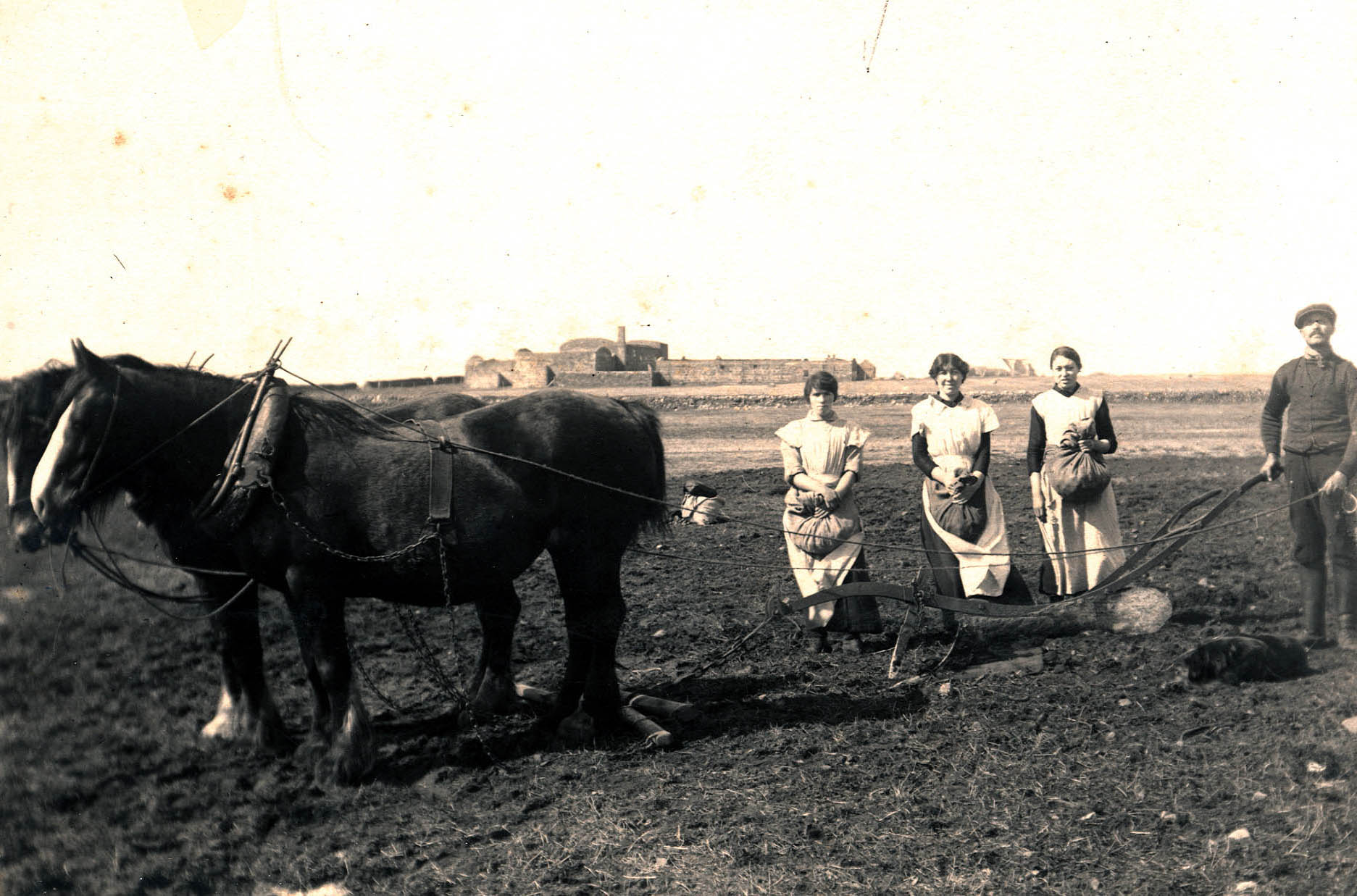
Planting potatoes at Middleton in the 1920s
Photograph of Alasdair MacDonald planting potatoes with Lizzie MacArthur, Effie and Mary Ann MacDonald at Middleton in the 1920s.
Courtesy of Mr Lachie MacDonald
Taken in the 1920s, the photograph illustrates a standard plough used to prepare the ground for sowing corn. Because of the fine sandy soil in most of Tiree, a ridger was not successful.
The women followed in the furrow planting potatoes from the supplies heaped in their sack aprons and the ploughman made a second furrow to cover them. This process was repeated leaving a 45 cm space between the planted furrows for the grubber.
The Middleton seaweed factory operated by the North British Chemical Company can be seen in the background. Known locally as the Glassary, it ceased operation in 1901 and was demolished during World War II.
Black and white photograph of Alasdair MacDonald planting potatoes at Middleton in the 1920s.
Planting potatoes at Middleton, with the Glessary (as it was known) in the backgound in the 1920s. L-R: Lizzie MacArthur, Middleton and Greenhill – aunt of John MacArthur, Middleton Farm; Effie MacDonald, married to the late Archie Walker, Coll and Kenovaay, Tiree – aunt of Lachie MacDonald , Middleton; Mary Ann MacDonald – aunt of Lachie MacDonald, Middleton; Alasdair MacDonald – father of Lachie MacDonald, Middleton. The photograph illustrates a standard plough used to prepare the ground for sowing corn. Because of the fine sandy soils in most of Tiree, a ridger was not successful. Instead, the standard plough was used and the women followed in the furrow with supplies of potatoes heaped in their sack aprons. The ploughman made a second furrow to cover the potatoes. The same process was repeated thus leaving an 18 inch (45cm) space between planted furrows to allow the grubber to be used.
Black and white photograph of the MacDonald family in Middleton in the 1920s.
Middleton in the 1920s. L-R: Mary MacDonald, sister of Alasdair MacDonald; unknown; May MacDonald, mother of Alasdair MacDonald; Alasdair MacDonald, father of Lachie MacDonald, Middleton.

Black and white photograph of John MacIntyre of Moss in the 1920s.
John MacIntyre (Iain Chailein) of Moss with a Clydesdale horse in the 1920s.

The souterrain in Kilkenneth in 1918
Photograph of John MacIntyre and his son Colin at the opened souterrain in Kilkenneth in 1918.

Courtesy of Mr Colin MacKinnon
John MacIntyre (Iain Chailein Mhurchaidh) and his son, Colin, are pictured here at the souterrain in Kilkenneth opened by chance when ploughing in 1918. It was later covered over.
Less than a mile away, a Y-shaped passage was exposed in the 1890s in the sand dunes at Tràigh Ghrianail. Measuring 9.2 metres long, 1 metre wide and 1.5 metres high, it was known locally as An Taigh Falaichte (the hidden house) and used for shelter by those working on the shore. It has since disappeared.
Similar underground structures were built on the mainland around 200 AD. They may have been used as byres or stores, or as places to hide from raiders.
Black and white photograph of John MacIntyre at the souterrain in Kilkenneth around 1920.
John MacIntyre at the rear of the horse and his son Colin at the opened souterrain in Kilkenneth around 1920.