


Photograph of Rev Donald MacArthur baptising in Loch a` Phuill in the early 1920s.
Rev. Donald MacArthur baptising in Loch a` Phuill in the early 1920s.


Photograph of Rev Donald MacArthur baptising in Loch a` Phuill in the early 1920s.
Rev. Donald MacArthur baptising in Loch a` Phuill in the early 1920s.
Photograph of Dolina Campbell, Neil Brown and Ann MacPhee in Hawkes Bay, N. Z.
L-R: Dolina Campbell; Neil Brown, Balevullin; Ann MacPhee, sister of Dolina. Taken at Maraekakaho, Hawkes Bay, New Zealand in 1968.

Seven photographs of `Investors in People` awards, January 2002
Seven photographs from `Investors in People` awards held in the Scarinish Hotel in January 2002 with Ken Abernethy, Chief Executive Officer of AIE – group photograph, Baugh surgery (2), Tiree Motor Company, MacLennan Motors, I & F Macleod and Heylipol farm.
Scan of photograph of John MacFadyen.
John MacFadyen, Scarinish, b. 1833.

Colour photograph of Tiree High School staff, 2001.
Tiree High School staff photograph: (L-R) back row – Nell Campbell, Brian Milne, Lorna MacDonald, Catriona Campbell, Neil Oliver, Sheila MacKinnon, Mairi Forbes, Tommy Monaghan, Margaret Straker, Stewart Smith; middle row – Fiona Brown, Flora MacPhail, Ronnie MacGowan, Elaine MacArthur, Ron Stirrat, Stuart MacLean, Kate England, Brian Findlater, June Hunter, Janie MacPhail; front row – Joyce Gillespie, Jan Paterson, Judith MacIntosh, Marion Findlater, Colin Hunter, Jessie Gray, Mary MacArthur, Anne Langley, Linda MacIntyre.

Colour photograph of Alasdair Sinclair, Brock modelling a woman`s bonnet, blouse and skirt.
Alasdair Sinclair photographed in August 2001 in front of An Iodhlann modelling a woman`s black bonnet, blouse and skirt made in the early 20th century.

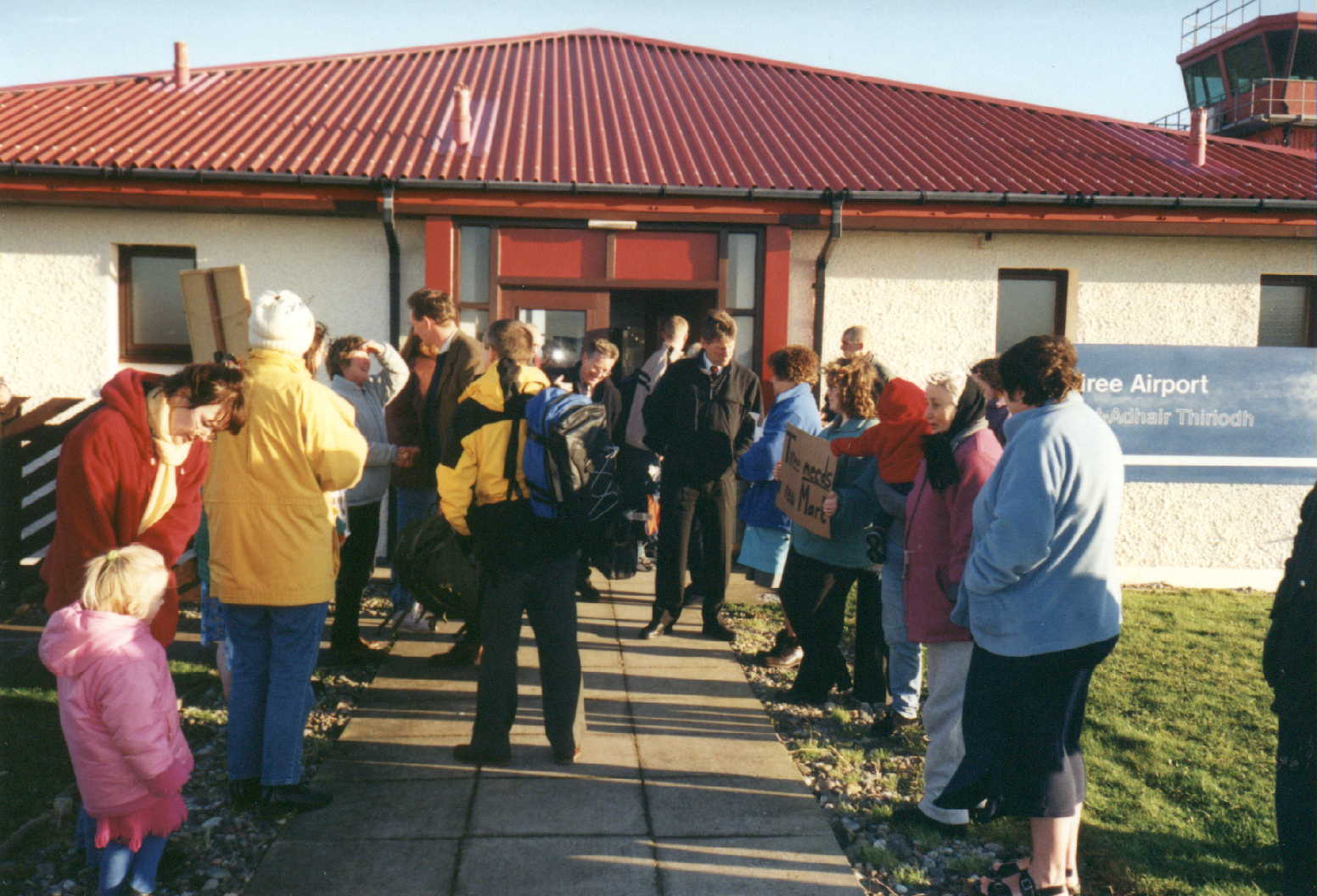
Colour photograph of protesters for the Tiree Mart at the airport, 2001.
Protesters at the airport demonstrating their support for the Tiree Mart to various dignitaries, including MP George Lyon, arriving for a meeting on the island in December 2001.
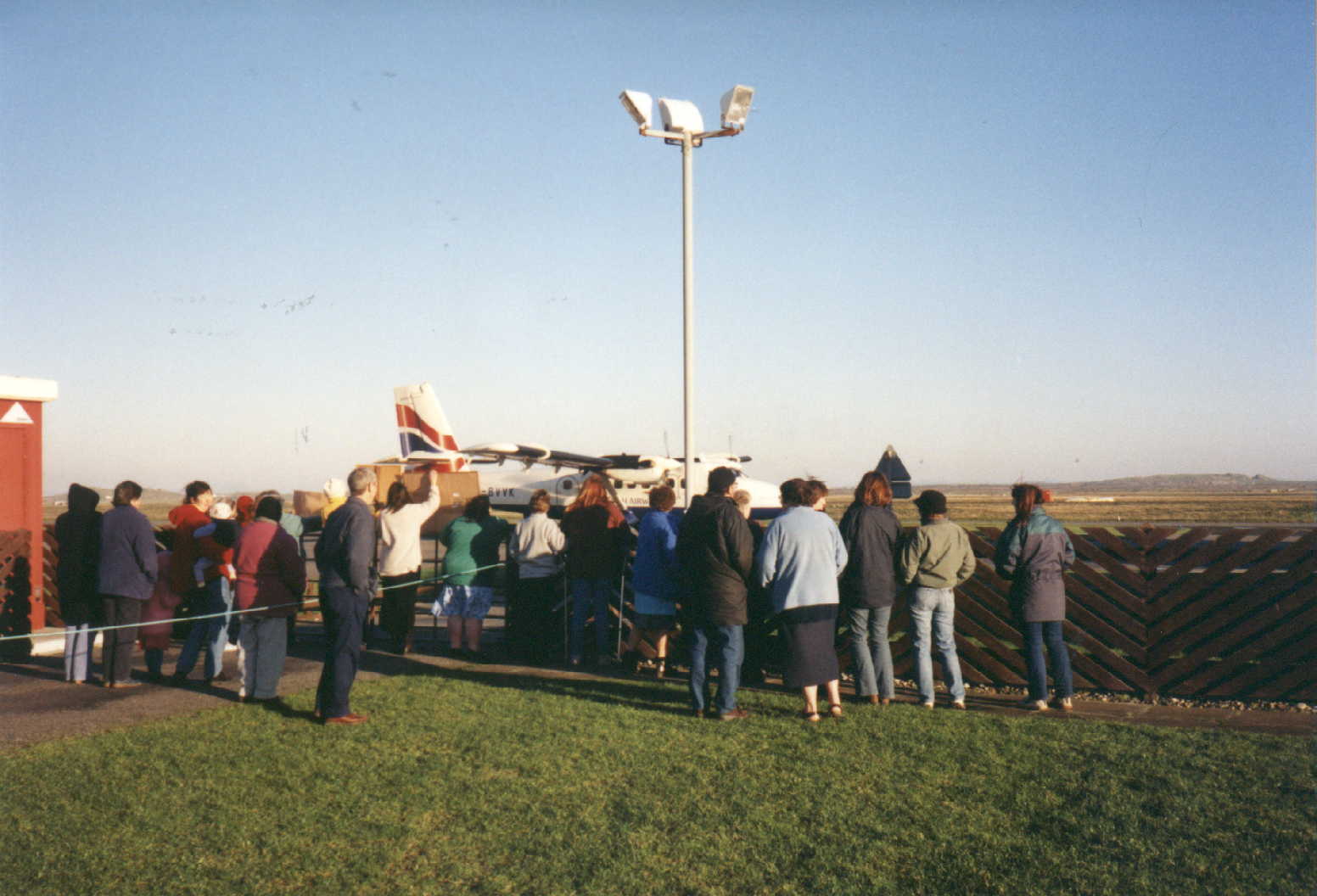
Colour photograph of protesters for the Tiree Mart at the airport, 2001.
Protesters at the airport demonstrating their support for the Tiree Mart to various dignitaries, including MP George Lyon, arriving for a meeting on the island in December 2001.

Colour photograph of protesters for the Tiree Mart at the airport, 2001.
Protesters at the airport demonstrating their support for the Tiree Mart to various dignitaries, including MP George Lyon, arriving for a meeting on the island in December 2001.
Colour photograph of Fiona MacCrae and Charlie Self.
Photograph of Fiona MacRae, Balevullin and Charlie Self, RSPB Coll, at a farewell party in Caoles in August 2001 before leaving for 3 years to stay in Aride in the Seychelles.
