


Poster and flyer for the `War Child` concert in July 2005.
Poster and flyer for the `War Child` concert held in An Talla on 16th July 2005.

Poster and flyer for the `War Child` concert in July 2005.
Poster and flyer for the `War Child` concert held in An Talla on 16th July 2005.
Leaflet for Skipinnish Sea Tours.
Colour lraflet withinformation about Skippinish Sea Tours.
Cover of magazine `Living Edition`, Issue 63, July/August 2005 with full page advert for Skipinnish Records.
Full page advert for Skipinnish Records with a list of their albums.
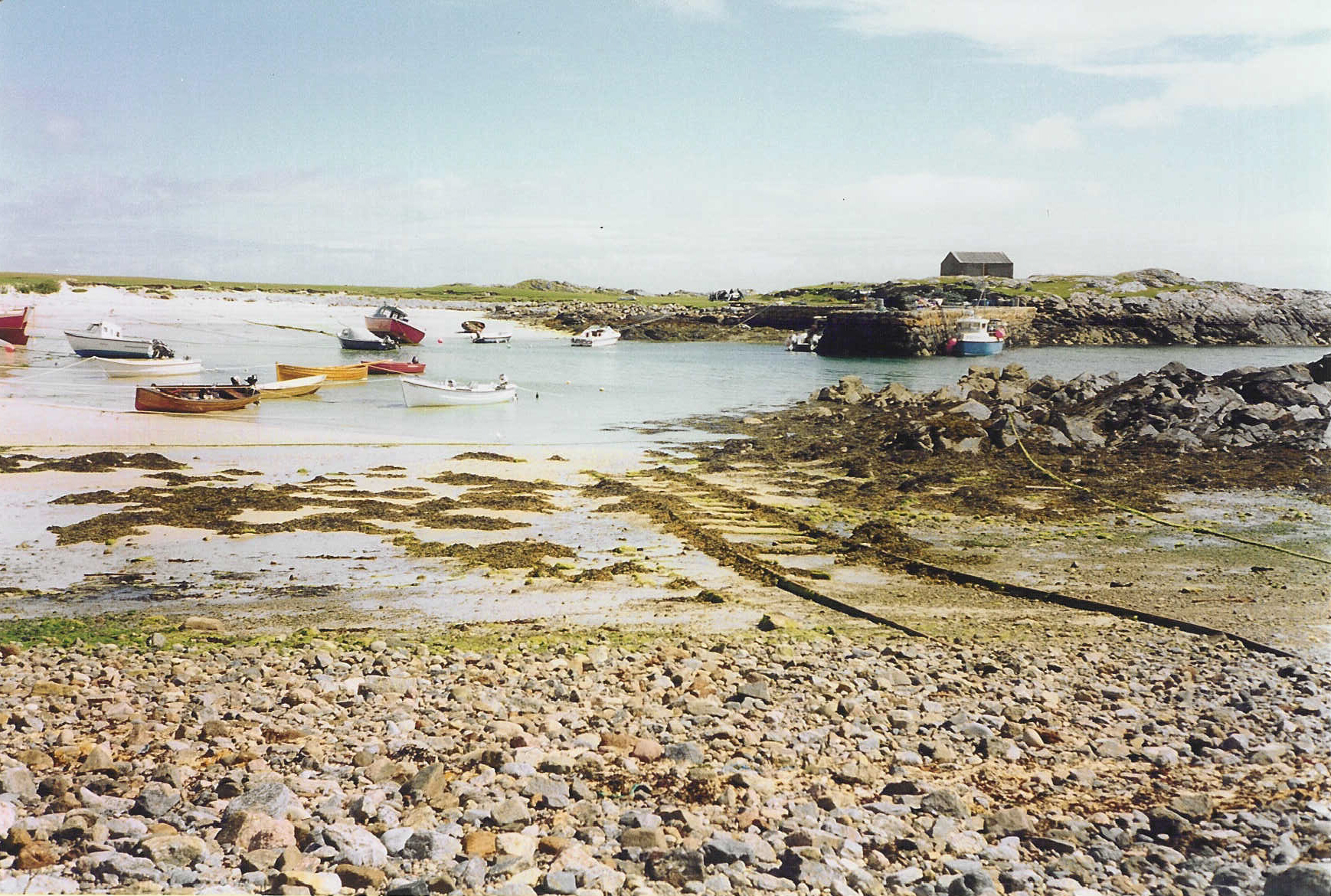
Colour photograph of Scarinish harbour in 2004.
The railway at Scarinish harbour used to beach the `Spindrift` in a cradle, photographed by Dr John Holliday in 2004.
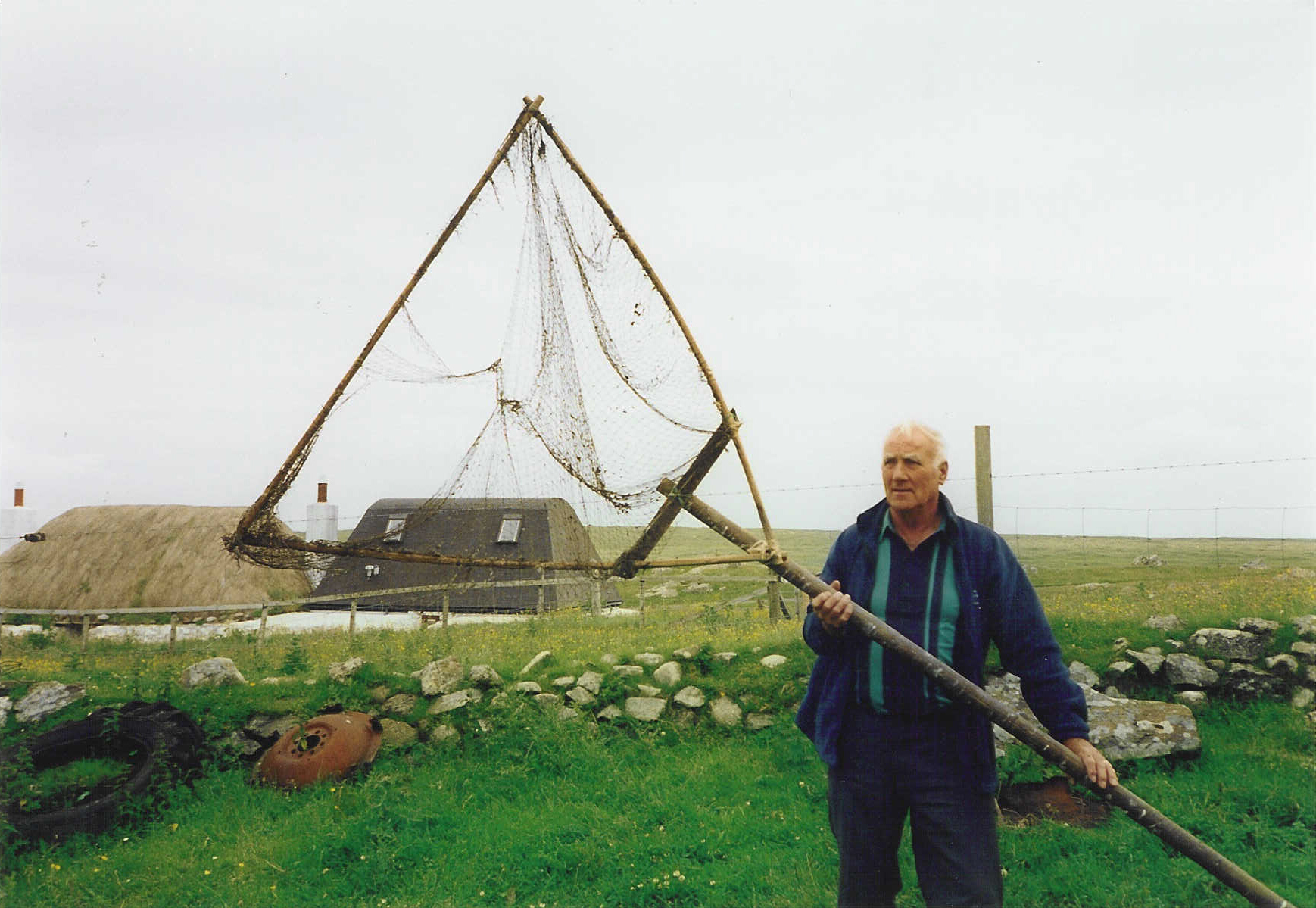
Donald Archie Brown of Balevullin with an ‘àbh’
Photograph of Donald Archie Brown of Balevullin with an ‘àbh’.
Courtesy of Mr Donald Archie Brown
Donald Archie Brown from Balevullin is holding an ‘àbh’, a large triangular net on a long handle used to fish for cuddies (small fry) from certain rocks. Derived from the Old Norse word ‘haaf’ meaning sea, it may have been introduced to Tiree after the arrival of the Vikings in the 9th century AD.
The pieces of wood making up the ‘àbh’ were bound together with cord as nails or bolts would rust and split the wood. It was heavy and dangerous with a full net and used only by stronger, more experienced men.
The best time to use the ‘àbh’ was at dusk. The fish were brought close to the rock with bait, traditionally by spitting out chewed raw limpets. Then a handful of ‘siaban’, dried shell sand, was thrown on the surface of the water so that the fish could not see the net coming from above.
Colour photograph of Donald Archie Brown with an `abh` in 2004.
Donald Archie Brown of Balevullin with an `abh` made from an oar and herring net belonging to Donald Kennedy and made by Donald MacNeill, photographed by Dr John Holliday in August 2004.
Donald Archie Brown of Balevullin
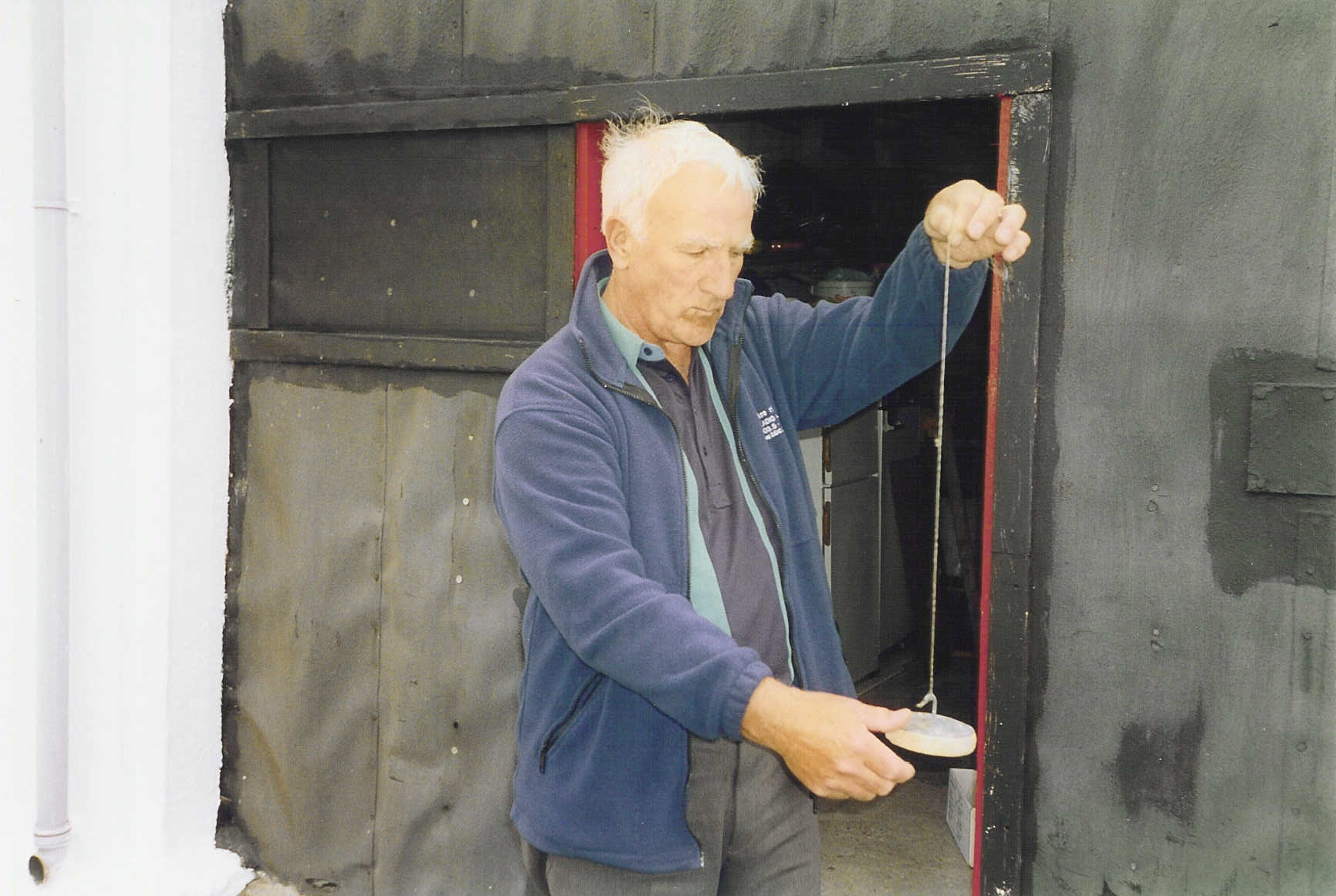
Photograph of Donald Archie Brown of Balevullin spinning horsehair fishing line.
Courtesy of Mr Donald Archie Brown
Donald Archie Brown of Balevullin is pictured spinning horsehair fishing line using a small weight. Joined together with smooth knots, the line was used for fishing with rods from a boat or short lengths were used to attach the hooks to the main line used for flounder fishing.
Second-hand haddock line was often bought from east coast fishermen to use for flounder fishing. The main line was weighted to keep it on the bottom and up to 500 hooks spaced a yard apart were attached to it using horsehair which was light and floated.
Baiting the hooks was a tedious job. Lugworms dug up from the beach were the usual bait but mussels, if ones large enough could be found, were also used.
Colour photograph of Donald Archie Brown making horsehair fishing line in 2004.
Donald Archie Brown of Balevullin spinning fishing line from horsehair, photographed by Dr John Holliday in August 2004.
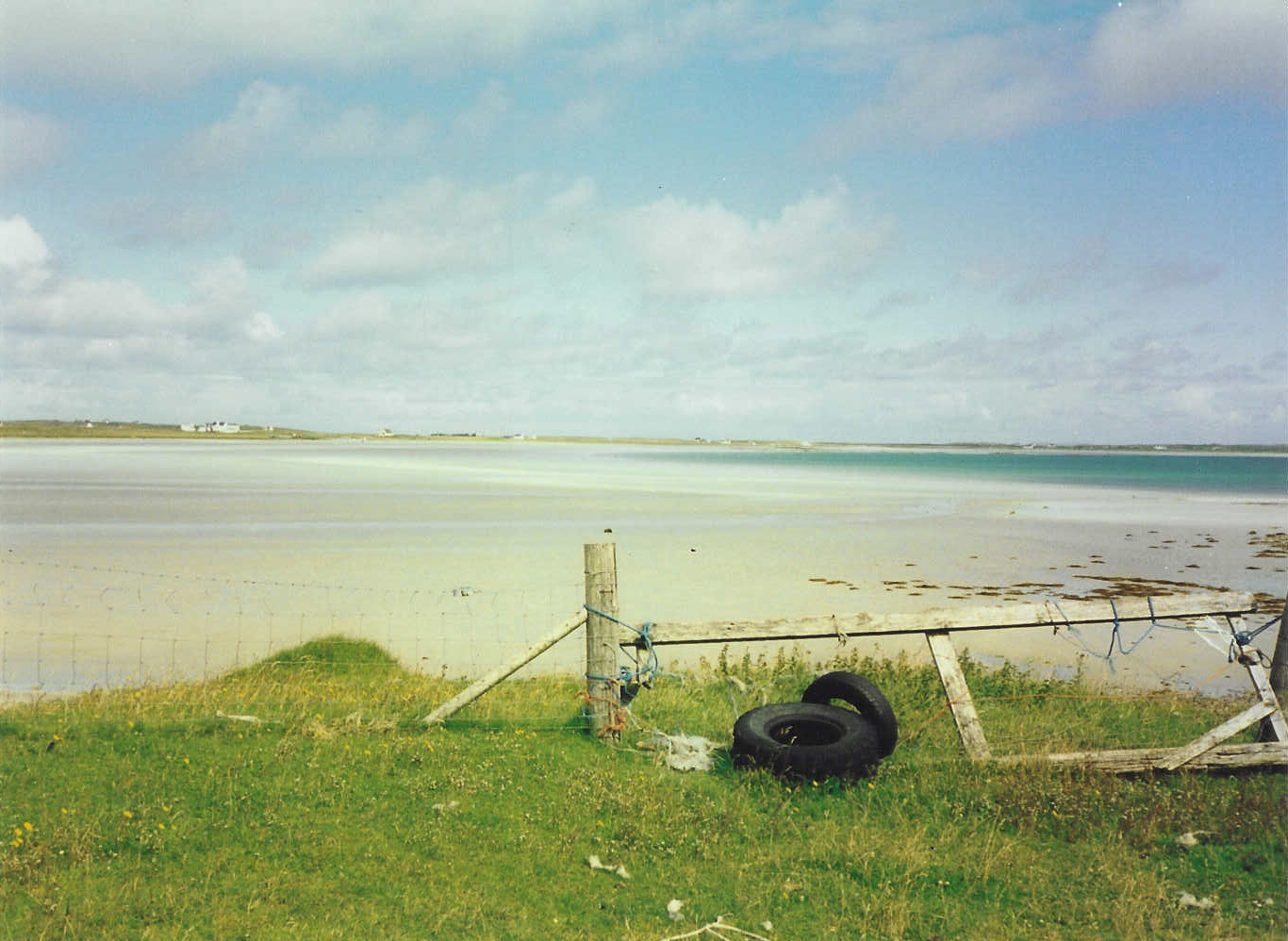
Colour photograph of Port Driseag at West Hynish in 2004.
Port Driseag at West Hynish photographed by Dr John Holliday in 2004.
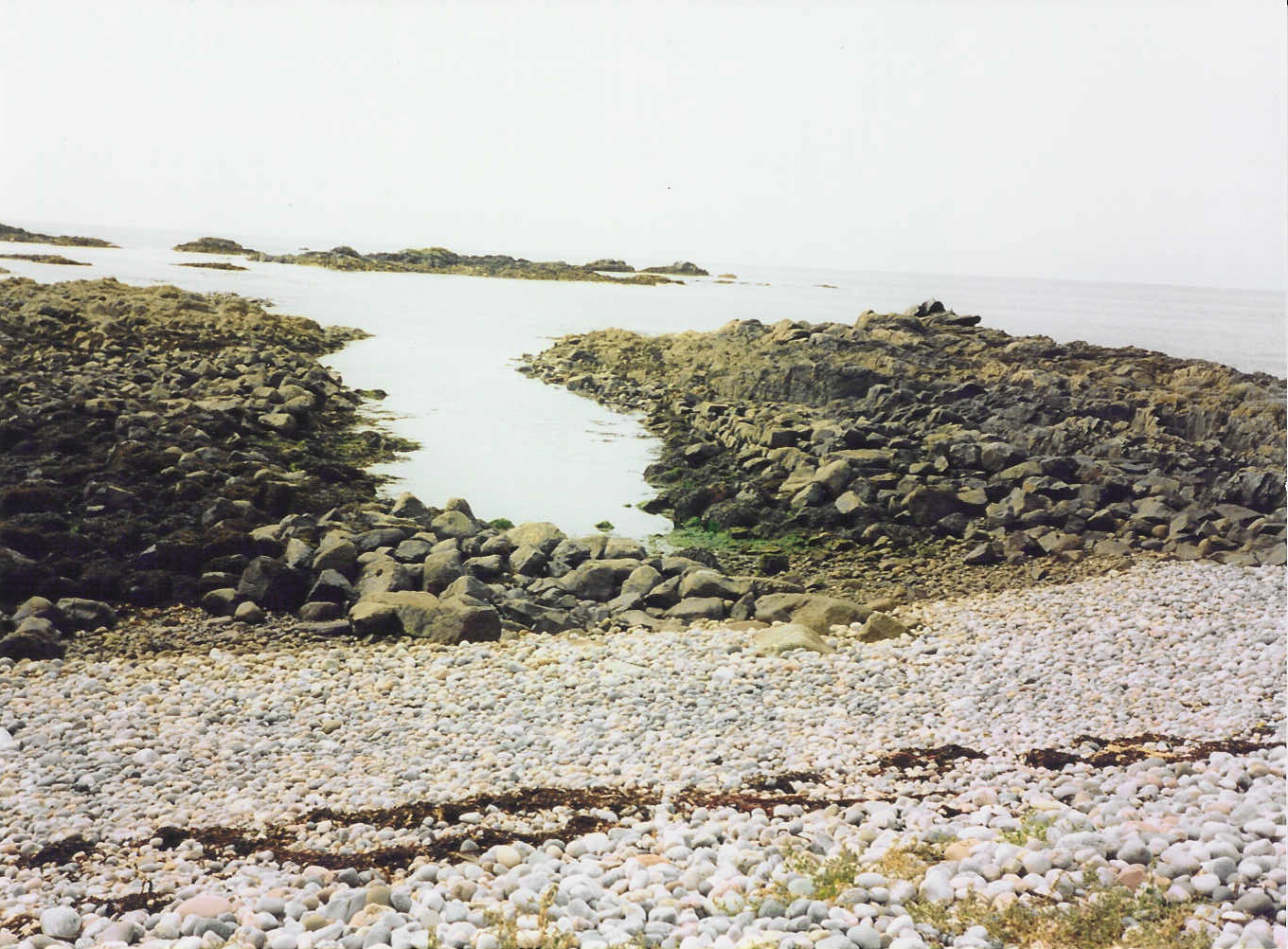
Colour photograph of Traigh nam Muirsgian at Gott Bay in 2004.
Tràigh nam Muir-sgian at Gott Bay where razor fish are found, photographed by Dr John Holliday in 2004.
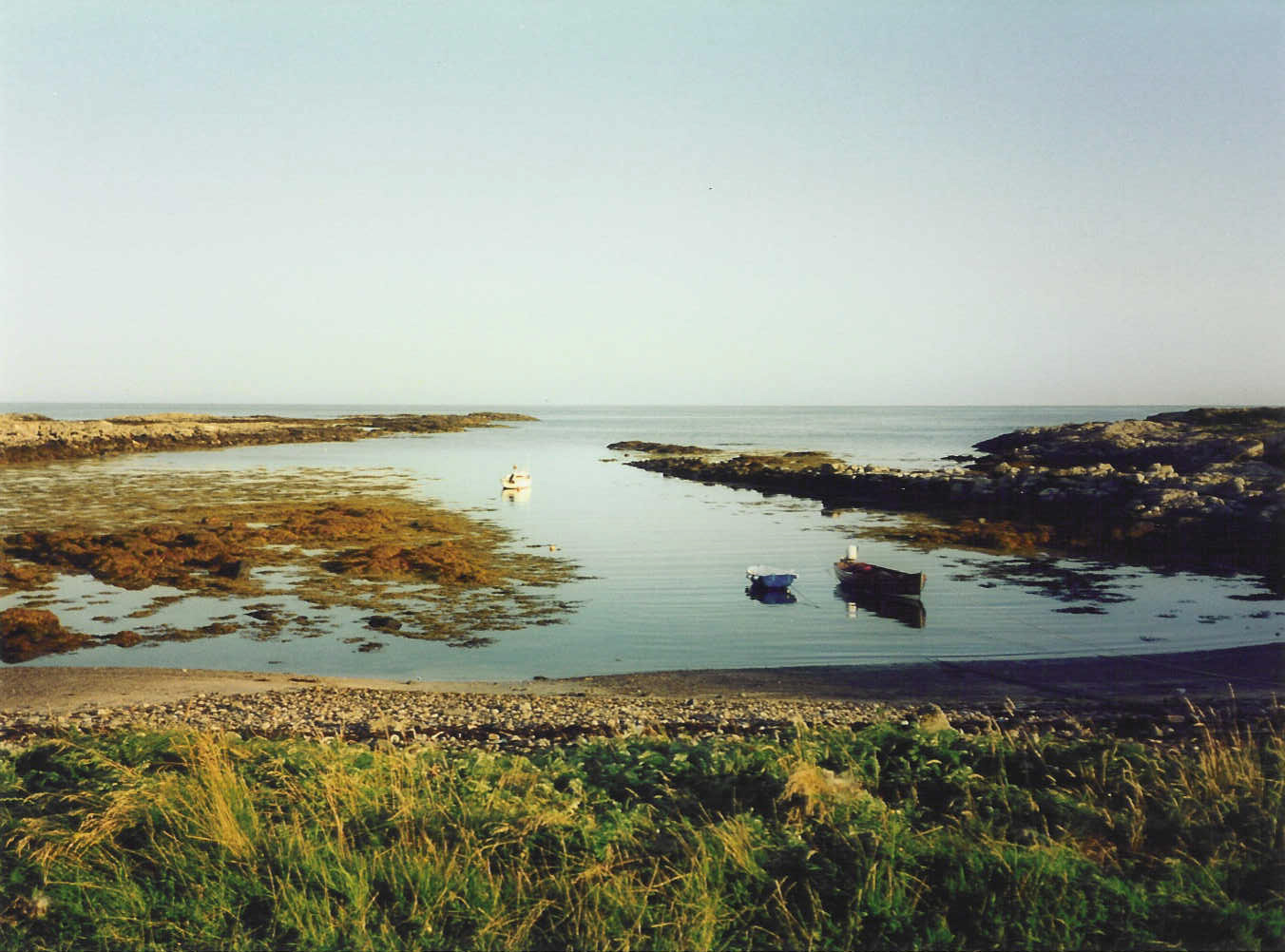
Colour photograph of Port a` Mhuilinn at Baugh in 2004.
Port a` Mhuilinn at Baugh photographed by Dr John Holliday in 2004.
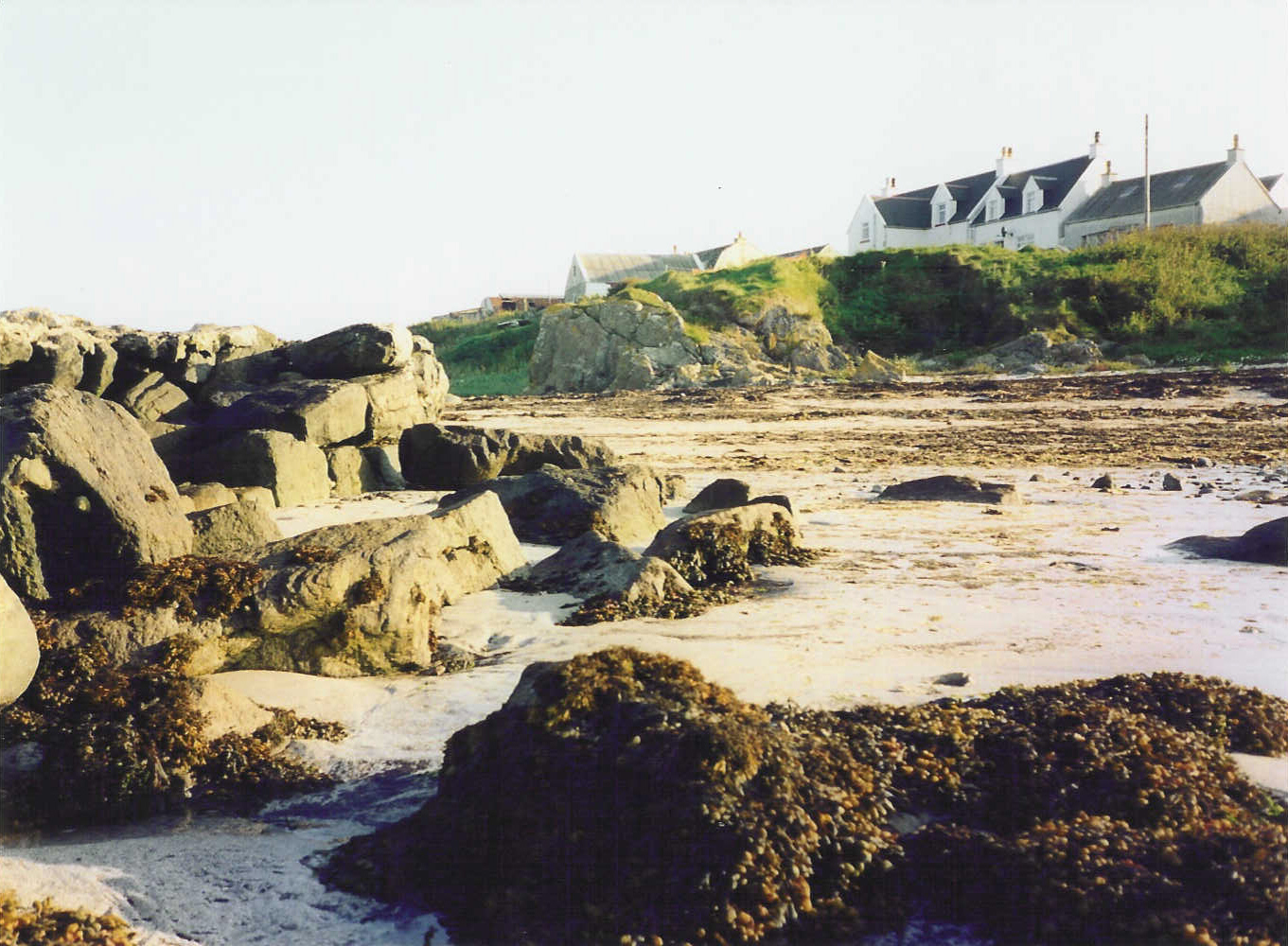
Port an Tobair at Balemartine
Photograph of Port an Tobair at Balemartine in 2004.
Envious of the success of the Dutch fishing fleet in the North Sea, the British Government established the Fishery Board in 1809 to promote fishing around Britain. In 1824, the Board commenced a programme of pier building funded with contributions from landlords.
In 1847 at the height of the potato famine, the 8th Duke of Argyll paid £690 as his share of the cost to build four piers in Tiree at the Green, West Hynish, Balemartine and Milton. The Balemartine pier was built at Port an Tobair (harbour of the well) and at its busiest twelve boats used it.
Exposed to winter storms, the pier was repeatedly damaged. In 1902 thirty fishermen wrote to the County Clerk asking for it to be repaired. In 1912 the 9th Duke of Argyll and Lord Archibald Campbell contributed to its repair but it was finally destroyed by a storm in 1936.
Colour photograph of Port an Tobair at Balemartine in 2004.
Port an Tobair at Balemartine photographed by Dr John Holliday in 2004.