


Black and white photograph of a Tiree Show in Scarinish in the 1920s or 1930s.
Tiree Show behind Scarinish School in the 1920s or 1930s.


Black and white photograph of a Tiree Show in Scarinish in the 1920s or 1930s.
Tiree Show behind Scarinish School in the 1920s or 1930s.
Day out in Scarinish in 1927
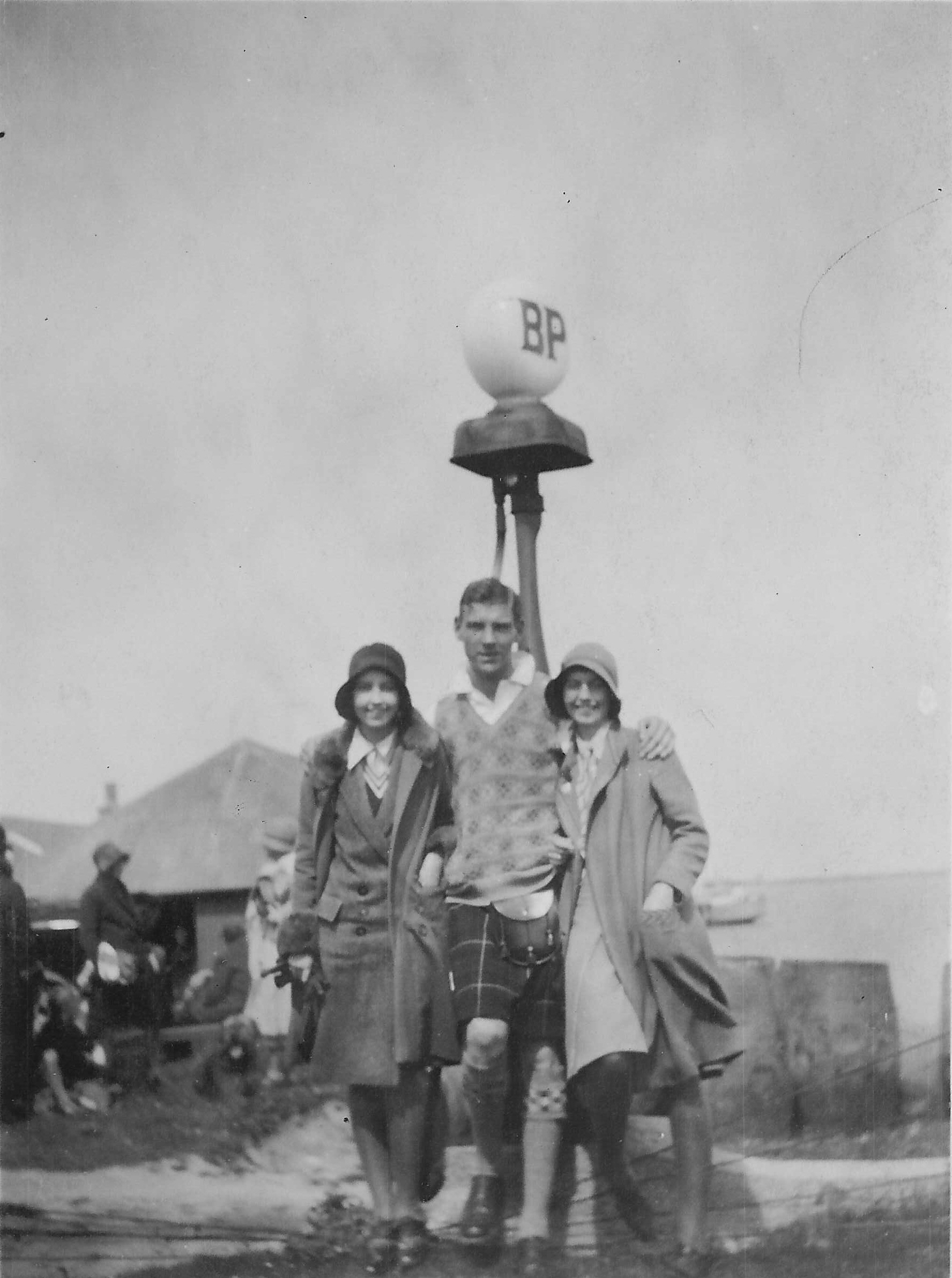
Photograph of three young people in Scarinish in 1927.
Courtesy of Mr Ronnie MacLean
These three young people were photographed in front of the petrol pump in Scarinish on the day of the Tiree Agricultural Show in 1927. One of the major events of the local calendar, it was well attended by locals and visitors alike.
Held in Scarinish school grounds, the Show was a day-long affair with numerous sections for horses, cattle and sheep, poultry, dairy produce and other home industries. After the judging, there were piping and dancing competitions and field sports.
A greasy pole was erected, the prize for which was a bottle of whiskey, much sought after on what was then a temperance island. The last event of the day was a fiercely contested tug-of-war between islanders and visitors.
Black and white photograph of three young people by a petrol pump in the 1920s.
The petrol pump at Gott Bay pier, from a small photograph album from Silversands, Vaul dating from the late 1920s.
Black and white photograph of a prize mare and foal at the 1927 agricultural show.
Prize mare and foal belonging to Donald MacDougall of Ruaig at the agricultural show of 1927, from a small photograph album from Silversands in Vaul titled 1927.
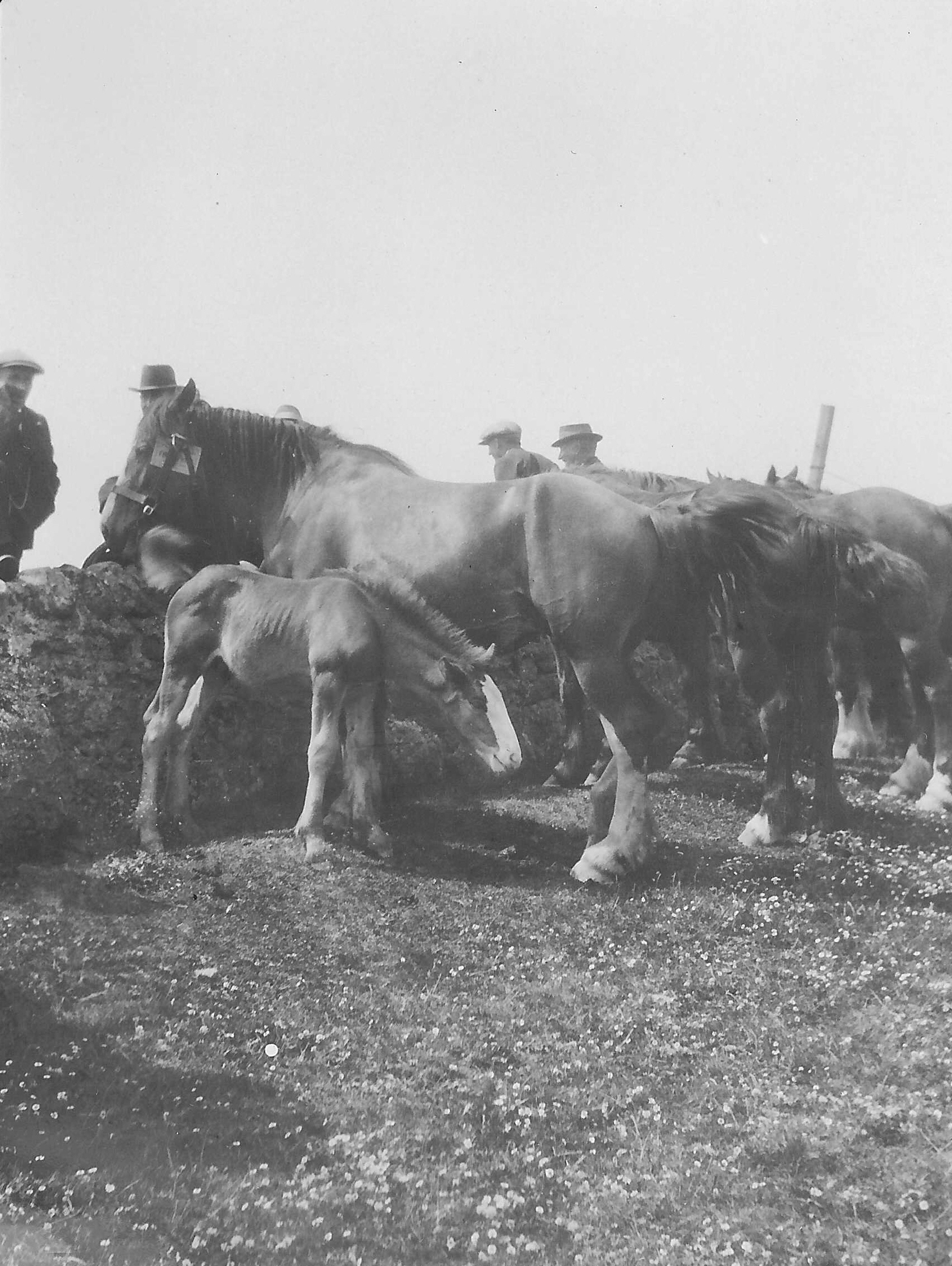
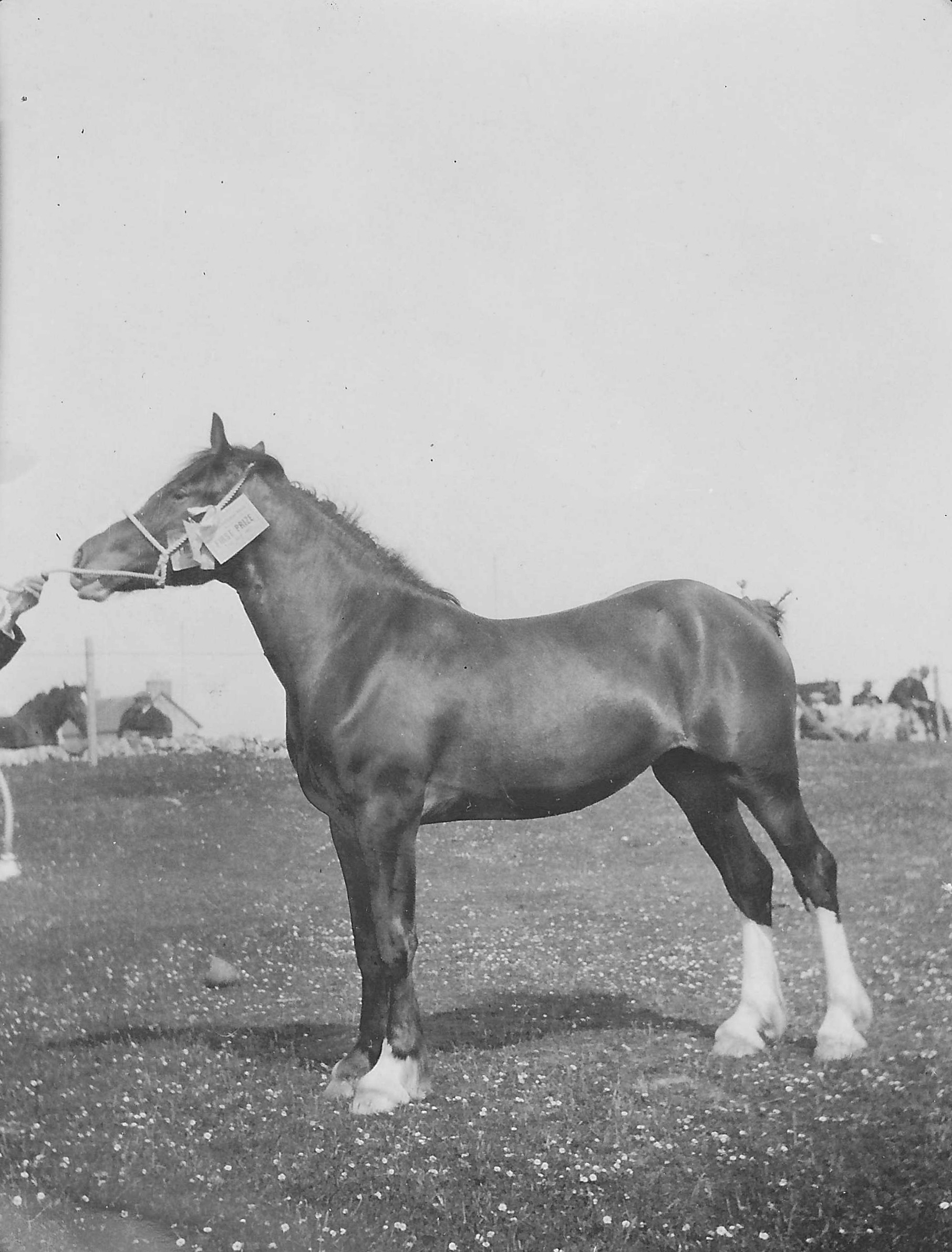
John MacNeill of Greenhill with his champion Clydesdale mare
Photograph of John MacNeill of Greenhill with his champion Clydesdale mare in 1927.

Courtesy of Mr Ronnie MacLean
John MacNeill of Greenhill was photographed at the Agricultural Show at Scarinish in 1927 with his champion Clydesdale mare. Until the 1950s, crofting depended on draught horses for ploughing and transporting crops.
Clydesdales were introduced to Tiree around the 1870s by Tom Barr, the tenant of Balephetrish farm, and crossed with the local ponies. The resulting animals were comparatively light and fast and were occasionally ridden or driven in gigs.
Continued use of Clydesdale stallions resulted in Tiree becoming famous in the early 20th century for the production of this breed, with the sale of colts and fillies becoming one of the most important sources of income for the island.
Black and white photograph of a champion Clydesdale mare at the 1927 agricultural show.
Champion Clydesdale mare belonging to John MacNeill of Greenhill at the agricultural show of 1927, from a small photograph album from Silversands in Vaul titled 1927.
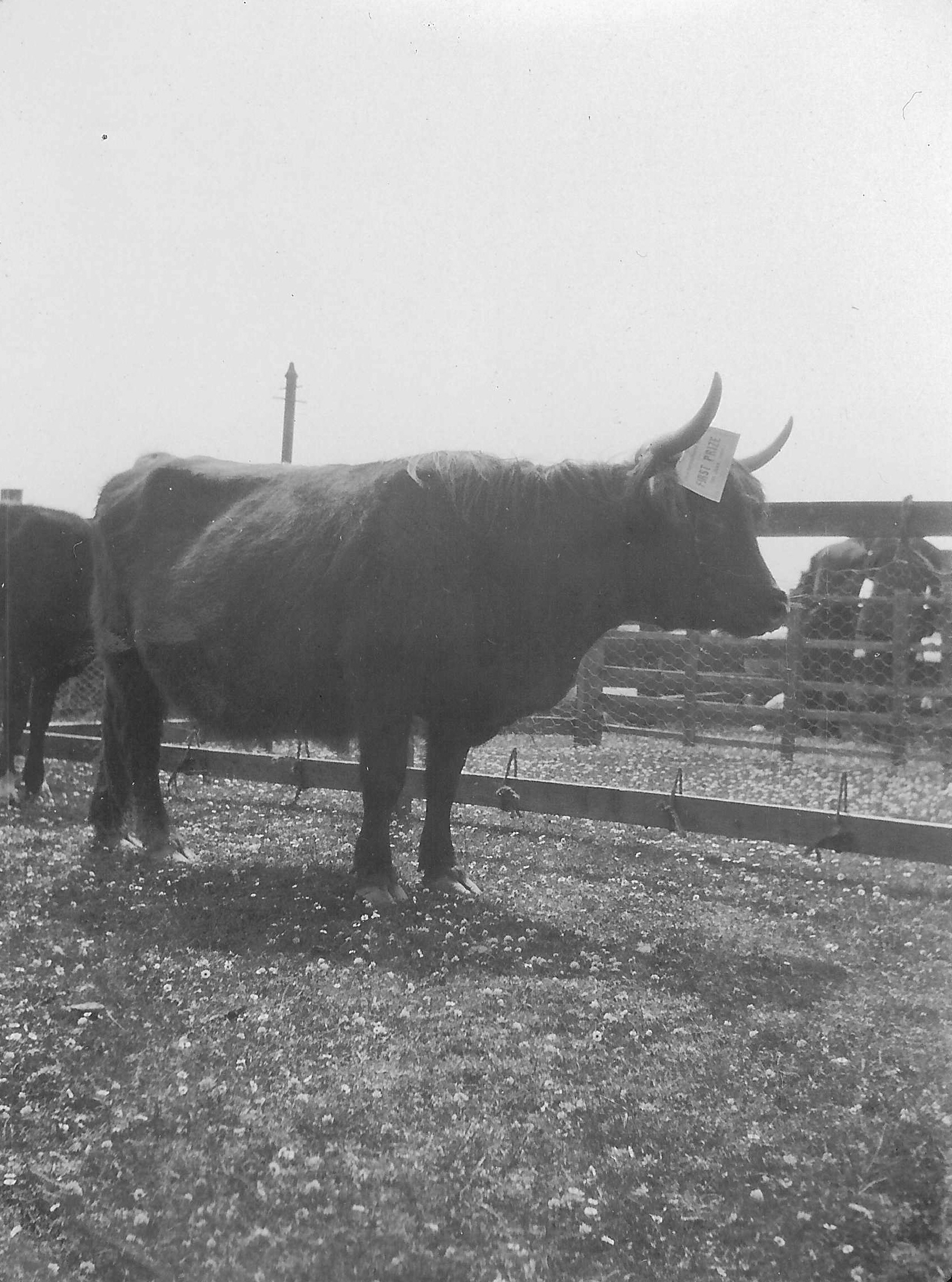
Black and white photograph of prize-winning cow at the 1927 agricultural show.
Prize-winning cow at the agricultural show of 1927, from a small photograph album from Silversands in Vaul titled 1927.
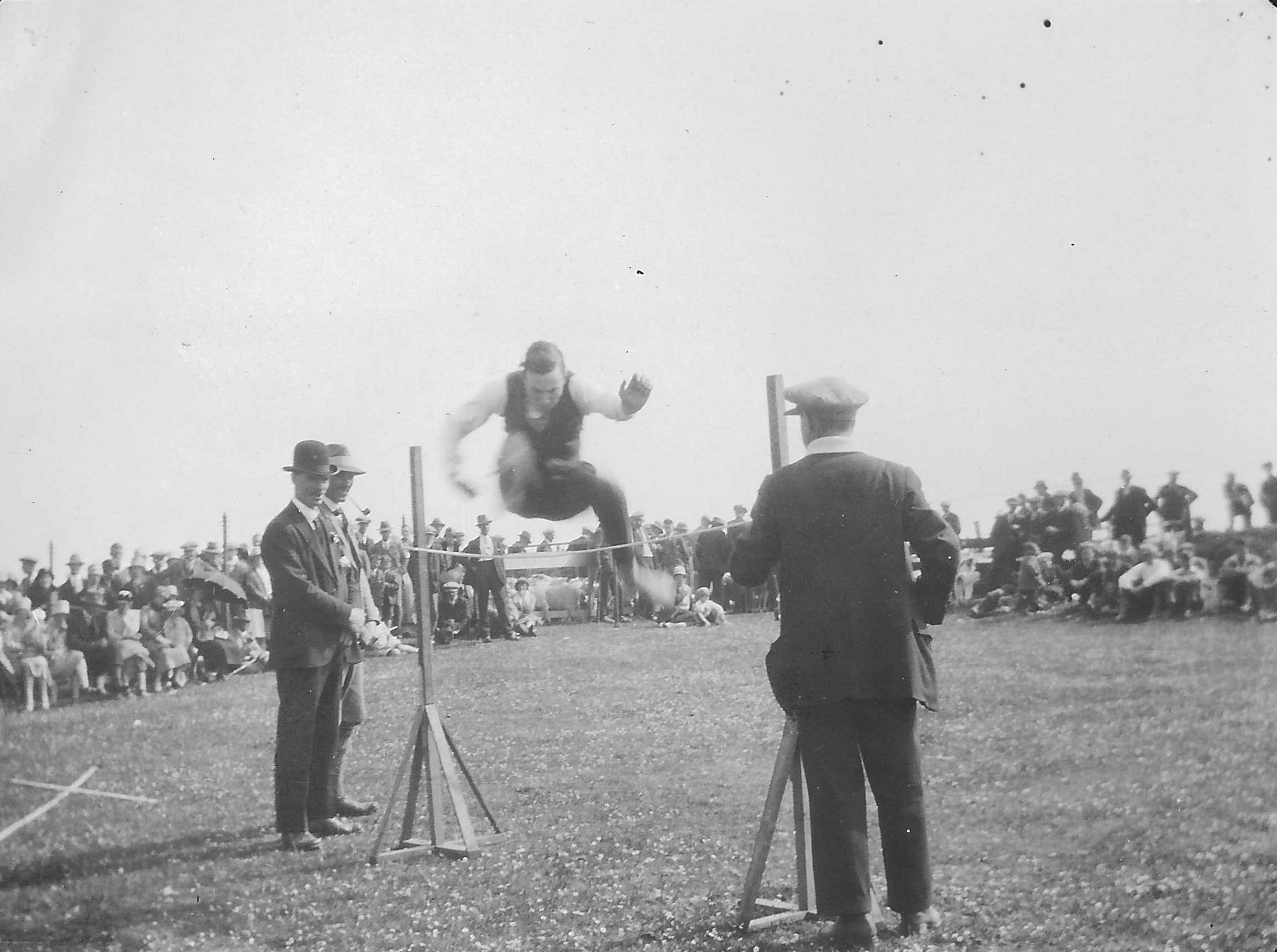
Black and white photograph of the high jump at the 1927 agricultural show.
The high jump at the agricultural show of 1927, from a small photograph album from Silversands in Vaul titled 1927.
Black and white photograph of a champion Clydesdale mare at the 1927 agricultural show.
Champion Clydesdale mare belonging to John MacNeill of Greenhill at the agricultural show of 1927, from a small photograph album from Silversands in Vaul titled 1927.
The Agricultural Show at Scarinish in 1927
Photograph of the 1927 Agricultural Show at Scarinish.

Courtesy of Mr Ronnie MacLean
Prior to World War II, the Show was held at the school in Scarinish. It was run by a committee comprising of one crofter from each township. The committee met each March to decide on the judges who came from Tobermory, Bunessan, Oban, Kerrera and sometimes as far afield as Stirling.
Crofters would get up at five or six in the morning to walk their animals to the Show venue. The horses were judged in a roped-off area within the school grounds, the cattle and sheep in specially erected pens, ducks and hens in coops at the back of the school.
Home Industry entries, such as butter, cheese, eggs, sewing and knitting, were displayed inside the school itself. To sustain the competitors and spectators, teas were served throughout the day in the marquee. Water for the teas was boiled on an open fire built against the playground wall.
Black and white photograph of the 1927 agricultural show held in Scarinish.
The 1927 Tiree Show with Scarinish School in the background, from a small photograph album from Silversands in Vaul titled 1927.
The Tiree Agricultural Show was started in the 1880s by Tom Barr, the tenant of Balephetrish farm, to encourage the local crofters to improve their breed of horses. Around 1900 a stirk would fetch £4 to £5 whereas a good year-old filly foal would fetch £25 to £30.
Prior to World War II, the Show was held at the school in Scarinish. It was run by a committee comprising of one crofter from each township. The committee which met each March to select judges, all of whom came from outside the island.
The horses were judged in a roped-off area within the school grounds, the cattle and sheep in specially erected pens, ducks and hens in coops at the back of the school and inside the school itself Home Industry entries, such as butter, cheese, eggs, knitting and sewing. Children could enter drawing and painting competitions.
To sustain the competitors and spectators, teas were served throughout the day in the marquee. Water for the teas was boiled on an open fire built against the playground wall.
After the judging, there were piping and dancing competitions and field sports. The piping competition was confined to locals and was often won by John MacLean of the Brae, Cornaigbeg. The sports included running, the high jump and long jump. There was a greasy pole competition, the prize for which was a bottle of whiskey, unusual on a temperance island. It was often won by John Bunting (Willie’s brother). The last event was a fiercely contested tug-of-war between the islanders and visitors.
After the sports, the prizes were given out from the shelter in the playground. The next day, the committee went out for a meal together.
(Information from Donald MacIntyre, Gott)
Black and white photograph of a champion mare at the 1927 agricultural show.
Champion mare at the 1927 Tiree Show in Scarinish, from a small photograph album from Silversands in Vaul titled 1927.

Black and white photograph of a prize-winning Clydesdale mare at the 1927 agricultural show.
Prize-winning Clydesdale mare at the 1927 Tiree Show in Scarinish, from a small photograph album from Silversands in Vaul titled 1927.
