


Colour photograph of Iain MacKinnon scything at Kilmoluaig.
Iain MacKinnon scything at his croft in Kilmoluaig.


12074 Results Found
Displaying page 735 of 1208 pages of results:
Colour photograph of Iain MacKinnon scything at Kilmoluaig.
Iain MacKinnon scything at his croft in Kilmoluaig.
Colour photograph of Iain MacKinnon of Kilmoluaig.
Iain MacKinnon at his croft in Kilmoluaig.

Thatching at ‘Cnoc Bhiosta’
Photograph of Lachie MacLean, Iain and Hugh MacKinnon thatching at ‘Cnoc Bhiosta’ in Kilmoluaig.

Courtesy of Mrs Fiona Munn
Lachie MacLean, Iain and Hugh MacKinnon are pictured here thatching Iain’s house at ‘Cnoc Bhiosta’ in Kilmoluaig. Initially, the thatch is laid over a layer of turfs or sgrothan which are pinned or tied to the roof timbers.
The main roof timbers, ‘ceanna-mhaidean’ or couples, usually of oak, run from the inner wall head to the apex of the roof. Those at the rear are about a foot shorter making the back of the roof slightly steeper than the front. The couples are held together by one or two timbers, making an A-frame.
On top of the couples two or three purlins run lengthwise along the house, over which is laid a layer of finer branches, often hazel. The upper purlins are joined by short lengths of wood which give the roofs their distinctively round shape and allow the thatchers to stand easily on the top.
Colour photograph of thatching at Iain MacKinnon`s croft house in Kilmoluaig.
Thatching Iain MacKinnon`s croft house in Kilmoluaig. L-R: Lachie MacLean, Kilmoluaig; Iain MacKinnon (Iain Chaluim), Kilmoluaig; Iain`s brother Hugh MacKinnon (Eoghann Chaluim), Crossapol.
Colour photograph of the range in Iain MacKinnon`s croft house in Kilmoluaig.
The range inside Iain MacKinnon`s (Iain Chaluim) thatched house in Kilmoluaig.

Colour photograph of the interior of Iain MacKinnon`s croft house in Kilmoluaig.
The fireplace and range in Iain MacKinnon`s (Iain Chaluim) thatched house in Kilmoluaig.

Colour photograph of Iain MacKinnon`s croft house in Kilmoluaig.
Iain MacKinnon`s (Iain Chaluim) thatched house in Kilmoluaig.

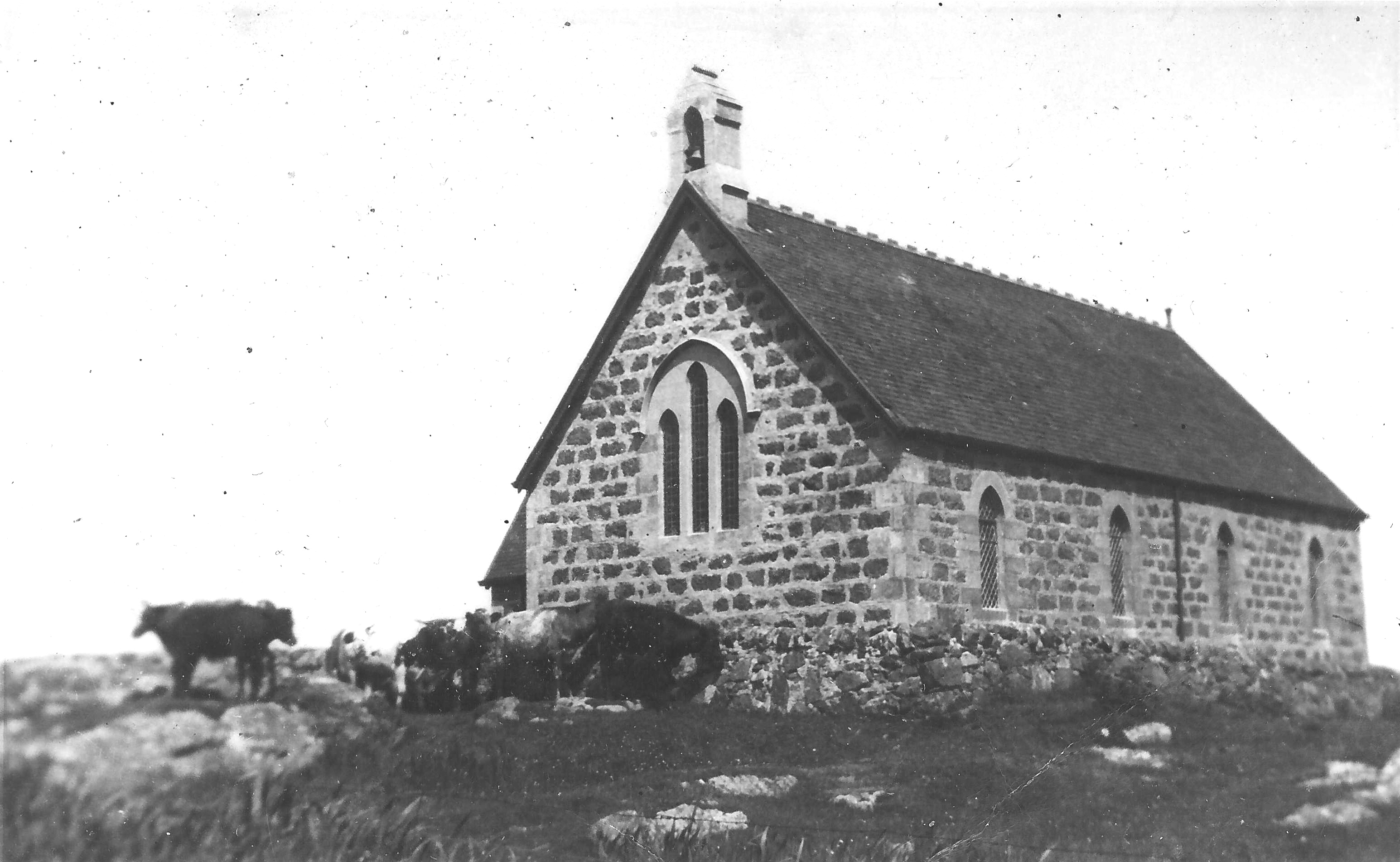
The Church of Scotland at Cornaigmore
Photograph of the Church of Scotland at Cornaig.
Courtesy of Mrs Fiona Munn
Due to difficulties in obtaining use of the Congregational Chapel in Cornaig, the Kirkapol Session decided to build a new church accommodating 200 worshippers. The Duke of Argyll granted one eighth of an acre in Cornaigmore at an annual feu of one shilling.
A building committee was set up comprising the minister, Rev Thomas MacPherson, and six elders. Donald MacDonald of Caoles put in the successful tender of £530 for the building work. Grants were promised by the Church of Scotland and one of the elders, Thomas Barr, offered to advance the money at 4% interest.
The new church opened for public worship in 1899 ‘notwithstanding the very boisterous nature of the weather’ and continued as a place of worship until the mid-1970s. It has since been sold as a dwelling house.
Black and white photograph of the old Church of Scotland at Cornaigmore.
The old Church of Scotland at Cornaigmore.
Colour photograph of Calum MacKinnon of Kilmoluaig.
Calum MacKinnon (1890 – 1984) outside his thatched house at Kilmoluaig.

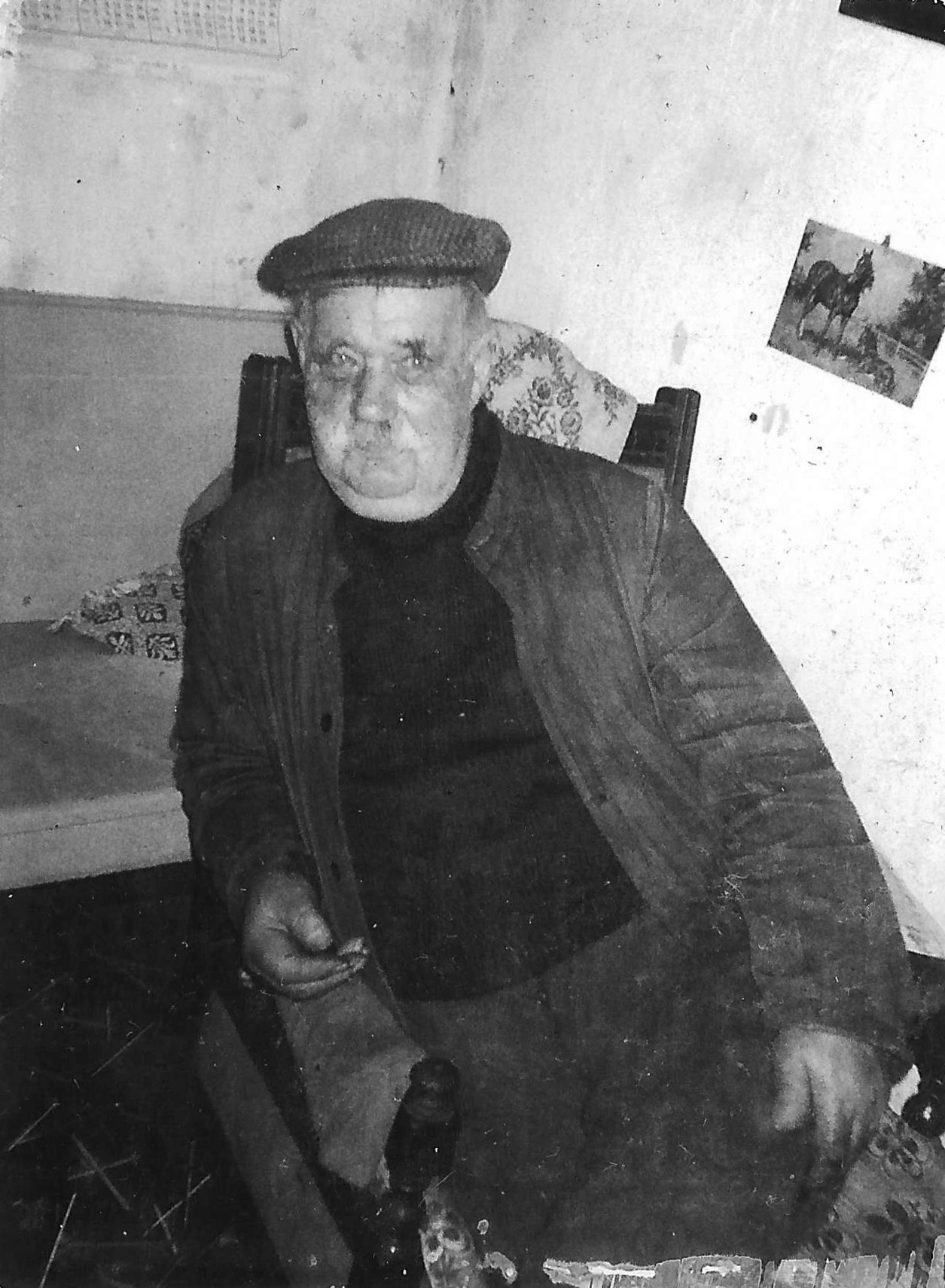
Black and white photograph of Calum MacKinnon of Kilmoluaig.
Calum MacKinnon (1890 – 1984) inside his thatched house at Kilmoluaig.
Black and white photograph of Iain MacKinnon`s croft in Kilmoluaig.
The thatched house, outbuildings and stackyard at Iain MacKinnon`s (Iain Chaluim) croft in Kilmoluaig.
