


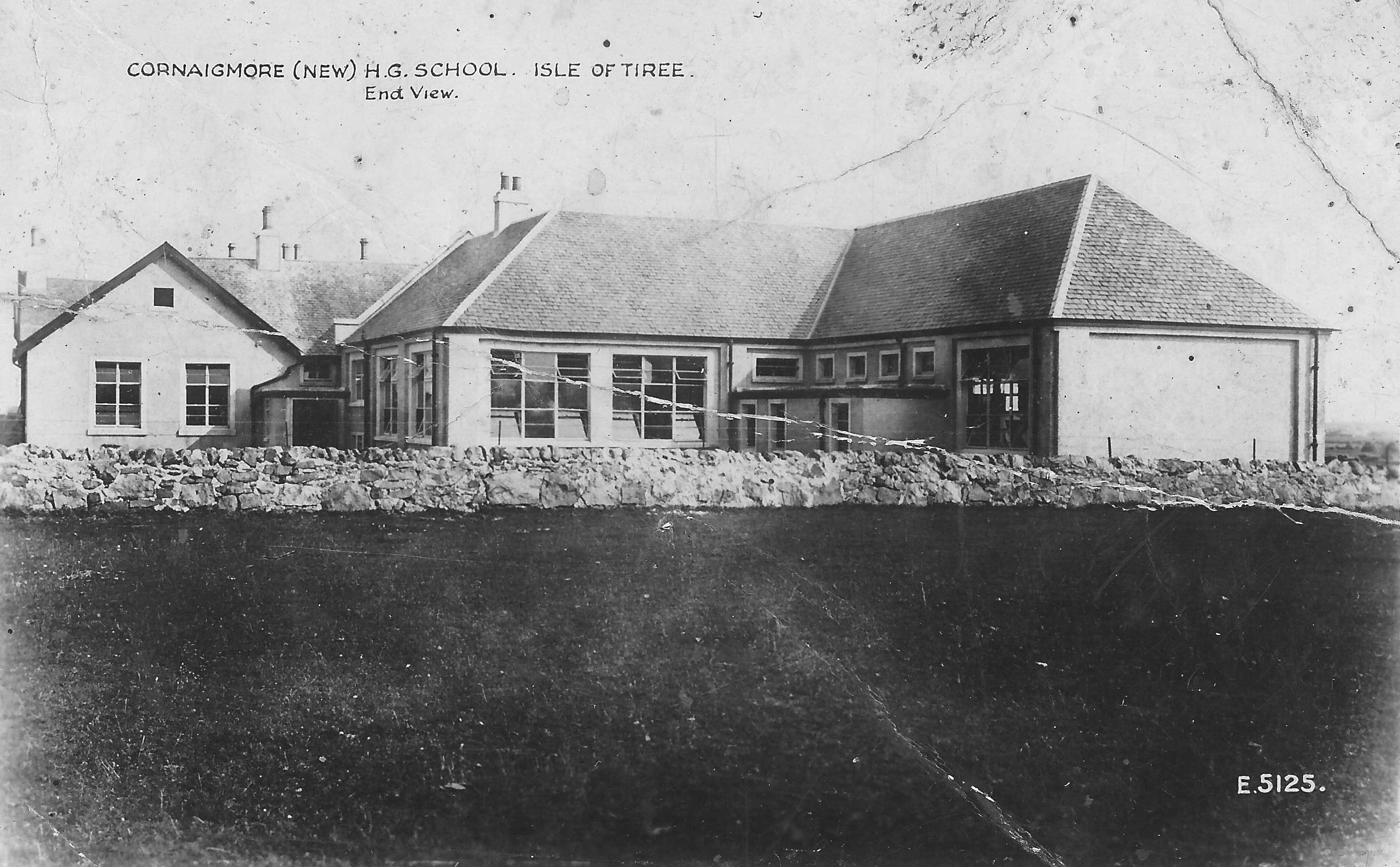
Black and white postcard of Cornaigmore H.G. School in 1936.
End view of the new Cornaigmore H.G. School in 1936. (Original in Filing Cabinet 8 drawer3)

12074 Results Found
Displaying page 558 of 1208 pages of results:
Black and white postcard of Cornaigmore H.G. School in 1936.
End view of the new Cornaigmore H.G. School in 1936. (Original in Filing Cabinet 8 drawer3)
Black and white photograph of Cornaigmore H.G. School in 1936.
Cornaigmore H.G. School in 1936. (Original in Filing Cabinet 8 drawer3)

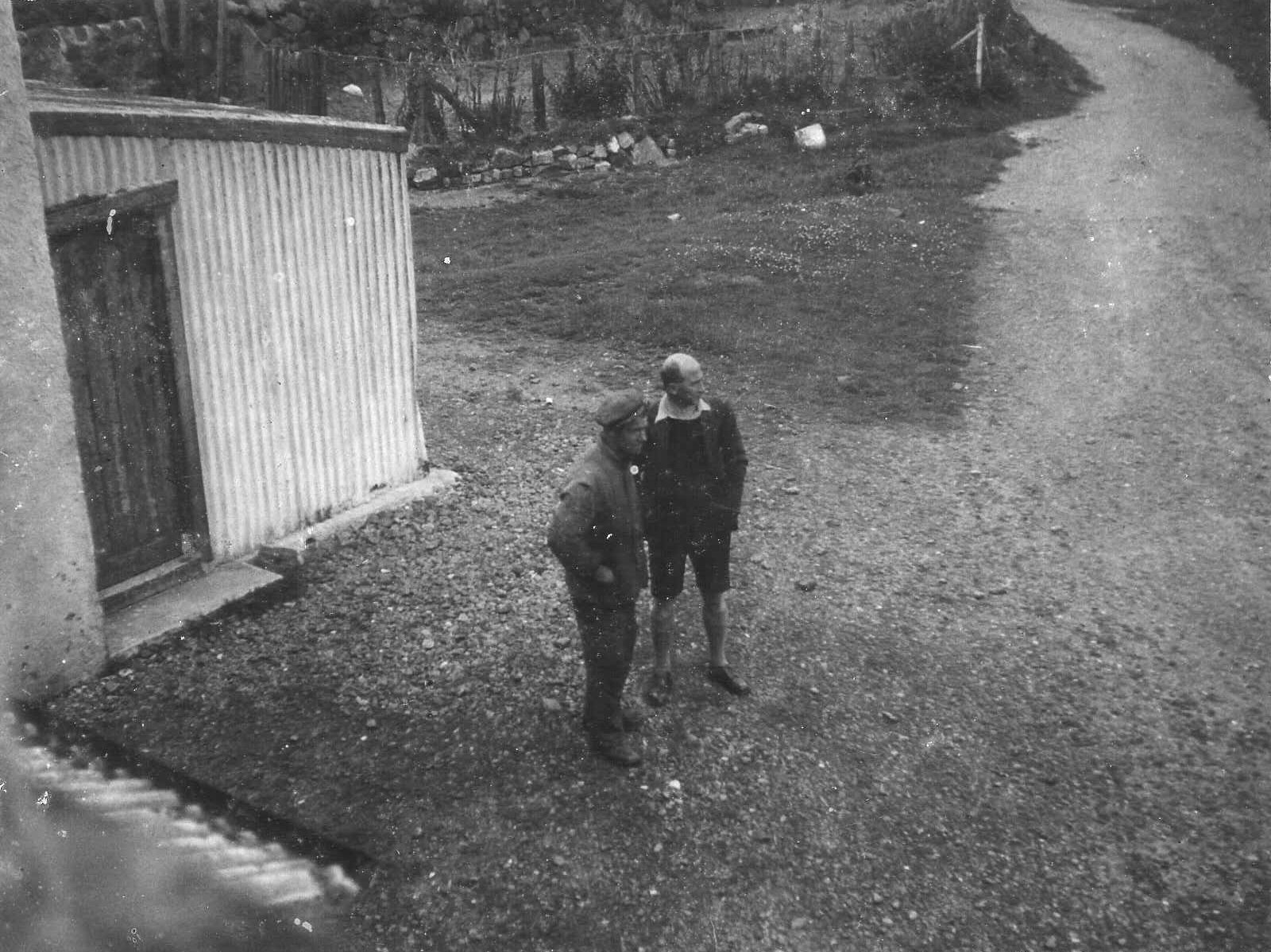
Black and white photograph of two unknown men in 1947.
Two unknown men, titled `The Weather Forecast-ers`, taken in July 1947. (Original in Filing Cabinet 8 drawer3)
‘Worth looking into’
Photograph taken at the old petrol pump at Scarinish in 1947.

Courtesy of Mrs Dolina MacDonald
The first petrol pump on the island was installed at the top of the pier by piermaster Kenneth MacKenzie in the late 1920s. This was removed either in the late 1930s or early 1940s. Around this time, the owner of the Scarinish Hotel, Johnny Brown, installed pumps in Scarinish village, as did the former post-mistress Maggie Robertson.
Johnny Brown sold petrol in two-gallon tins with a brass cap at a cost of 3/10½d (17p) for the petrol and tin. The pump was operated by turning a handle. The hotel was sold in 1950 to Donald Archie Cameron who installed new pumps which lasted until the late 1970s.
At first, petrol came in drums shaped like wooden barrels, as shown in this photograph. To remove dents in empty metal barrels, show-offs would ignite the petrol vapour inside by passing burning material at the end of a long stick over the bung-hole.
Black and white photograph of a man and a boy at the old petrol pump in Scarinish in 1947.
An unknown man and boy at the old petrol pump in Scarinish in 1947, titled `Worth looking into`. (Original in Filing Cabinet 8 drawer3)
Black and white photograph of crofter Alan MacKinnon from Baugh.
Alan MacKinnon (1895-1970), father of Dolina MacDonald, Kenovay. He crofted in Baugh and also worked at the airport.

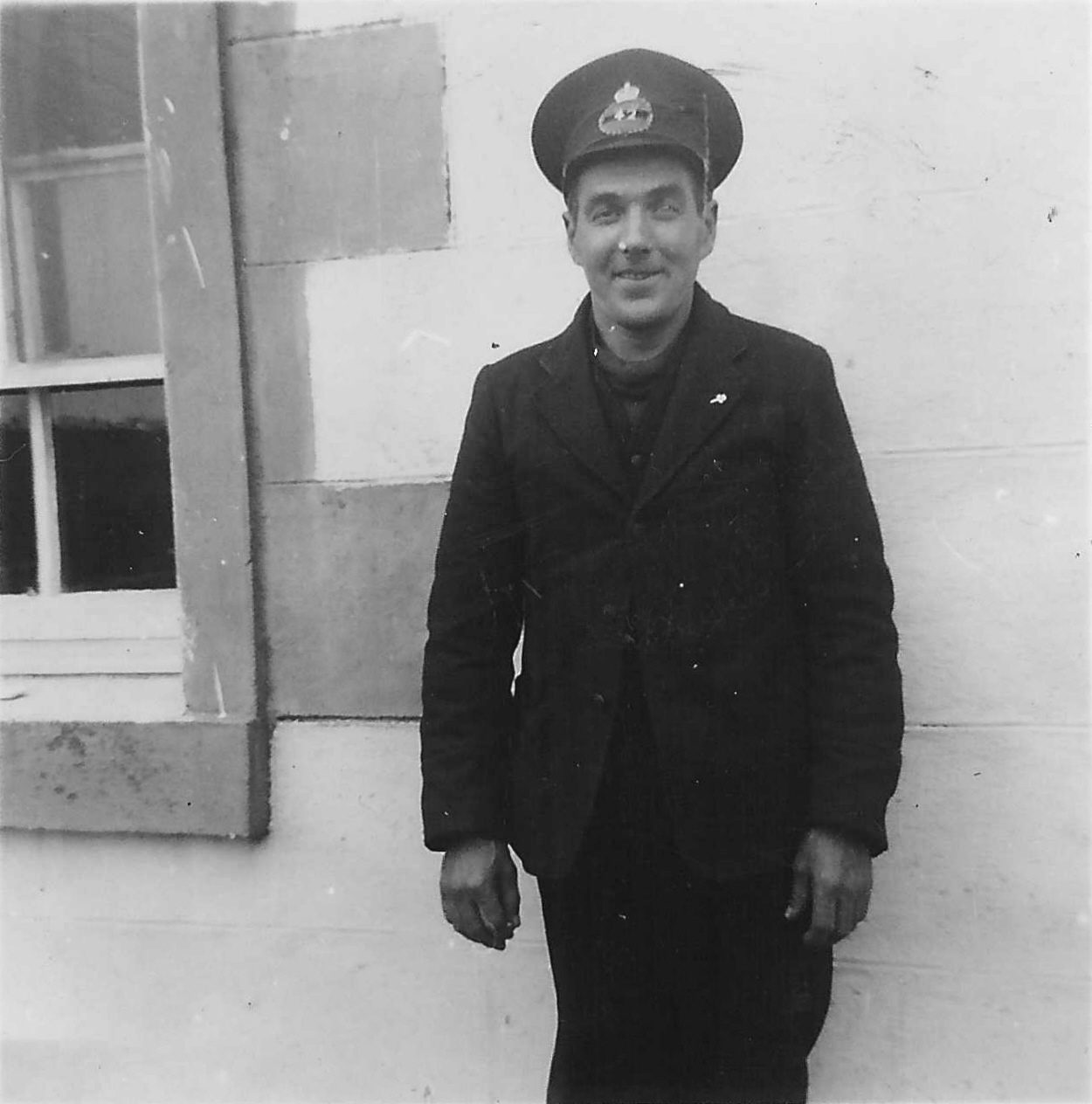
Black and white photograph of postman George Goudie in the early 1950s.
Postman George Goudie from Baugh, taken in the early 1950s.
Newsletter `An Tirisdeach`, No. 343, 14/5/2005.
Local news and events including the Farmers` Market held in the Rural Centre on the 7th May, the nomination of a new minister, the retiral of two Tiree Community Business board members, a letter from Derrick Wolstencroft and the sale prices for cattle.
A folder of papers including witness statements, a petition for search warrant and a search warrant regarding a breaking in and theft of fishing equipment in 1858. Donald McPhail of Kilmoluag is the accused.
The evidence of Charles MacLean
Transcription of the evidence of Charles MacLean given at the enquiry into the sudden of death of a fishing crew from Mannal in 1860.
Courtesy of Argyll & Bute Archives
In April 1860 two fishing skiffs, one from Mannal and one from Balephuil, were out near Stevenson’s Rock, twenty kilometres to the south-west of Tiree. Both boats were rigged with dipping lugs which require considerable skill when tacking in heavy seas.
In windy weather there is the danger that too much sail will cause the boat to heel over and be swamped. This is apparently what happened to the Mannal boat which was not seen again after leaving the fishing grounds in the early morning.
Lugsails are shortened by lowering the yard and taking in reefs, i.e. hooking the sail to the bow at a point further up the luff (the leading edge of the sail) and tying the excess sail with reefs (cords attached to both sides of the sail). A lugsail may have four to six rows of reefs depending on its size.

The police report on the Ruaig drowning of 1860
Transcription of the police report on the Ruaig drowning of 1860.
Courtesy of Argyll & Bute Archives
In February 1860, Charles MacLean and brothers Duncan and Archibald MacInnes left Skipnish, the harbour in Ruaig, to check their lobster traps. Their skiff measured just over sixteen feet. With Duncan at the helm and Charles and Archibald on the oars, they rowed four or five hundred yards to the south-east.
They then put three reefs in the sail, hoisted it and steered to the west of Soay. The wind was from the south, very strong but steady. As the sea was so heavy, they decided to shorten sail. While Archibald was doing this, water came aboard. They dropped the sail and in a moment the boat capsized.
Duncan managed to struggle ashore but the other two were drowned. When found by two Ruaig men, he was so weak he was unable to speak and had to be assisted home.