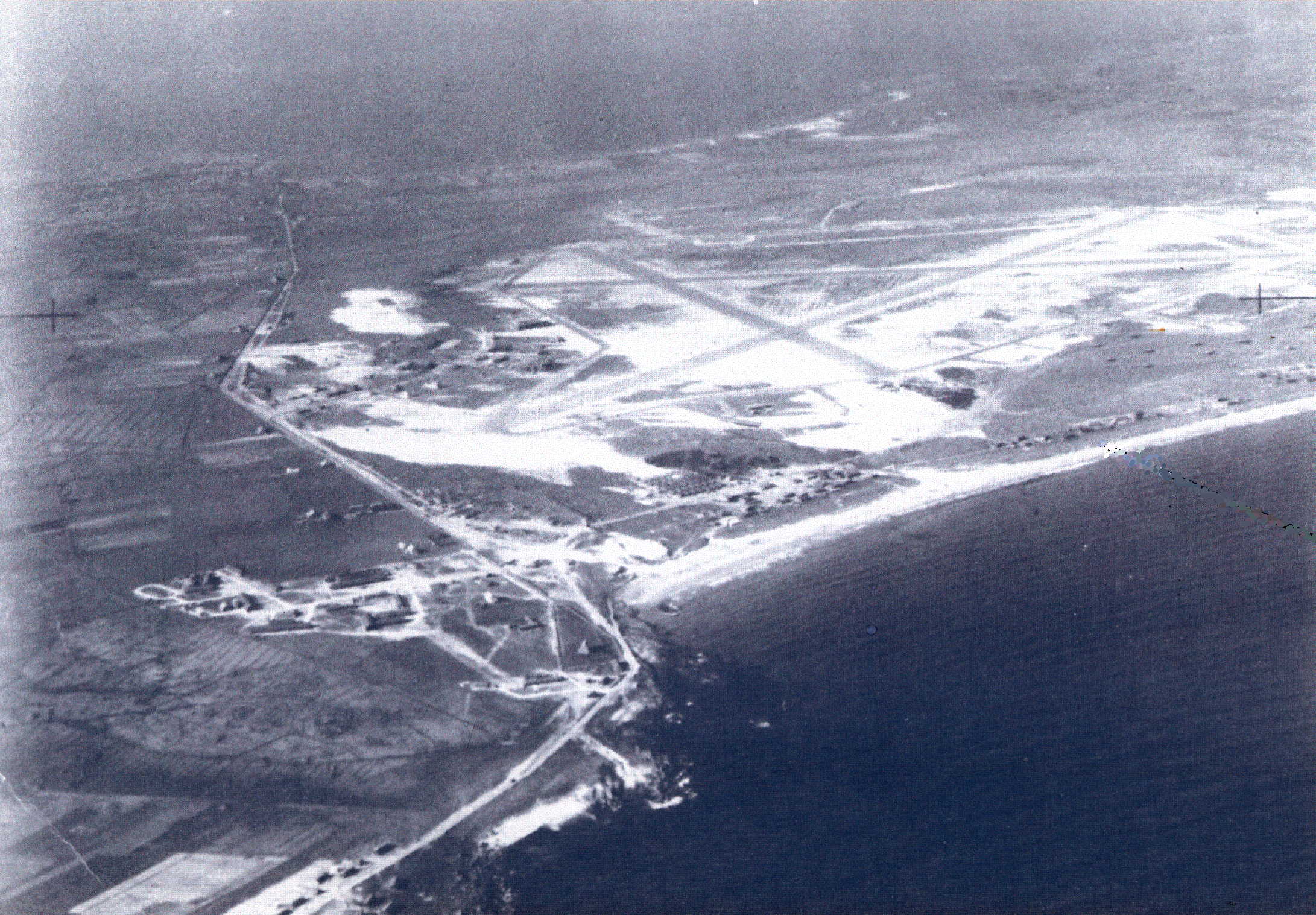
Tiree Aerodrome in 1944
Photograph of Tiree Aerodrome in 1944.
Courtesy of Sergeant Neil Owen
The origins of the Tiree airfield go back to 1934 when Midland and Scottish Airways selected a grass landing site on the Reef. A rental dispute delayed until 1937 the start of air services which continued to operate spasmodically during World War II.
The Reef was requisitioned by the Ministry of War in 1940 to provide air cover for the convoys routed from the North Sea to the Irish Channel. Contractors Melville, Dundas & Whitson and Tawse of Aberdeen were among those involved in building the airstrip, roads and living quarters for the RAF base.
Labourers were brought in from Ireland and the mainland, including prisoners from several Scottish jails. Quarries at Baugh and Balephetrish were blasted out and the ruins of the Glassary seaweed factory in Sandaig and the storehouse on Scarinish jetty were demolished and used as hardcore.
Aerial photograph of Tiree Aerodrome, 1944.
Aerial view of Tiree Aerodrome taken in 1944 showing erosion.
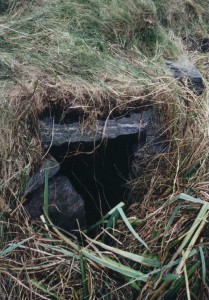
Tobar Eachainn
Photograph of Tobar Eachainn at Kirkapol.
Tobar Eachainn (Hector’s Well) is situated on the west bank of Kirkapol stream a hundred metres to the east of Kirkapol graveyard. Formerly known as Tobar Odhrain (Oran’s Well), its waters were said to have healing properties.
St Oran was a relative and a disciple of St Columba. He possibly spent time in Tiree as the larger of the two graveyards at Kirkapol is also dedicated to him. Evidence of the foundations of a chapel was uncovered there by a grave-digger in the late 19th century.
The well is a natural spring which is enclosed within dry-stone walls and roofed with turf-covered slabs. It was closed as a source of drinking water in the 1940s because of its close proximity to the graveyard.
Colour photograph of Tobair Eachainn.
Tobair Eachainn, once known as Tobair Odhrain, on Lodge Farm.
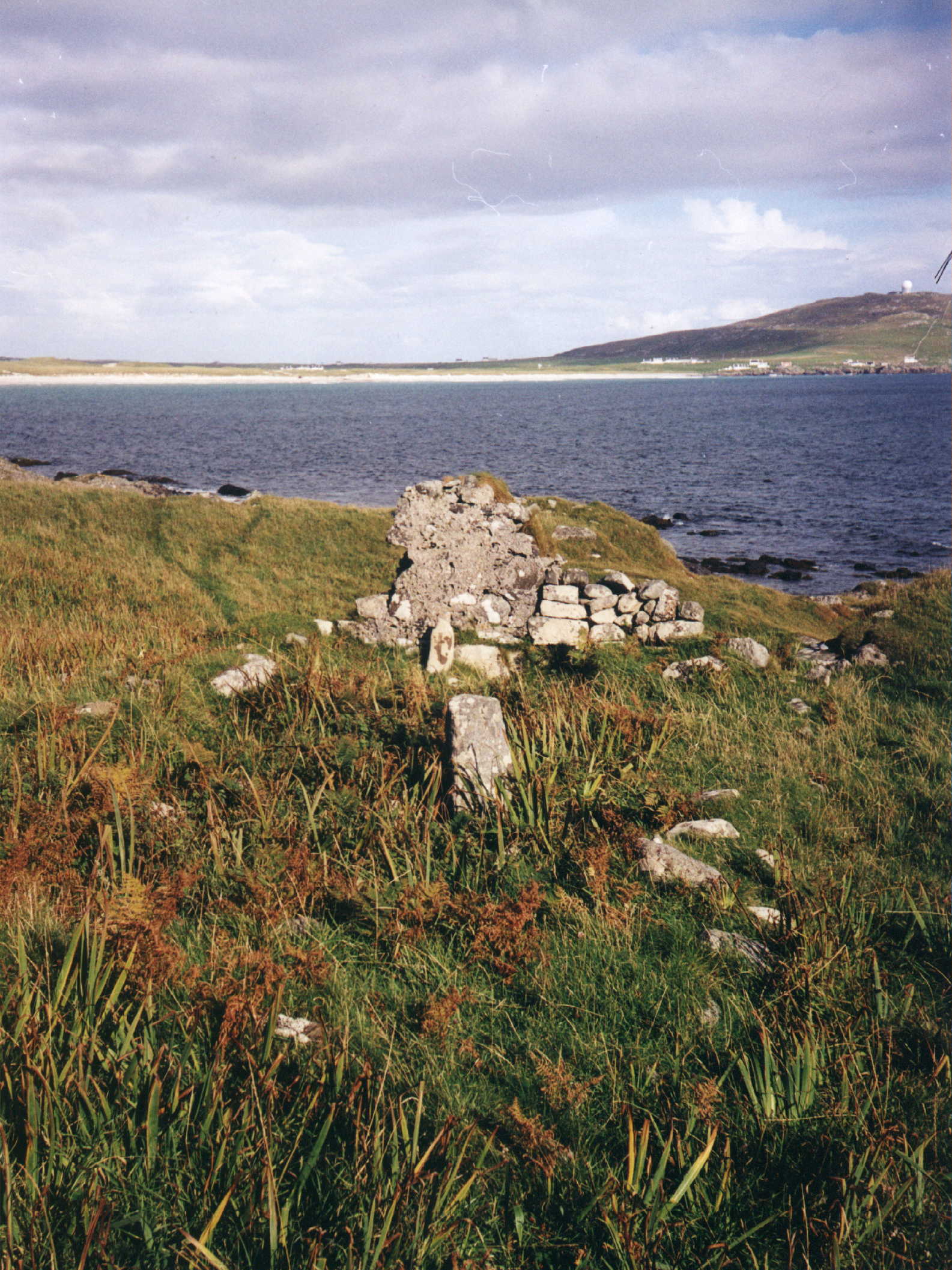
Colour photograph of a cross carved on a rock.
Cross carved on a rock near the Kirkapol chapels photographed in 2001.
Colour photograph of St Patrick`s Chapel, Kennavara.
St Patrick`s Chapel, Kennavara.
Pen and ink drawing of one of the Kirkapol chapels.
One of the Kirkapol chapels.
Colour photograph of the Kirkapol chapels.
The Kirkapol chapels photographed in 2001.
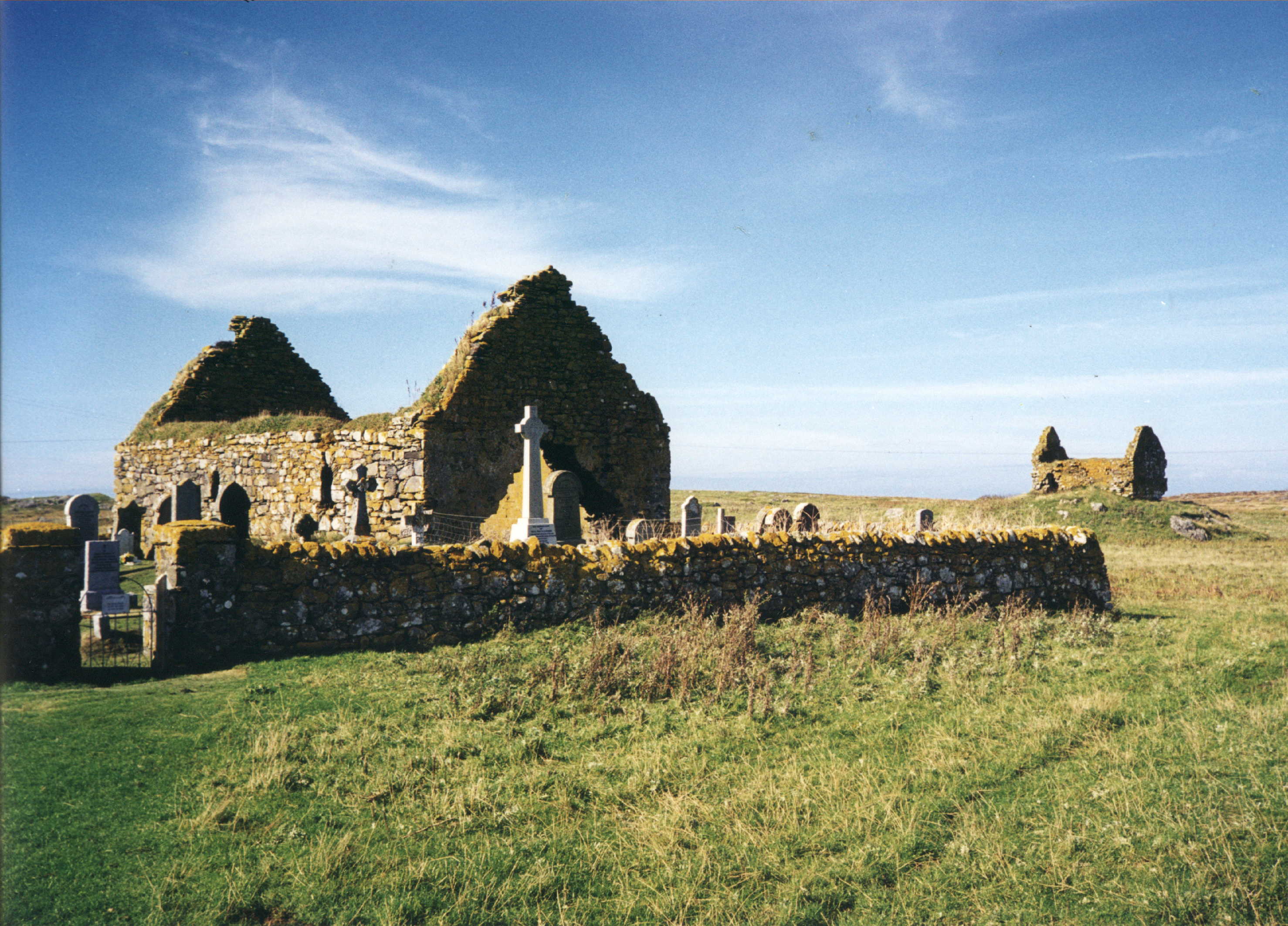
St Columba’s Church, Kirkapol
Photograph of the Old Parish Church at Kirkapol in 2001.
Courtesy of Rev. Robert Higham
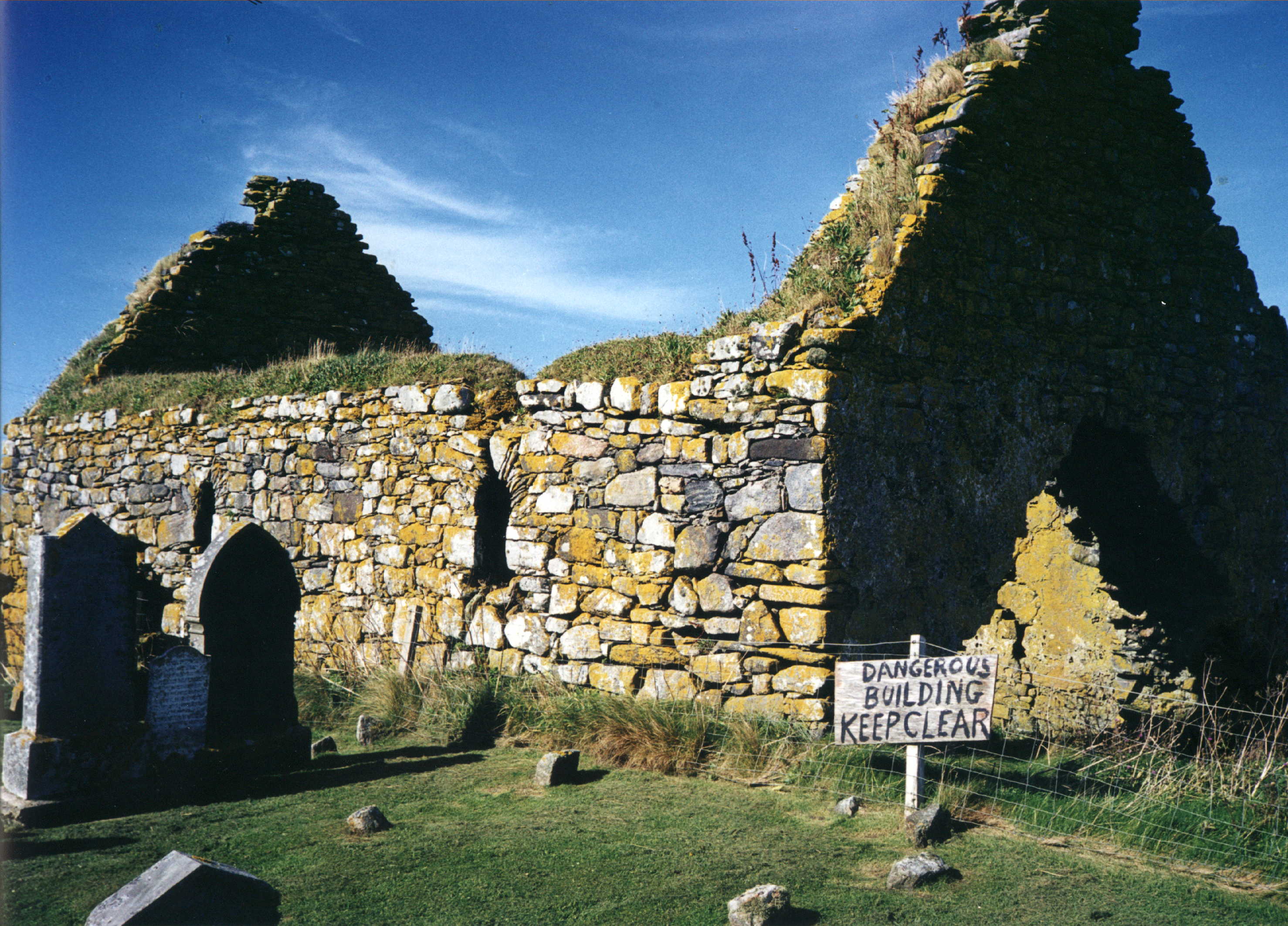
The Old Parish Church, dedicated to St Columba, stands within its own graveyard, An Cladh Beag, a quarter of a kilometre from Gott Bay. It is oblong in plan and measures 11.3 by 5.2 metres within walls over a metre thick.
There is a blocked-up round-arch entrance in the west wall and two round-arch windows in the south wall. During conservation work on the church in 2001, the disarticulated remains of at least ten bodies were found in the area of ground beneath the large breach in the east gable wall.
Beneath these bones, the remains of two more bodies were found in a small burial chamber, which was probably part of the original church construction in the late 14th century. These discoveries accord with the medieval practice of burying bodies beneath the walls of consecrated buildings.
Colour photograph of one of the Kirkapol chapels.
The larger of the two Kirkapol chapels, St Columba`s, photographed in 2001.
The small chapel at Kirkapol
Photograph of the small chapel at Kirkapol in 2001.
Courtesy of Rev. Robert Higham
The smaller and older of the two medieval chapels at Kirkapol was probably dedicated to St Brendan. It stands on a rocky knoll about 80 metres north of the larger chapel which originally served as the island’s Parish Church. Both chapels are constructed from random rubble laid in lime mortar.
The small chapel is a simple oblong in plan with gables to the east and west and measures 7 by 3.5 metres internally. The flat but uneven surface of the rock it stands on serves as the floor.
The south wall of the chapel has partially collapsed but there is still a round-arch door in the west wall. A narrow slit window in the north wall lights what would have been the altar area at the east end.
Colour photograph of one of the Kirkapol chapels.
The smaller of the two Kirkapol chapels, possibly called St Brendan`s, photographed in 2001.
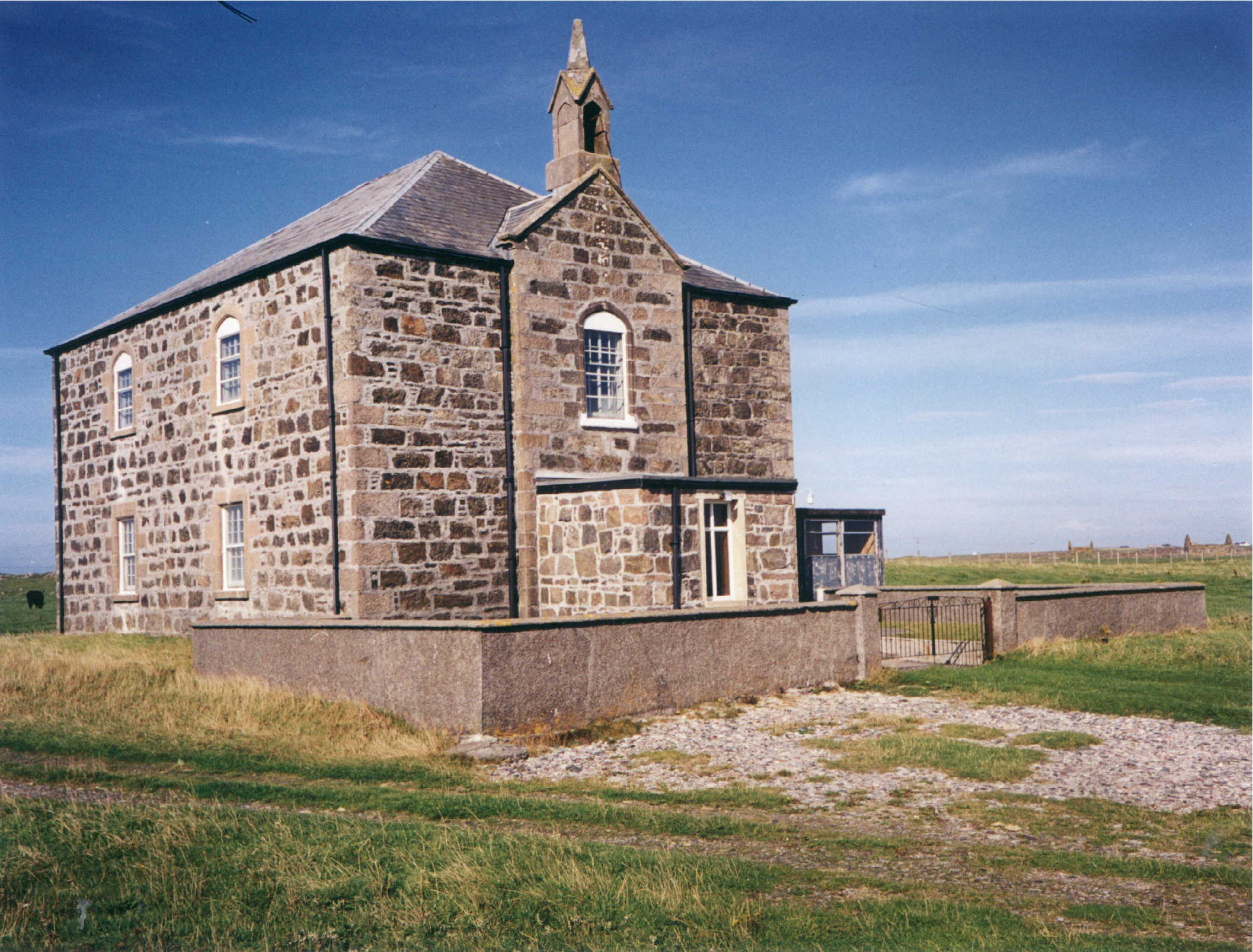
Colour photograph of Kirkapol Parish Church.
Kirkapol Parish Church.
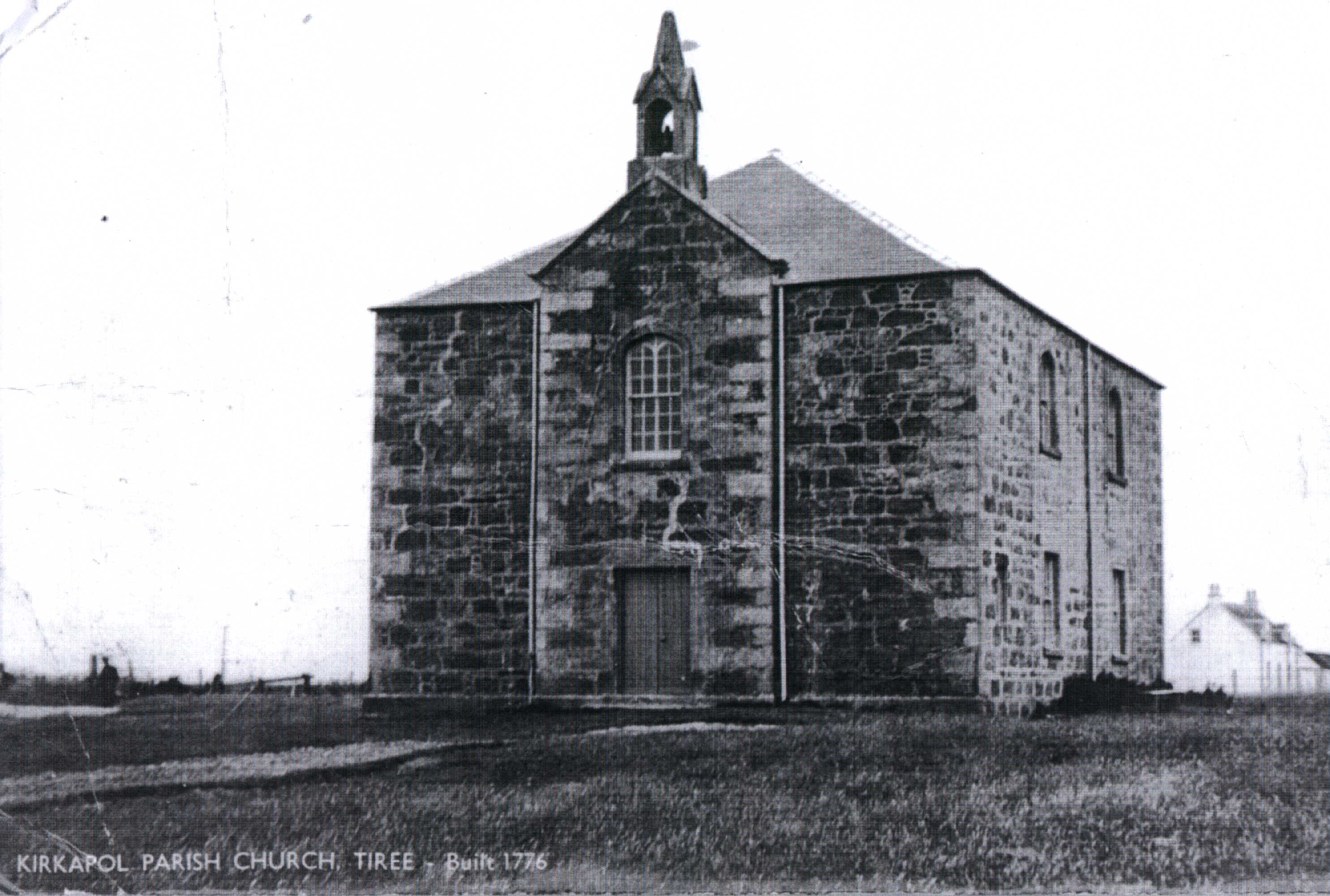
Scan of postcard of Kirkapol church.
Postcard of Kirkpol Parish Church.