


Black and white photograph of Calum MacKinnon of Kilmoluaig.
Calum MacKinnon (1890 – 1984) inside his thatched house at Kilmoluaig.
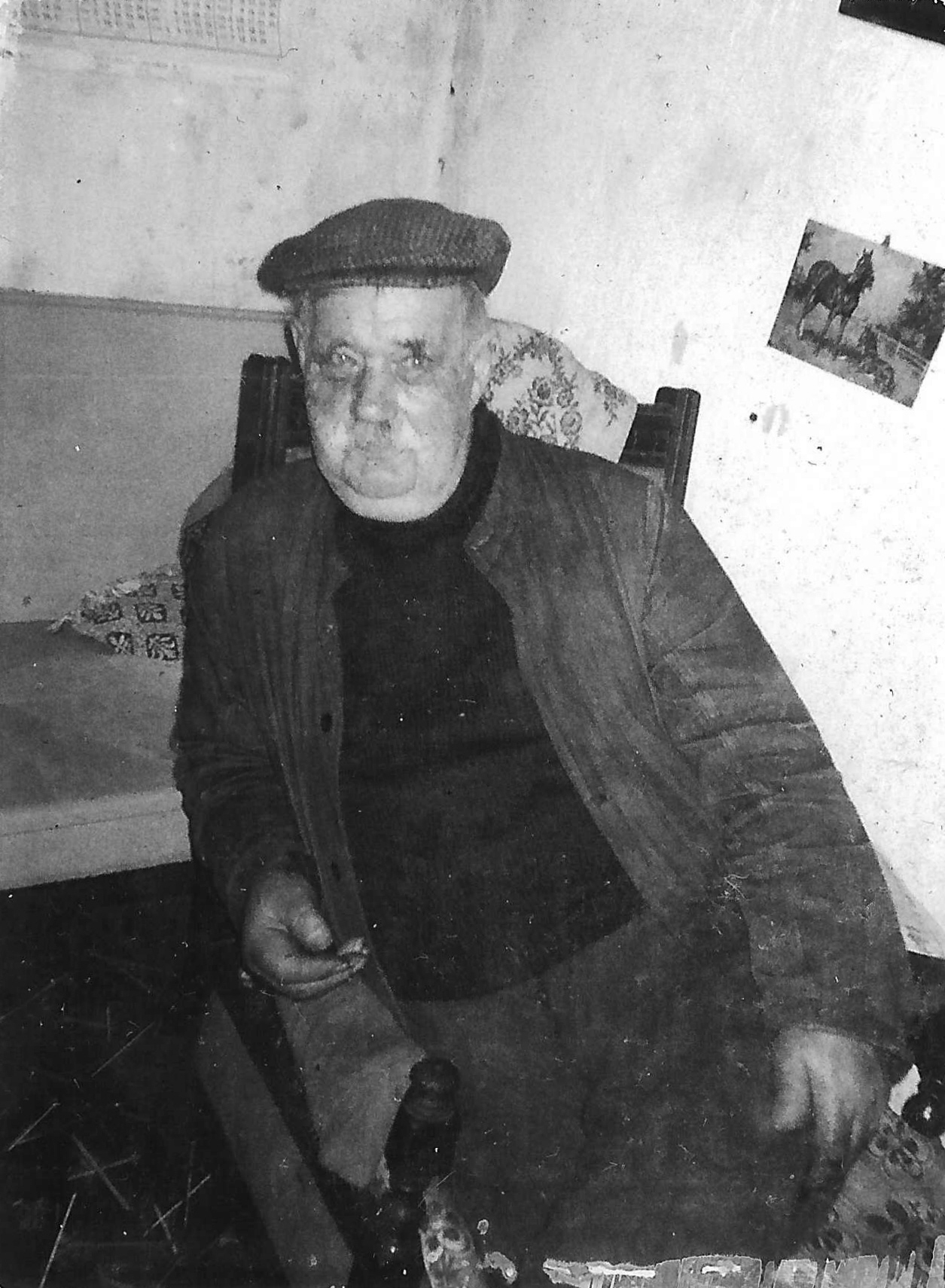

Black and white photograph of Calum MacKinnon of Kilmoluaig.
Calum MacKinnon (1890 – 1984) inside his thatched house at Kilmoluaig.
Colour photograph of Calum MacKinnon of Kilmoluaig.
Calum MacKinnon (1890 – 1984) outside his thatched house at Kilmoluaig.

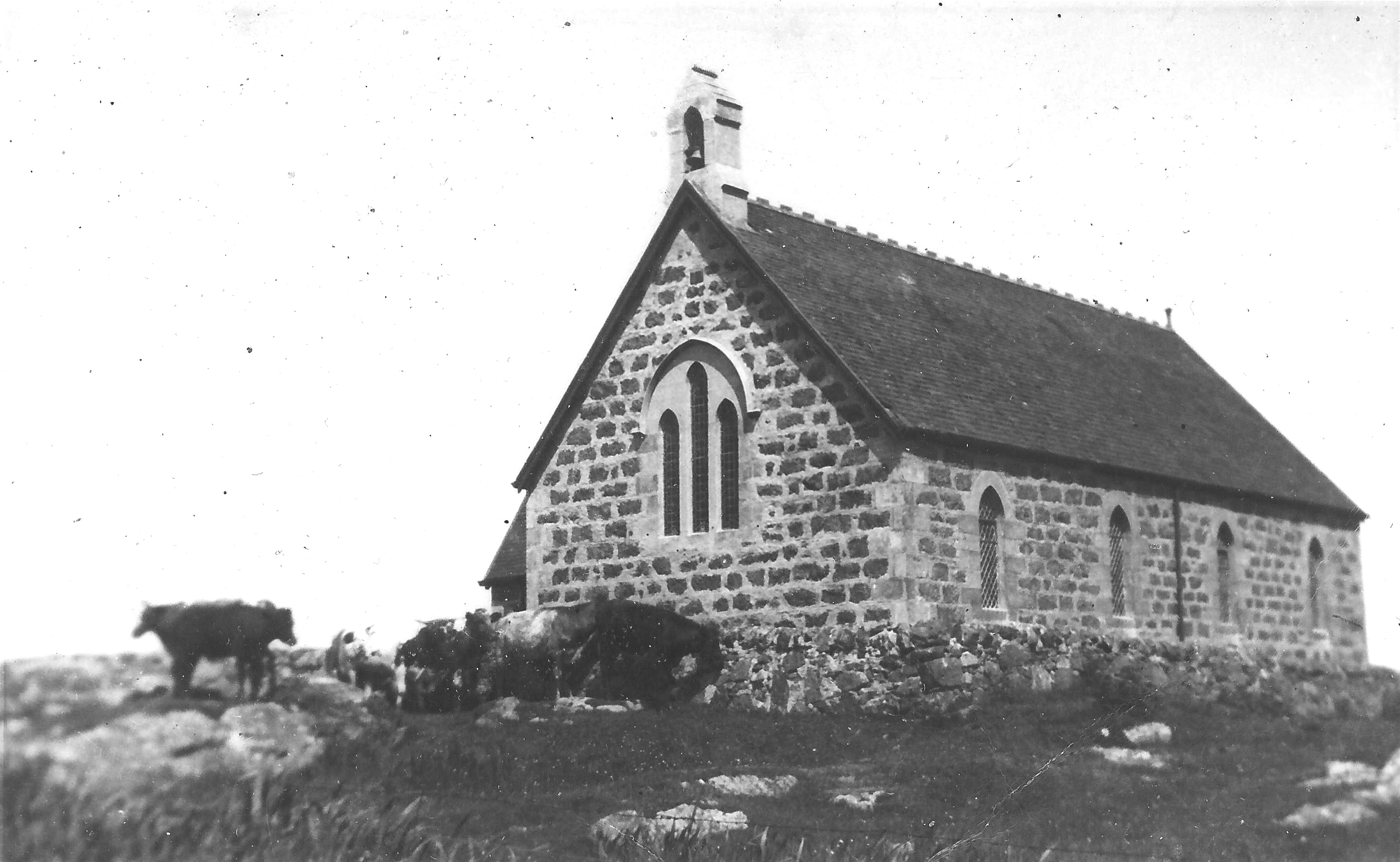
The Church of Scotland at Cornaigmore
Photograph of the Church of Scotland at Cornaig.
Courtesy of Mrs Fiona Munn
Due to difficulties in obtaining use of the Congregational Chapel in Cornaig, the Kirkapol Session decided to build a new church accommodating 200 worshippers. The Duke of Argyll granted one eighth of an acre in Cornaigmore at an annual feu of one shilling.
A building committee was set up comprising the minister, Rev Thomas MacPherson, and six elders. Donald MacDonald of Caoles put in the successful tender of £530 for the building work. Grants were promised by the Church of Scotland and one of the elders, Thomas Barr, offered to advance the money at 4% interest.
The new church opened for public worship in 1899 ‘notwithstanding the very boisterous nature of the weather’ and continued as a place of worship until the mid-1970s. It has since been sold as a dwelling house.
Black and white photograph of the old Church of Scotland at Cornaigmore.
The old Church of Scotland at Cornaigmore.
Colour photograph of Iain MacKinnon`s croft house in Kilmoluaig.
Iain MacKinnon`s (Iain Chaluim) thatched house in Kilmoluaig.

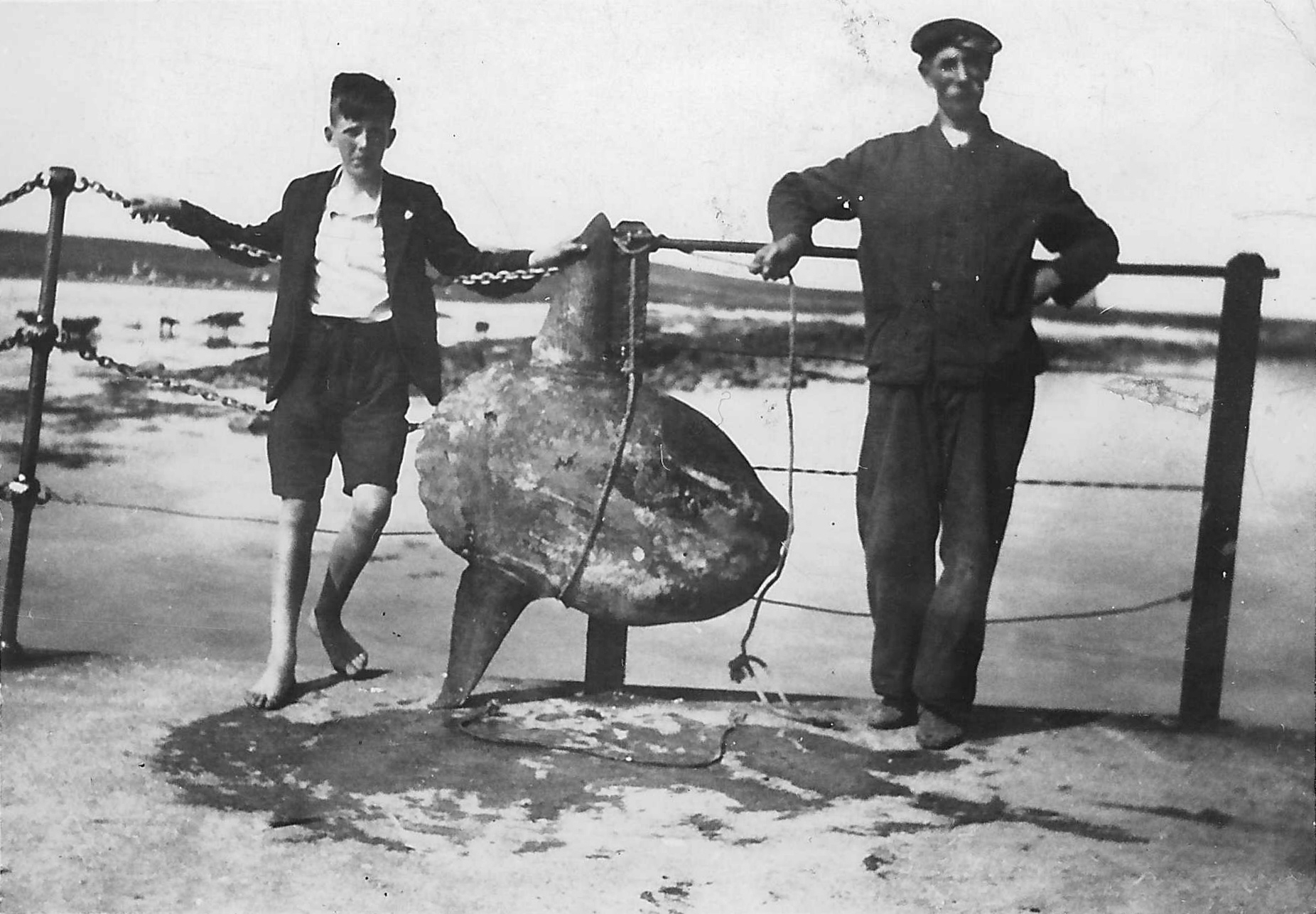
John and Donald MacDonald with a sunfish on Gott Bay pier
Photograph of John and Donald MacDonald with a sunfish on Gott Bay pier.
Courtesy of Dr John MacDonald
John MacDonald of Heanish and his son Donald were photographed with a sunfish on Gott Bay pier in the late 1920s or early 1930s. The ocean sunfish, Mola mola, is the most massive bony fish in the world and can grow over three metres in length.
Sunfish feed on jellyfish, plankton and small fish. They stay primarily in open waters, but can often be seen near kelp beds, large expanses of which surround Tiree. Its name ‘mola’ is Latin for ‘millstone’ which the fish is said to resemble in shape, colour and texture.
They propel themselves by flapping their large fins from side to side. Sometimes they are seen floating sideways in the water and it is commonly thought that they are basking in the sun. They are more often to be found further south in the waters round Cornwall and Wales.
Black and white photograph of John MacDonald on Gott Bay pier in the 1920s.
L-R: John `Nonian` MacDonald of Heanish and his son Donald with a sunfish on Gott Bay pier in the late 1920s or early 1930s. Donald jumped ship in Australia and lived there. (Donald is the brother of Jean MacEwan.)
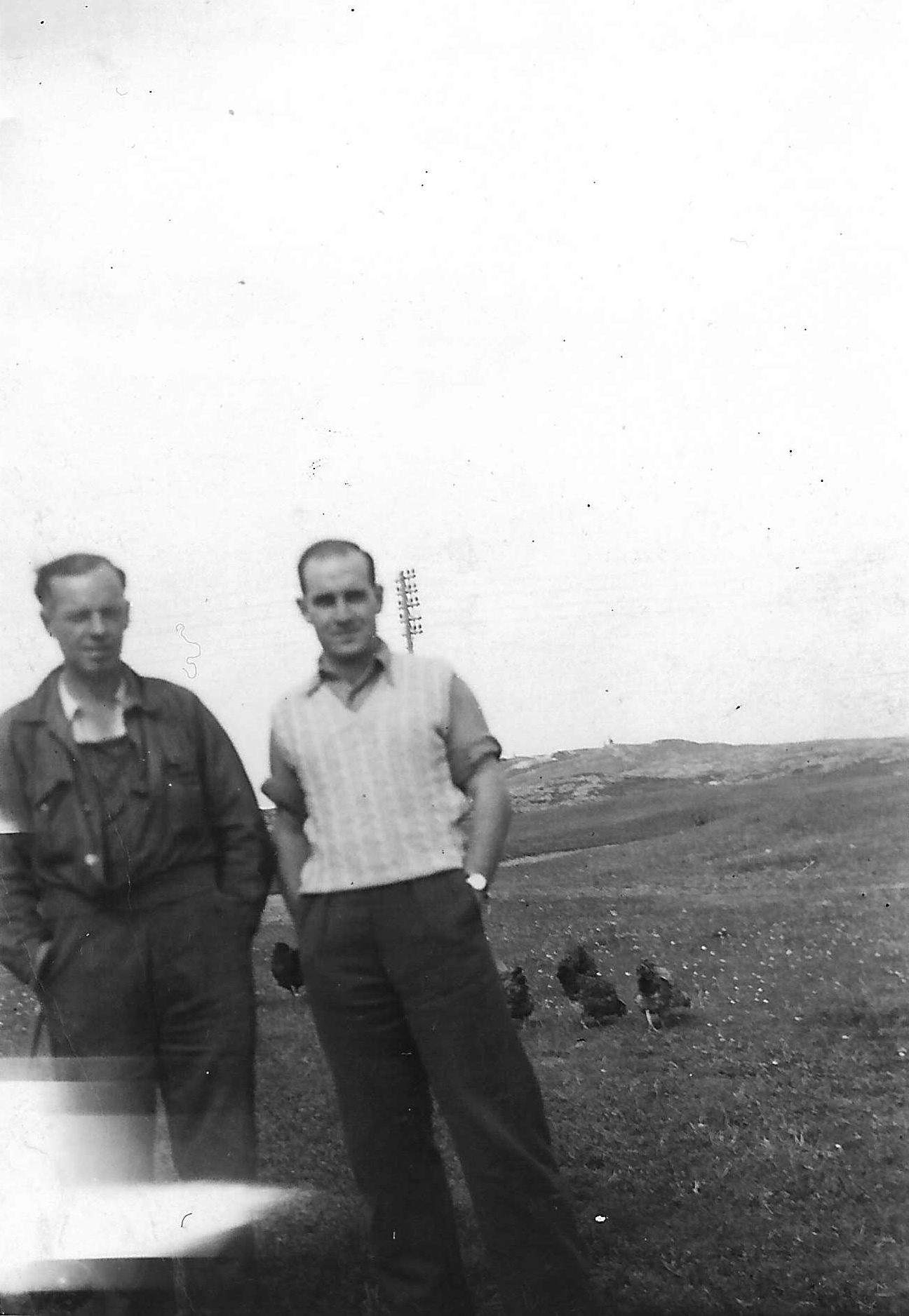
Black and white photograph of Iain Munn and Lachie MacFadyen.
L-R Iain Munn and Lachie MacFadyen, probably taken around the 1940s.
John MacDonald of Heanish with visiting children at Gott Bay pier
Photograph of John MacDonald of Heanish with visiting children at Gott Bay pier around 1930.

Courtesy of Dr John MacDonald
John MacDonald of Heanish is seen here on the left with visiting children on Gott Bay pier around 1930. John, known as ‘Nonian’, was the caretaker for Scarinish lighthouse and also worked as a docker at the pier. On the right is Hector MacKinnon (Eachann Dhonnchaidh) of Scarinish. The horse belonged to Alan MacFadyen of Gott.
In those days, a railway ran down the centre of the pier and a bogey, pulled by the horse, carried cargo between the ferry or puffer and the pier shed and office where all loads were marked in the ledger and pier dues collected. The bogey was attached to the horse’s collar by chains which can be seen in the photograph.
Nonian was good piper and fiddle player and would sing at ceilidhs and dances. His favourite song was ‘The Yellow Rose of Texas’.
Black and white photograph of John MacDonald on Gott Bay pier in the 1920s or 30s.
John MacDonald of Heanish is seen here on the left with visiting children on Gott Bay pier around 1930. John, known as ‘Nonian’, was the caretaker for Scarinish lighthouse and also worked as a docker at the pier. On the right is Hector MacKinnon (Eachann Dhonnchaidh) of Scarinish. The horse belonged to Alan MacFadyen of Gott. In those days, a railway ran down the centre of the pier and a bogey, pulled by the horse, carried cargo between the ferry or puffer and the pier shed and office where all loads were marked in the ledger and pier dues collected. The bogey was attached to the horse’s collar by chains which can be seen in the photograph.
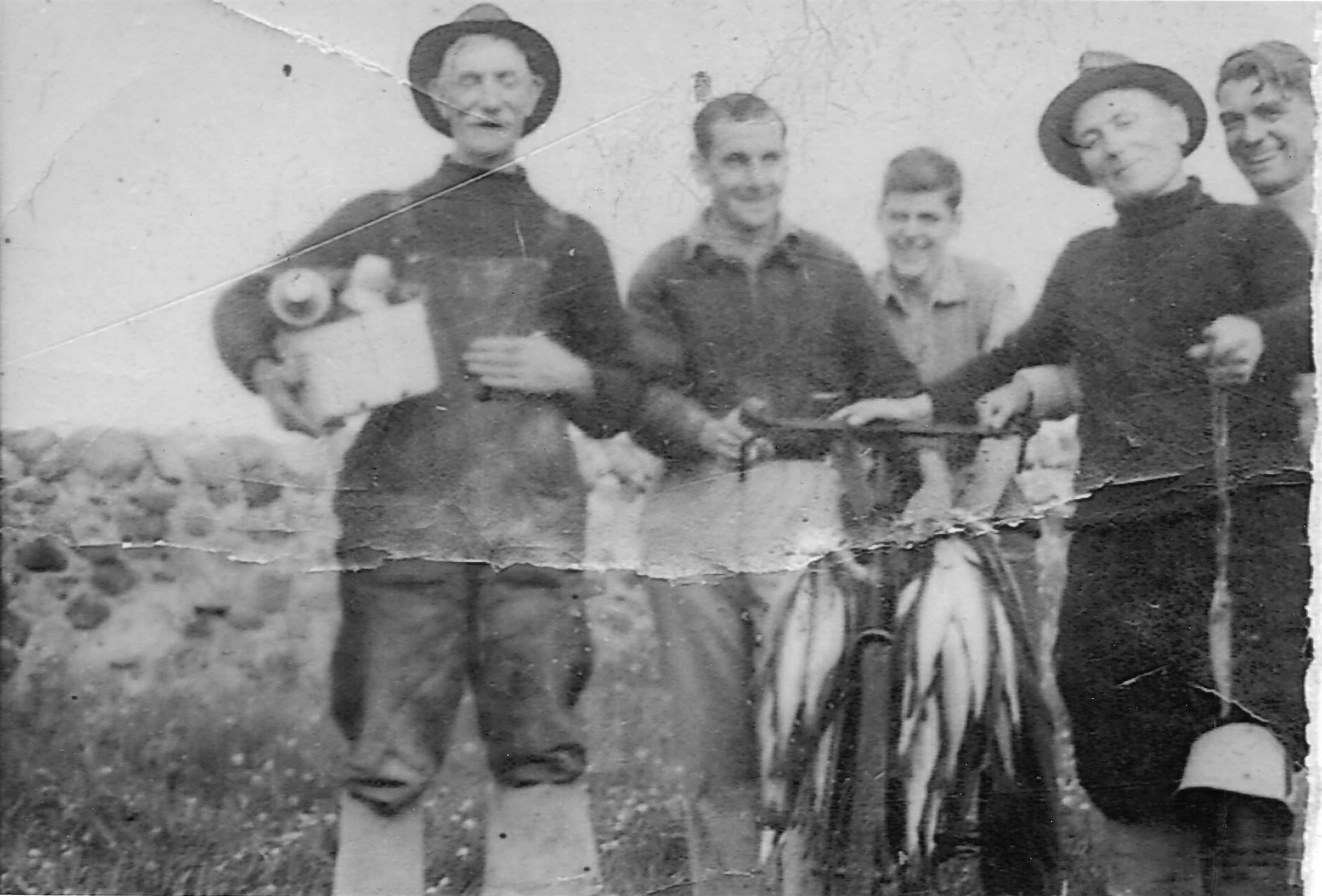
Black and white photograph of a group of men with their fishing catch.
L-R: John MacDonald of Heanish, Lachie MacFadyen, Kennneth Bisset, his father and Will Butler (possibly RAF), taken in the 1940s. Note the catch of fish hanging from the handlebars of the bicycle.
Copied black and white postcard of Balephetrish from John Barr.
Postcard of Balephetrish in 1931 with the wreck of the `Malve` in the distance.

Colour photograph of the School Sports Day in 2000.
Danielle Carter at the School Sports Day in 2000 photographed by Ron Hutchison.
