


`Dalli` iron, 1890 – 1930
Large, lidded `Dalli` iron for smoothing fabric, used during 1890 to 1930. A burning brick of smokeless fuel would have been placed into the iron to heat for use. From the estate of Angus MacLean, The Coolins, Scarinish.
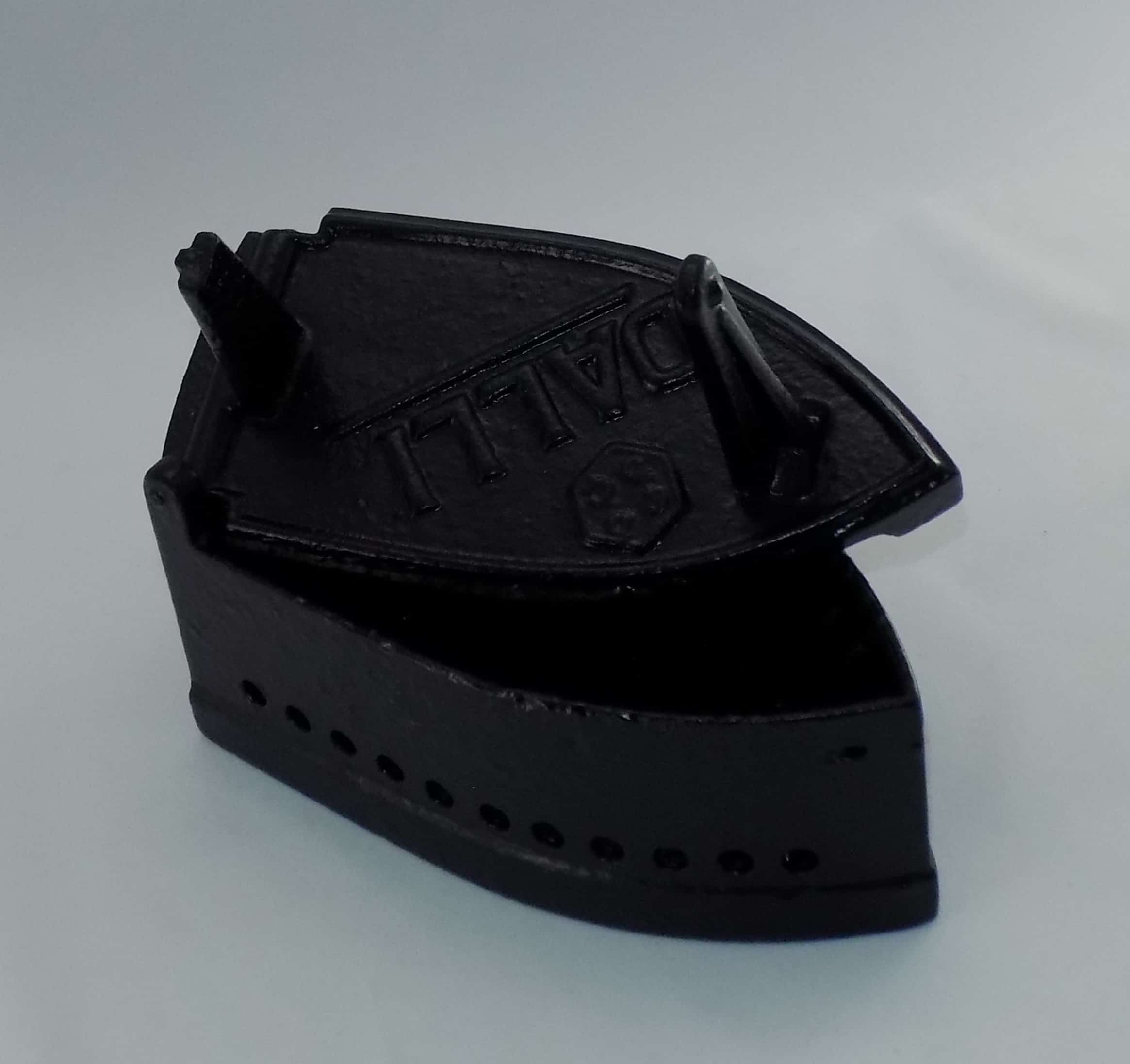

`Dalli` iron, 1890 – 1930
Large, lidded `Dalli` iron for smoothing fabric, used during 1890 to 1930. A burning brick of smokeless fuel would have been placed into the iron to heat for use. From the estate of Angus MacLean, The Coolins, Scarinish.
Two goffering irons
One small and one medium sized goffering irons used for pressing pleats into fabric. These would have been used in conjunction with appropriately sized pokers which would have first been heated in the fire before being inserted into the irons to heat them.


Iron stand
Decorative, metal stand for resting a hot iron during ironing.

Photograph of a gathering on Coll before 1913
Sepia postcard photograph of an outdoor gathering of well-dressed adults and children watching a piper, thought to be on the Isle of Coll before 1913. The reverse side of the postcard is stamped Nov. 1913, and was written at the Coll Post Office by Mary Clement to her mother in Port Appin. When the family lived on Coll, Mary`s brother, Jim, had the longest long-jump on the island, which was marked out for many years. He was a member of the Territorial Army and served in WWI. (Original and further information stored in filing cabinet 10 drawer 1)

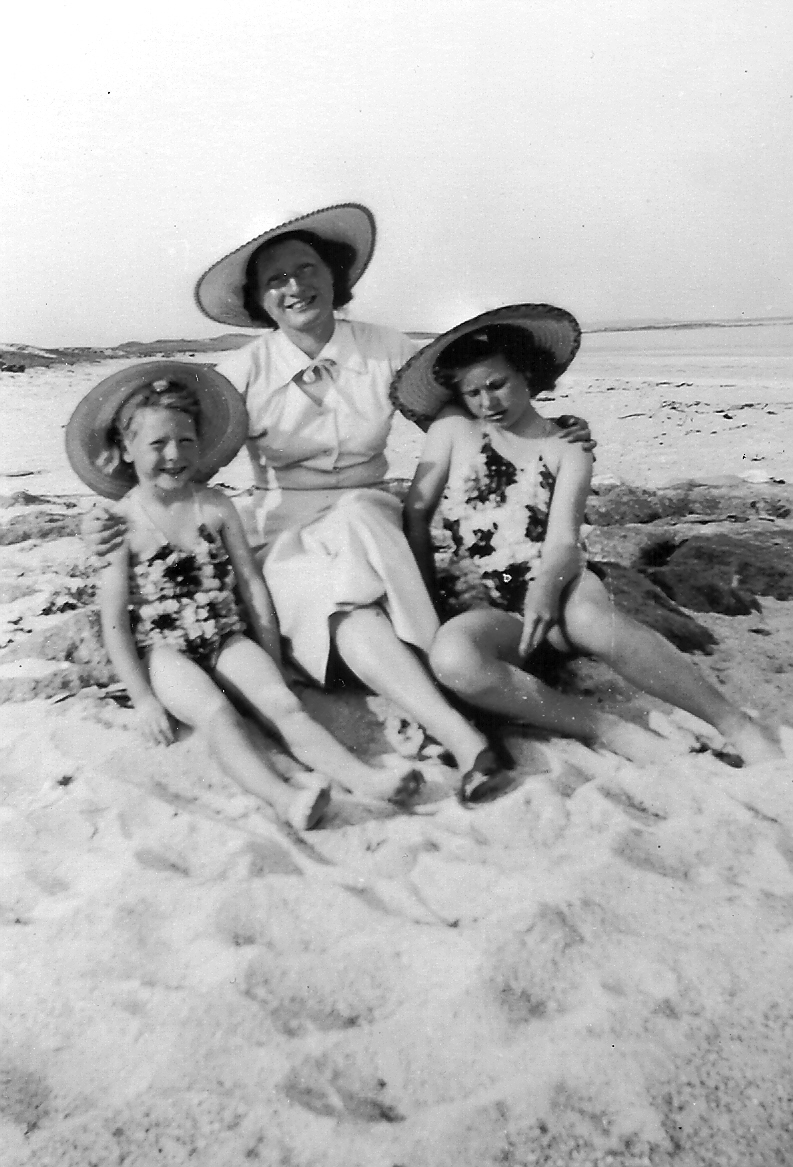
Photograph of a mother and two daughters from Clydebank on a beach on Tiree in 1953
Black & white photograph of Mrs Cathie Macmillan, Clydebank, and her daughters Elizabeth Macmillan (now Hobden) and Catherine Macmillan (now Fowler), sitting on Soroby Beach in their swimwear and sunhats in 1953. They were visiting with Willie Macmillan, who was installing water pipes on the island. Macmillan and Paterson Ltd were a plumbing business in Clydebank. (original stored in filing cabinet 10 drawer 1)
Wood and crocodile skin sea chest from Australia
Sea chest made of wood and crocodile skin owned by Dugald MacKinnon, Heanish (Dughall an Oir, b.1840), who brought it back from Australia.

Black & white photograph of Archibald Henderson of Kilmoluaig (1854-1903), in the uniform of the 5th Volunteer Battalion of The Highland Light Infantry, in around 1880. Archibald was the son of Hector Henderson, Grianal (1812-1856), and Julia MacLean, Kilmoluaig (1827-1873) – family of the Hendersons of Moss. He migrated from Tiree to Glasgow in the 1880s.

The uniform was based on that of Black Watch, including the same tartan and a similar style cap badge. The 5th Volunteer Battalion of The Highland Light Infantry was raised in Glasgow in 1868 and was known as the Glasgow Highlanders ‘G’ Company, being made up of natives from Argyllshire. The honorary Colonel of the battalion was the Duke of Argyll. The volunteer battalions were akin to the modern reserve force of the British Army (Territorial Army).
Wartime service issue hand mirror
Small plain hand-mirror issued to service personnel during WWII.

Samples of needlework from Lady Victoria Campbell`s classes ca 1900
Seven pieces of needlework from Lady Victoria`s needlwork classes held at Lodge Farm, Kirkapol, in 1890: 1 x broaderie anglaise trimming, 2 x crochet, 4 x macrame(?).

Handmade lavender bag
Cream silk, hand-sewn pouch containing dried lavender and tied with a handmade lace ribbon. Made by Catherine (Kate) MacKinnon of Lodge Farm, Kirkapol (sister of Rev Hector MacKinnon) at one of Lady Victoria`s sewing classes held at the farm in the 1910s.
