


Colour photograph of Port a` Mhuilinn at Baugh in 2004.
Port a` Mhuilinn at Baugh photographed by Dr John Holliday in 2004.
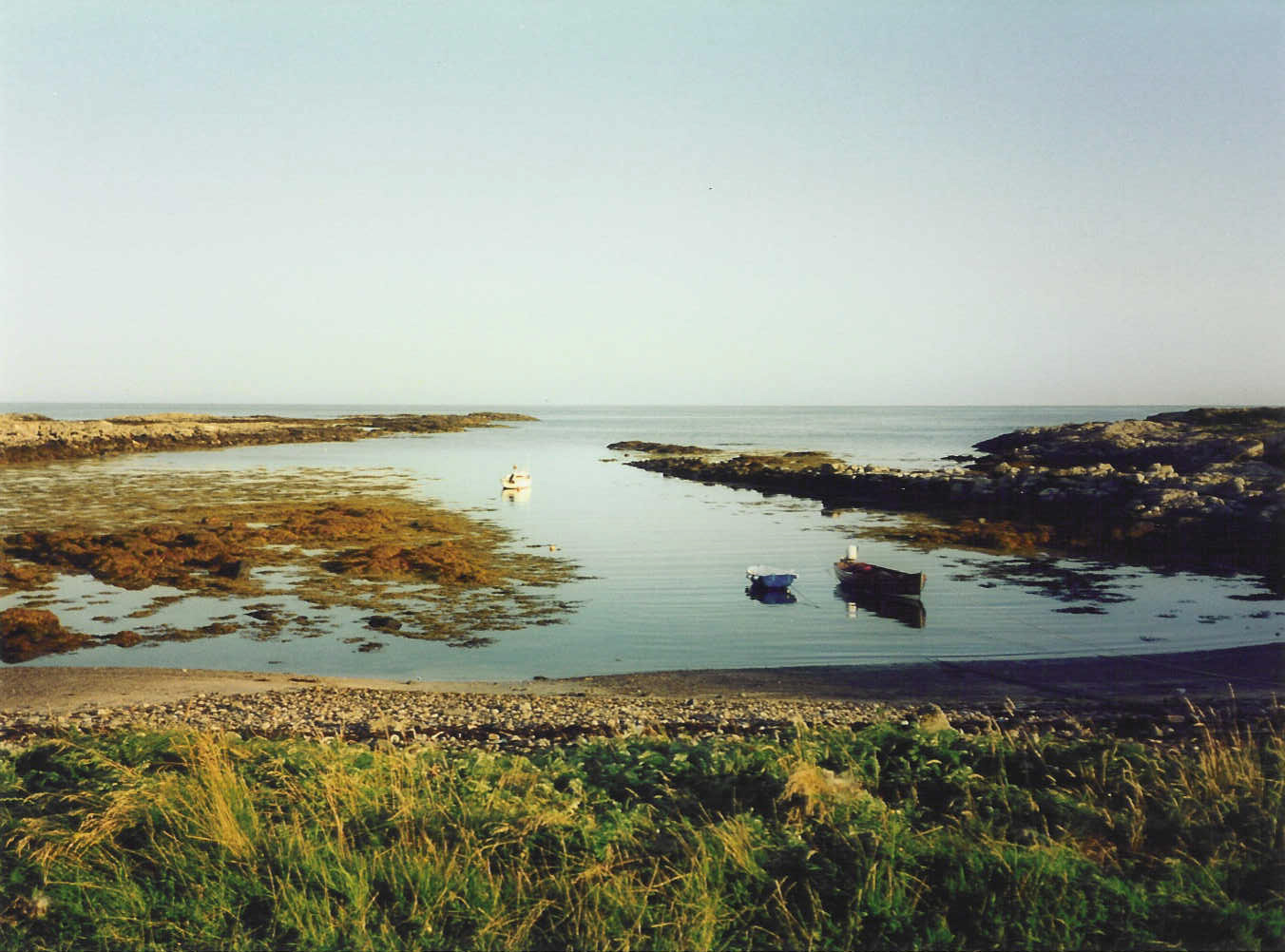

Colour photograph of Port a` Mhuilinn at Baugh in 2004.
Port a` Mhuilinn at Baugh photographed by Dr John Holliday in 2004.
Port an Tobair at Balemartine
Photograph of Port an Tobair at Balemartine in 2004.
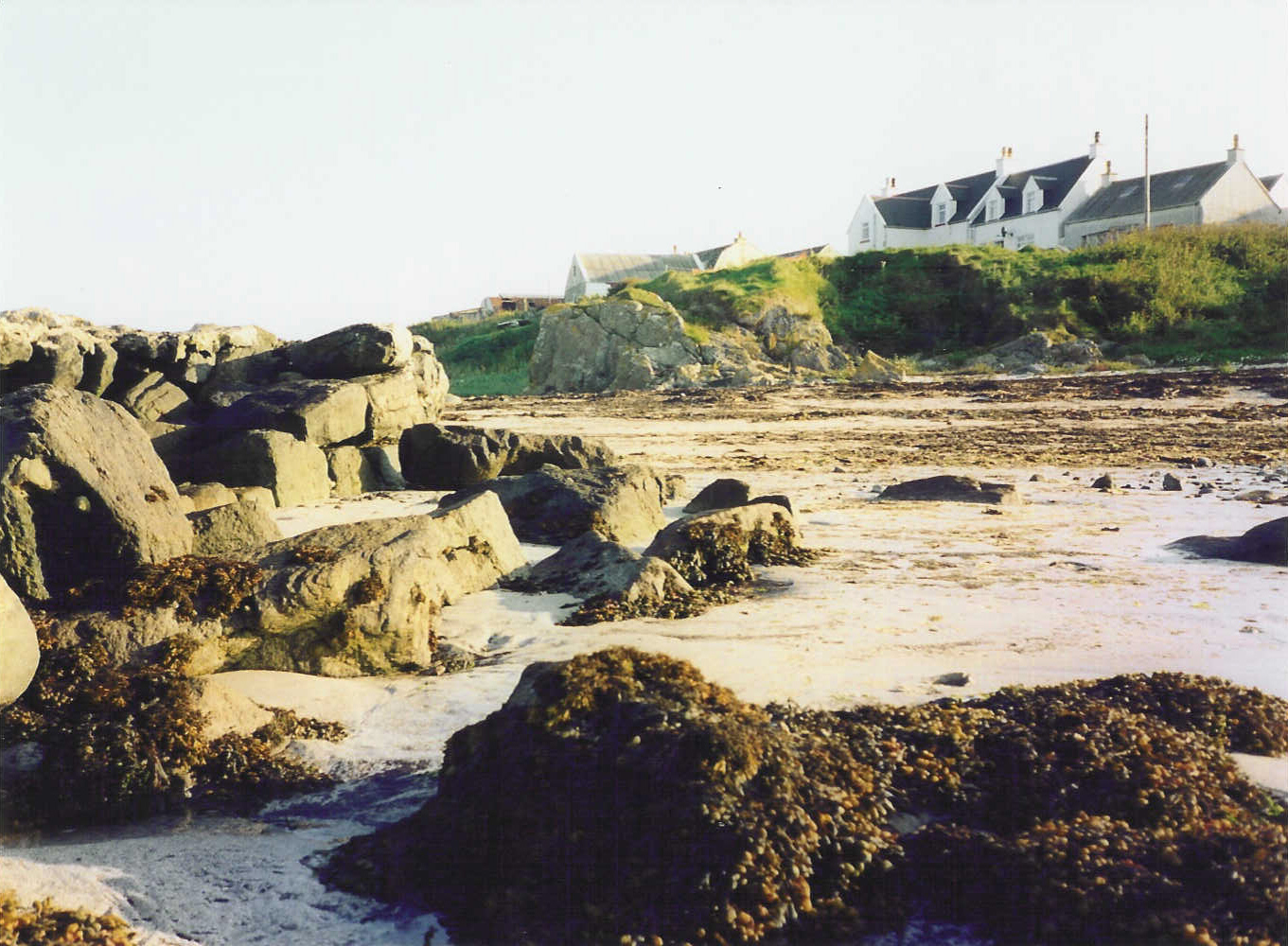
Envious of the success of the Dutch fishing fleet in the North Sea, the British Government established the Fishery Board in 1809 to promote fishing around Britain. In 1824, the Board commenced a programme of pier building funded with contributions from landlords.
In 1847 at the height of the potato famine, the 8th Duke of Argyll paid £690 as his share of the cost to build four piers in Tiree at the Green, West Hynish, Balemartine and Milton. The Balemartine pier was built at Port an Tobair (harbour of the well) and at its busiest twelve boats used it.
Exposed to winter storms, the pier was repeatedly damaged. In 1902 thirty fishermen wrote to the County Clerk asking for it to be repaired. In 1912 the 9th Duke of Argyll and Lord Archibald Campbell contributed to its repair but it was finally destroyed by a storm in 1936.
Colour photograph of Port an Tobair at Balemartine in 2004.
Port an Tobair at Balemartine photographed by Dr John Holliday in 2004.
Colour photograph of the fish trap between Eilean nan Gobhar and Heanish in 2004.
The fish trap between Eilean nan Gobhar and Heanish, photographed by Dr John Holliday in 2004.

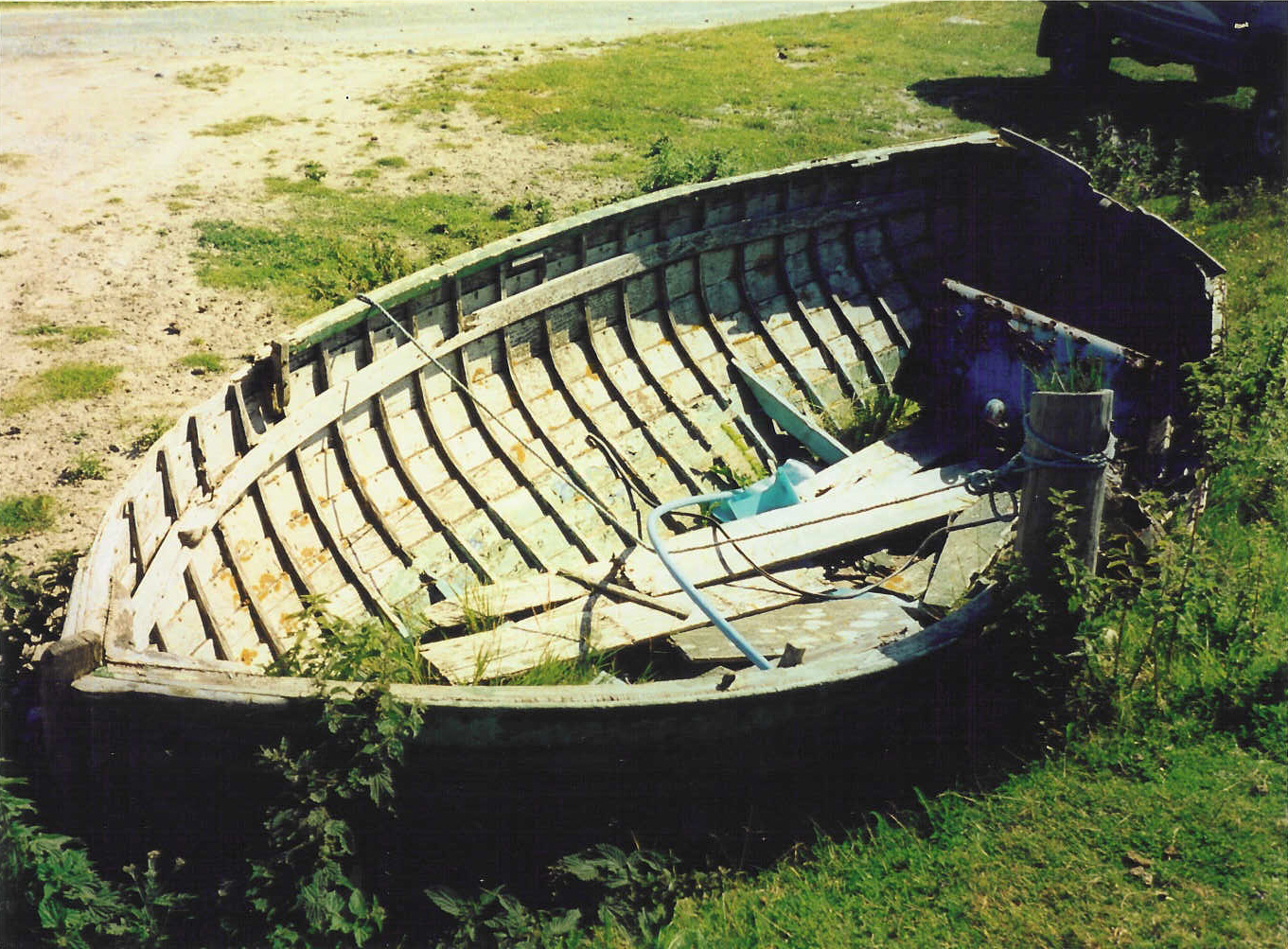
Colour photograph of old boat at Scarinish harbour in 2004.
Old boat at Scarinish harbour photographed by Dr John Holliday in 2004.
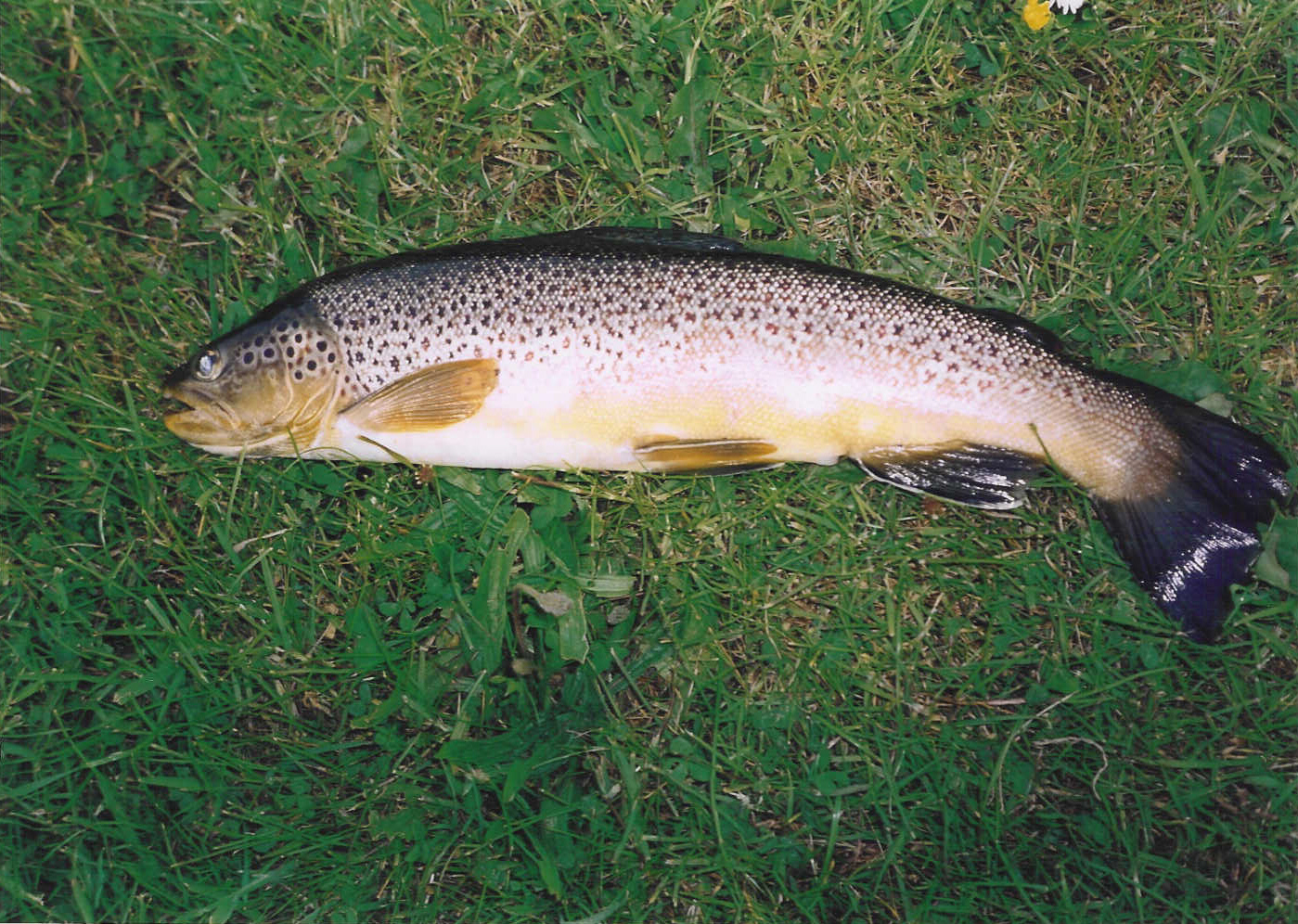
Colour photograph of brown trout from Loch Bhasapol in 2004.
Brown trout from Loch Bhasapol photographed by Dr John Holliday in 2004.
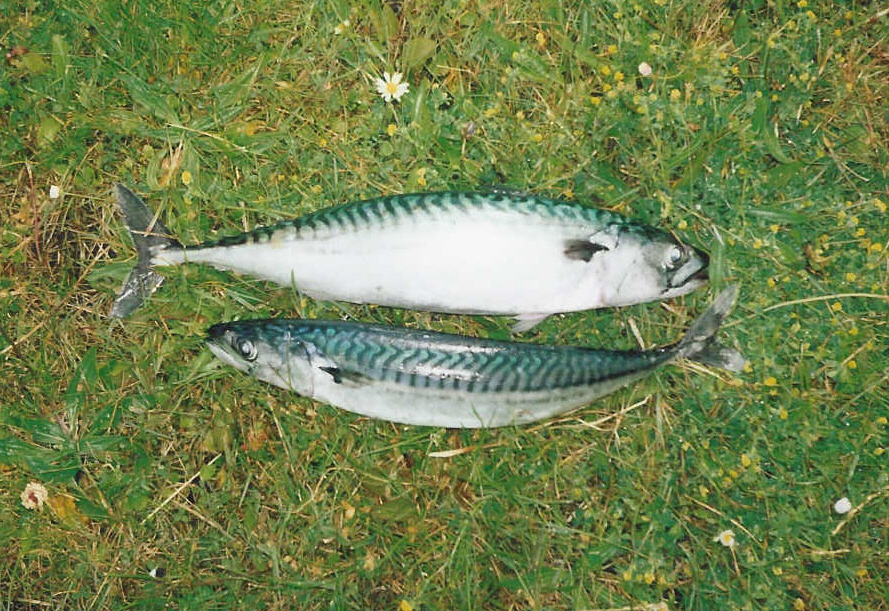
Colour photograph of two mackerel in 2004.
Mackerel photographed by Dr John Holliday in 2004.
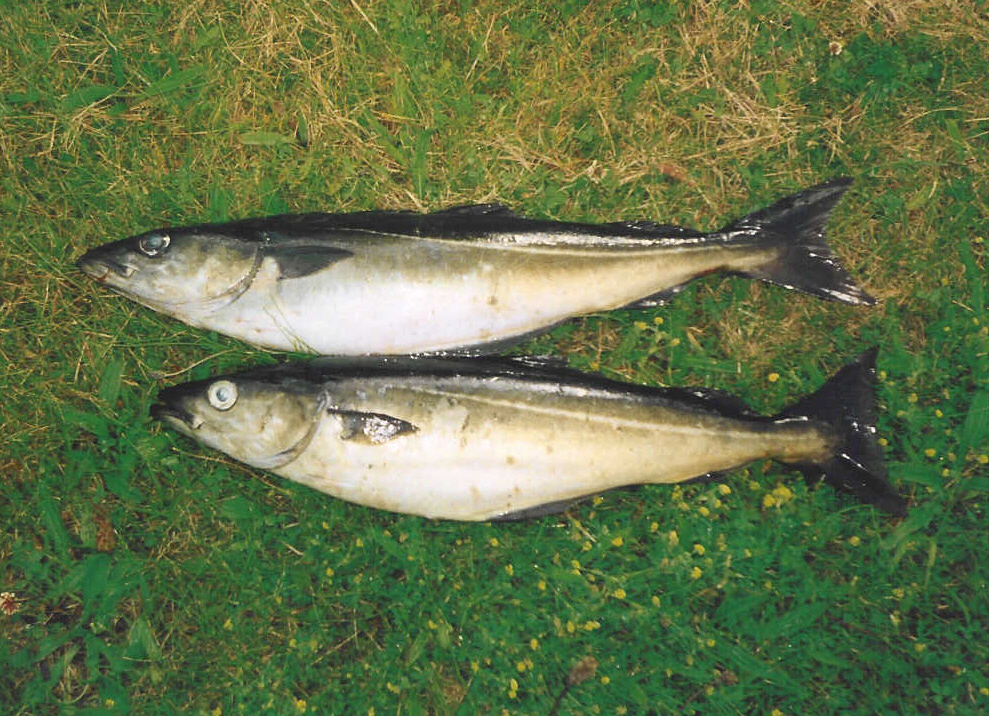
Colour photograph of two saithe (coalfish) in 2004.
Two saithe (coalfish) photographed by Dr John Holliday in 2004.
Colour photograph of two lythe (pollack) in 2004.
Two lythe (pollack) photographed by Dr John Holliday in 2004.

The shed at Balemartine with the roof made from an old boat, photographed by Dr John Holliday in 2004.

The unpredictability of the sea quite naturally bred a strong sense of the magical and superstitious amongst Tiree’s fishermen. Everything had to be done sun- or clock-wise. Boats were always pushed into the sea stern first and then turned ‘deiseal’, clock-wise.
Women were thought to be unlucky in or near a boat. It was widely thought that it brought misfortune to have a minister on a boat. Even meeting a minister on the way to fishing was a bad sign. If anyone called after a fisherman going to sea it was unlucky and they turned back.
It was bad luck to burn a boat and the old fishermen would pull boats that were no longer seaworthy up on the shore and leave them to rot. Sometimes old boats were made into roofs for outhouses as in this photograph taken in Balemartine.
‘Na Teantaichean’ at Clachan
Photograph of the remains of ‘Na Teantaichean’ at Clachan, Cornaig in 2004.

Tiree was an attractive summer base for fishermen from the north-east coast of Scotland during the19th century. They favoured the Green, Cornaig and Salum which were close to the rich fishing banks north of the island.
In those days, it was common for fishermen to have shelters down by the shore where they lived and stored their fishing tackle. Two ruins called ‘Na Teantaichean’ on the shore at Clachan in Cornaig can still be seen. The name suggests they were roofed with canvas.
The fishermen who used the site moored their boats at nearby Port nam Bàtachan. One of the crew would remain ashore to cook and dig for bait while the others were out fishing. After a day at sea they would sometimes meet up at the inn at Croish in Kilmoluaig.
Colour photograph of `Na Tentaichean` at the Green in 20040
The remains of `Na Tentaichean` at the Green where east coast fishermen stayed in the 19th century, photographed by Dr John Holliday in 2004.