


Black and white photograph of two unknown women with a pet lamb from a small album from Silversands.
`Tri pheatichean` (three pets) from a small album from Silversands, Vaul, titled `Idle Days` probably dating from the 1920s or early 1930s.
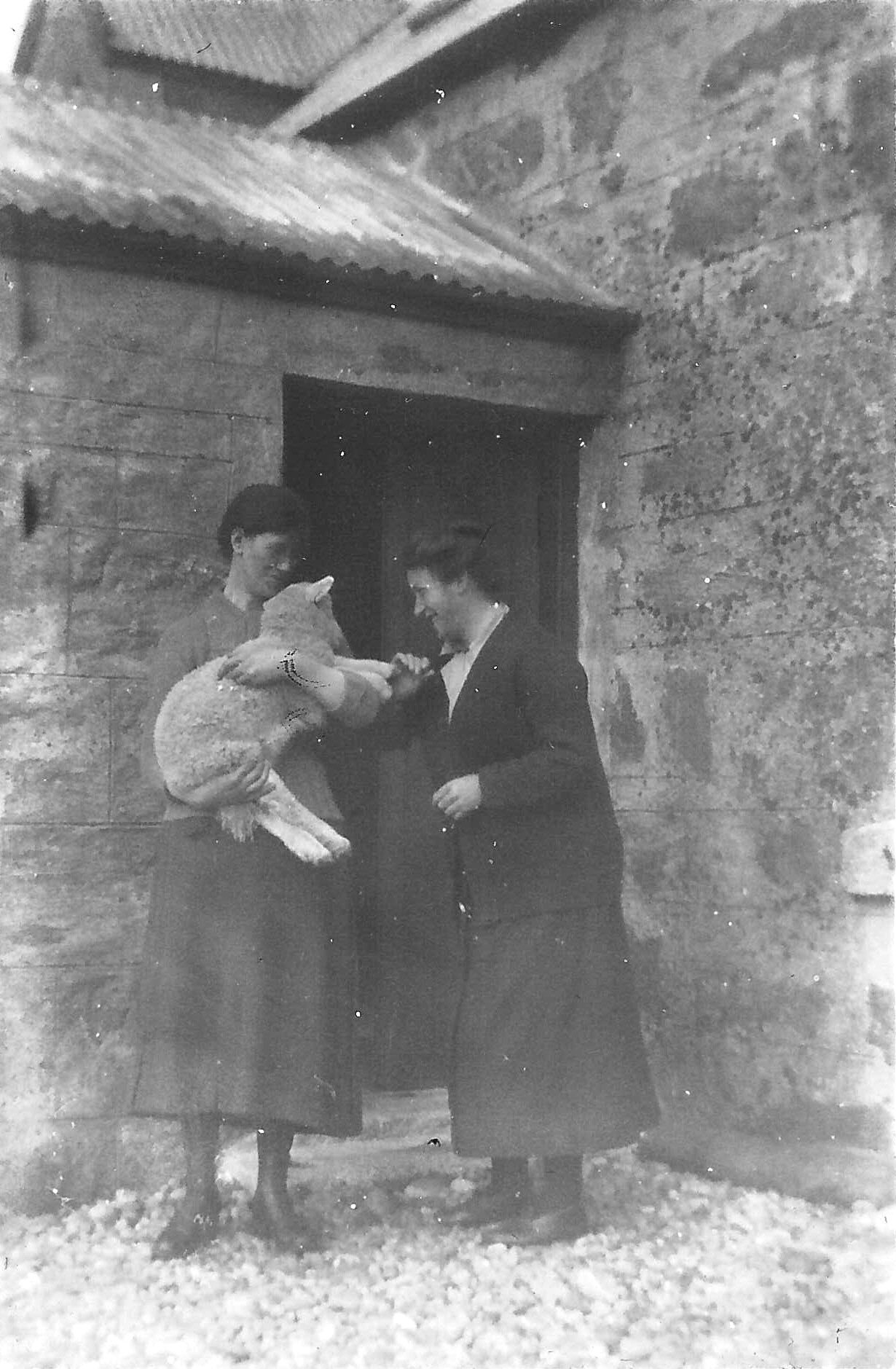

Black and white photograph of two unknown women with a pet lamb from a small album from Silversands.
`Tri pheatichean` (three pets) from a small album from Silversands, Vaul, titled `Idle Days` probably dating from the 1920s or early 1930s.
Black and white photograph of three unknown women outside Silversands from a small album from Silversands.
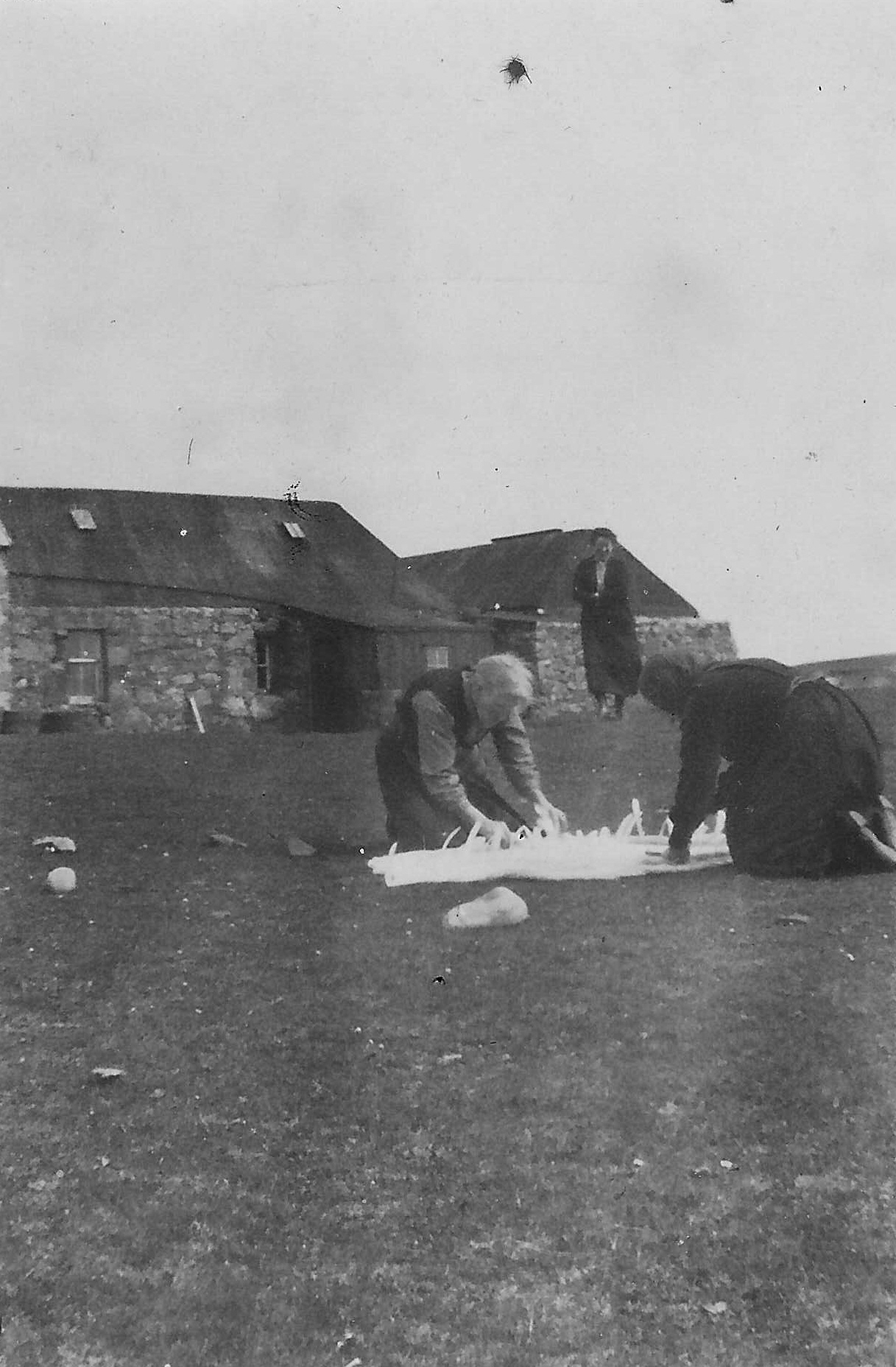
Two women pegging out what is probably a shawl on the grass to dry using feathers, from a small album from Silversands, Vaul, titled `Idle Days` probably dating from the 1920s or early 1930s.
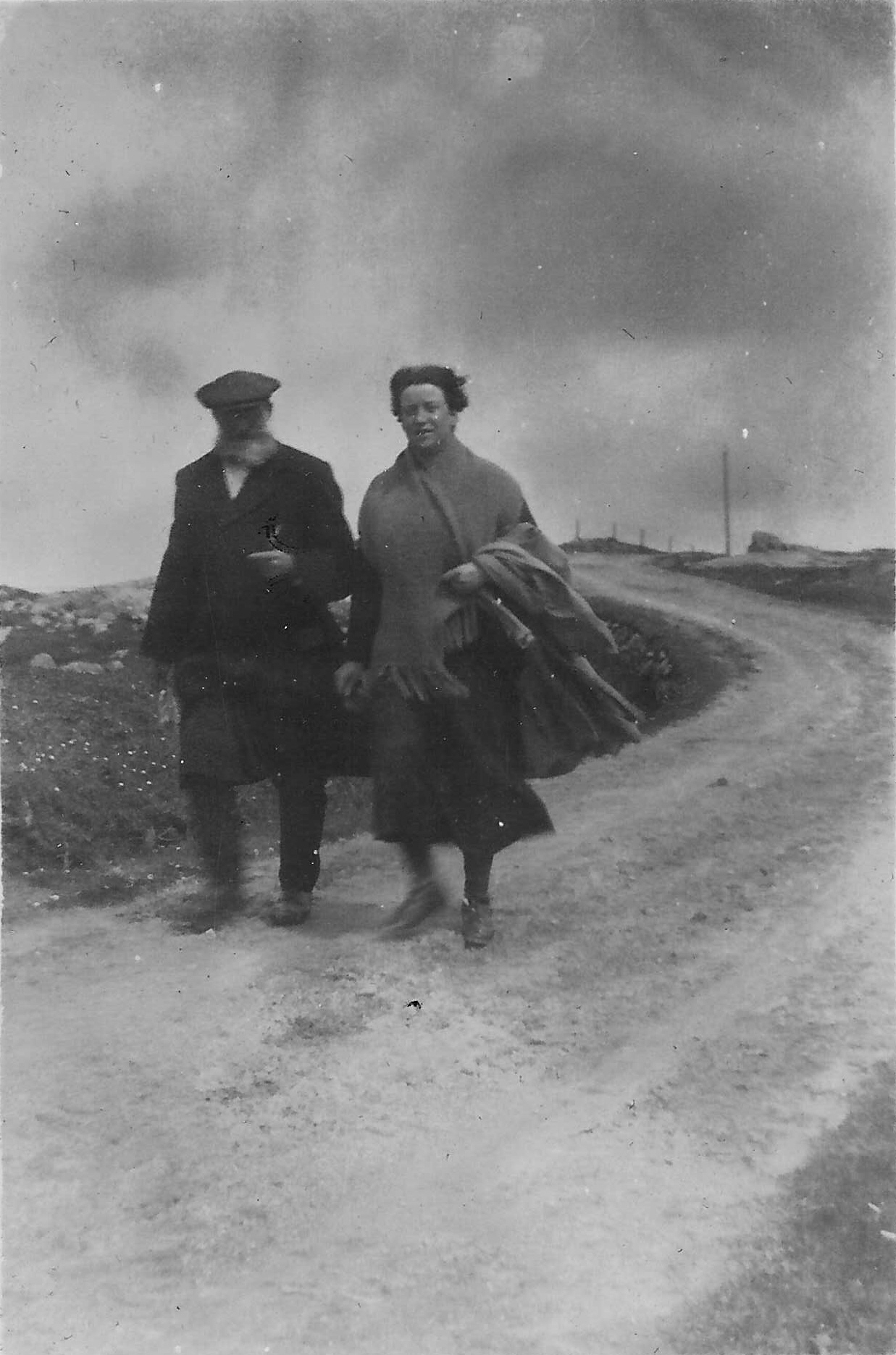
Black and white photograph of an unknown couple on the Caoles road from a small album from Silversands.
`Rathad Caholais` (the caoles road) from a small album from Silversands, Vaul, titled `Idle Days` probably dating from the 1920s or early 1930s.
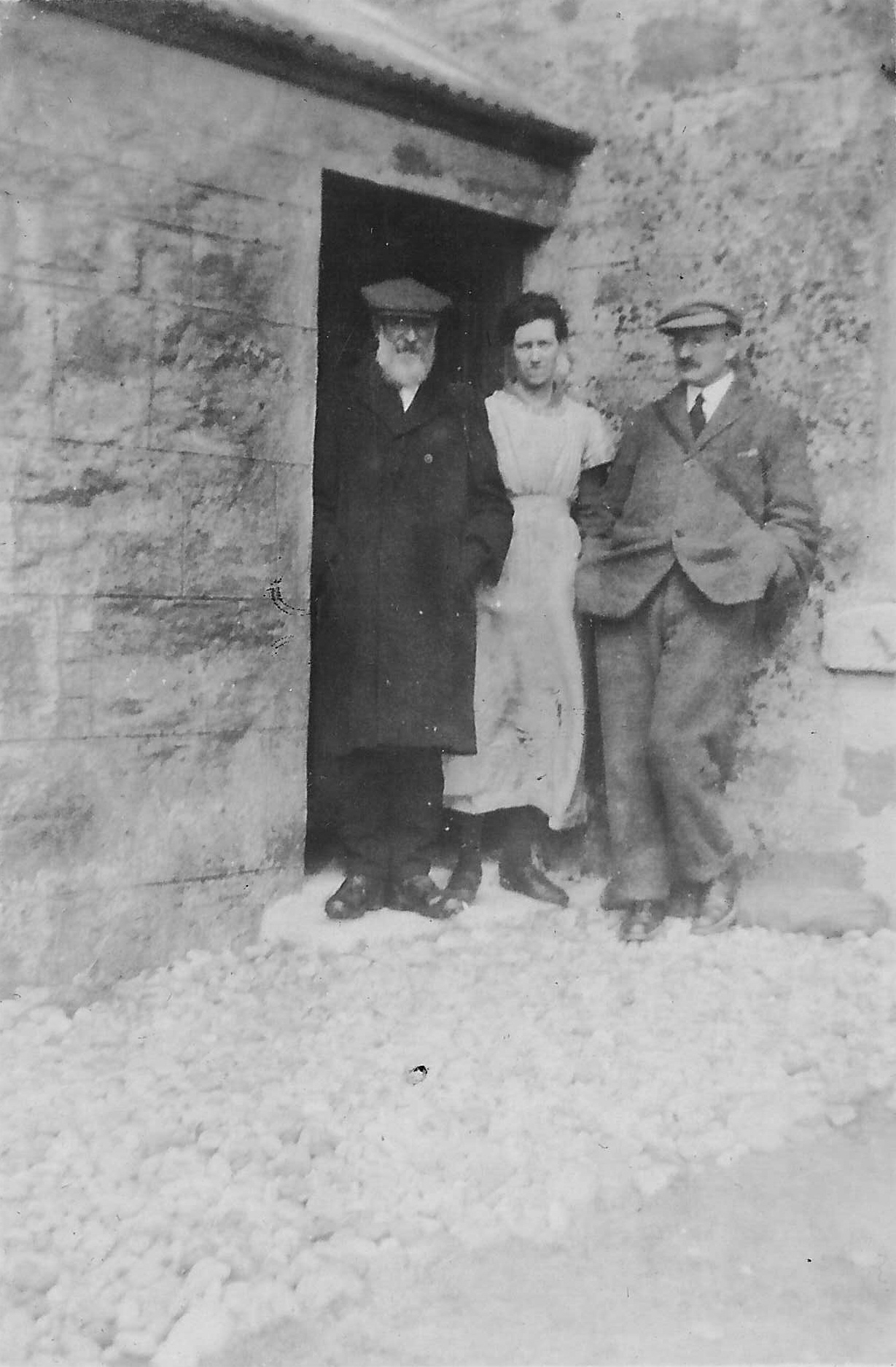
Black and white photograph of an unknown group at Silversands from a small album from Silversands.
Unknown group at the porch door of Silversands, from a small album from Silversands, Vaul, titled `Idle Days` probably dating from the 1920s or early 1930s.
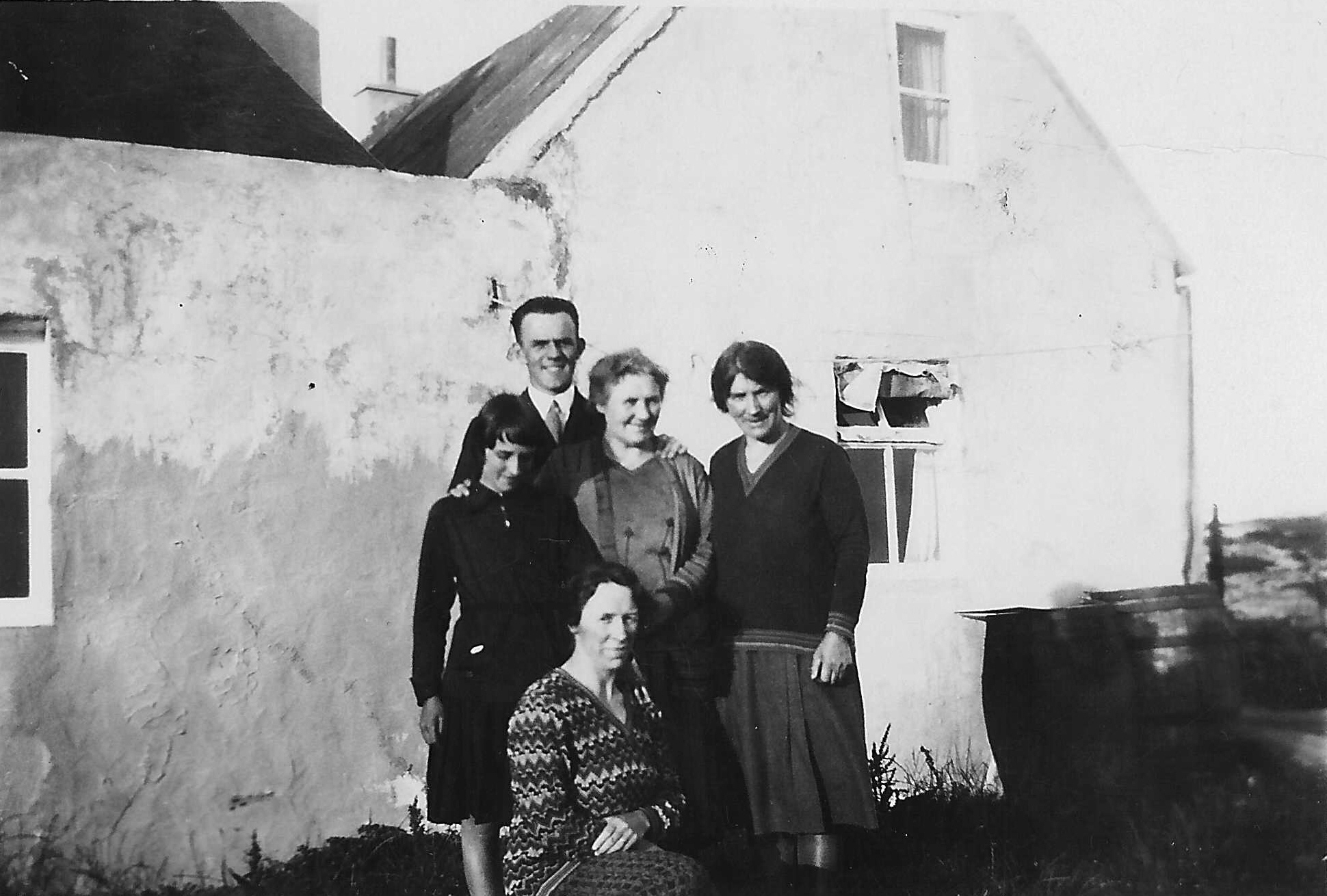
Black and white group photograph outside Rhum View, Vaul in the early 1920s.
Rhum View, Vaul in the early 1920s. L-R: (back) Jessie Pettigrew, Iain MacKinnon (Johnny London), Mary Flora Pettigrew née MacKinnon, Catriona MacKinnon, Mary Flora’s sister, (front) Marion Spears née MacKinnon. Mary Flora married Jimmy Pettigrew who was the brother of Margaret Johnston, Margaret Doig’s mother.
Black and white photograph of Nan MacClounnan and Margaret Doig in 1945.
The old well at Rhum View, Vaul in 1945. L-R: Nan MacClounnan and Margaret Doig nee Johnston.

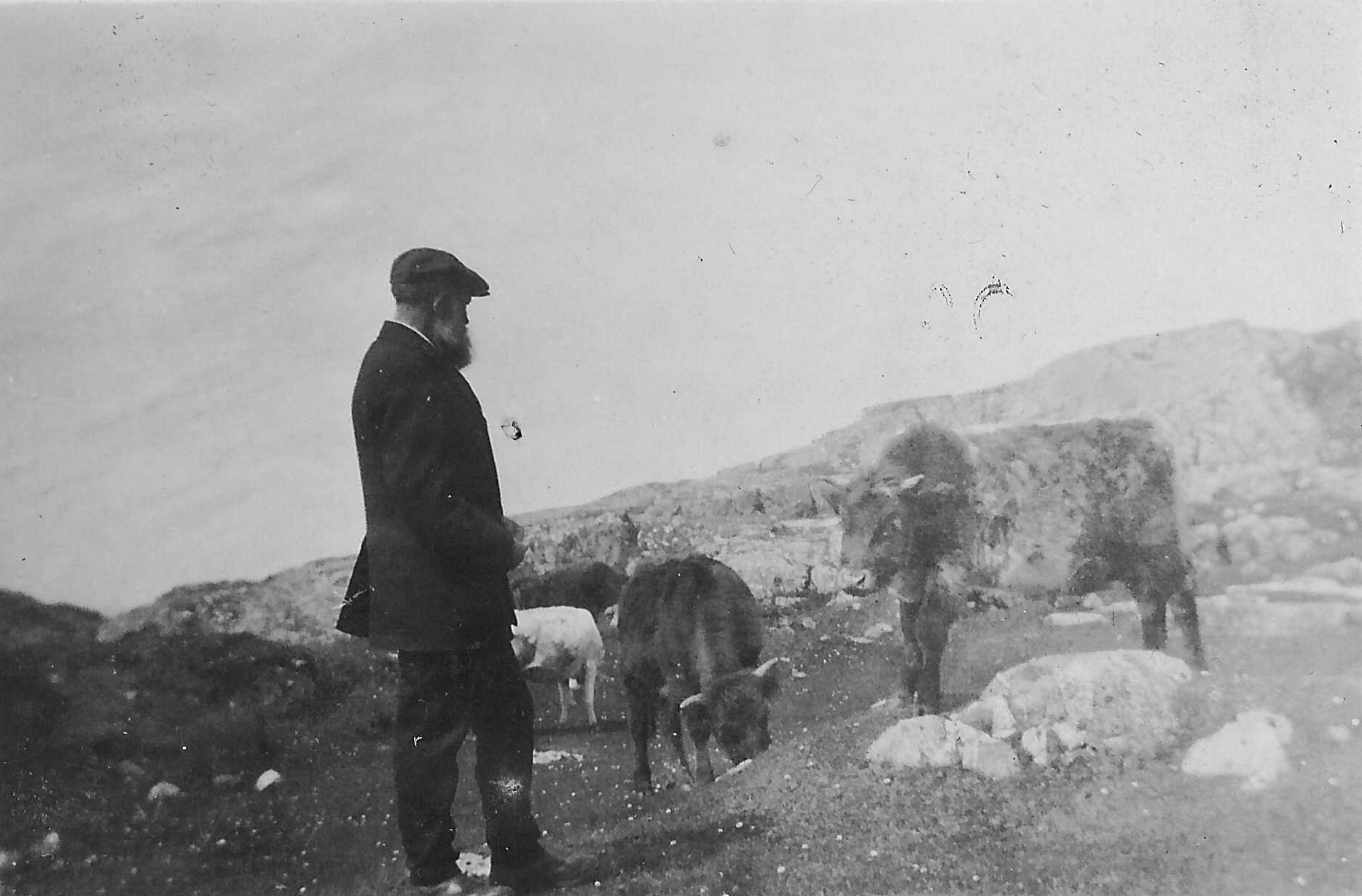
Black and white photograph of an unknown man with cows from a small album from Silversands.
`Am Buachaille` (the cow-herd or shepherd) from a small album from Silversands, Vaul, titled `Idle Days` probably dating from the 1920s or early 1930s.
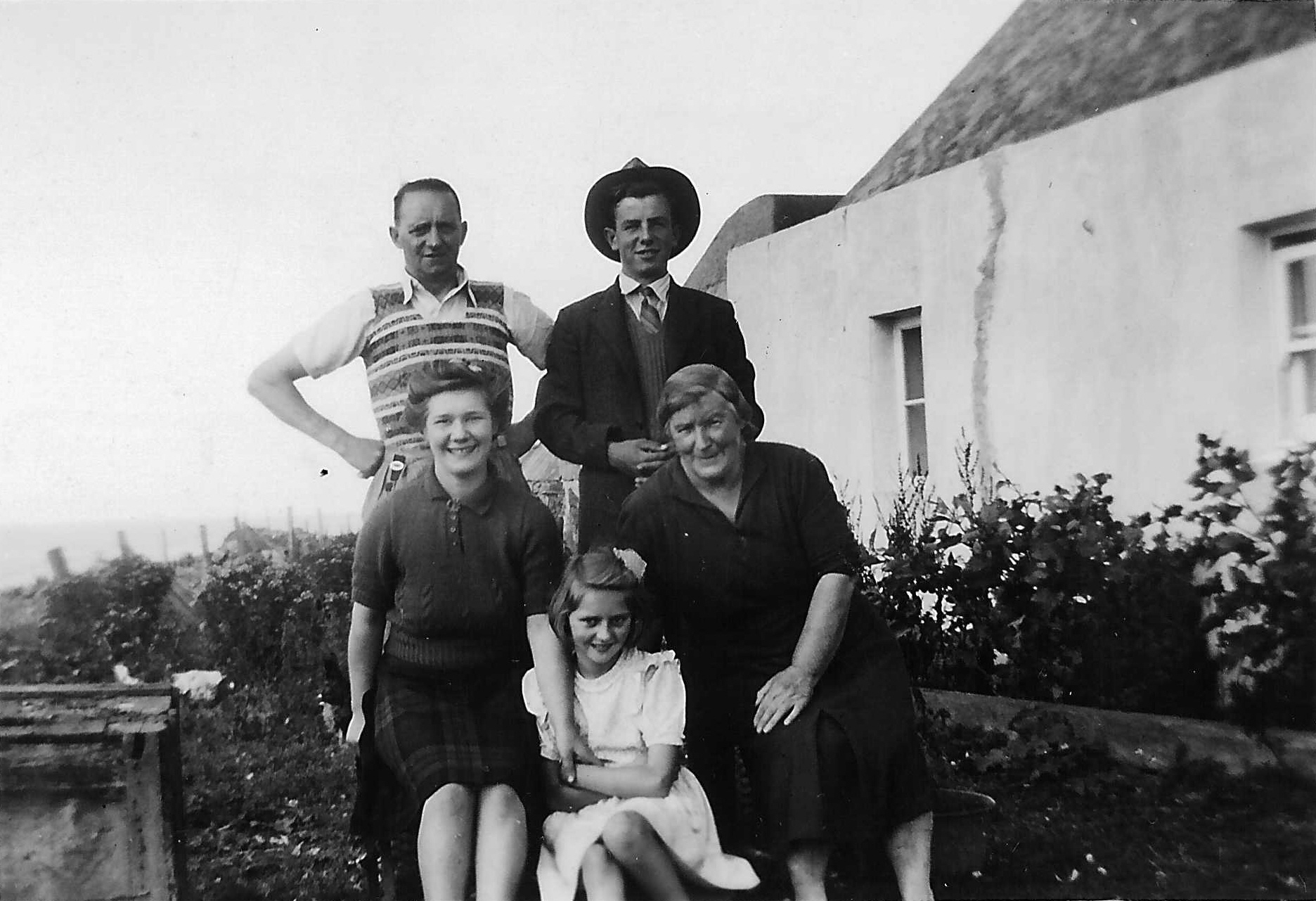
Black and white group photograph outside Rhum View, Vaul in 1945.
Rhum View, Vaul in 1945. L-R: (back) Harry Johnston (Margaret`s father), Iain MacKinnon (Catriona`s grandson), (front) Nan MacClounnan, Margaret Doig nee Johnston, Catriona MacKinnon (Margaret`s aunt). Catriona`s sister Mary Flora married Jimmy Pettigrew, the brother of Harry Johnston`s wife.
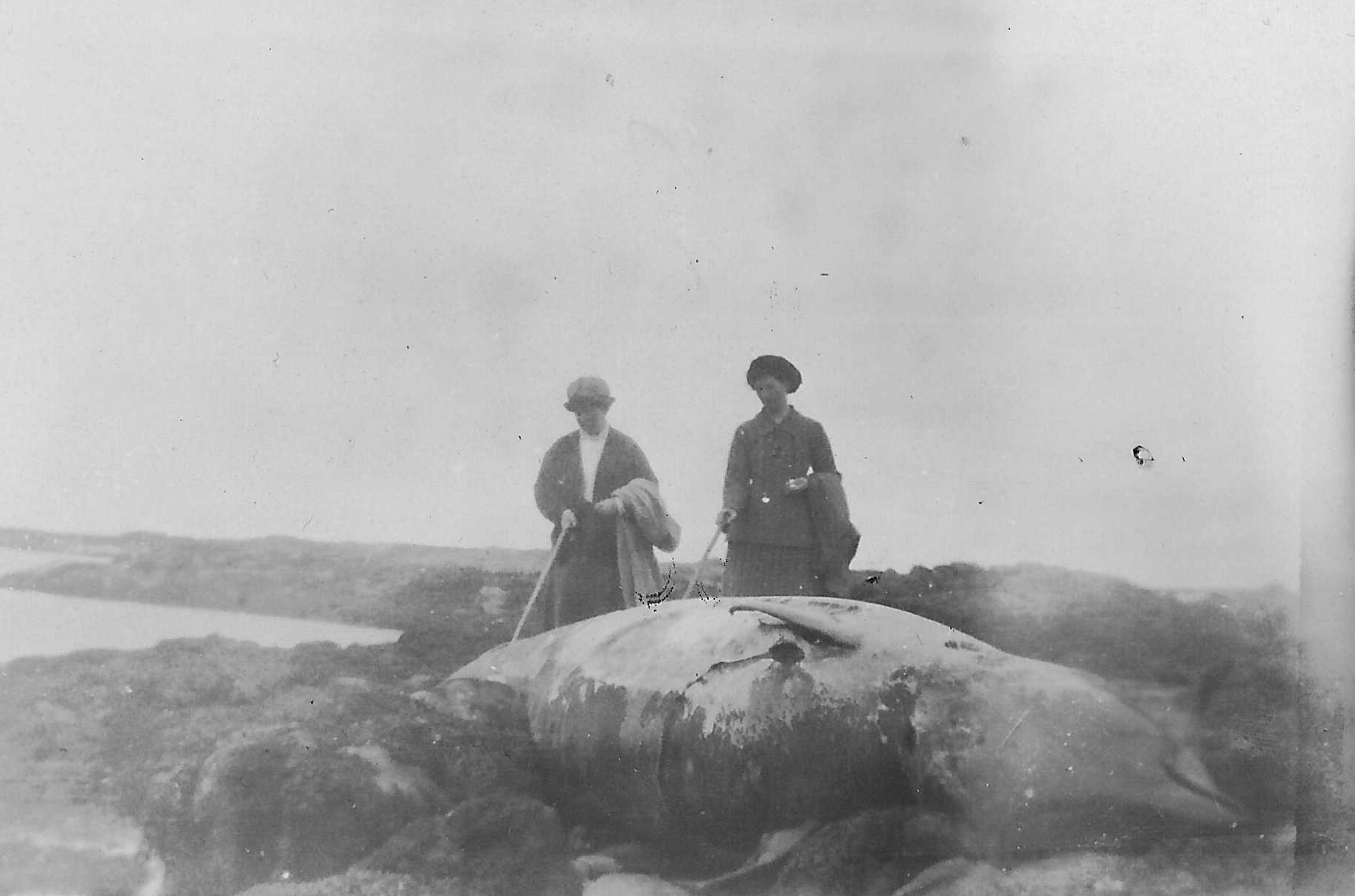
‘Aig a’ Mhuc Mhara’
Photograph of a stranded whale.
Courtesy of Mr Ronnie MacLean
Before the development of paraffin lamps, lighting in Tiree’s houses was provided by small oil lamps known in Gaelic as ‘crùisgean’. Oil from various fish was used but whales stranded on the shore were another important source.
The Statistical Account of 1845 recorded that ‘…shoals of small whales sometimes frequent our bays; and the people have become very expert at driving them ashore with boats… They are commonly from 15 to 20 feet long, and their blubber yields about a barrel of oil, each.’ From this description, they are most likely to have been Long-finned Pilot Whales.
This photograph titled ‘Aig a’ Mhuc Mhara’ (At the whale), of what is probably a Northern Bottle-nosed Whale, came from a small album from Silversands in Vaul and dates from the 1920s or early 1930s.
Black and white photograph of two unknown women and a dead whale from a small album from Silversands.
`Aig a` Mhuc Mhara` (at the whale) from a small album from Silversands, Vaul, titled `Idle Days` probably dating from the 1920s or early 1930s.
Black and white postcard of Vaul Bay postmarked in the 1930s.
Postcard of Vaul Bay postmarked in the 1930s.
